 Μake us preferred on Google
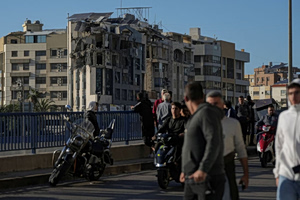
 Even though the international geopolitical balance now hangs by the thin thread of a fragile ceasefire between the United States and Iran—where the main front of the Third Gulf War is unfolding—about 2,000 kilometers to the west, Lebanon is being transformed, not slowly but painfully, into a failed state.
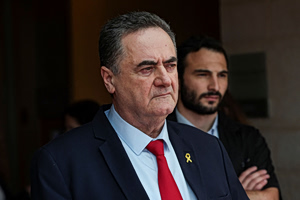
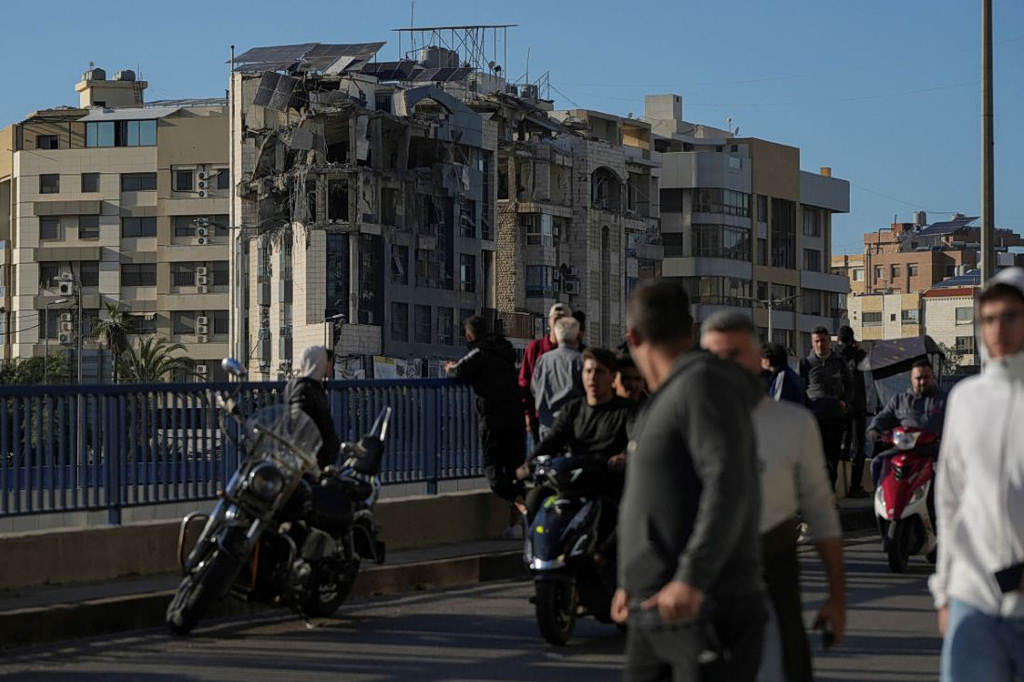
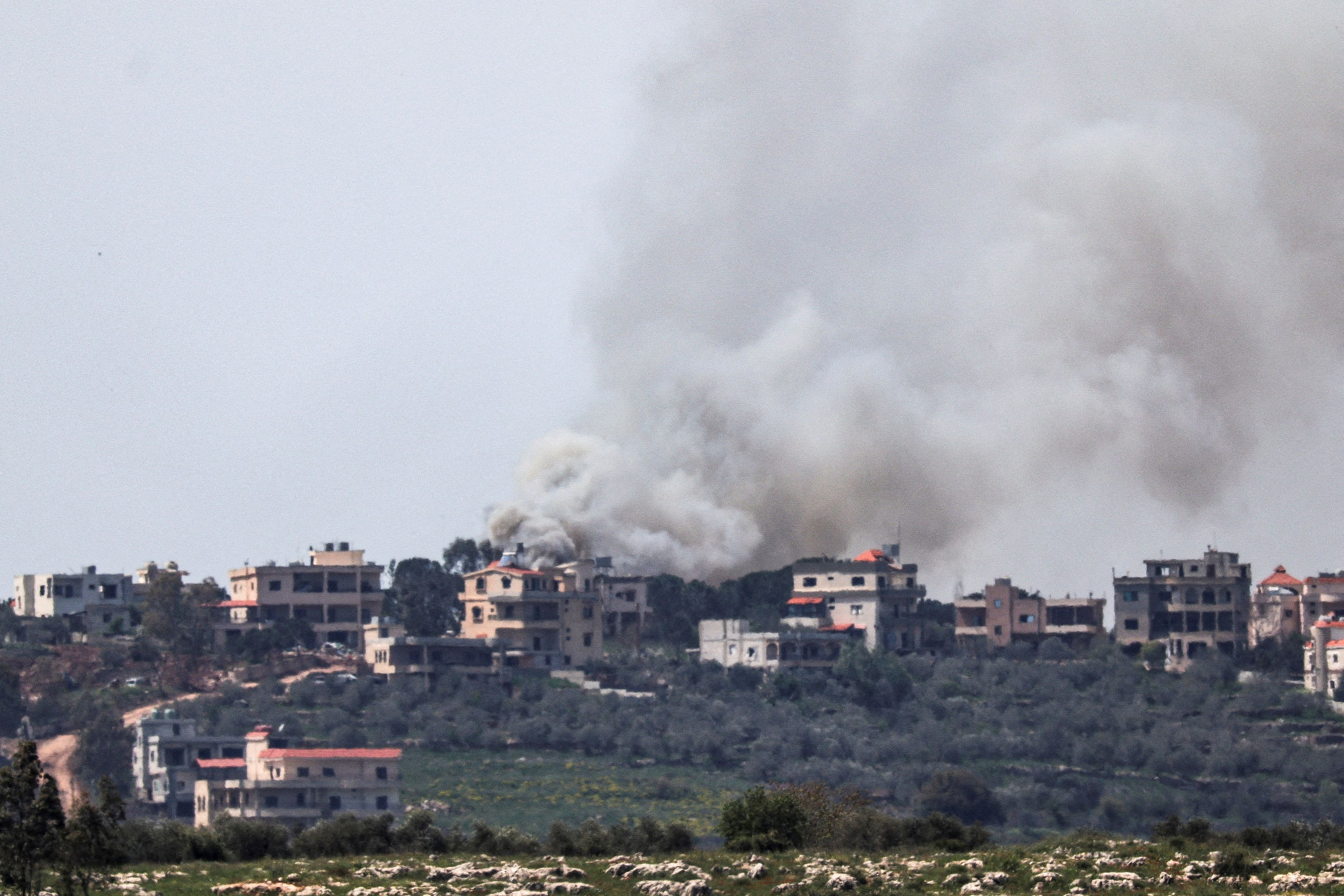
A “failed state” whose territory is being struck— for the second time in the last two and a half years—by Israel. With Tel Aviv’s declared objective being the creation of a security zone, if not an occupation zone, of at least 40 kilometers, where the IDF will maintain control even after the end of hostilities. And with Prime Minister Benjamin Netanyahu initially not including Lebanon in the ceasefire agreement, but ultimately being persuaded by the Americans that he must sit at the negotiating table.
The Israelis express optimism that they will fully eliminate Hezbollah—a prospect difficult to achieve, since, as is demonstrated daily, the Shiite organization, in direct contact with Tehran, still possesses significant reserves of resistance. Beyond this, Hezbollah is deeply rooted in Lebanon’s political system and society, with the result that Israeli attacks fuel a vicious cycle of radicalization.
Support for the government of General Aoun
Lebanon’s apparent path toward the abyss is causing strong concern in Athens. Experienced diplomats describe a possible collapse of Beirut’s legitimate authority as an “extremely dangerous development” for Greece’s security system in the Eastern Mediterranean, while not ruling out a new surge of migratory flows toward the West. At the same time, the safety of Greek Orthodox Christians and Christians in general—both in Syria and in Lebanon—is at stake, while Athens’ clear stance against an Israeli ground operation is causing strains in Greece’s strategic relationship with Tel Aviv.
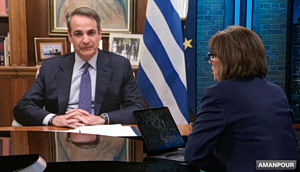
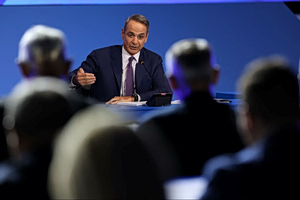
The viability of the government led by former Lebanese Armed Forces chief Joseph Aoun is, for Athens, a non-negotiable condition for maintaining cohesion in the troubled, contradictory country. Kyriakos Mitsotakis was the first European leader to travel to Beirut after the ceasefire, in December 2024, accompanied by the Chief of the Hellenic National Defense General Staff Dimitrios Choupis, with both sides seeking fields for developing bilateral military cooperation.
This resulted in the signing of an agreement for the provision of 15 M-113 armored vehicles and 10 Steyr utility vehicles to the Lebanese army, with Defense Minister Nikos Dendias visiting Beirut twice (April, July 2025), publicly expressing the Greek government’s concerns regarding security issues in the region.
“No” to Israeli attacks
Although Athens strongly condemns Hezbollah’s attacks against Israel, both Mr. Mitsotakis and Foreign Minister George Gerapetritis have repeatedly stated that the only authority responsible for dealing with the Shiite organization is the Lebanese government, which however requires multi-level support. Any other action—namely the increasingly intensified Israeli attacks targeting Hezbollah and not only it—undermines the legitimate authority of the country.
Greece, together with nine other European countries and the EU High Representative Kaja Kallas, co-signed on 31 March 2026 a Joint Statement calling on Israel to avoid further escalation of the conflict, including the conduct of a ground operation. On the same day, Greece’s position was formally presented at the United Nations Security Council, with experienced observers noting that, after objections expressed in recent months regarding the asymmetrical Israeli intervention in Gaza, this was the second time Athens opposed Tel Aviv’s policy.
In Athens it is understood that the prevalence of chaos in Lebanon—a prospect that appears to be systematically promoted by Israel—could even lead to civil conflict. At the same time, the national army does not have the necessary resources to confront Hezbollah and is therefore beginning to withdraw from the southern regions of the country. However, the possibilities for supporting Beirut are not unlimited. Theoretically, when conditions allow, another international conference on Lebanon will be held in Paris to raise additional financial and humanitarian aid.
Refugee issue and Christians
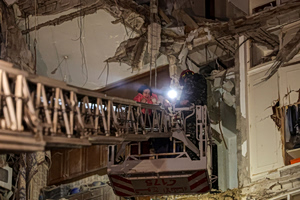
In Lebanon today, the number of displaced persons exceeds 900,000—many of whom have been forced to leave their homes for the second time since 2023. In parallel, the country hosts more than 1.2 million refugees of Syrian and Palestinian origin, while damage due to Israeli attacks is estimated by the World Bank at $3 billion. The revenues of the Aoun government are minimal. It is clear that the current social conditions in Lebanon could create new, uncontrolled migratory flows through Syria and Turkey toward European territory, and even populations vulnerable to extreme radicalization.
In Athens there is great concern over such a development, which is why senior diplomatic sources link the various “fronts.” “Stability in Damascus is a prerequisite for stability in Beirut,” they say to To Vima, stressing the need for the return of Syrian refugees to their country in order to relieve—at least partially—the pressure in Lebanon. To this complex equation must also be added the influential role of Turkey in the regime of al-Shaar, with Ankara seeking an ever-larger share of control in post–civil war Syria.
A few days ago, the Greek embassy donated €300,000 on behalf of Lebanon to the relevant UN Office, while the humanitarian mission that Athens is planning to send to the Lebanese people remains on hold, as security conditions are currently prohibitive. It is indicative that a similar Vatican mission heading toward southern Lebanon returned to base due to an armed attack.
A major priority for the government, as stated by sources at Maximos Mansion, is the protection of Lebanon’s Christian populations, who however are not directly threatened at present, since the areas where they live are closer to the Syrian border and not the south. “However, in the event of civil war, the first to suffer will be the Christians, as they do not have means of protection,” a government official with excellent knowledge of the issue tells To Vima. He adds, of course, that “at this moment, atrocities are being recorded in Syria and not in Lebanon; however, no one can predict what could happen in the event of a total collapse of the state and the dominance of Hezbollah extremists.”
The harsh reality, however, is that despite the strenuous efforts being made by the Patriarchate of Antioch, the Christian population in the wider region is almost collapsing under the suffocating pressure of successive conflicts. And this adverse development is extremely difficult to avert.