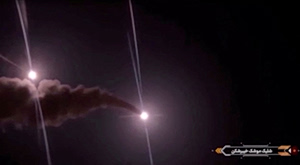
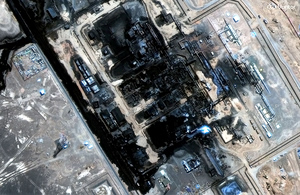
President Donald Trump said Wednesday he believes the war against Iran could be approaching its end, even as fighting intensified elsewhere in the region, with Saudi jets bombing Yemen and Houthi fighters firing drones and missiles at Saudi cities.
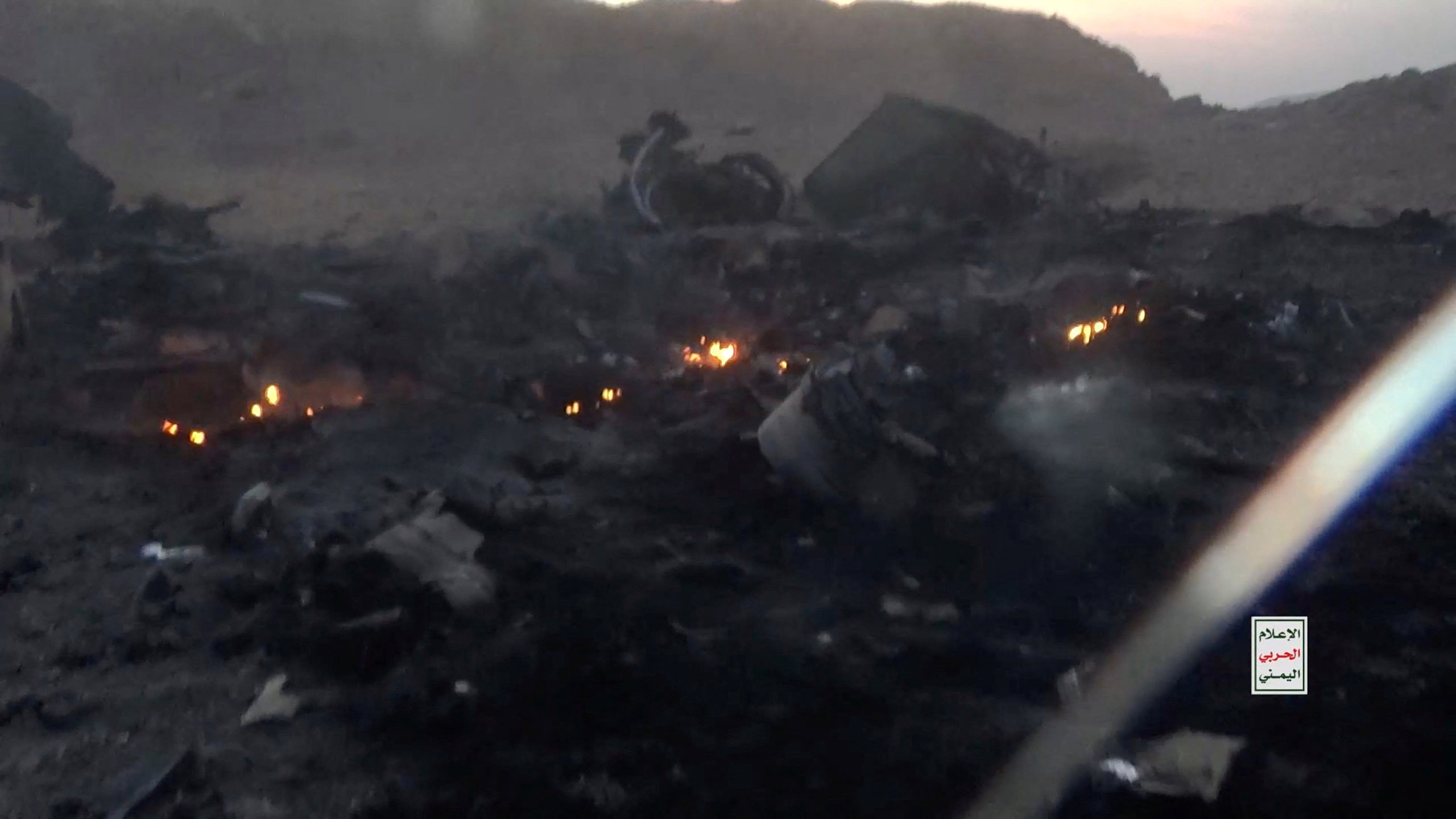
Burning debris from the wreckage of what the Houthi military media wing says is a downed Saudi jet, at a location given as Yemen, in this still image from a handout video released on September 16, 2026. Houthi Military Media/Handout via REUTERS Houthi military spokesman Yahya Saree said the Houthis had shot down a Saudi F-15 fighter jet. – The extensive damage seen on the aircraft meant the model was not immediately identifiable. – A Saudi Arabian flag is seen on the tail of the jet. – The shape and discolouration of the debris is consistent across multiple shots and angles.
Now in its seventh month, the conflict has widened its footprint as Iran-backed Houthi forces rapidly advance along Yemen’s Red Sea coast, strike Saudi territory, and damage Saudi Arabia’s East-West oil pipeline, developments that have extended Tehran’s influence in the war and raised fresh concerns about global oil supply.
As the fighting spreads into this new front, the United States tightened its travel advisory for Saudi Arabia, barring government employees from coming within 20 miles of the Yemeni border. Despite this, and only hours after news broke of renewed Houthi-Saudi clashes, Trump told reporters Wednesday evening, “Well, hopefully we are towards the end of the war.”
Trump says Iran wants a deal, oil prices remain elevated
Trump said Iran “wants to make a deal,” adding, “We’ll see how that works out,” a comment consistent with things he’s said before. He also mentioned hearing from Iran directly, though he didn’t offer further detail. Trump’s statements on the war’s goals and expected timeline have shifted repeatedly since fighting broke out on February 28, when the US and Israel struck Iran and Tehran retaliated against Israel and US military bases in the Gulf.
The expansion of the conflict into Yemen threatens to deepen the global energy shortage already caused by disruptions to shipping through the Strait of Hormuz, a waterway that handled about a fifth of the world’s oil and LNG before the war began. Traders warn that if Saudi Arabia’s East-West pipeline remains shut for an extended period, it could remove as much as 4% of global oil supply from the market; Saudi officials haven’t indicated when the pipeline might resume operating.
Brent crude was trading around $108 a barrel Wednesday, near its highest level since May, while the average US retail price for diesel climbed past $6.30 a gallon for the first time ever. Oil prices then eased in early Thursday trading after reports emerged that Saudi Arabia was offering additional crude shipments through Oman, easing some fears of a broader supply disruption; Brent fell to $104.59 a barrel and US crude to $101.29. The rising cost of oil and gas tied to the US-Israeli conflict with Iran has become a growing political liability for Trump’s Republican Party ahead of November’s midterm elections.
Trump expected to meet Gulf leaders at the UN
According to Axios, which cited unnamed sources, Trump is expected to meet with leaders or foreign ministers from Gulf Cooperation Council countries, Saudi Arabia, the UAE, Qatar, Bahrain, Kuwait, and Oman, on the sidelines of next Tuesday’s UN General Assembly session to discuss next steps in the conflict. Neither the State Department nor the White House responded to requests for comment on the report.
On Wednesday, the Houthis released video footage showing their fighters seizing armored vehicles from Saudi-backed forces, along with images of warplanes overhead and large explosions in the desert. Houthi military spokesman Yahya Saree said the group had carried out fresh drone and missile strikes on the Saudi Red Sea oil port of Yanbu and an air base at Khamis Mushait in southern Saudi Arabia, though he didn’t specify when the strikes occurred. Saree also claimed Saudi forces had conducted as many as 450 air strikes on Yemen over the past week. Officials from the Saudi-backed government controlling southern Yemen confirmed that their forces and Saudi Arabia’s were striking Houthi positions, although Riyadh itself has not confirmed the strikes.
Saudi Arabia has led a military coalition against the Houthis since 2015. The conflict had largely settled under a ceasefire in recent years before reigniting after the Houthis declared a naval blockade against Saudi Arabia in July and began firing into the kingdom’s southern regions.
Source: Reuters