
 Μake us preferred on Google
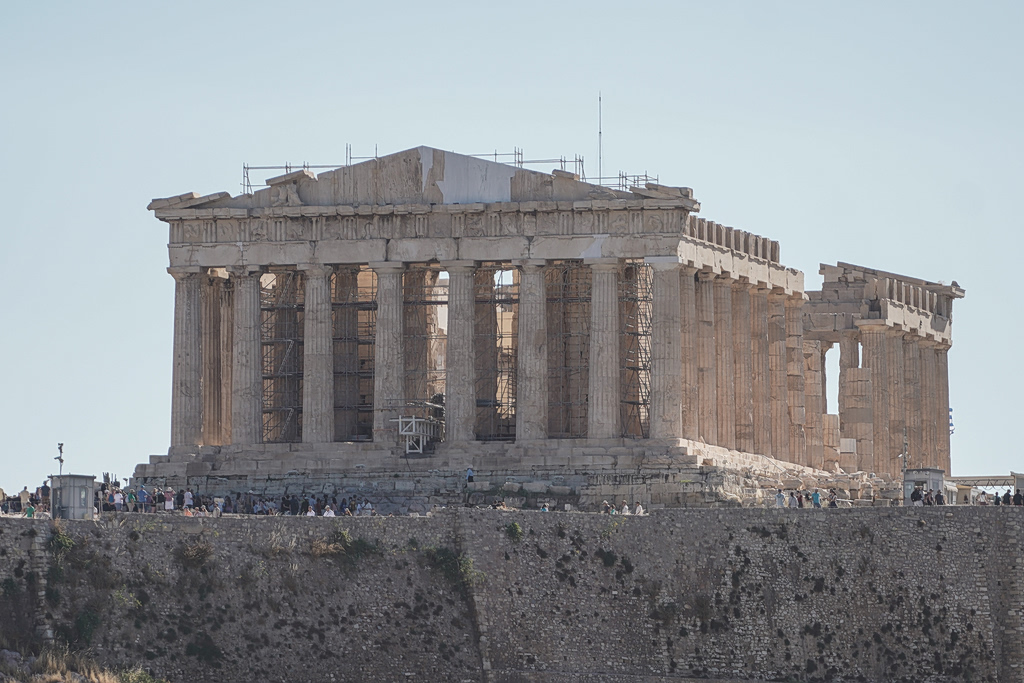
The British Museum has previously lent a Parthenon sculpture to Russia and is now preparing to send two further fragments to Germany. Yet their permanent return to Athens remains unresolved, raising fresh questions about the institution’s position on one of the world’s longest-running cultural heritage disputes.
In an exclusive interview with TO VIMA, Catharine Titi, Research Professor of International Law at France’s National Centre for Scientific Research (CNRS), challenges the distinction between the British Museum’s willingness to share the Sculptures internationally and its reluctance to return them permanently to Greece.
“I don’t think anyone can seriously argue that the Sculptures cannot be returned to Greece because they cannot be moved from London. Besides, this is not the first time that the British Museum will loan Parthenon Sculptures. In 2014, the museum loaned the pedimental statue of the river-god Ilissos to Russia.
“Some time ago, Mary Beard, one of the museum’s trustees, declared that she would like to see the Sculptures ‘shared’ with museums around the world. The loan to Frankfurt is an instance of such ‘sharing’. It’s a way for the museum to say that it will not be returning the Sculptures to Athens and that, from the museum’s viewpoint, Athens has as much a right to host them as Saint Petersburg or Frankfurt.”
Her remarks come ahead of a major exhibition in Frankfurt and amid fresh legal questions surrounding the return of the Fagan fragment from Sicily to Greece.
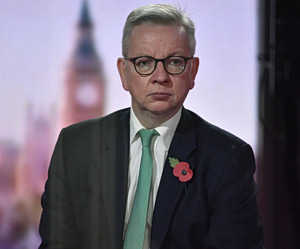
The developments follow TO VIMA’s conference in Athens, which continues to fuel international discussion about the future of the Parthenon Sculptures, and an earlier exclusive interview in which Lord Frost expressed support for their return through reciprocal cultural exchanges.
From Russia to Frankfurt: The British Museum’s international loans
On 18 November 2026, Frankfurt’s Liebieghaus Skulpturensammlung will open Athena, the Stage is Yours: The Parthenon Puzzle, an exhibition dedicated to reconstructing the Parthenon’s east pediment.
Running until 25 July 2027, the exhibition will present research led by curator Vinzenz Brinkmann, whose team has used three-dimensional scans, surviving fragments, ancient written sources and Roman reproductions to reconstruct the monumental composition depicting the birth of Athena.
The British Museum has agreed to lend two marble fragments: the feet of a striding figure and a piece of hanging drapery.

According to Greek media reports, Greece’s Central Archaeological Council rejected a request for nine fragments from Athens because they would be displayed alongside pieces removed from the
Acropolis by Lord Elgin in the early 19th century.
The exhibition follows the British Museum’s controversial decision in December 2014 to lend the pedimental sculpture of the river-god Ilissos to the State Hermitage Museum in St Petersburg.
For Titi, these international loans demonstrate that the central issue is not whether the Sculptures can physically leave London, but whether the British Museum is willing to accept their permanent return.
Could the Fagan fragment undermine Greece’s claim?
Another question concerns the legal challenge, revealed by TO VIMA a few days ago, surrounding the return of the Fagan fragment, formerly held at the Antonino Salinas Museum in Palermo.
Could a successful challenge establish a precedent that might complicate negotiations over the Sculptures in London?
Titi considers that prospect unlikely.
“It is unlikely that Italy will ask Greece to return the Fagan fragment.”
She points to Italy’s earlier decision to return the Venus of Cyrene, a statue removed from Libya in 1915 during Italian occupation.
When that decision was challenged, Italy’s highest administrative court rejected the challenge in 2008.
“The court explained that international law requires the return of looted heritage irrespective of when it was removed, since the passage of time does not make a bad title good. If it were looted a century ago, it would still be considered looted today.”
Titi argues that international precedents for restitution extend far beyond the Fagan fragment.
“The return of the Fagan fragment is only one predecent of repatriation. Hundreds and even thousands of repatriations are taking place every year.”
She cites the Netherlands’ recent formalisation of the return of more than 30,000 cultural objects to Indonesia as evidence of a wider international movement.
“When we allow ourselves to stop treating the Parthenon as a unique case, we will see that there are precedents everywhere.”
Why lending the Sculptures is not the same as returning them
The British Museum Act 1963 generally prevents the institution from permanently removing objects from its collections, except in limited circumstances.
Temporary loans, however, are legally permitted.
Titi insists that this distinction is fundamental.
“There is a fundamental difference between a loan and restitution (or repatriation or return). A loan is equivalent to renting out property. A restitution is a permanent return of property with the recognition that ownership belongs to the receiving party.”
She argues that a long-term loan arrangement could undermine Greece’s position by failing to resolve the question of ownership.
“Greece is asking for the permanent return of the Parthenon Sculptures, not for a loan. A loan would be detrimental to Greece’s claim for the Sculptures’ permanent return.”
She also rejects comparisons between a possible British Museum loan and the return of the Fagan fragment.
“The Antonino Salinas Museum in Palermo intended the return to be permanent. There was a political will that is absent in the British Museum.”
For Titi, the distinction is ultimately one of institutional willingness rather than simply legal authority.
Lord Frost’s proposal: Can cultural exchanges resolve the dispute?
In an earlier exclusive interview with TO VIMA, Lord Frost expressed support for the return of the Parthenon Sculptures through an arrangement involving reciprocal cultural exchanges.
Such proposals have been discussed as potential diplomatic solutions to the longstanding disagreement.
Titi, however, warns against confusing cultural co-operation with restitution.
“Loans, exchanges, and cultural partnerships are not repatriations. These are unrelated topics.”
She believes that the return of cultural heritage should not be conditional upon reciprocal concessions.
“Repatriation is simple. Countries are doing it all over the world. Repatriation does not and should not have any strings attached.”
Crucially, she argues that negotiations should take place between the Greek and British governments rather than between Greece and the British Museum.
“Negotiations are a legal means of settling disputes, and I think Greece needs to continue to negotiate with the UK government (not with the museum. The museum should not be Greece’s interlocutor).”
Could international law offer another route?
Titi believes developments in international law are strengthening the case for returning cultural heritage removed under conditions of unequal power.
“The international legal protection of cultural heritage today increasingly includes the repatriation of heritage that was removed unlawfully or in circumstances of power inequality.”
She also identifies the Parthenon’s status as a monument as an additional legal consideration.
“The fact that the Parthenon is a monument gives an additional argument in favour of repatriation, since jurisprudence of the International Court of Justice confirms that parts of a monument belong to the sovereign territory in perpetuity.”

People view examples of the Parthenon sculptures on display at the British Museum in London, Britain, November 29, 2023. REUTERS/Hannah McKay
Asked whether Greece could pursue international proceedings without British consent, she identifies advisory proceedings before the International Court of Justice as a possibility.
“Advisory proceedings before the International Court of Justice would not require the United Kingdom’s consent.”
Such proceedings could be requested through international bodies including the United Nations General Assembly or UNESCO.
Nevertheless, she believes direct negotiations with the British Government remain the most promising immediate route.
“Everyone dislikes being told to be patient, but this I believe is an occasion where patience is going to pay off.”
‘All it takes is an act of parliament’
Despite the complexities surrounding the dispute, Titi believes the legal mechanism for returning the Sculptures could be straightforward.
“All it takes is an act of parliament transferring the Parthenon Sculptures from the British Museum to Greece. It’s incredibly simple.”
As the British Museum prepares to lend fragments to Frankfurt, more than a decade after sending the Ilissos sculpture to Russia, the contrast between temporary international loans and Greece’s demand for permanent restitution remains central.
For Titi, the ultimate responsibility rests with the British Government.
“A political decision needs to be taken by the UK government. That’s all that stands between the present and the Sculptures’ repatriation. I am confident that sooner or later this decision will be taken.”
TO VIMA contacted the British Museum and the Liebieghaus Skulpturensammlung.