 Μake us preferred on Google
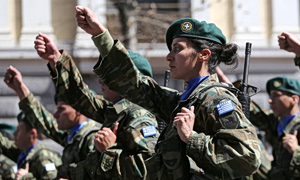
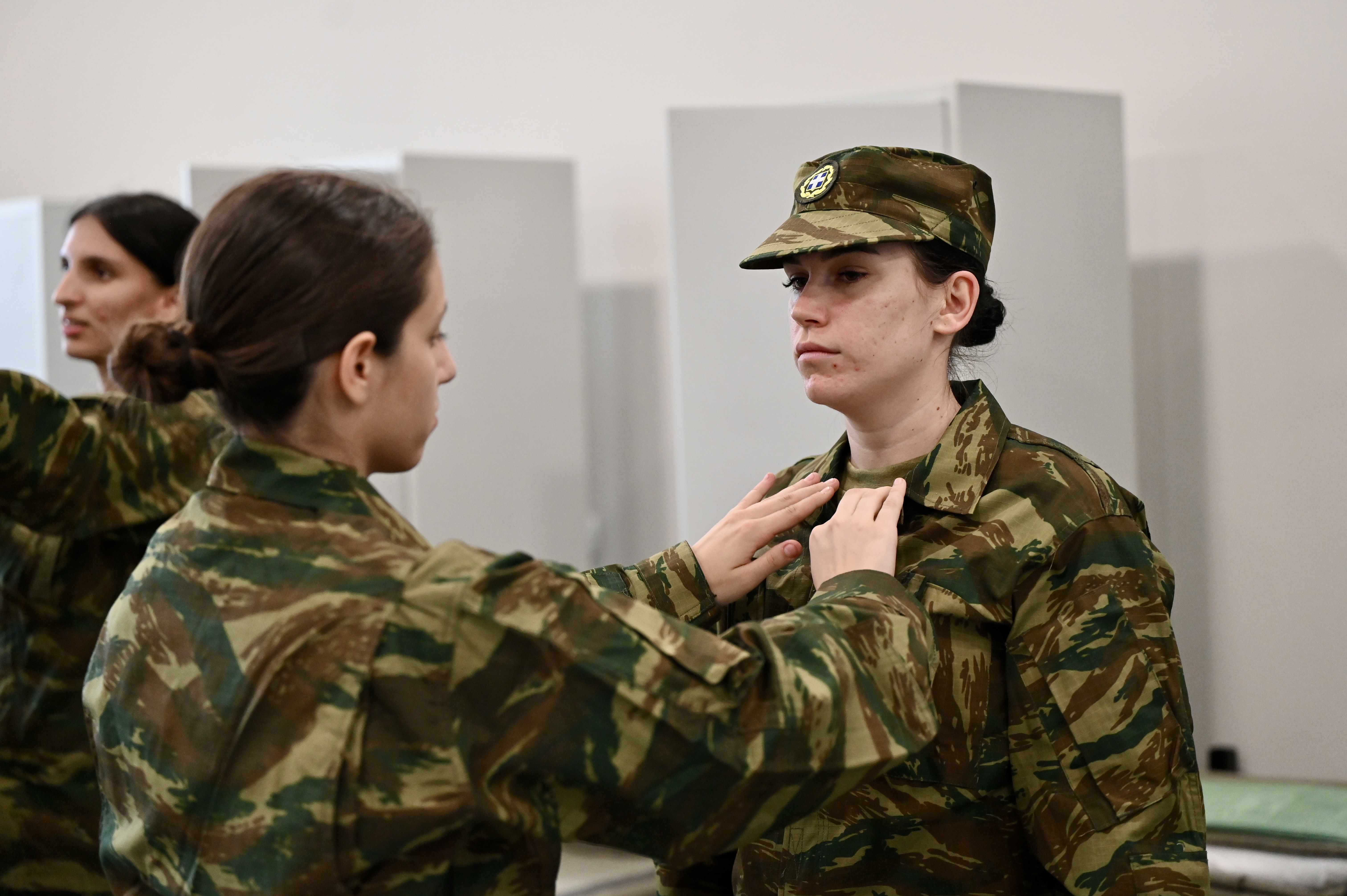
 It was a historic moment for the Greek armed forces on Thursday when 72 young women reported for duty at a military camp near Lamia, marking the launch of the country’s first voluntary military enlistment program open to women. Across the Aegean, however, a section of the Turkish press saw something else entirely: a Greece in panic, scrambling to beef up its defenses in the face of Ankara’s growing military might.
The Turkish news website ahaber.com.tr ran the headline: “Panic in Greece over the Blue Homeland: Athens turns to female soldiers.” The “Blue Homeland,” doctrine or Mavi Vatan in Turkish, refers to Turkey’s expansive and revisionist maritime claims asserting sovereign rights over large stretches of the Aegean and Eastern Mediterranean. The maximalist doctrine has been a persistent source of tension between Greece and Turkey, and it is now at the center of a fresh diplomatic flashpoint: reports in both Turkish and foreign media indicate that the Erdogan administration is preparing legislation to formally codify the doctrine into domestic law. Initially expected to be submitted in June, the process has been pushed to autumn, with Ankara citing the time needed to draft the bill. The prospect has already drawn sharp responses from the Greek foreign minister.
The ahaber.com.tr report framed the female volunteer program not as a modernization initiative but as a symptom of Greek anxiety over Turkey’s growing defense industry, alleging that Athens is seeking to raise its armed forces to between 180,000 and 200,000 personnel. The article further claimed that female recruits are expected to be deployed near the Greek-Turkish border and on the eastern Aegean islands, casting their enlistment in explicitly adversarial terms. Some Turkish media attributed Greece’s decision to a mix of military necessity, domestic political calculations and an effort to address unemployment, suggesting the program was designed as much to manage public opinion at home as to strengthen the armed forces.
More inflammatory was Ibrahim Karagul, a former editor-in-chief of the pro-government newspaper Yeni Şafak, who used a social media post to connect Greece’s initiative to what he described as an Israeli plan to draw Greece into a war with Turkey. Karagul claimed that Athens and Cyprus were acting as instruments of Israeli strategy in the Eastern Mediterranean, argued that Israel lacked the capacity to protect its regional partners in a crisis, and called on the Greek people to push back against their government’s foreign policy choices.
İSRAİL YUNANİSTAN’I;
TÜRKİYE İLE SAVAŞA HAZIRLIYOR!
Baya baya savaş hazırlıkları yapıyorlar.
İsrail onların Türkiye’nin önüne sürecek.Rum Kesimi’nden sonra;
Yunanistan da İsrail aparatı haline geldi.Ama İsrail, savaşa sürer sonra yalnız bırakır.
Onları koruyamaz,… pic.twitter.com/Ii11eHdjr0— İbrahim Karagül (@ibrahimkaragul) June 5, 2026
The claims bear little resemblance to what the program actually entails. Announced last year as part of the broader modernization drive of the armed forces, the initiative initially targeted the enlistment of between 100 and 150 women. While women have served as professional personnel in the Greek military for decades, this is the first structured pathway for voluntary service by female conscripts.
Under the current plan, the volunteers, aged between 20 and 26, will serve for 12 months under the same obligations and conditions that apply to male conscripts. They are also eligible to participate in reserve officer selection procedures and will have access to military hospitals and other benefits available to serving personnel. Military service under the scheme is recognized as professional experience and carries advantages in certain public-sector hiring procedures.
Source: TA NEA