The United States has begun pulling some of its personnel out of Iraq and other parts of the Middle East due to heightened security risks, as tensions continue to escalate over Iran’s nuclear ambitions.
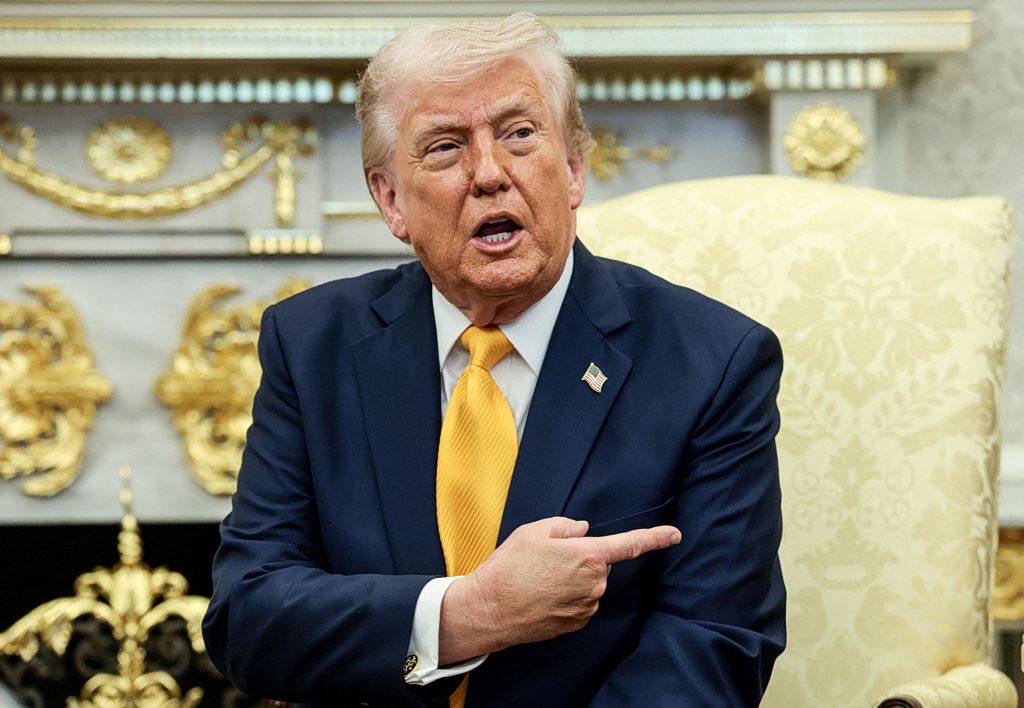
U.S. President Donald Trump confirmed the partial evacuation on Wednesday, stating that personnel were being moved because “it could be a dangerous place.” Speaking to reporters, Trump added, “They can’t have a nuclear weapon. Very simple, they can’t have a nuclear weapon.”
According to U.S. and Iraqi sources, the United States is preparing a partial evacuation of its embassy in Baghdad and has authorized the voluntary departure of military dependents from Bahrain and Kuwait. The State Department updated its global travel advisory late Wednesday, ordering the departure of non-emergency U.S. government personnel due to “heightened regional tensions.”
According to Reuters, while no specific threats were disclosed, reports of the evacuation sent oil prices soaring by more than 4%, with Brent crude futures climbing to $69.18 a barrel.
The move comes at a particularly volatile moment as U.S.-Iran nuclear negotiations remain deadlocked. Intelligence reports indicate that Israel, Washington’s key regional ally, has been preparing for a possible strike on Iran’s nuclear facilities. Trump, who has repeatedly threatened military action if talks with Tehran collapse, expressed growing skepticism earlier on Wednesday about Iran’s willingness to halt uranium enrichment.
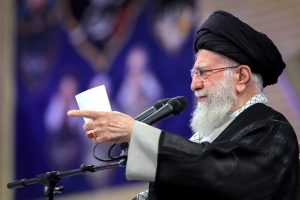
Iran, for its part, warned of serious consequences if attacked. Iranian Defense Minister Aziz Nasirzadeh said that any strikes against Iran would be met with retaliatory attacks on U.S. bases in the region.
Despite the escalating tensions, the U.S. embassy in Kuwait announced that it remains fully operational, with no changes in staffing. Similarly, operations at Al Udeid Air Base in Qatar, the largest U.S. military base in the Middle East, continue without disruption.
The United States maintains a widespread military presence across the oil-rich region, with bases in Iraq, Kuwait, Qatar, Bahrain, and the United Arab Emirates. U.S. Defense Secretary Pete Hegseth authorized the voluntary departure of military dependents primarily based in Bahrain, while the evacuation from Baghdad will be conducted through commercial means, with military assistance on standby if needed.
The Iraqi government has not reported any immediate security threats warranting an evacuation, according to Iraq’s state news agency.
Regional tensions have been simmering for months. Iran-aligned armed groups in Iraq have launched repeated attacks on U.S. troops, particularly since the outbreak of the Gaza war in October 2023. Although such attacks have decreased in recent months, both Israel and Iran exchanged direct fire twice last year, marking unprecedented confrontations between the two rivals.
Israel has also targeted Iran-linked forces in both Iraq and Syria, further fueling instability.
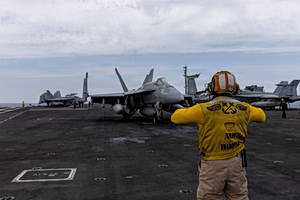
In recent months, the U.S. has bolstered its military presence in the Middle East, deploying additional assets such as B-2 bombers and aircraft carriers, though some of these reinforcements have since been withdrawn.
As the next round of nuclear negotiations looms, Iran is expected to submit a counterproposal after rejecting a recent U.S. offer. A senior Iranian official accused Washington of using military threats as part of its negotiation tactics. “Any military action against Iran, whether by the U.S. or Israel, will have serious consequences,” the official warned.
Iran’s U.N. mission reiterated its position on Wednesday, posting on X: “Threats of ‘overwhelming force’ won’t change facts: Iran is not seeking a nuclear weapon and U.S. militarism only fuels instability.”
Amid these developments, U.S. Army General Michael “Erik” Kurilla, head of U.S. Central Command, has postponed scheduled testimony before Congress due to the growing tensions.
Meanwhile, Britain’s maritime agency has issued warnings about the potential for increased military activity in strategic waterways near Iran, advising ships to proceed with caution through the Gulf, the Gulf of Oman, and the Strait of Hormuz.
The United Kingdom’s Foreign Office stated that it is closely monitoring the situation and will continue to review the status of its own embassy in Iraq following the U.S. decision.