
 Μake us preferred on Google
 A growing global threat from synthetic drugs and new psychoactive substances was highlighted at the United Nations, with Greece warning of the risks posed by their rapid spread and calling for stronger international cooperation.
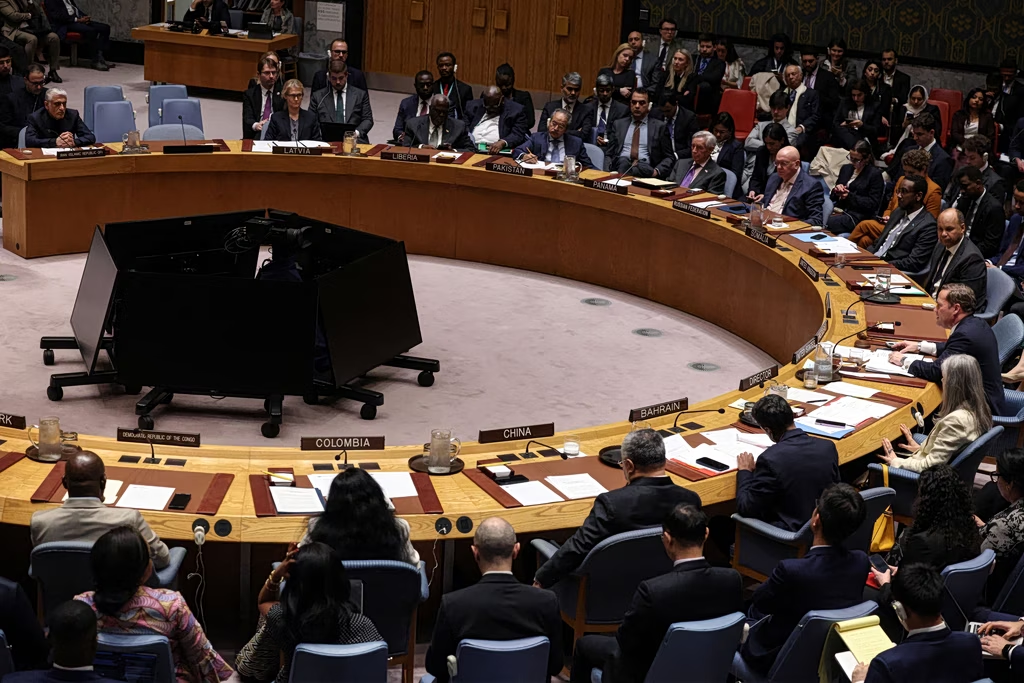
During the 69th session of the UN Commission on Narcotic Drugs, Greece’s National Coordinator for Addictions, Athanasios Theocharis, emphasized the urgent need for a balanced and evidence-based approach to drug policy.
Rising Threat from Synthetic Drugs
The Greek intervention drew attention to the increasing dangers linked to synthetic drugs, potent opioids, and new psychoactive substances, warning that their uncontrolled circulation poses serious challenges worldwide.
Officials stressed that effective responses must address both drug supply and demand, while prioritizing prevention, treatment, harm reduction, rehabilitation, and social reintegration.
Role of Innovation and Data
Greece also underlined the importance of innovation and scientific data in shaping modern drug policies. Technologies such as artificial intelligence, advanced data analysis systems, and digital monitoring tools were highlighted as key to identifying emerging trends and improving early risk assessment.
Call for Global Cooperation
The transnational nature of drug trafficking was a central concern, with Greece calling for enhanced international collaboration, including information sharing and the development of interoperable early warning systems.
Respect for human rights, access to healthcare, and the involvement of civil society were also presented as essential pillars of effective drug policy.
Participation in International Discussions
Alongside the main session, Greece took part in a series of international discussions involving partners such as the European Union, the World Health Organization, and the UN Office on Drugs and Crime.
Topics included reducing drug supply and demand, the role of supervised consumption spaces, and balancing public health with safety considerations. Greece also addressed the issue of so-called “date rape drugs,” highlighting the need for targeted prevention measures and support for victims.
Commitment to Prevention
Greece further presented its participation in an international prevention initiative, outlining efforts to strengthen early intervention programs, including a pilot scheme already underway in a Greek city.