A damning report by Human Rights Watch (HRW) reveals serious allegations of mistreatment and abuse in three US immigration detention centers in Florida managed by the Immigration and Customs Enforcement (ICE) agency during the Trump administration.

U.S. President Donald Trump gestures as he speaks with Florida Governor Ron DeSantis’ on the day of the opening of a temporary migrant detention center informally known as “Alligator Alcatraz” in Ochopee, Florida, U.S., July 1, 2025. REUTERS/Evelyn Hockstein
Degrading Conditions and Overcrowding
According to testimonies gathered by HRW and partner organizations, detainees at a Miami facility were crammed into overcrowded cells, often denied food until late in the evening. When meals were provided, detainees had to eat kneeling on the floor with hands tied behind their backs, using disposable trays placed on the ground—a degrading practice reportedly intended to humiliate them.

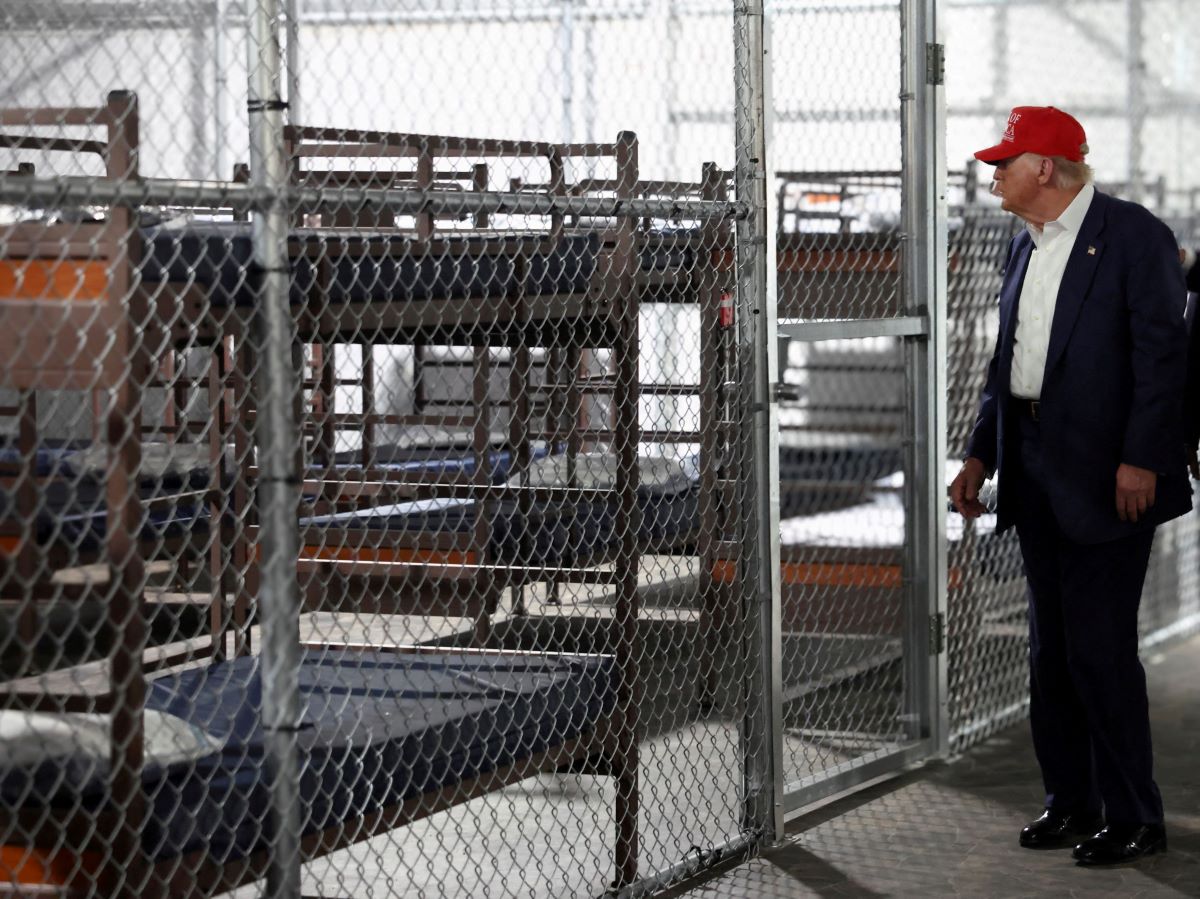
U.S. President Donald Trump and U.S. Homeland Security Secretary Kristi Noem visit a temporary migrant detention center informally known as “Alligator Alcatraz” in Ochopee, Florida, U.S., July 1, 2025. REUTERS/Evelyn Hockstein
At another facility in western Miami, female detainees were forced to use restrooms in full view of male detainees, denied gender-appropriate care, adequate showers, and sufficient food. The overcrowding was so severe that some detainees spent over 24 hours locked inside a prison bus in a parking lot, shackled except when briefly allowed to use a single onboard toilet, which quickly became unusable.
Denied Medical Care and Abuse
Inside the detention centers, many endured harsh conditions including extended confinement in cold, windowless rooms without beds or warm clothing, sleeping on concrete floors. Reports also detail systematic denial or delay of medical and psychological care. Some detainees suffered untreated injuries or chronic conditions, while staff responses to health requests were often hostile.

FILE PHOTO: U.S. President Donald Trump, Florida Governor Ron DeSantis and U.S. Homeland Security Secretary Kristi Noem visit a temporary migrant detention center informally known as “Alligator Alcatraz” in Ochopee, Florida, U.S., July 1, 2025. REUTERS/Evelyn Hockstein/File Photo
In April, an incident was reported where surveillance cameras were turned off as a “riot control” team violently suppressed detainees protesting the lack of medical treatment for a prisoner suffering continuous coughing up of blood. Injuries included broken fingers.
The facilities were severely overcrowded, reflecting a nationwide surge in arrests. By mid-June, an average of 56,400 migrants were detained daily, 72% of whom had no criminal record. The 2024 average daily detention figure was 37,500, according to HRW.

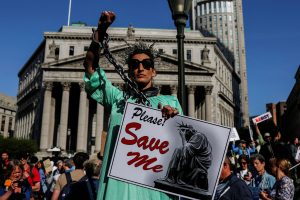
Protesters participate in a performance art installation meant to symbolize the detention of people sent to El Salvador’s Terrorism Confinement Center (CECOT) prison, outside of the Edward R. Roybal Federal Building in Los Angeles, California, U.S., July 17, 2025. REUTERS/Daniel Cole
These documented abuses illustrate inhumane conditions in federal immigration facilities, worsening since President Trump’s inauguration in January, which triggered increased detentions and deportations. The testimonies echo reports from migrant and refugee detention centers worldwide and revive memories for many Americans of secret prisons used during the “war on terror,” such as the notorious Abu Ghraib.
The HRW report calls urgent attention to the need for reform and humane treatment of detainees within the US immigration system.