 Μake us preferred on Google
 The World Health Organization (WHO) has sharply revised the number of suspected Ebola cases linked to the ongoing outbreak in the Democratic Republic of Congo (DRC), saying hundreds of cases previously under investigation have now been ruled out.
According to updated figures released by the WHO, the outbreak currently includes 321 confirmed cases and 116 suspected cases in the DRC. The agency also reported 48 deaths and six recoveries.
The latest figures mark a significant drop from previous estimates. Just days earlier, health authorities had reported more than 900 suspected cases, while Africa Centres for Disease Control and Prevention Director-General Jean Kaseya said over 1,100 suspected cases were under investigation.
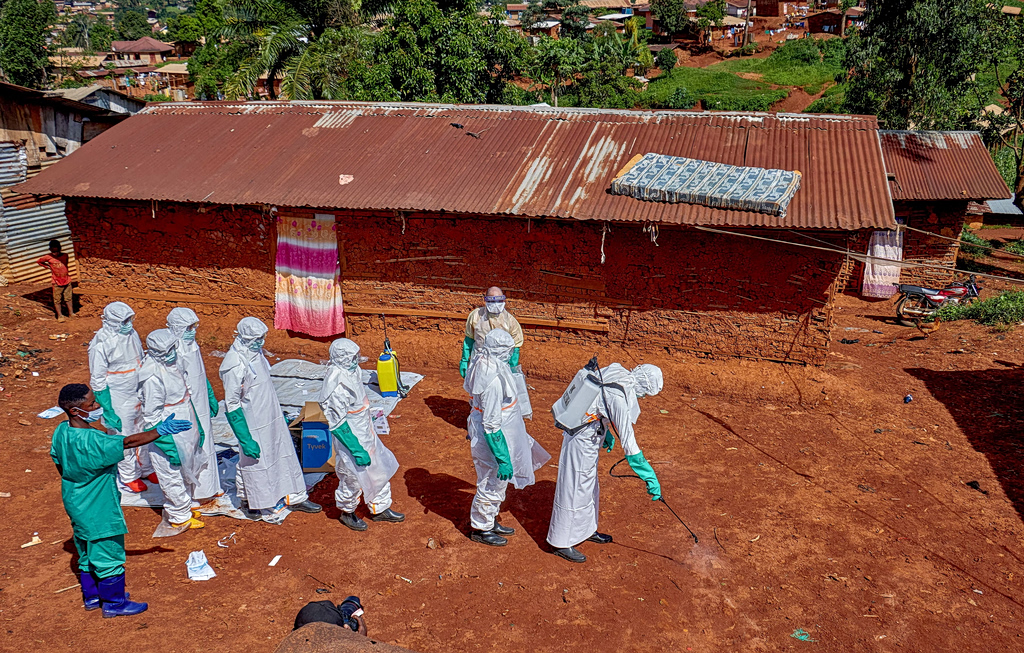
FILE PHOTO: Red Cross workers wearing personal protective equipment walk in a formation as they disinfect the ground outside the house of an unidentified man who died of Ebola, before retrieving his body, as aid agencies intensify efforts to contain a new Ebola outbreak involving the Bundibugyo strain, in Quartier Shuni 1, a residential sector in Mongbwalu, Djugu Territory of Ituri province, Democratic Republic of Congo, May 24, 2026. REUTERS/Gradel Muyisa Mumbere/File Photo
WHO spokesperson Christian Lindmeier said the reduction reflects the results of ongoing investigations, with many individuals ultimately found not to have Ebola.
“They have been cleared out and have either other diseases or have just had fever and nothing else,” Lindmeier said, noting that suspected case numbers are expected to fluctuate as testing and surveillance continue.
A suspected case includes individuals identified through surveillance systems or those presenting symptoms at healthcare facilities, while confirmed cases are limited to patients who test positive for the Bundibugyo strain of Ebola.
Health officials have faced challenges throughout the outbreak because standard Ebola tests initially failed to detect the Bundibugyo strain. The strain currently has no approved vaccine, while testing capacity has also been limited.
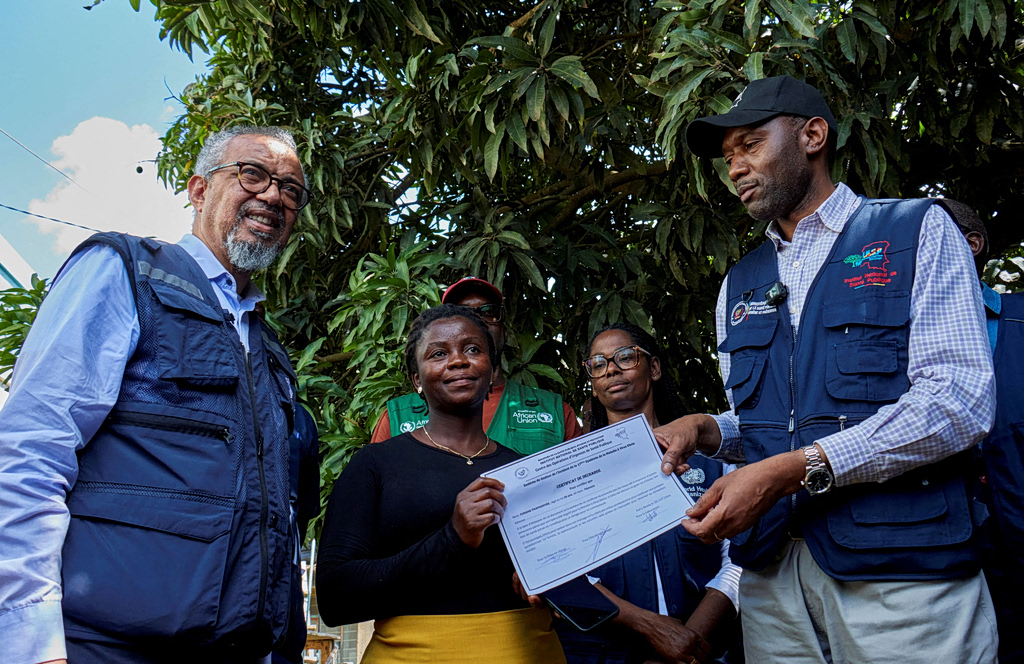
Furaha Tikamanyire 29, a Congolese health worker who recovered from the Ebola virus receives her certificate of discharge at the Evangelical Medical Center (CEM), as she stands with Director-General of the World Health Organisation (WHO) Tedros Adhanom Ghebreyesus as agencies intensify efforts to contain a new Ebola outbreak caused by the Bundibugyo virus strain, in Bunia, Ituri province, Democratic Republic of Congo, May 31, 2026. REUTERS/Gradel Muyisa Mumbere
The outbreak was officially declared by Africa CDC on May 15 and was subsequently designated a public health emergency of international concern by the WHO. It has already become the third-largest recorded outbreak of the Bundibugyo strain.
Uganda Reports New Cases
The outbreak continues to affect neighboring Uganda, where authorities confirmed six additional Ebola infections on Tuesday. The new cases were identified among contacts of previously confirmed patients.
The latest infections bring Uganda’s total number of confirmed cases to 15. Health officials reported one death, two recoveries and 12 people currently receiving treatment in hospital.
As governments seek to limit transmission, Uganda has closed its border with the DRC. However, the International Organization for Migration (IOM) warned that border closures could unintentionally increase risks by encouraging people to use informal crossing routes that are harder to monitor.
IOM spokesperson Zoe Brennan said the confirmation of cross-border transmission highlights the need for coordinated regional surveillance efforts rather than isolated national measures.
Ugandan government spokesperson Alan Kasujja defended the border restrictions, saying authorities were focused on protecting citizens while acknowledging that some people may attempt to bypass official crossings.
Congo Reopens Bunia Airport
Meanwhile, the Congolese government has reopened Bunia Airport in Ituri province, the region most affected by the outbreak.
Passenger flights were suspended last month after the first Ebola cases were confirmed in the area, though humanitarian and medical flights continued under special authorization.
The Transport Ministry said conditions now allow for a “gradual and safe resumption” of air travel. New health measures include mandatory temperature screenings before departure and upon arrival, handwashing requirements and restrictions preventing passengers with fever symptoms from boarding flights.
Ebola has now spread to 15 of Ituri’s 36 health zones, according to official data.