KANSAS CITY, Mo.—For the greatest player of all time, everything was going wrong.
Lionel Messi had spent the night looking decidedly mortal, unable to find the goal. Argentina was locked in a tense battle with a team they were supposed to dispatch with ease. Even after Argentina was handed a massive advantage with a controversial red card for Switzerland, the score was tied 1-1 deep into extra time.
That’s when Julian Alvarez steadied himself just outside the 18-yard box in the 112th minute. He unleashed a curling strike that found the back of the net, saving Argentina once again on its way to a 3-1 victory. The defending champions will now reignite one of the fiercest rivalries in world soccer when it faces England in the semifinals on Wednesday.
The turning point came midway through the second half, when Swiss striker Breel Embolo crumpled in a heap, apparently the victim of a violent foul.
But upon video review, officials deemed that Embolo had taken a dive. He received his second yellow card and was ejected.
With 11 men against Switzerland’s 10, Argentina ratcheted up the pressure in extra time, a siege the Swiss couldn’t escape.
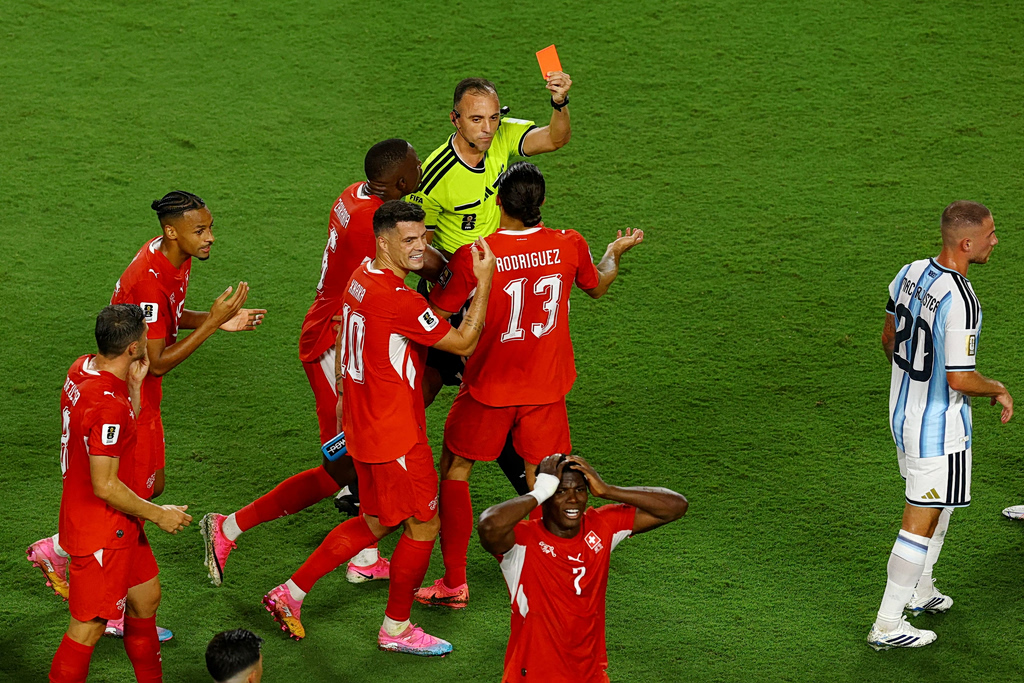
Soccer Football – FIFA World Cup 2026 – Quarter Final – Argentina v Switzerland – Kansas City Stadium, Kansas City, Missouri, U.S. – July 11, 2026 Switzerland’s Breel Embolo is shown a red card by referee Joao Pinheiro after a VAR review REUTERS/Albert Gea TPX IMAGES OF THE DAY
For Argentina, it was just the latest in a string of nail-biting wins. Simply reaching this round had required steel nerves and an unlikely run of good fortune. In the round of 32, they were tied deep into extra time with Cape Verde—the smallest nation ever to reach the World Cup’s knockout stage—before an own goal let Argentina escape.
In the round of 16, circumstances were even more dire. Argentina trailed Egypt 2-0 in the 79th minute before a flurry of three goals in 13 minutes—with Messi in the middle of it all—saw them scrap through once again.
“Through thick and thin,” said Argentina coach Lionel Scaloni, “we play our hearts out.”
But Argentina’s run has also required some well-timed—and extremely controversial—decisions from referees. Against Egypt, Argentina’s comeback was made possible only by an earlier call that ruled out an end-to-end Egypt goal.
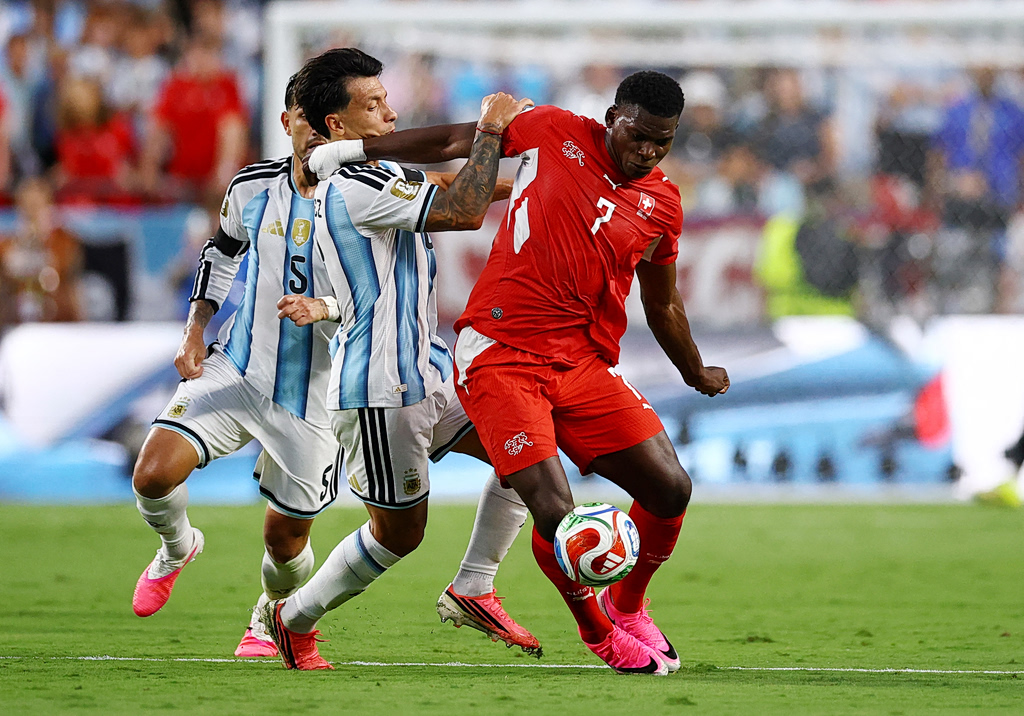
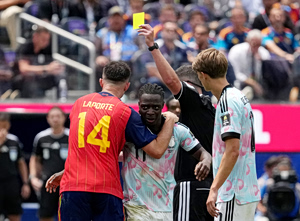
Soccer Football – FIFA World Cup 2026 – Quarter Final – Argentina v Switzerland – Kansas City Stadium, Kansas City, Missouri, U.S. – July 11, 2026 Argentina’s Lisandro Martinez in action with Switzerland’s Breel Embolo REUTERS/Agustin Marcarian
Saturday’s red card only fanned the flames for Argentina’s detractors. At first glance, when it appeared that Embolo had fallen under a rough tackle, the referee initially issued a yellow card to Argentina’s Leandro Paredes.
But VAR intervened, declaring that Embolo had crashed to the pitch in an effort to dupe the referee—an offense deemed worthy of ejection. It was just the latest instance of controversy around the instant-replay technology.
The decisive goal, at least, was more straightforward. After spending the tournament playing a supporting role to Messi, Alvarez was able to save his captain with his first goal of the World Cup.
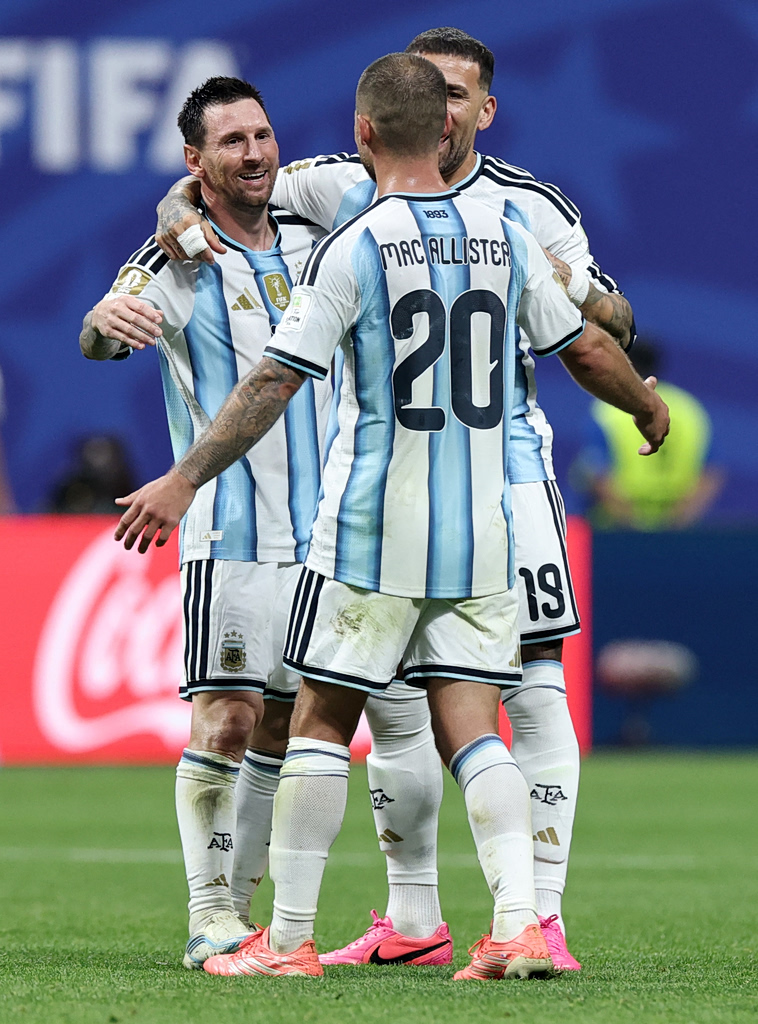
Soccer Football – FIFA World Cup 2026 – Round of 16 – Argentina v Egypt – Atlanta Stadium, Atlanta, Georgia, U.S. – July 7, 2026 Argentina’s Lionel Messi, Nicolas Otamendi and Alexis Mac Allister celebrate after the match as Argentina qualify for the quarter finals of the World Cup REUTERS/Amanda Perobelli
Now, when Argentina faces England, it can already look back on a favorable history of officiating. In a 1986 win over England, Argentina’s Diego Maradona scored the “Hand of God” goal after punching the ball with his fist—an offense none of the officials ever managed to spot.
Then, in 1998, the most memorable moment of Argentina’s victory over England came when David Beckham was kicked out of the game with a red card.
Twenty-eight years later, Argentina doesn’t care how it reached this stage. The defending champions are 90 minutes from a seventh World Cup final.