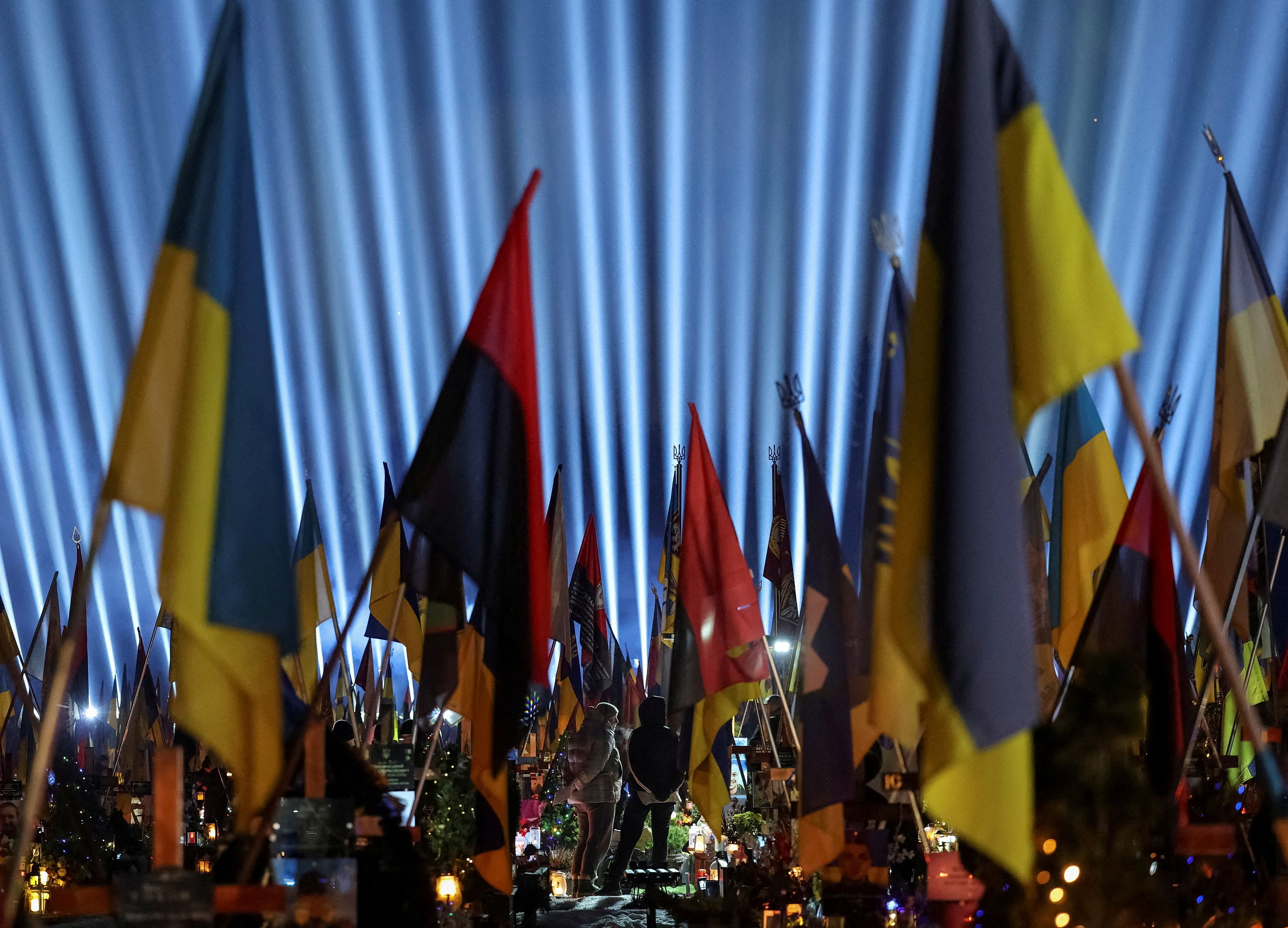
KHARKIV, Ukraine—A Ukrainian counterattack in the country’s southeast is chipping away at Russian advances there and demonstrating that Kyiv’s forces have got plenty of fight left as Moscow’s invasion stretches into a fifth year.
With peace negotiations backed by President Trump stalled, Russia has sought to portray its victory in Ukraine as inevitable. But losses among the Kremlin’s troops now number well over one million, and its grinding offensives advance at a few dozen yards a day at best, according to a recent analysis by the nonpartisan Center for Strategic and Intelligence Studies and the conclusions of several European defense-intelligence departments.
Ukraine has embarrassed Russian generals’ claims of significant gains by largely clearing the city of Kupyansk in the northeast of Russian forces and retaking several villages in the southeastern Zaporizhzhia region.
At the same time, long-range strikes by Ukraine, Western sanctions and ship seizures are pushing down prices for Russian oil that are critical for Moscow to sustain its military efforts.
Seth Jones , president of the defense and security department at CSIS, said that is why Russian President Vladimir Putin is dangling economic deals in front of Trump—to tempt him to cut off support to Ukraine or try to force Kyiv to hand over territory that his army hasn’t conquered.
“That’s the big breakthrough in a war that his military is unable to win,” Jones said of Putin. “The real hope is that the U.S. will come to their aid.”
War dead
Russian military casualties total some 1.2 million, of which as many as 325,000 have been killed, more than double the numbers for Ukraine, according to CSIS. While Russia has long been able to attract volunteers to the war with large payments, there are signs that recruitment is now struggling to keep pace with casualties. Ukraine’s top military commander, Gen. Oleksandr Syrskiy , said last week that Russia wasn’t able to replace its battlefield losses in 2025.
Some Western defense officials have also concluded that Russian recruitment is on the slide. Over the past three months Russia has recruited 30,000 to 35,000 soldiers monthly, but more have been killed or wounded, according to a Western official.
While Russia has enough troops to keep up its current operations, the lack of troops is among the reasons Moscow might find it difficult to make major breakthroughs, some analysts say.
Ukraine, too, is struggling to raise enough manpower.
“There are some signs the Russians are not recruiting as much but they are still recruiting more than the Ukrainians,” said Maj. Gen. Pekka Turunen , the chief of Finland’s military intelligence.
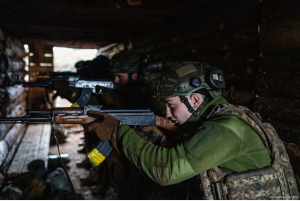
The war has taken its toll, with Ukrainian President Volodymyr Zelensky acknowledging the deaths of 55,000 Ukrainian soldiers. The thin ranks of its infantry rely on explosive drones and artillery to hold Russian advances back. But offensives require more manpower to sustain the defense, and Ukraine is seeking to wear down Russian forces.
Ahead of the fourth anniversary of Russia’s full-scale invasion on Tuesday, the U.K.’s armed-forces minister, Alistair Carns , said Russia had been at war longer than in World War II and lost over 4,000 tanks, 10,000 armed vehicles and had its navy arguably destroyed by a country that never had a navy.
Slow motion
Russian advances in some of its major offensives are slower than the infamous Battle of the Somme in World War I, according to CSIS. In Chasiv Yar, a city on strategic heights in the eastern Donetsk province, Russia has advanced just over 6 miles at an average pace of approximately 16 yards a day.
Russia was only able to capture around 0.8% of Ukrainian territory last year, according to one Western official. Military intelligence in several European countries estimate that Russia will continue to make incremental gains on the ground but at a very high cost.
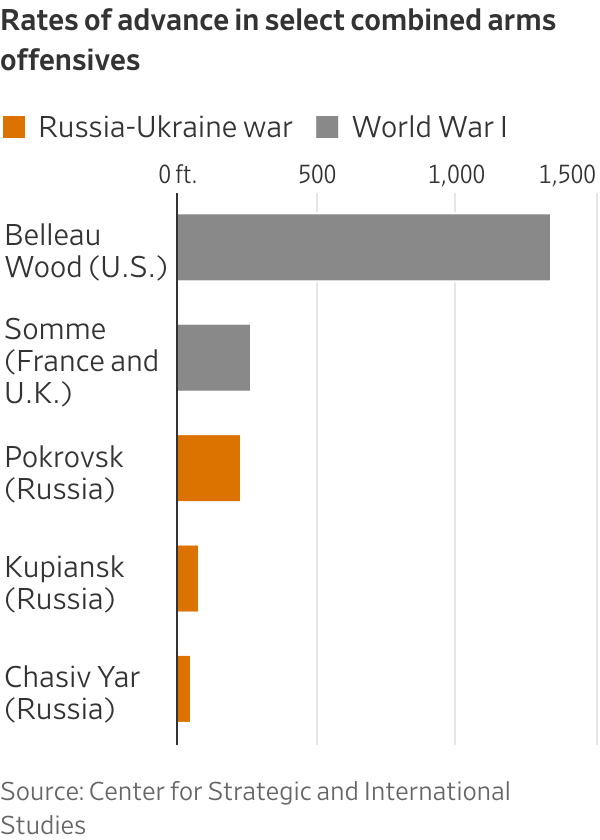
“I think this war continues like it has for a couple of years already,” said Turunen. “Both sides mostly keeping their positions, with very small steps forward by the Russians—progress but not on a big scale.”
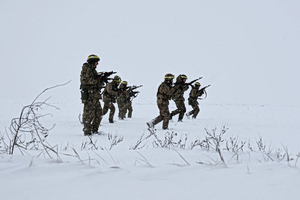
Russian forces are mainly advancing on foot in so-called infiltration groups, small teams of no more than a handful of soldiers who sneak forward under artillery fire and attacks from drones and try to survive and await reinforcements.
The tactics are leading to heavy Russian losses and weak control over any land seized, giving Ukraine the chance to push back.
Striking back
It was early this month when reports began to circulate online that Ukraine was counterattacking in the Zaporizhzhia region, where Russia has held the upper hand in recent months. Russian military bloggers claimed a large-scale counteroffensive, but Ukraine’s military has since described the advances as tactical assaults.
Soldiers said they took advantage of Russian communications problems after Elon Musk’s SpaceX disabled Starlink for the Russian military in Ukraine.
Zelensky said his military had retaken some 115 square miles of territory. Analysts estimate the area is smaller and that Ukraine has mainly cleared the area of Russian infiltration teams.
Last week, U.K. defense intelligence said that Ukraine had retaken about 39 square miles of territory from Russia in around two weeks during its counterattack in the Zaporizhzhia region near the city of Huliaipole.
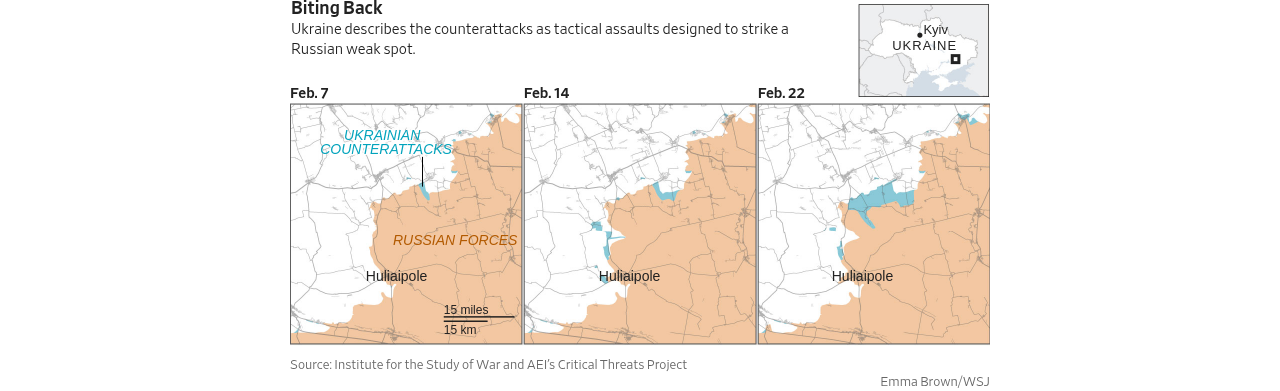
Ukrainian officers say the main aim isn’t to reclaim land but to strike a weak spot for Russia’s military and force it to redirect its own forces from other areas of the front.
“We’re not focused on the deepest possible penetration,” Capt. Dmytro Filatov, commander of Ukraine’s 1st Separate Assault Regiment, told Ukrainian television. Instead, he said, the aim was “to force the enemy to deploy its reserves not where it plans, but where we plan.”
The Ukrainian success follows on from the recapture by Ukraine of the northeastern city of Kupyansk in mid-December. Russia had boasted of taking the city weeks earlier, but Zelensky recorded a dramatic video from the edge of the city to demonstrate Ukraine’s advance.
Drone advantage
Over 2025, Russia steadily built an advantage in medium-range drones that wreaked havoc on Ukrainian supply lines. One of the key elements has been the Molniya, or Lightning, drone, a cheap, fixed-wing unmanned flying vehicle with a range of more than 30 miles. Russia has used the drones to strike vehicles bringing fresh troops and supplies to the front lines, weakening Ukrainian front-line positions.
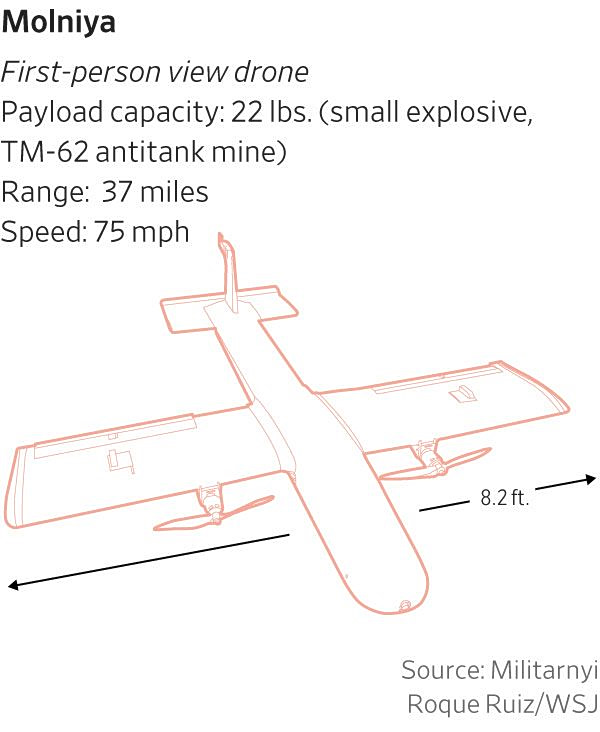
Russia also jury-rigged the drones with smuggled Starlink internet terminals, extending their range and allowing them to bypass Ukrainian electronic-warfare systems that are designed to knock them out of the sky.
But earlier this month, the disabling of Starlink curbed this battlefield advantage for Moscow. Ukrainian soldiers have noted a significant decrease in battlefield drone strikes as a result, as Russia is struggling to come up with a viable alternative.
Oil pain
Crude oil is the critical source of revenue for Russia’s war machine—and a key target for Ukraine and its allies to bring pressure to bear on Moscow.
Fresh Western sanctions, seizures of aging tankers, known as the shadow fleet, that Russia relies on for deliveries, and Trump’s pressure on India to pull back on purchases have driven down the price for Russia’s main grade of crude, known as Urals. That grade now trades at a sizable discount to the international benchmark Brent.
With oil such a critical source of budget revenues for Moscow, that is putting strains on the Russian economy.
“Before it looked like they were invincible in terms of the economy, with growing revenues and GDP. This is not the case any more,” said Janis Kluge , a researcher at the German Institute for International and Security Affairs.
Write to James Marson at james.marson@wsj.com and Alistair MacDonald at Alistair.Macdonald@wsj.com