
 Μake us preferred on Google
 PARIS—French President Emmanuel Macron has a message for American academics like Nathan Perl-Rosenthal: Forget the U.S., come to France!
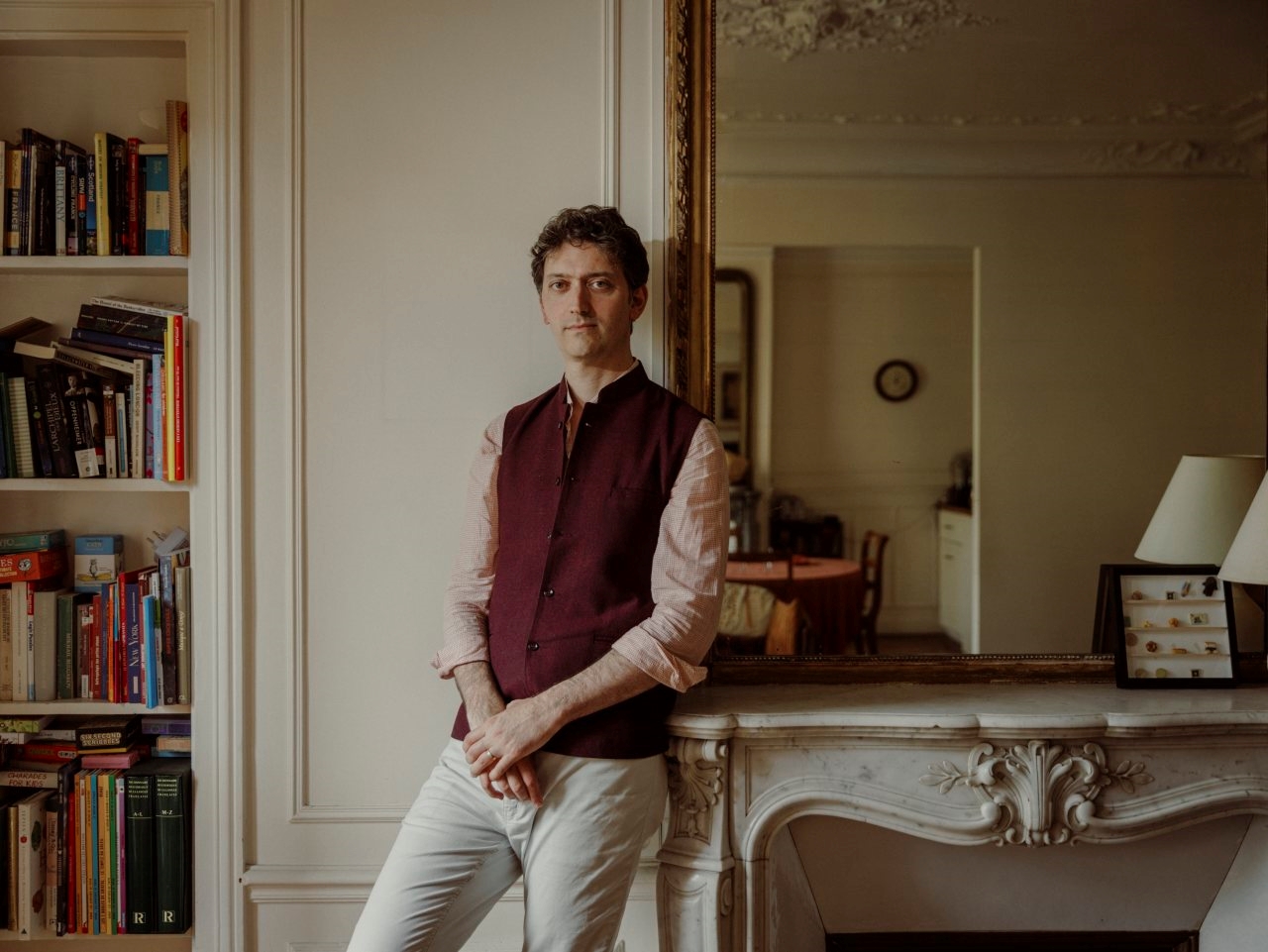
Perl-Rosenthal, a history professor at the University of Southern California, met Macron at a conference in Paris in May, weeks after the U.S. government canceled a grant funding his research on maritime history. Perl-Rosenthal was impressed by Macron’s commitment to defend l’esprit critique and academic freedom.
“He winked at me when I said I worked on the rise of mass politics,” Perl-Rosenthal said. He is considering a permanent post in Paris.
Macron and his European peers are angling to turn President Trump’s overhaul of U.S. academia into their gain. European Commission President Ursula von der Leyen in May said she would establish a fund of about $575 million “to make Europe a magnet for researchers.” The U.K. in June said it would spend about $75 million over five years to cover relocation costs and research for foreign scientists moving to the U.K.
Macron, at the Paris conference, pledged another $115 million to help foreign researchers relocate to France. “If you love freedom, come and help us remain free, conduct research here, help us become better, invest in our future,” Macron said.
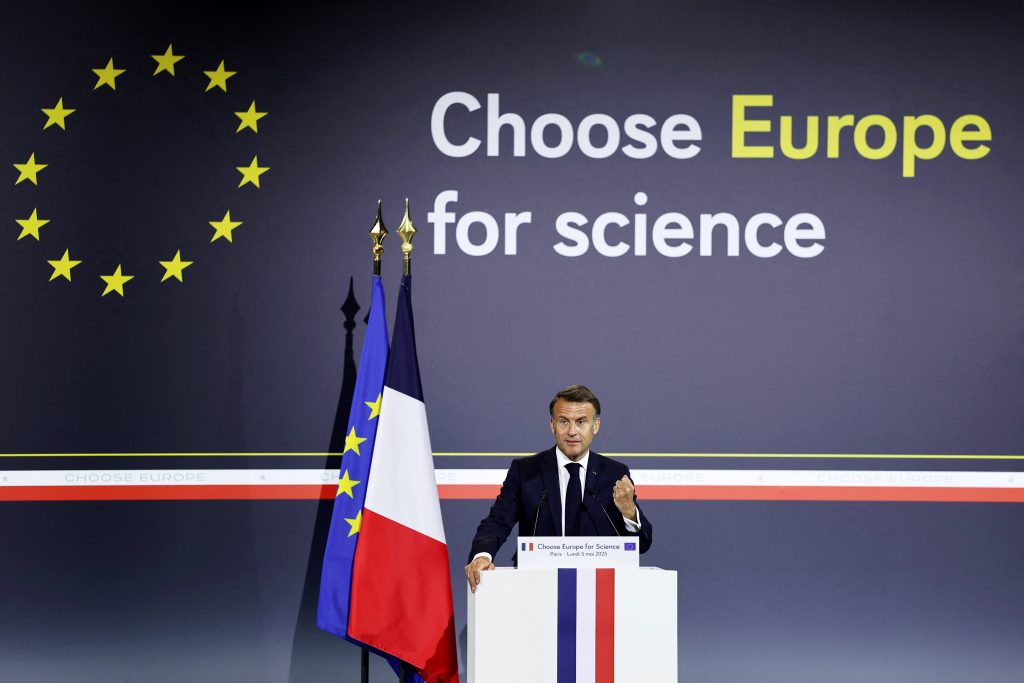
French President Emmanuel Macron, speaking in Paris last month, pledged $115 million to help foreign researchers relocate to France. Photo: Gonzalo Fuentes/AP
Europe, once home to Louis Pasteur and Albert Einstein , for centuries led the world in discoveries that explained the natural world. The U.S. took the lead after World War II, as European émigrés went to work alongside Americans in university labs flush with federal funding.
The U.S. still outspends any other country on research and development. But since returning to office, the Trump administration has cut or frozen billions of dollars of government research grants to universities, citing investigations into diversity programs and antisemitism.
The Trump administration is cutting waste, fraud and abuse in federal research funding, according to spokesman Kush Desai. He said the administration would deliver on Trump’s pledge to “cement America’s dominance in cutting-edge technologies like AI, crypto, and space exploration while addressing our chronic disease epidemic.”
Universities across Europe, meanwhile, are offering grants and the promise of academic freedom to U.S. scholars. Aix-Marseille University in the south of France said it received some 300 applications within three weeks for its Safe Place for Science program, including from researchers at Harvard, Yale, Princeton, Columbia and Stanford.
Belgium’s Vrije Universiteit Brussel aims to support a dozen postdoctoral scholars, especially from the U.S., with fellowships of about $3 million each. The research council of Norway in April established a $10 million fund for U.S. scientists.
“There is a war on talent going on globally, and it’s intensifying,” said Eppo Bruins , minister of education, culture and science in the Netherlands, who has proposed spending about $30 million to draw dozens of scientists from countries including the U.S. to Dutch universities.
Most of the programs are too small or short-term to fundamentally change Europe’s academic competitiveness, said James Wilsdon, professor of research policy at University College London.
“What science responds well to is stability and predictability and long-term planning,” he said.
Researchers earn significantly less in Europe than in the U.S. To move to France for instance, researchers typically need to be willing to earn half or even a third of what they would in America. But the cost of living in much of Europe is lower and governments pay more for healthcare and education.
Rachel Beatty Riedl, a political scientist at Cornell University who studies democracy and authoritarianism, has accepted a one-year position at Sciences Po in France to research what she describes as a global retreat for democracy. She plans to move to France with her family in the fall.
Beatty Riedl said conducting research had become more complicated since Trump returned to office and directed the federal government to remove support for research on some topics. “That permeates every decision that academics are making around what they’re willing to say publicly and what kinds of research they want to publish,” she said.
Three-quarters of the 1,600 scientists who responded to a poll the journal Nature published in March said they were thinking of leaving the U.S. and that Europe was among their top choices for relocation.
Perl-Rosenthal, the history professor, said the Trump administration has created a climate of fear in U.S. academia. “Frankly, all the university leaders in the U.S. are by and large cowering in closets,” he said.
Perl-Rosenthal has been in Paris for two years conducting research on privateers—ships that governments allowed to attack and seize enemy ships at sea. His National Endowment for the Humanities grant was canceled months before he was expected to return from leave to USC, which he joined nearly 15 years ago.
“Figuring out how to live in a foreign country, it’s hard, it requires a whole series of efforts,” Perl-Rosenthal said. “People are going to need a lot of help to figure out this stuff and it’s going to take time.”
Write to Noemie Bisserbe at noemie.bisserbe@wsj.com and Nidhi Subbaraman at nidhi.subbaraman@wsj.com