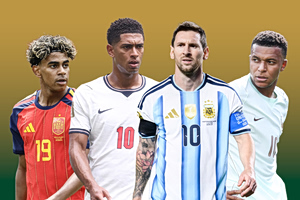
At the largest World Cup in the tournament’s history, only one thing has actually united the entire planet. Fans around the globe, regardless of rooting interest, have come together to decry a common enemy: soccer’s instant replay.
Three little letters—VAR, for video assistant referee—have reshaped matches and sparked global outrage for the past four weeks. Croatians are still tearing their hair out. Egyptians haven’t stopped seething. And the Swiss are decidedly not neutral. Fans fear soccer might never be the same now that VAR is everywhere.
Well, nearly everywhere.
One country has managed to hold firm against this scourge. While every major league adopted VAR in the name of tyrannical accuracy, fans of Sweden’s top division mounted a resistance. Today the Scandinavian nation is the only place in Europe’s top 30 leagues to still officiate games the old-fashioned way.
“We are getting used to seeing VAR in international football, but in our domestic league, we don’t want it,” said Svante Samuelsson, the sporting director of Sweden’s pro divisions. “I think that’s probably even stronger now.”
The rebellion occurred during the pandemic. At the time, the league’s governing body was weighing the introduction of VAR, only to run into a popular movement of supporters’ clubs against it. And, because Swedish clubs are majority-controlled by the fans, the measure never passed. They agreed that being exactly right all of the time wasn’t worth the misery of waiting so long to witness a goal—and then being robbed of that moment of ecstasy when it gets overturned.
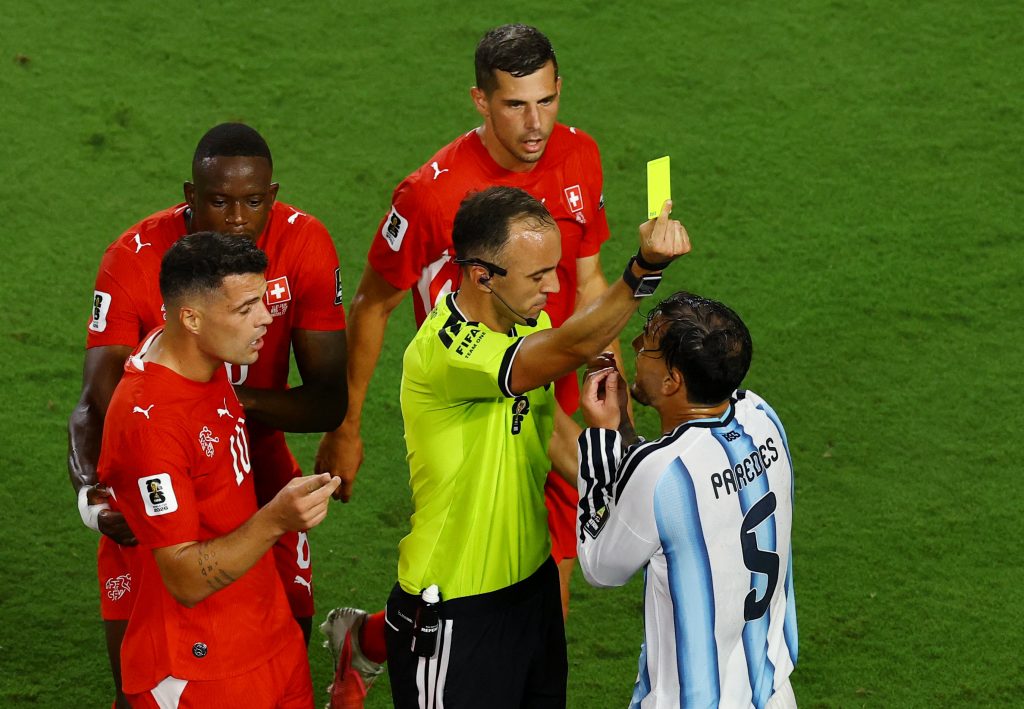
Soccer Football – FIFA World Cup 2026 – Quarter Final – Argentina v Switzerland – Kansas City Stadium, Kansas City, Missouri, U.S. – July 11, 2026 Argentina’s Leandro Paredes is shown a yellow card by referee Joao Pinheiro REUTERS/Albert Gea
That’s not to say Swedish referees have been perfect. Over the first 10 rounds of the season, Samuelsson said, officials have reported five situations where a goal was wrongfully disallowed or should not have stood. But to supporters, these mistakes are a small price to pay to never hear the words “VAR controversy.”
“In general, there is an acceptance,” Samuelsson added. “And around Europe, the supporters are a little bit envious that we don’t have it.”
At the World Cup, however, refereeing technology has become ubiquitous. Beyond VAR to review on-field decisions, soccer’s governing body has also introduced semi-automated technology to make offside calls practically in real-time and a sensor in the ball designed to detect the slightest touch. It all contributes to the most complete officiating picture the World Cup has ever seen, right down to the millimeter.
But what alarms fans even more than nitpicking that exceeds the abilities of the human eye is how often that tech is intervening.
Four years ago in Qatar, only one goal was disallowed after 70 minutes. This summer, five goals after that mark have been erased from the scoreboard, including four after the 90th minute.
The most recent game-altering decision came on Saturday, during Argentina’s quarterfinal win over Switzerland. In the 72nd minute, Swiss striker Breel Embolo was initially awarded a free kick, only for VAR to determine that he had taken a dive. Embolo was given a second yellow card and ejected from the game, which Switzerland viewed as unnecessarily harsh.
“It’s just a disaster,” said Swiss midfielder Remo Freuler. “How can a VAR change a game with this situation? Just let the referee do his thing.”
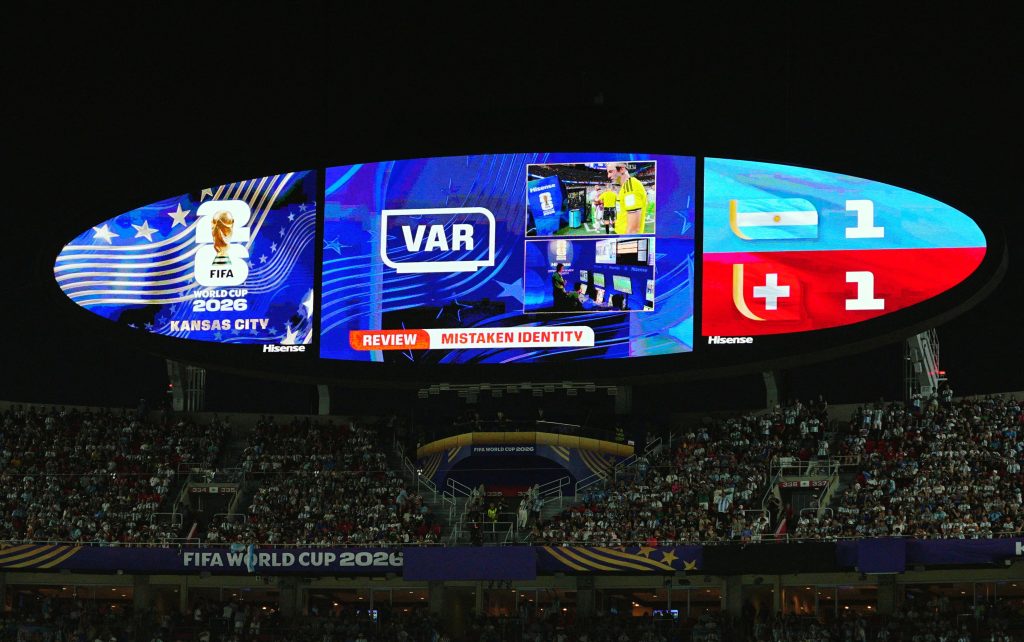
Soccer Football – FIFA World Cup 2026 – Quarter Final – Argentina v Switzerland – Kansas City Stadium, Kansas City, Missouri, U.S. – July 11, 2026 A big screen displays a VAR review message IMAGN IMAGES via Reuters/Jay Biggerstaff
The biggest gripe from VAR detractors is that forensic dissections of game footage take the action out of their high-speed context. When fouls are studied like the Zapruder Film, even the slightest contact takes on proportions that countries like Sweden would simply prefer to live without.
“There is no 100% justice,” Samuelsson said. “Even if you have VAR, because you have to make a decision anyway when you look at the video.”
FIFA insists that VAR is at the World Cup to stay. And it has categorically dismissed what it called “unfounded allegations” of bias from its officials.
“There will always be an element of subjectivity in some decisions,” the organization’s head of refereeing Pierluigi Collina said, “but we are happy with how this principle has been applied throughout the tournament.”
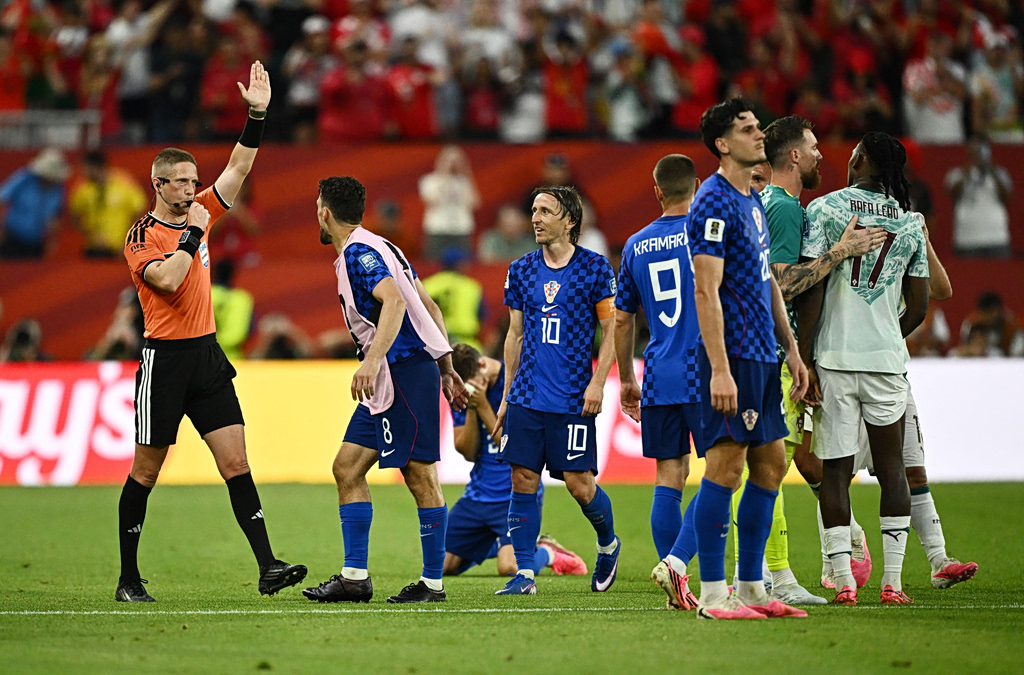
Soccer Football – FIFA World Cup 2026 – Round of 32 – Portugal v Croatia – Toronto Stadium, Toronto, Canada – July 2, 2026 Referee Espen Eskas signals no goal after a VAR review of a goal scored by Croatia’s Josko Gvardiol REUTERS/Dylan Martinez
Few others are. Aggrieved Egyptian fans remember the goal they had chalked off against Argentina, for a foul that took place 90 yards away. Norway’s coach remains upset about a ball that he believes hit a wire holding a mid-air camera during the buildup to England’s first goal on Saturday. Croatia fans can hardly believe that their extra-time equalizer against Portugal was wiped out for an offside call triggered by a cross grazing a player’s hair.
And France’s Kylian Mbappé still doesn’t understand why he was made to stand around for 3 minutes and 11 seconds during a review of an obvious penalty kick. (After all that waiting, he missed.)
But for all of those players, coaches, and fans who are fed up with VAR, Samuelsson has one piece of advice.
“You can tell them that they are welcome to come watch Swedish football,” he said, “without VAR.”