Dr. Anthony Fauci and his lawyers knew that invoking his Fifth Amendment right against self-incrimination during a congressional hearing this week was a gamble. The doctor millions trusted through the pandemic risked looking like a man with something to hide.
His team decided it was his best play, according to people familiar with his legal strategy—because his alternatives were worse. His lawyers believed that answering could open him up to a perjury charge from Republican opponents hunting for discrepancies in his near constant stream of statements during the chaos of the pandemic. Refusing to testify at all could land a contempt-of-Congress referral at President Trump ’s Justice Department.
So this week, Fauci invoked the Fifth more than 100 times during a combative Senate hearing, sitting silently as frustrated Republican senators peppered him with expletives and accusations.
“You have for years avoided responsibility,” said Sen. Rand Paul (R., Ky.), who led the charge against Fauci. “Loss of trust may be your most damaging legacy.”
The scene marked a staggering shift for a man who, at the height of the pandemic, marveled at his own “unimaginable” fame. Americans sported socks and bobbleheads with his face. Time magazine put him on its cover. Even Kim Kardashian facilitated a Zoom call with Fauci in April 2020 that drew celebrities ranging from Ariana Grande to Ashton Kutcher and Chris Rock.

Now, despite a pre-emptive pardon from former President Joe Biden , Fauci is confronting the biggest challenge to his legacy to date. Republicans are pointing to private and sometimes embarrassing journals released before the hearing to argue he misled the public about the origins of Covid-19 and the merits of pandemic-era restrictions. And while polls taken before the journals were released show a majority of Americans still trust Fauci, public opinion around the pandemic health measures he championed—and the deference owed to scientific expertise—has shifted.
“He was a hero until he wasn’t,” said Dr. Jeanne Marrazzo, who succeeded Fauci as head of the National Institute of Allergy and Infectious Diseases and who was fired during the second Trump administration. “He was glorified in a way that ultimately turned some people against him.”
A spokesman for Fauci declined to comment.
An Annenberg Public Policy Center survey earlier this year found that 54% of Americans have confidence in Fauci to provide trustworthy public-health information. Some 38% said the same of Health and Human Services Secretary Robert F. Kennedy Jr.
Still, confidence in Fauci has declined from the 71% support he enjoyed in an April 2021 Annenberg poll, driven largely by a drop in approval among Republicans.
Fauci faced repeated death threats during and after the pandemic, prompting Biden to authorize a federal security detail even after his retirement, according to a person familiar with the decision. Trump revoked that protection shortly after taking office.
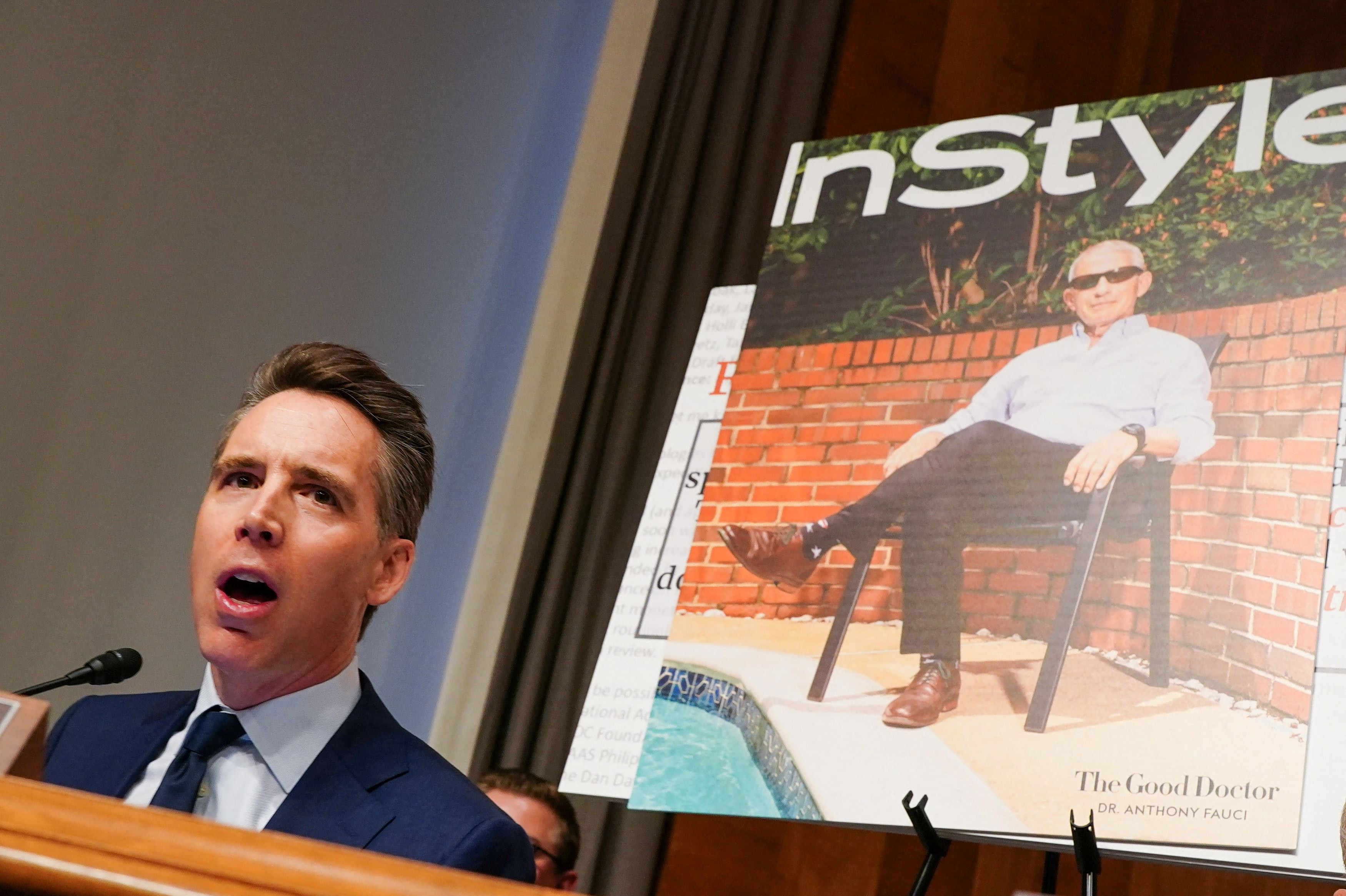
Sen. Josh Hawley (R., Mo.) speaking at the hearing. REUTERS/Nathan Howard
Fauci was also among a handful of officials who received a pre-emptive pardon—which wouldn’t cover present-day congressional testimony—from Biden in one of his final acts as president. At the time, Biden administration officials suggested the move was intended in part to shield Fauci and others from what they believed would be an effort by Republicans to target perceived political opponents.
Ellen Sigal , a cancer-research advocate and friend and former neighbor of Fauci’s, said the doctor would have answered questions if he felt the process was legitimate. “He had no choice unfortunately because this clearly was not a hearing that was looking for the facts,” Sigal said.
Paul, the Kentucky Republican who chairs the Senate Committee on Homeland Security and Governmental Affairs, has been a longtime Fauci critic. He has accused the doctor of supporting dangerous research that some scientists think might have led to the first coronavirus cases, conspiring with others to discredit that theory, attempting to evade federal transparency laws and ignoring evidence that didn’t fit with his preferred public-health measures. Fauci’s lawyer in a statement Wednesday called Paul’s accusations false.
Ahead of the hearing, Paul released more than 1,000 pages of Fauci’s journals from the pandemic period. They revealed, among other things, Fauci’s close tracking of his many media appearances and what he described as his “explosive” growing fame, leaving his supporters to awkwardly defend him.
“I think we all would’ve been better off, including him, if he hadn’t written his personal musings on an HHS server,” said Dr. Deborah Birx , who worked closely with Fauci while coordinating the White House’s Covid response during Trump’s first term. She said that while the scientific community still had respect for Fauci, the hearing represented continuing frustration among Americans with the consequences of pandemic-era restrictions.
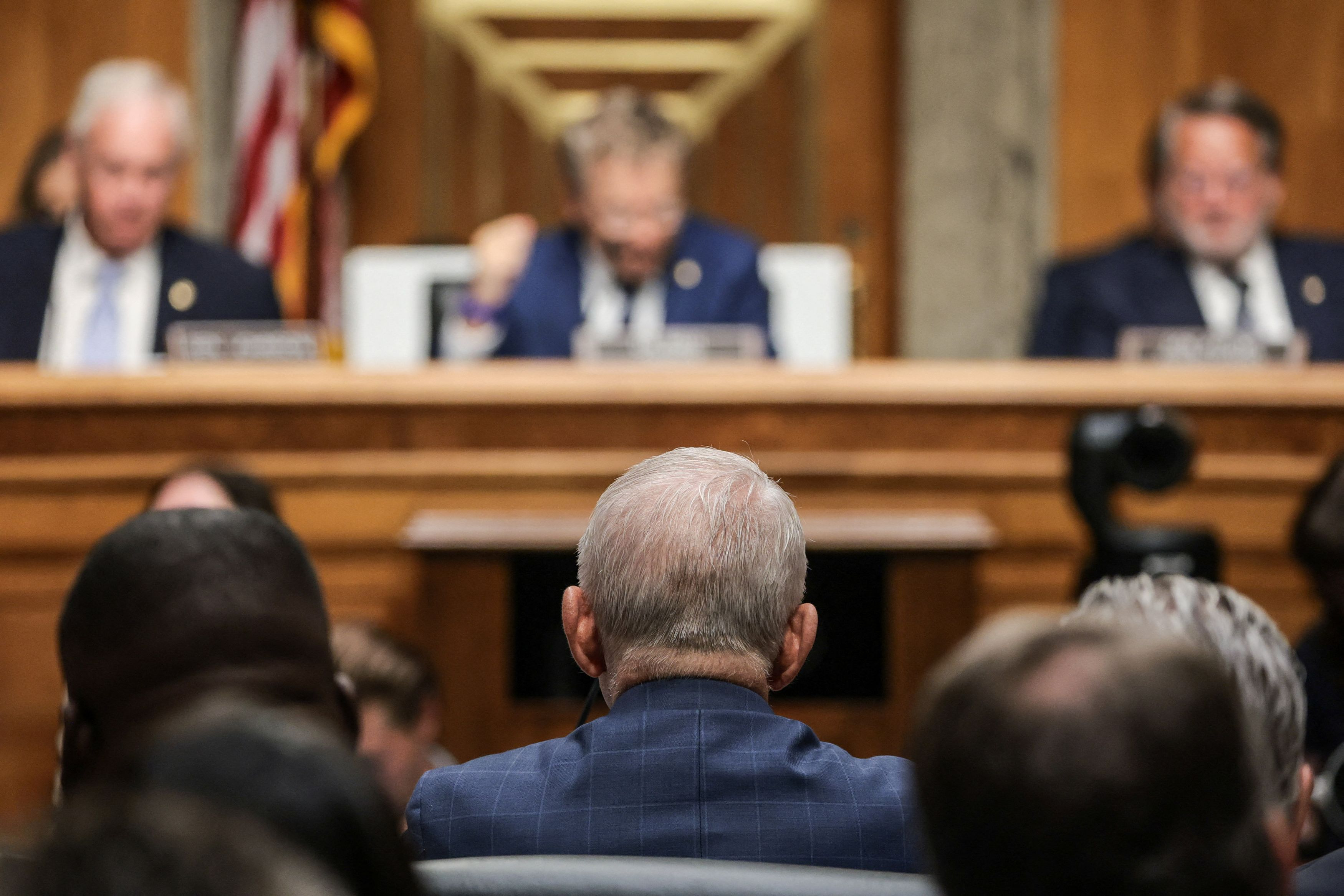
Fauci declined to answer questions during the hearing, invoking the Fifth more than 100 times. REUTERS/Jonathan Ernst
Fauci, in his now-released diaries, recalled clashing with Paul in August 2020, accusing him of bluster while acting like an “experienced epidemiologist.”
By June of the following year, complaints about Paul and “the crazies” were common in the doctor’s journals: “The right-wing fringe social media are ablaze with anti-Fauci stuff,” he wrote.
Trump, on the last full day of his first term, awarded Fauci and other members of the Operation Warp Speed team presidential commendations. But he tapped Kennedy, one of Fauci’s fiercest critics, as his health secretary this term, and has more recently slammed Fauci.
“His ideas were CRAZY!” the president said Wednesday on social media.
Fauci now teaches at Georgetown University and gives talks at various conferences. He still requires expensive private security because of the threats on his life. He wrote in 2024 about a bout with West Nile virus that left him in the hospital and struggling to remember facts.
People who know him said he is happy at Georgetown but is frustrated by the continuing attacks. They said he has often been willing to go toe-to-toe with Republicans, and that it took a toll on him to sit through the hearing without responding to senators’ criticisms.
“The only conclusion I can reach is that the sole reason he is calling me before this committee is to get me to say something—anything—that could vindicate his repeated public pledges that I end up, in his words—quote—‘behind bars,’ ” Fauci said of Paul in his opening remarks Wednesday.
Paul threatened “repercussions” for Fauci’s silence and scheduled a time for his committee to vote on whether to hold Fauci in contempt of Congress and potentially refer him for prosecution to the Justice Department.
Meanwhile, Sen. Tommy Tuberville (R., Ala.) threatened a state-level prosecution, and Florida’s attorney general said he would open an investigation. Sen. Ron Johnson (R., Wis.) threatened Fauci with another subpoena.
Democrats in the hearing focused more on criticizing Republicans and the Trump administration than they did on explicitly defending the details of Fauci’s record. Two Democrats on the committee, Sens. Ruben Gallego (D., Ariz.) and Elissa Slotkin (D., Mich.), didn’t speak at the hearing.
Fauci detractors saw the hearing as a turning point in Fauci’s legacy—and just the beginning of a fuller grappling with how the U.S. handled the pandemic.
Longtime Fauci critic Mary Holland, chief executive of the Children’s Health Defense nonprofit previously helmed by Kennedy that questions vaccine safety, sat behind Fauci at Wednesday’s hearing.
She told Kennedy’s followers on a livestream later in the day: “This is just the start of a true Covid reckoning.”
Corrections & Amplifications undefined An earlier version of this story incorrectly said that Fauci posted a picture of himself at the Wednesday hearing on social media, with the caption “Good vs. Evil.” A spokesman for Fauci said the social media account was not his. (Corrected on July 30)