A former Crips gang leader was convicted of murder on Monday for orchestrating the drive-by killing of hip-hop legend Tupac Shakur in Las Vegas three decades ago.
A Nevada jury found Duane “Keffe D” Davis, 63 years old, procured a gun and ordered a fellow South Side Crips gang member to shoot Shakur and former rap mogul Marion “Suge” Knight in an “act of revenge.” The jury reached a verdict after roughly three hours, solving a mystery that has surrounded the rapper’s death.
Davis had pleaded not guilty to a charge of first-degree murder with a deadly weapon. He didn’t appear to react when the jury forewoman announced the verdict.
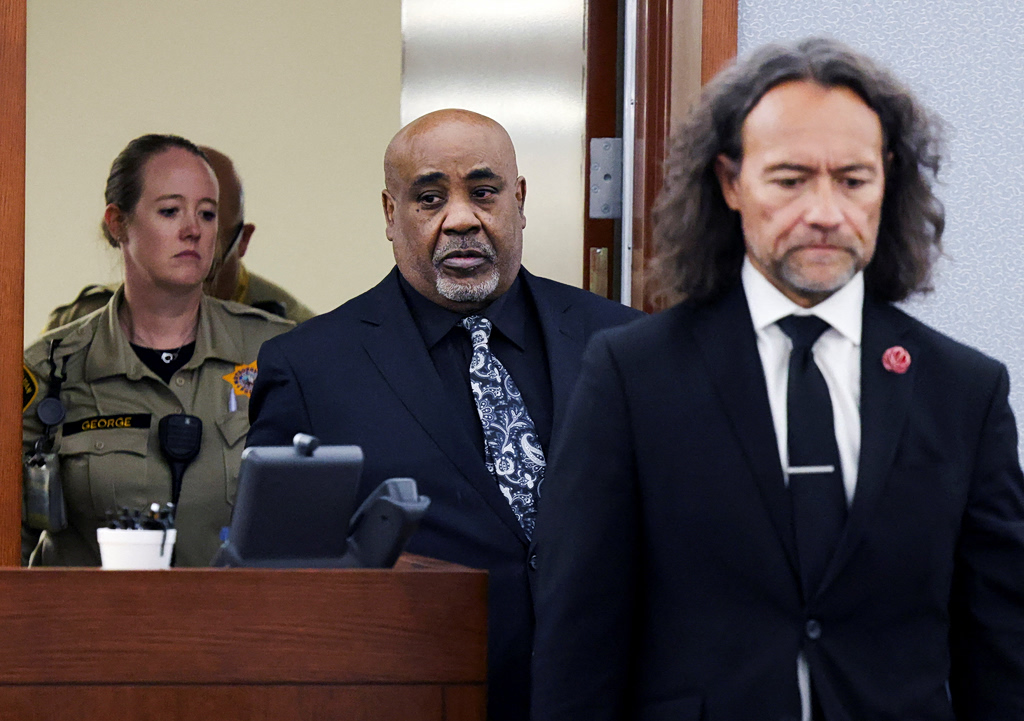
Duane Davis, center, and his attorney Michael Sanft are led back to a courtroom to hear his sentencing date after a jury found Davis guilty in the 1996 killing of rapper Tupac Shakur, in Clark County District Court at the Regional Justice Center on Monday, Aug. 31, 2026, in Las Vegas. Bizuayehu Tesfaye/Pool via REUTERS TPX IMAGES OF THE DAY
Prosecutors said Davis orchestrated Shakur’s killing after the rapper and other members of a rival gang allegedly beat Davis’s nephew. Davis allegedly obtained a handgun and gathered fellow gang members into a Cadillac from which Shakur and Knight were shot on their way to a nightclub. Shakur’s death at 25 stunned the hip-hop community.
In Davis’s self-published memoir from 2019, he wrote, “I’m one of the only living eyewitnesses to Tupac’s killing.”
After his conviction on Monday, Davis interrupted the proceedings. “Excuse me, I’d like to have my stuff back,” he said. “And I would like to appeal this matter.”
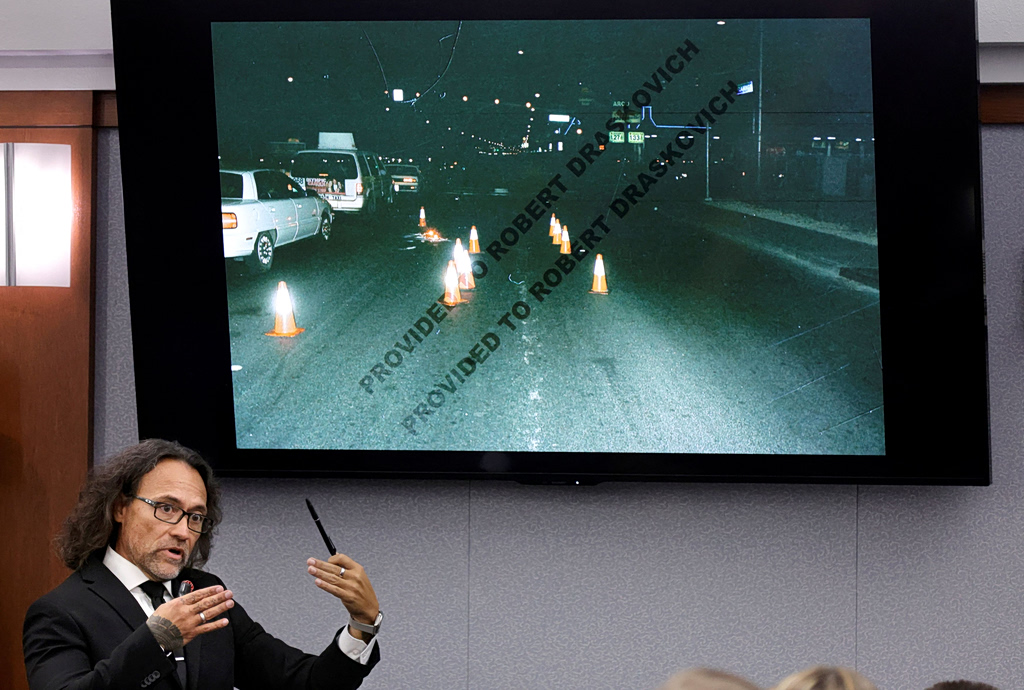
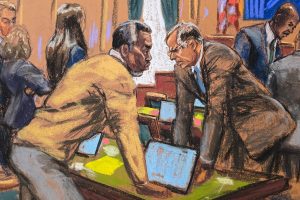
Michael Sanft, attorney for Duane Davis, makes closing arguments in the Duane Davis murder trial, related to the 1996 killing of rapper Tupac Shakur, in Clark County District Court at the Regional Justice Center in Las Vegas, Nevada, U.S., August 31, 2026. REUTERS/Steve Marcus/Pool
Clark County Judge Carli Kierny said he could appeal the verdict after his sentencing. He is being held without bail.
Prosecutors told jurors that Davis was a major Compton, Calif., narcotics dealer and a leader of the South Side Crips who repeatedly admitted to his role in the fatal shooting. They said over the past 18 years, Davis implicated himself on four separate occasions through interviews with federal and local investigators, appearances in television and YouTube documentaries, and his memoir.
Defense attorney Michael Sanft argued Davis’s book was a self-aggrandizing fiction designed to profit from Tupac’s historical slaying and insisted there was little evidence to corroborate his client’s written claims.
“The book is fiction, not fact, but the state wants you to believe this is somehow a confession,” Sanft said. “He wanted to make money.”
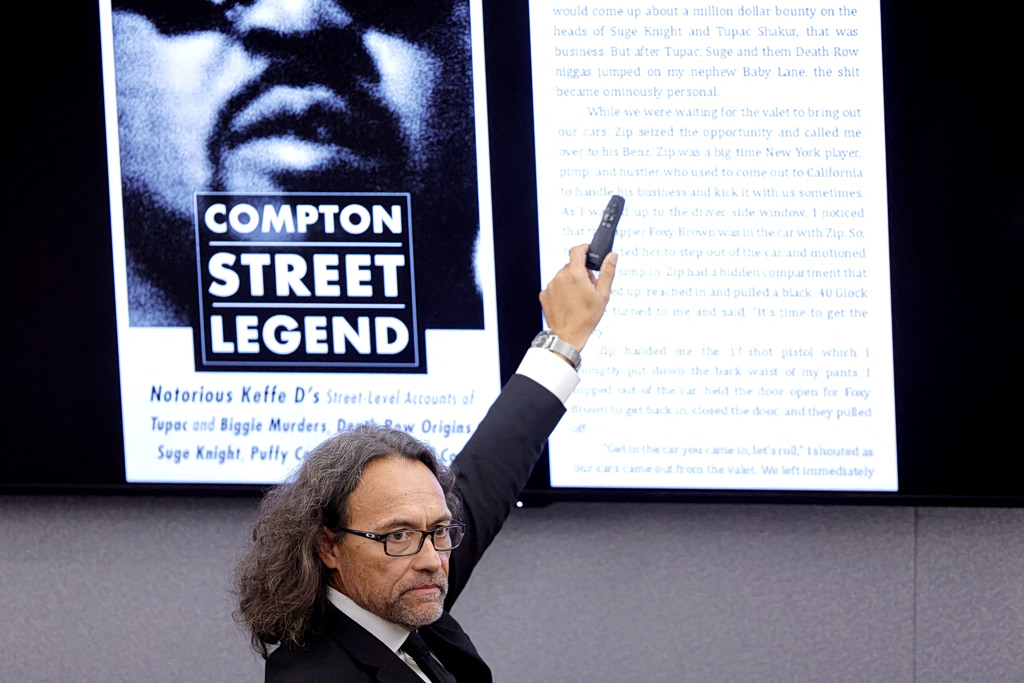
Michael Sanft, defense attorney for Duane Davis, points to an excerpt from a book by Davis, as he makes closing arguments in the Duane Davis murder trial, related to the 1996 killing of rapper Tupac Shakur, in Clark County District Court at the Regional Justice Center in Las Vegas, Nevada, U.S., August 31, 2026. REUTERS/Steve Marcus/Pool TPX IMAGES OF THE DAY
In several interviews and the book, Davis detailed passing the firearm used in Shakur’s killing to fellow gang members in the back seat. Clark County Chief Deputy District Attorney Binu Palal questioned why Davis would implicate himself in a murder if the account was a fabrication.
“Why would he create a story that makes him legally liable for murder when he could just make himself a witness?” Palal said in court.
Bloods and Crips gang members were in Las Vegas for the heavyweight championship bout between Mike Tyson and Bruce Seldon at the MGM Grand on Sept. 7, 1996. The Bloods were allied with Knight’s Death Row Records and the South Side Crips provided security for artists such as the Notorious B.I.G., who was signed to Sean “Diddy” Combs’s rival label Bad Boy Records.
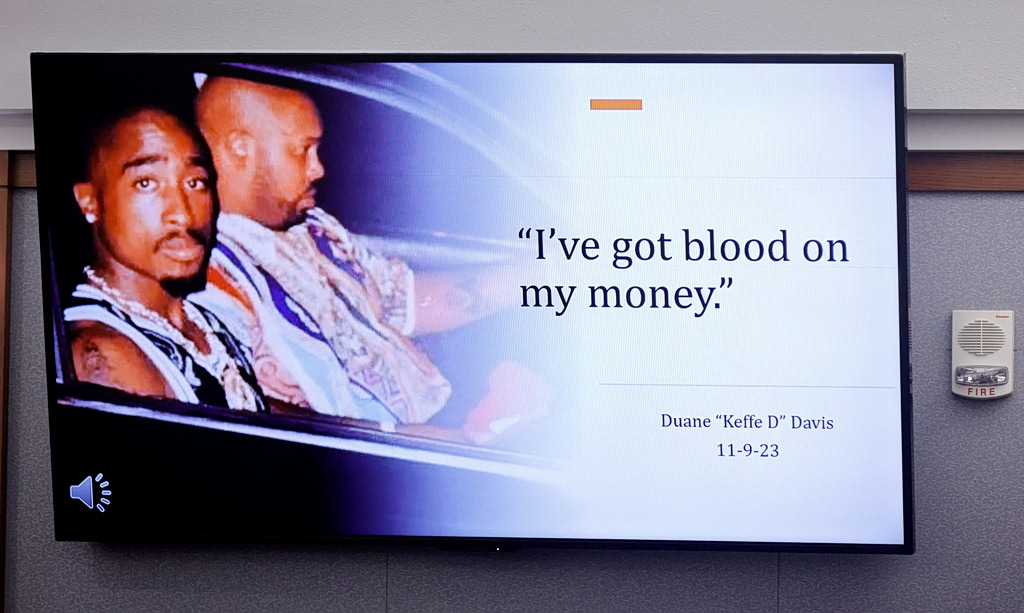
An image featuring a photo of Tupac Shakur and Marion “Suge Knight and a quote from Duane Davis is displayed on a screen during prosecution closing arguments in the Duane Davis murder trial, related to the 1996 killing of rapper Tupac Shakur, in Clark County District Court at the Regional Justice Center in Las Vegas, Nevada, U.S., August 31, 2026. REUTERS/Steve Marcus/Pool
Davis, according to testimony, obtained a .40-caliber handgun and gathered fellow South Side Crips members Orlando “Baby Lane” Anderson, Deandrae “Big Dre” Smith and Terrence “Bubble Up” Brown into a rented white Cadillac to pursue Knight and Shakur, who were en route to Club 662, a Vegas nightclub owned by Knight.
Prosecutors argued the Cadillac pulled up alongside a BMW carrying Knight and Shakur at a red light at the intersection of East Flamingo Road and Koval Lane. Davis handed the weapon to the back seat, where either Smith or Anderson fired off at least seven rounds, the court heard. Davis is the only occupant of the Cadillac still alive today.
Shakur died six days later from multiple gunshot wounds.
Write to Jack Morphet at jack.morphet@wsj.com and Alyssa Lukpat at alyssa.lukpat@wsj.com