 Μake us preferred on Google
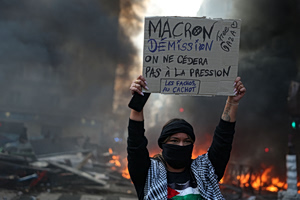
PARIS—France confronted scenes of destruction on Sunday, from toppled landmarks to smashed city storefronts, as its political class began pointing fingers over who bore responsibility for some of the worst rioting to sweep the nation in years.
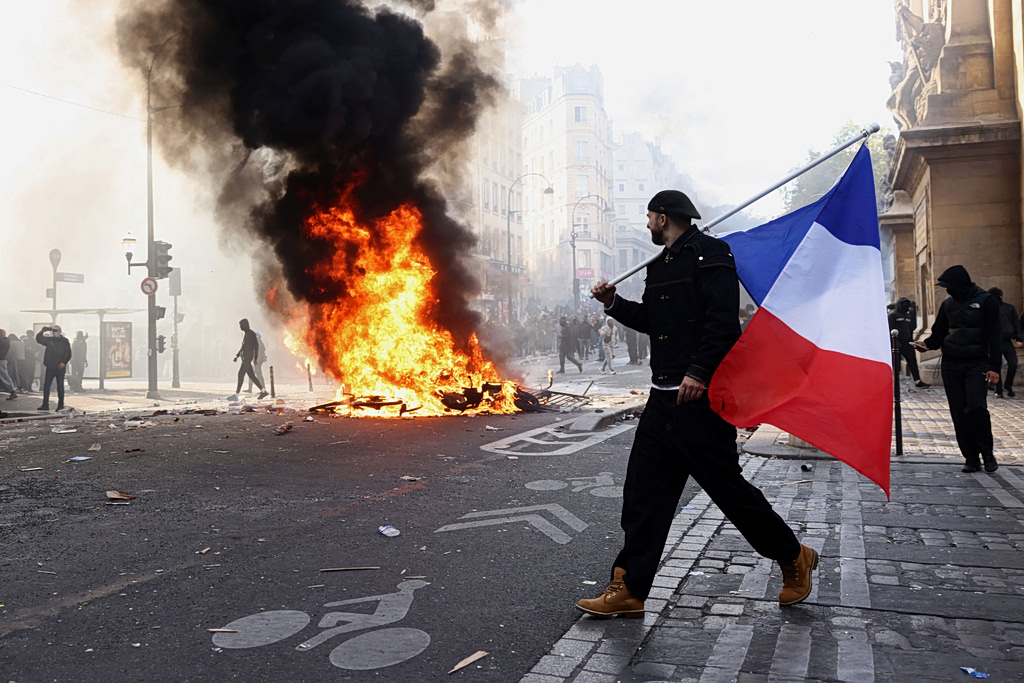
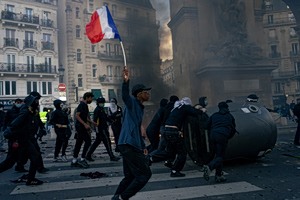
A protester holds a French flag next to burning objects amid clashes in a street near the Place de Republique during a day of demonstrations against the cost of living and rising fuel prices in Paris as part of nationwide protests called by the “Yellow Vests” movement, joined by French high school and university students, teachers and parents demanding better school conditions and government action, as well as labour unions, workers, farmers and retirees, France, October 17, 2026. REUTERS/Jack Taylor
The violence, which erupted during a nationwide protest on Saturday, resumed Sunday evening with rioters burning barricades across Paris. More than 600 police officers and firefighters were injured in the weekend mayhem and more than 2,000 people were detained.
In a country with a long history of violent protest, the weekend riot stood out for its sheer scale, with police mostly powerless to stop thousands of rioters who descended on urban centers across the country, attacking city halls, luxury shopping districts and other areas usually considered off-limits.
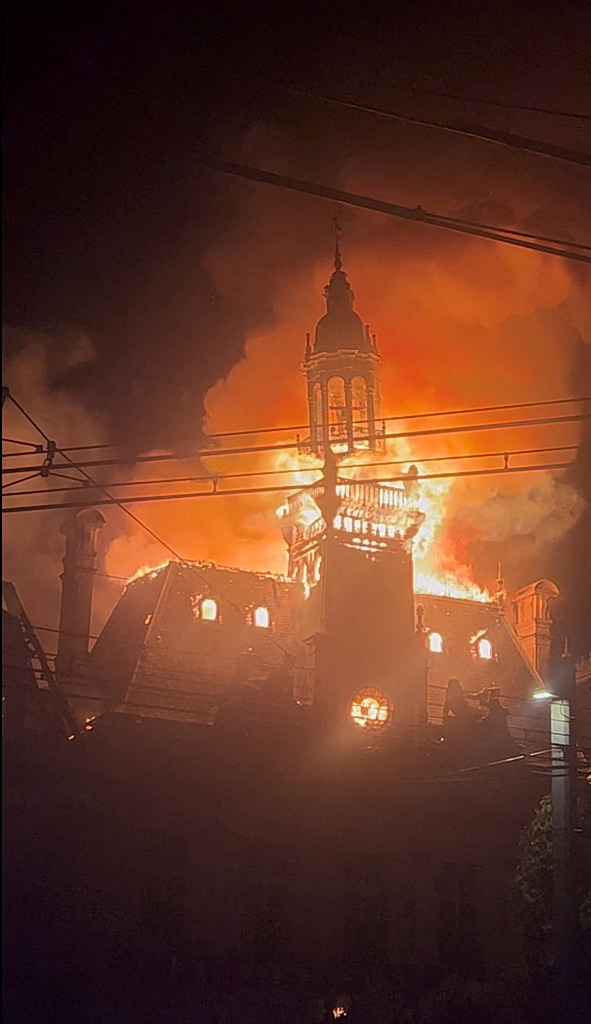
Fire in Limoges city hall amid protests, in Limoges, France, October 17, 2026, in this screengrab from a video obtained from social media. Lucas Destrem/via REUTERS THIS IMAGE HAS BEEN SUPPLIED BY A THIRD PARTY. MANDATORY CREDIT. NO RESALES. NO ARCHIVES. VERIFICATION: Reuters verified the location of the video from original file metadata and building structure that matched archive and satellite imagery of the area. The date matched Reuters reporting of a fire in Limoges city hall on October 17. REFILE – ADDING VERIFICATION LINES.
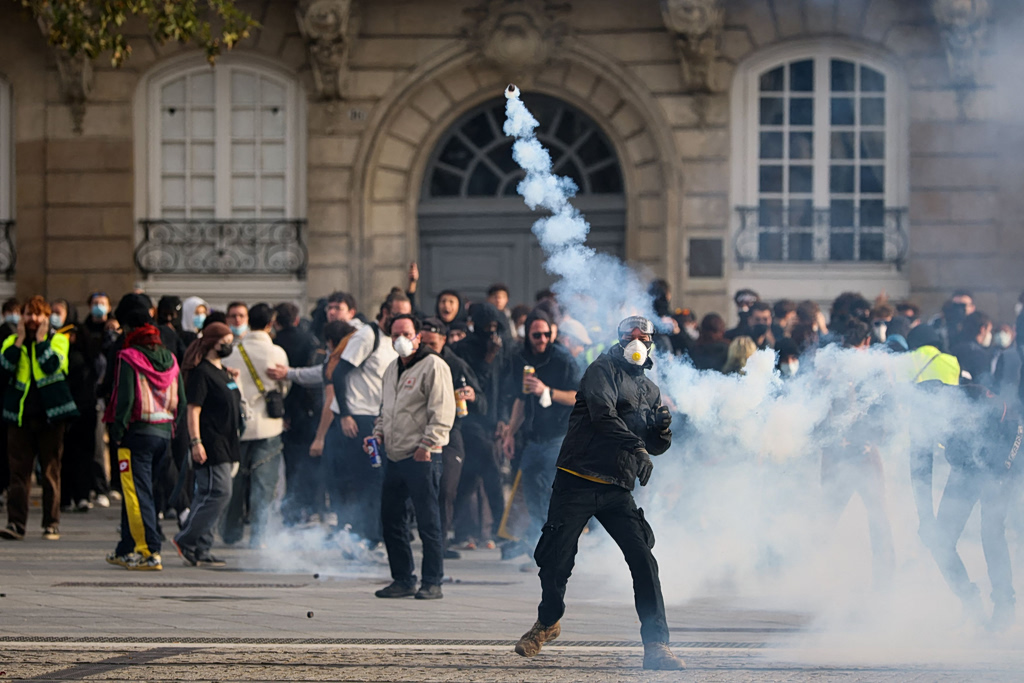
A person throws an object while people take part in a demonstration as part of nationwide protests called by the “Yellow Vests” movement against the cost of living and rising fuel prices, joined by French high school and university students, teachers and parents demanding better school conditions and government action, as well as labour unions, workers, farmers and retirees, in Nantes, France, October 17, 2026. REUTERS/Stephane Mahe
Complicating matters was the fact that the riots unfolded in a moment of political transition. France is just six months away from holding presidential elections, and its current government is mired in fiscal woes that have constrained its ability to address the problems fueling protests.
The paralysis was underscored Sunday evening as President Emmanuel Macron delivered a televised address that condemned the violence but was vague about what measures the government would take to stop it. Instead, Macron invoked the coming elections and warned of politicians seizing on the chaos for political gain.
“Those who tell you today it’s urgent to take to the streets, demonstrate and create disorder have but one goal: to damage the Republic and hijack the debate,” Macron said.
Prime Minister Sébastien Lecornu said the rioters were part of highly organized far-left groups seeking to shape the outcome of the coming spring election. He also traded barbs on social media with Jean-Luc Mélenchon after the far-left leader and presidential candidate accused the government of “opening the door to chaos” with its policing tactics.
“You cannot call for an end to the violence while providing excuses to those who commit it,” Lecornu wrote on X. “This is YOUR political responsibility.”
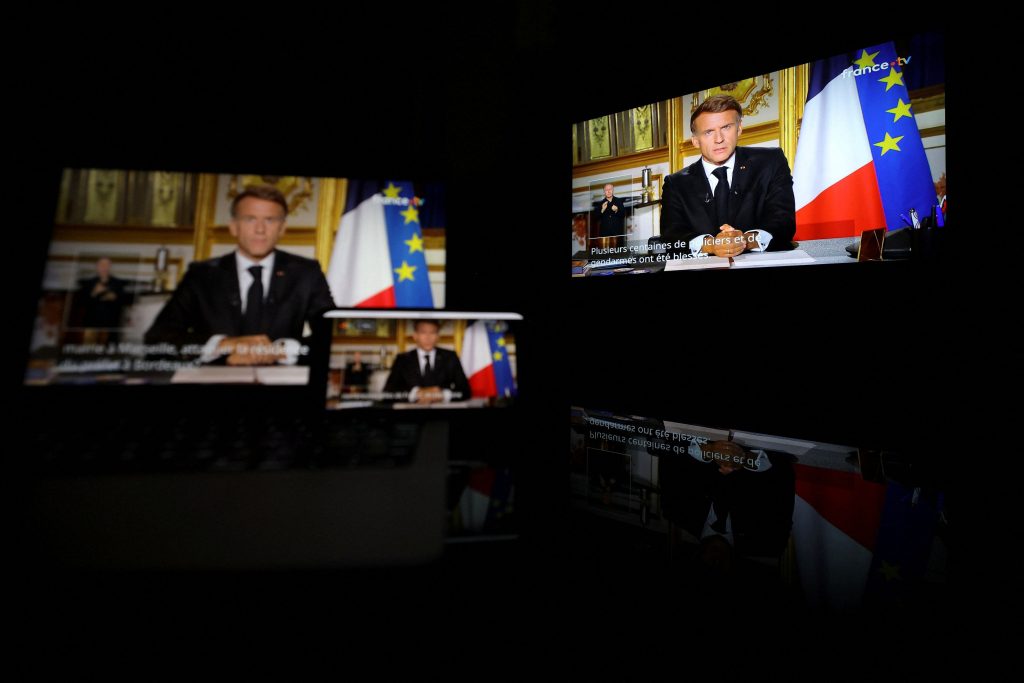
French President Emmanuel Macron appears on screen as he makes a television address to the nation a day after clashes during a national day of demonstrations against the cost of living and rising fuel prices, near Marseille, France, October 18, 2026. REUTERS/Manon Cruz
Marine Le Pen , the far-right leader and election front-runner, faulted Macron for his “powerlessness.” The riots were the work of an alliance between political radicals and people she described as delinquents from France’s banlieues , the poor urban outskirts where much of France’s minority Muslim population resides.
Tensions had been building across the country for weeks as high-school students blockaded schools , demanding more spending on the education system from a government that is badly strapped for cash. France has been running budget deficits above 5% of gross domestic product for years. Investors have been driving up the country’s borrowing costs, fearful France has grown too polarized to restore fiscal order.
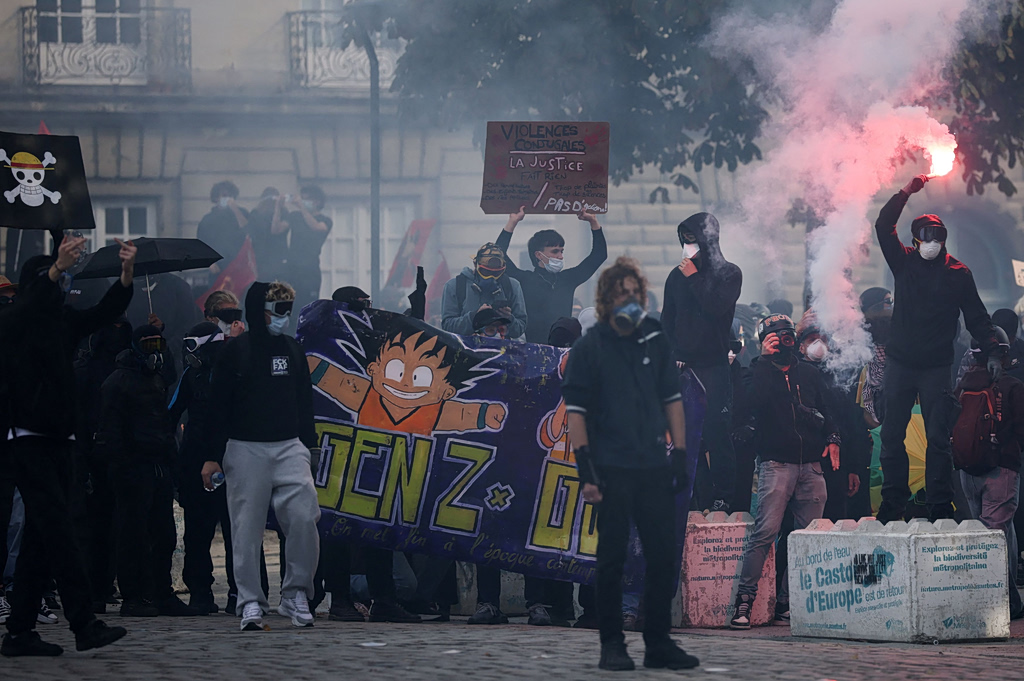
Protesters take part in a demonstration as part of nationwide protests called by the “Yellow Vests” movement against the cost of living and rising fuel prices, joined by French high school and university students, teachers and parents demanding better school conditions and government action, as well as labour unions, workers, farmers and retirees, in Nantes, France, October 17, 2026. REUTERS/Stephane Mahe
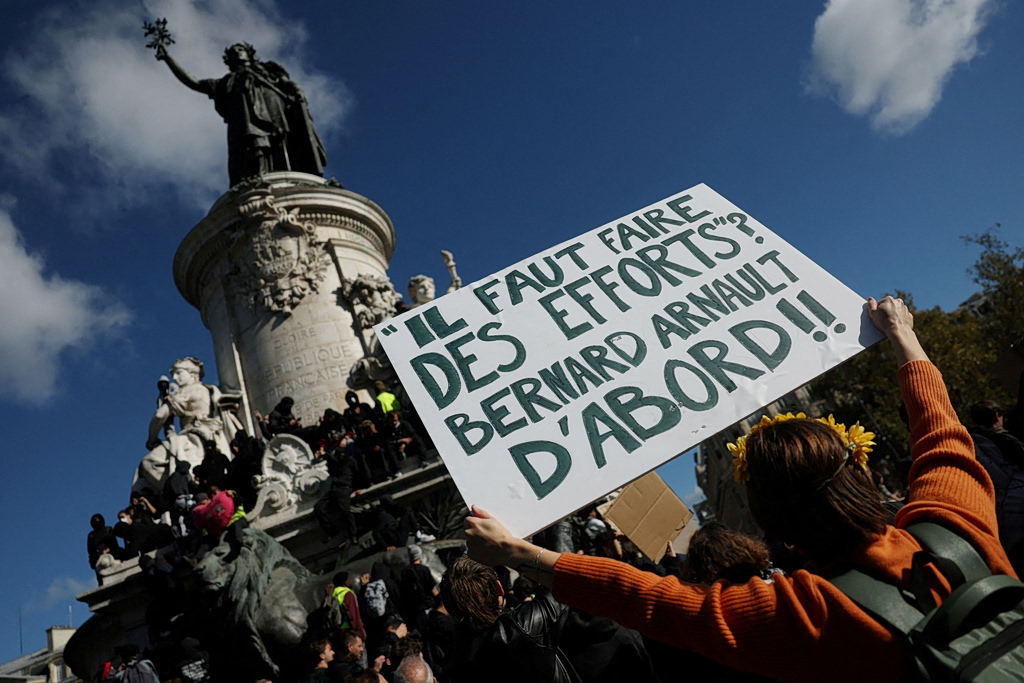
A protester holds a placard reading “Efforts must be made. Starting with Bernard Arnault” near the Marianne statue of the Place de la Republique during a demonstration against the cost of living and rising fuel prices in Paris as part of nationwide protests called by the “Yellow Vests” movement, joined by French high school and university students, teachers and parents demanding better school conditions and government action, as well as labour unions, workers, farmers and retirees, France, October 17, 2026. REUTERS/Stephanie Lecocq TPX IMAGES OF THE DAY
On Saturday, the situation spiraled out of control as more than a half-million people nationwide turned out to protest the cost of living. On the margins of the protests, bands of hooded youths in dark clothing began swarming shopping areas and government buildings, stretching police forces thin.
In Bordeaux, a group was filmed breaking down the door of a Louis Vuitton boutique, allowing a mob to storm the store and make off with handbags as protesters carrying banners walked by.
In Limoges, a town in central France known for its porcelain, up to 3,000 rioters swarmed the streets, according to Maurice Barate, the local prefect. Some carried out carjackings. One group penetrated Limoges’s 19th-century town hall in the late afternoon, setting fire to its interior while elected officials and staff were still inside.
Officials and staff managed to evacuate the building. But firefighters arriving at the scene were pelted with projectiles as they tried to douse the flames, Barate said. By nightfall, the building’s historic bell tower had caught fire and collapsed.
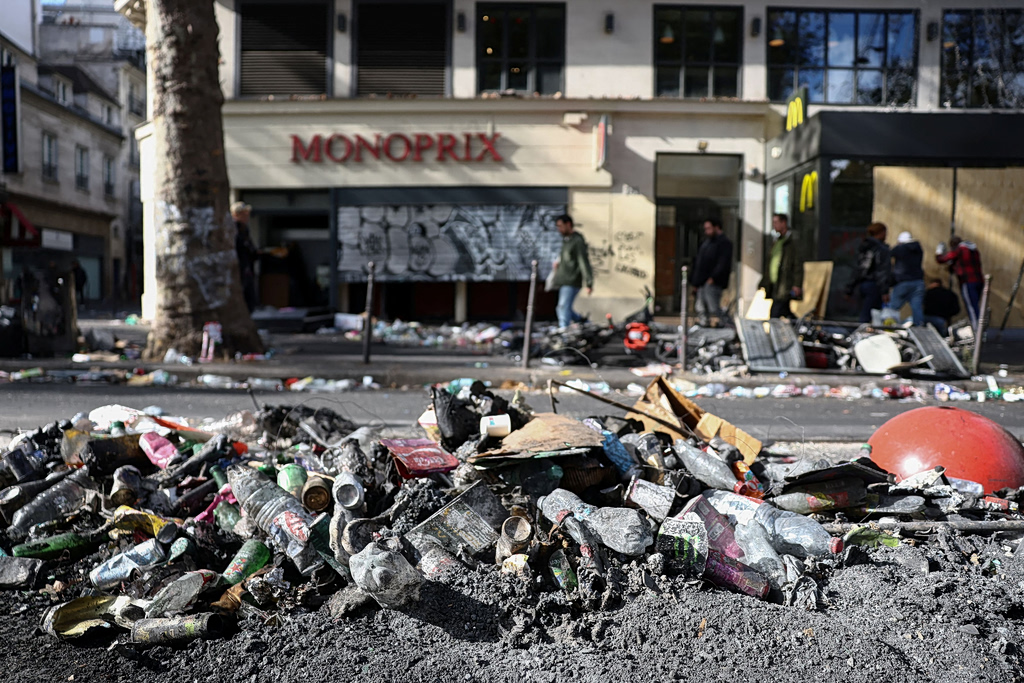
Ashes and rubbish on the side of a street, the day after clashes during a national day of demonstrations against the cost of living and rising fuel prices, in Paris, France, October 18, 2026. REUTERS/Abdul Saboor
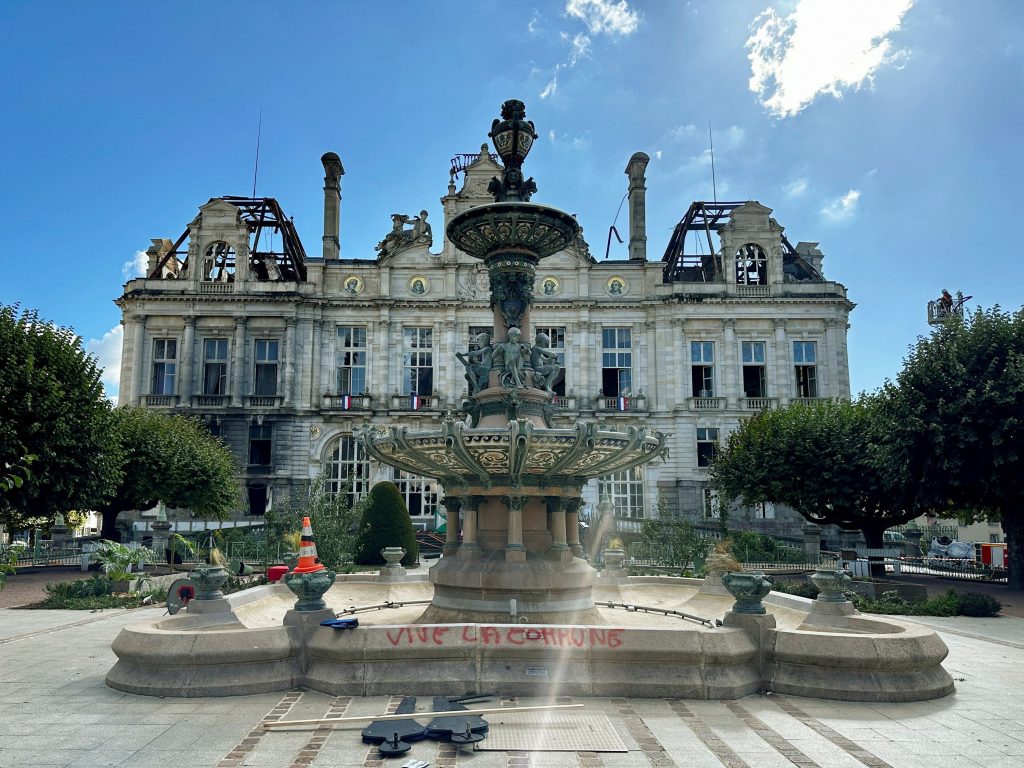
Burnt and destroyed Limoges town hall, which was set ablaze and largely destroyed in an arson attack amid demonstrations against the cost of living and rising fuel prices, in Limoges, France, October 18, 2026. Picture taken by mobile phone. REUTERS/Clotaire Achi
City-hall buildings are widely regarded as symbols of the French Republic. The burning of one on live TV is likely to fuel public frustration with the country’s political establishment and bolster the standing of nationalists like Le Pen who have called for a swift crackdown.
Le Pen has risen in the polls as the protests have gathered pace. On Sunday, she delivered a video address seated before a bookshelf and France’s tricolor flag, zeroing in on Limoges.
“You saw the most sacred symbols of our republic desecrated,” Le Pen said.
In Paris, police were forced to scramble to reinforce the area around the Élysée Palace and the Interior Ministry. That left the city’s shopping districts exposed to looters. Near Place de la République, a dozen stores were looted, ranging from a video-game vendor to a bike shop.
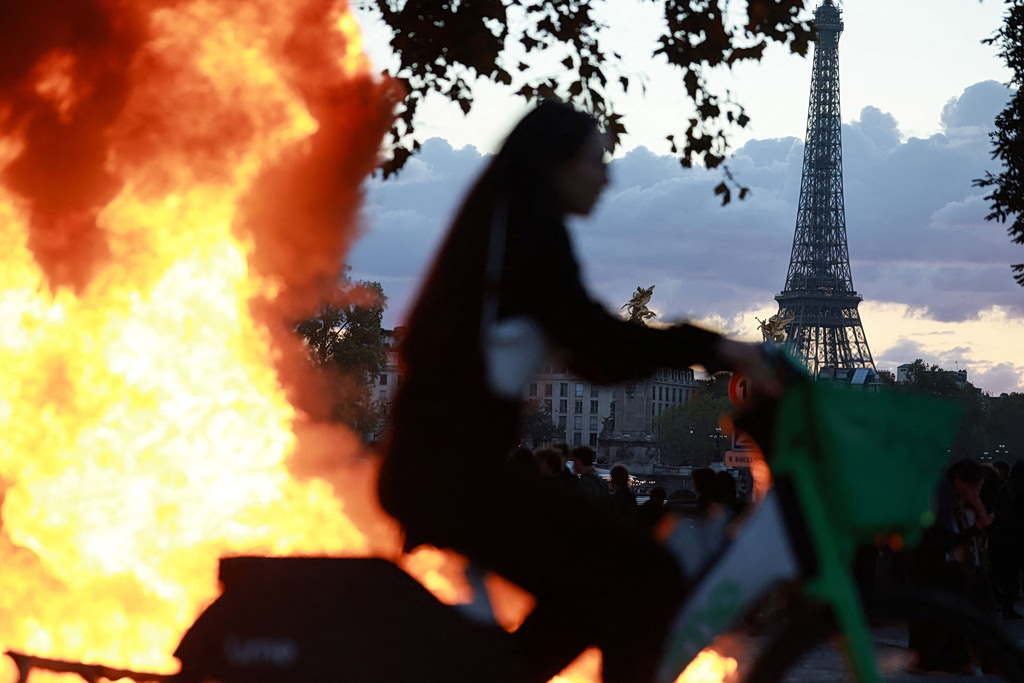
A woman rides a bicycle past a burning barricade near the Tuileries Garden with the Eiffel tower in the background, amid clashes during a day of demonstrations against the cost of living and rising fuel prices in Paris as part of nationwide protests called by the “Yellow Vests” movement, joined by French high school and university students, teachers and parents demanding better school conditions and government action, as well as labour unions, workers, farmers and retirees, France, October 17, 2026. REUTERS/Stephanie Lecocq
Nathan Mimoun, 47 years old, arrived at his electronics store Saturday evening to find it stripped of roughly 70,000 euros, or roughly $78,000, in merchandise. Looters continued pushing into his shop as he tried to repair a metal security shutter that had been forced open in the melee.
“This is a financial catastrophe,” he said on Sunday as staff swept up shards of glass. “I don’t know how I’m going to manage to get back on my feet.”
Hervé Denis , a 56-year-old shopkeeper, peered through the shattered storefront of his friend’s motorcycle-equipment store. Its shelves and racks had been stripped bare.
“They’ve taken everything,” Denis said, adding: “These aren’t high-schoolers. It’s thieves coming from all the projects, all the banlieues.”