 Μake us preferred on Google
 It was a typical quiet Sunday morning in the Pacific coast city of Puerto Vallarta—until the gunfire rang out.
Jim Vawter, a 76-year-old Iowan who is one of thousands of American retirees living in Puerto Vallarta, was lounging with a coffee at the Bean and Brick cafe when a commotion erupted at 9 a.m. in the street outside.
“I heard a couple gunshots,” he said. “And then we started hearing sirens.”
The Bean and Brick quickly closed, and Vawter stepped outside and into the middle of chaos. Gunmen from the Jalisco New Generation Cartel were on a rampage in a violent response to the Mexican military’s killing of their chieftain , Nemesio “Mencho” Oseguera.
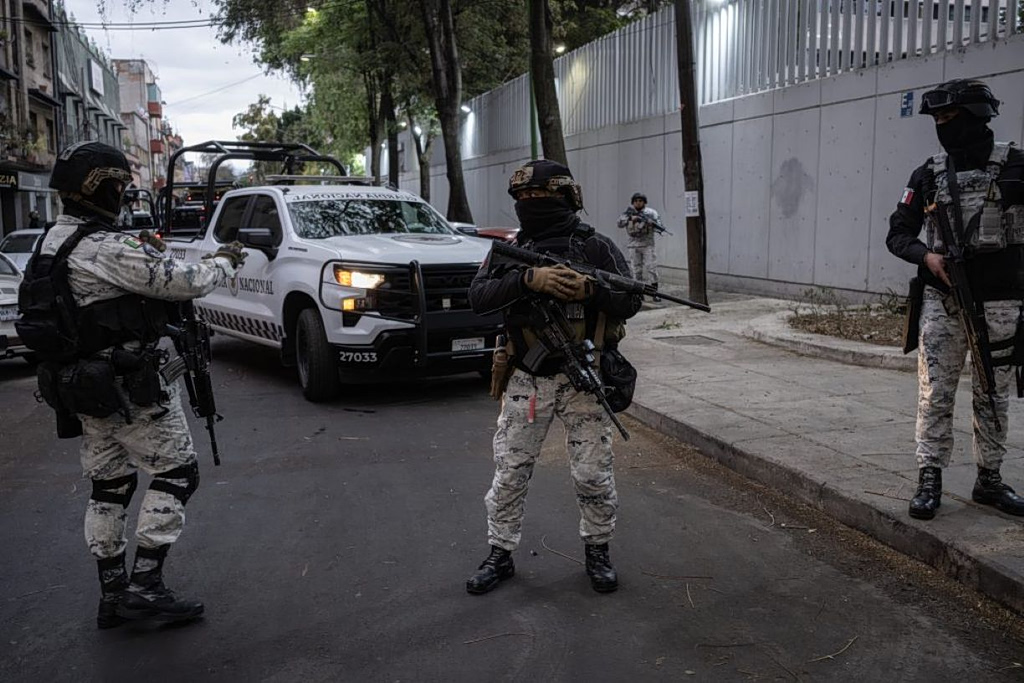
The cartel is considered the country’s most powerful organized crime group, one that doesn’t shy away from conspicuous violence to send a message. And on Sunday, its gunmen shattered the peace in Mexico’s premier Pacific beach destination, among the wealthiest places in Jalisco state.
American retirees normally spend the day walking the boardwalk or enjoying the cafes and restaurants in the Zona Romantica. On Sunday, they were huddling at home, peeking out of their windows at the unfolding violence.
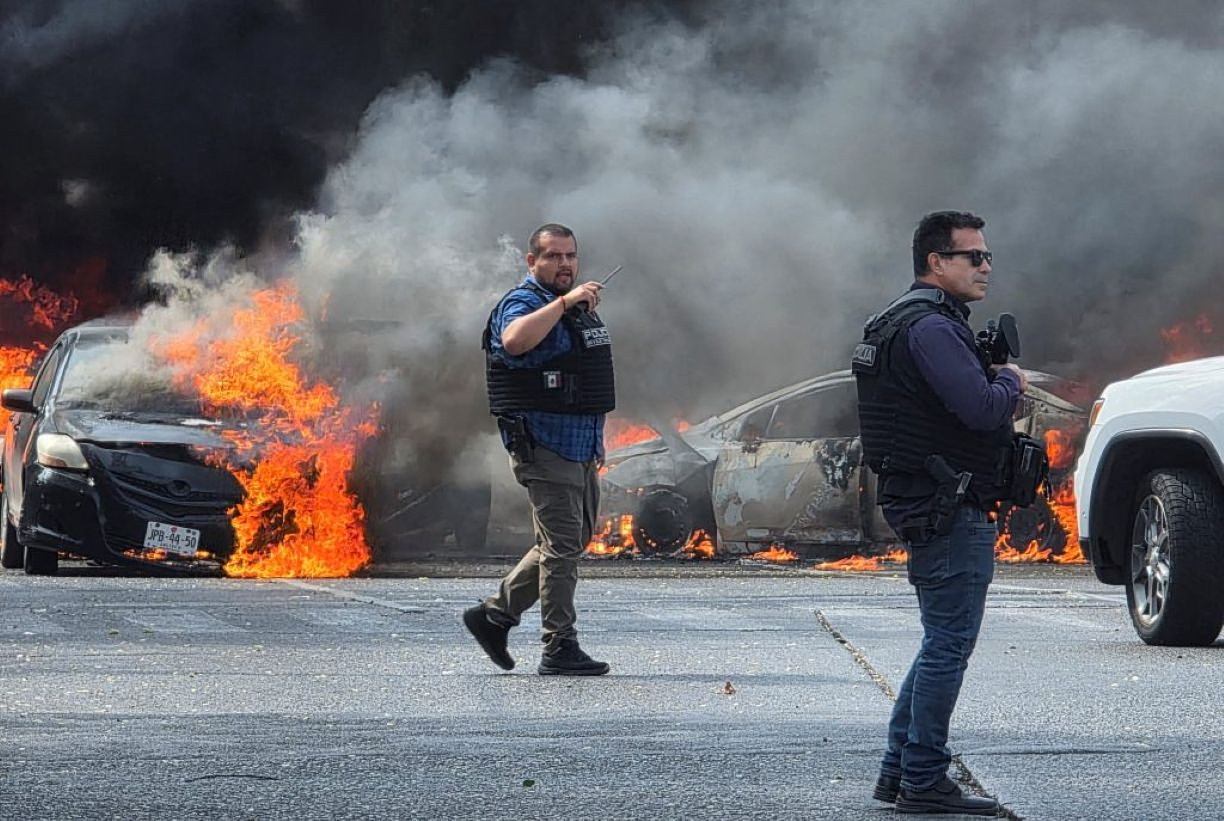
The city of 600,000, with its white stucco buildings and palm-lined streets, looked something like a war zone. Plumes of black smoke billowed into the sky. Police and firefighters raced to emergencies. The burning hulks of cars littered streets.
“It was full of vehicles on fire, just about everywhere you would look,” said Vawter, who took pictures and video.
Then Vawter saw motorcycles—two men per bike, the one in the rear toting semiautomatic weapons—stopping one vehicle after another and forcing people out. Buses and cars had to brake under threat of being shot.
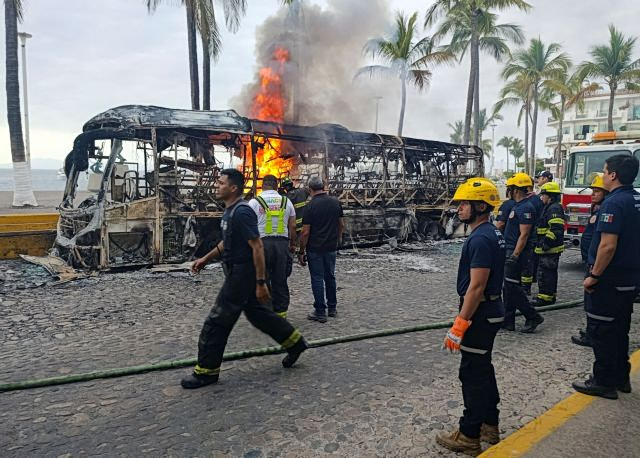
Firefighters work to extinguish flames from buses set on fire by members of organized crime following a military operation in which Mexican officials said cartel boss Nemesio Oseguera, “El Mencho,” was killed, at a tourist area, in Puerto Vallarta, Mexico, February 22, 2026. Picture taken with a mobile phone. REUTERS/Stringer
“They would immediately set them on fire and take off,” said Vawter, who had worked for a Midwest electric utility before settling in Puerto Vallarta. “It was swarmed with motorcycle riders. All the vehicles that were moving were stopped.”
He noted that the gunmen seemed to take care not to hurt the motorists.
The city was put on the map by Elizabeth Taylor and Richard Burton, who came in the early 1960s for the filming of “The Night of the Iguana.” The two had a romance in the postcard-perfect city, where high-rise condos climb hillsides as fishing boats bob off the coast—all framed by the Sierra Madre mountains.
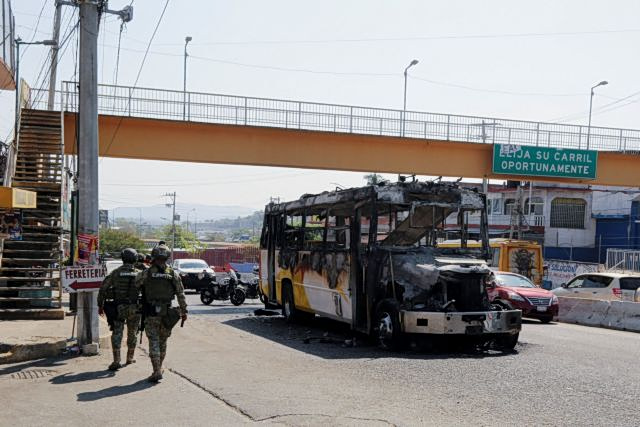
Soldiers walk past a bus torched by unknown assailants, following roadblocks and arson attacks carried out by members of organized crime in several states after a military operation in which a government source said Mexican drug lord Nemesio Oseguera, known as “El Mencho,” was killed in Jalisco state, in Acapulco, Mexico, February 22, 2026. REUTERS/Javier Verdin
The beauty of the place, and its relatively peaceful atmosphere, have long made it popular with American retirees.
What changed on Sunday in Puerto Vallarta is that the Jalisco New Generation Cartel began to enforce a red line they placed on the state—the killing of “el Mencho,” said Will Freeman, a researcher at the Council on Foreign Relations who is writing a book on organized crime in Latin America.
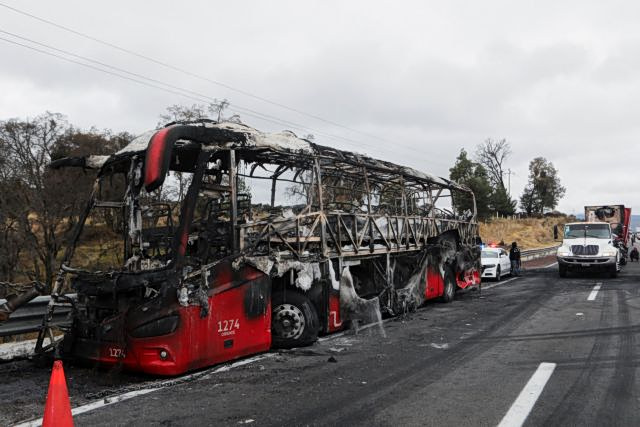
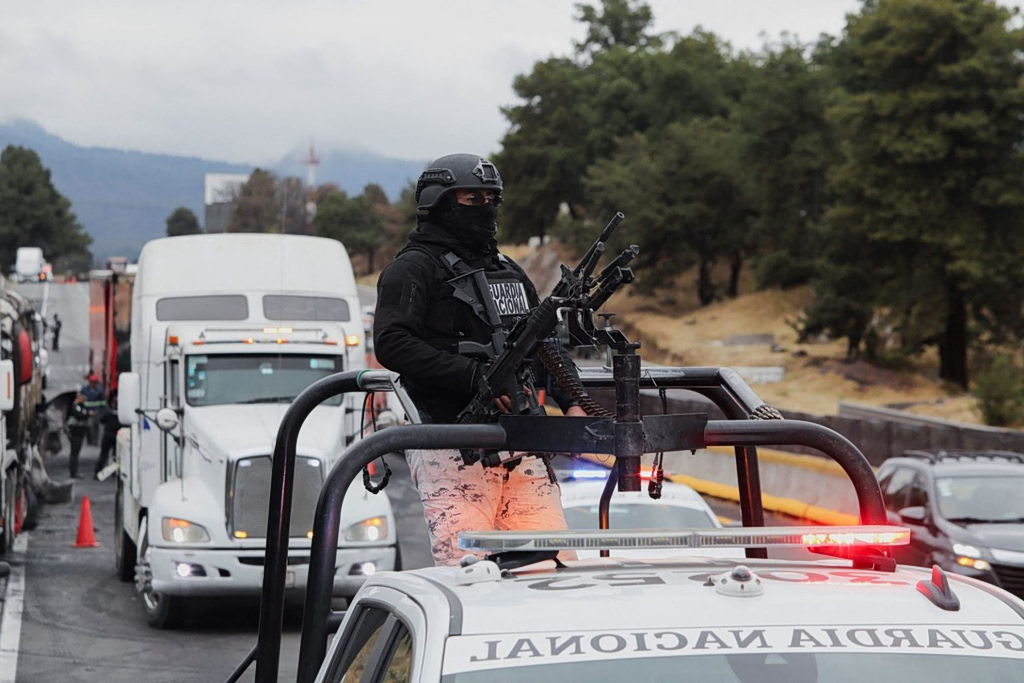
A burnt bus stands as members of the National Guard stand at the site on the highway connecting Mexico City with the state of Puebla, following roadblocks and arson attacks carried out by members of organized crime in several states after a military operation in which a government source said Mexican drug lord Nemesio Oseguera, known as “El Mencho,” was killed in Jalisco state, in Santa Rita Tlahuapan, Mexico, February 22, 2026. REUTERS/Paola Garcia
“They delivered a calculated response when the state crosses those lines,” Freeman said. “It shows that there was a plan in place.”
Like other drug-trafficking networks in Mexico, Oseguera’s organization acted as a de facto government in impoverished parts of Jalisco and other states, handing out food and medicine in a part of the country where the central government wields little control.
Berl Schwartz, 79, who used to run a newspaper in Michigan and has a home in the center of Puerto Vallarta, said he and his partner were considering leaving, fearing the violence could turn worse at night. He saw fire damage across the horizon and worried as local authorities warned people to shelter in place.
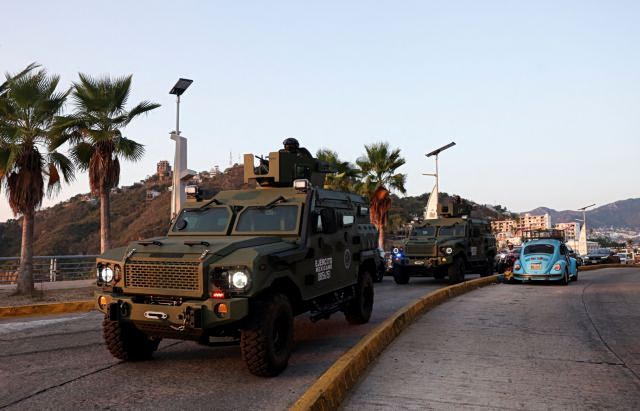
Mexican soldiers patrol in armored vehicles in Acapulco after authorities reinforced security following roadblocks and arson attacks carried out by organised crime in several states, in the aftermath of a military operation in which a government source said Mexican drug lord Nemesio Oseguera, known as “El Mencho,” was killed in Jalisco state, in Acapulco, Mexico, February 22, 2026. REUTERS/Henry Romero
“There were multiple buses set on fire, they closed down the transportation system, multiple cars set on fire,” he said. He added that the armed men seemed to be targeting Oxxos, a large chain of convenience stores. “They burned down at least three that I know of.”
Schwartz said he and his partner hunkered down Sunday.
“We have our bags packed,” Schwartz said by phone Sunday afternoon. “If this is what they’re doing in broad daylight, it’s scary to think what they could do at nighttime.”
He added later in the day: “The cartel sent a message. I’m worried about what’s next.”
The unrest wasn’t confined to Puerto Vallarta. In the state’s largest city, Guadalajara, and elsewhere, cartel violence upended daily life.
Elsa Puente, 59, a catering manager in Guadalajara, said she was meeting with friends in the morning when rumors started to spread about violence in the streets.
“We couldn’t find a way to get home,” she said. “Armed police began to arrive in a truck and they told us to get out. And people were just paranoid, even crying.”
Puente said she and a friend headed to her office 20 minutes away to wait it out. If they have to sleep there, so be it.
“Here we are safe and it doesn’t matter,” she said, talking from her office.
Not too far away, in a community outside Guadalajara, Puente’s niece, Selene, said she had to close her supermarket as word spread that the cartel was taking control of roads and burning vehicles.
“What we saw were helicopters flying around the area,” she said. Gasoline stations and stores began to close up and she began to hear that some convenience stores had been set on fire.
“I had to ask for someone to get me home,” she said.
Carol Ochoa, who lives with her family in a Guadalajara suburb, said the authorities called for a Code Red, meaning no wandering outside. She worried the fighting would continue for a while, considering the cartel’s firepower.
“They can attack the state forces,” she said. “They’re so big and they are all over Jalisco.”
Write to Juan Forero at juan.forero@wsj.com