The frequent calls aren’t so friendly anymore.
As President Trump was trying to broker a permanent end to his war in Iran that has weighed on the U.S. economy and kept gas prices above $4 a gallon, he had choice words for the partner that urged him into it.
“Why are you blowing up buildings?” Trump asked Israeli Prime Minister Benjamin Netanyahu in a recent phone call about Lebanon, people familiar with the call said. “Stop blowing up buildings.” In another, he complained that a global downturn sparked by the war could tie him to Herbert Hoover and the Great Depression of the 1930s, the people said.
Trump’s frustration with Netanyahu has boiled over at times in recent weeks as he has tried to end the war with Iran and the Israeli prime minister has sought to keep up the fight. The relationship has major ramifications for a region on the cusp of a potential peace deal , whose future could be undone by further military attacks by Israel.
In a memorandum of understanding , Tehran agreed to a trade: Iran fully reopens the Strait of Hormuz in exchange for the U.S. ending its blockade and allowing Tehran to sell its oil on the market. Both sides left the tougher negotiation on dismantling Iran’s nuclear work for the next 60 days.
Israeli officials were surprised by the ceasefire announced Thursday and had assessed that Trump was leaning more toward military strikes than a deal, according to Israeli officials. Israeli officials had been on standby for possible strikes, one person said.
“Donald, how are you going to verify that?” Netanyahu asked on one recent call about the nuclear weapons provisions of a potential deal, according to people with direct knowledge of the call. On other calls, he laid out reasons not to trust the Iranians over history.
Trump has told his advisers that no one can handle Netanyahu, and that he wants to “bomb everyone,” according to a person who heard his comments.
“I find him to be great, but sometimes he gets carried away,” Trump said about Netanyahu in a recent interview with The Wall Street Journal.
A senior administration official with knowledge of Trump’s calls to Netanyahu said they usually entailed the Israeli leader arguing for more military action, and said Trump had grown tired of it.
“Bibi tells the president why he needs to blow something up, and why Israeli intelligence knows how to do it, and when to do it, and the president listens,” the person said. “The calls are usually the same.”
As Trump has talked about needing to reopen the strait, Netanyahu has encouraged him to wait the Iranians out and make it continue to hurt.
After hearing last week that Trump was going to sign a deal while sidelining Israel, Netanyahu requested an urgent meeting with him, a person familiar with the matter said. Israeli officials were shown a draft of the deal days later.
On Sunday, Trump said in the interview the Israelis would like the deal, even as they signaled otherwise and had not yet seen it. He said the relationship had clear boundaries, and Netanyahu “asks for permission,” a public humiliation for the Israeli leader.
“He calls us the big one, and he’s the little one,” Trump said.
The mercurial nature of their relationship has sometimes led to internal disagreements, with Netanyahu regularly seeking out Trump’s approval but sometimes striking targets first, administration officials said.
“Bibi is terrified that Trump will flip on him, but he also sees Trump as a guy who can be convinced of anything, including attacking Iran,” said Nathan Sachs, a senior fellow at the Middle East Institute, using Netanyahu’s nickname.
Officials across the Trump administration have grown frustrated with the Israeli leader. Some White House officials have asked whether Netanyahu has sought to prolong the Iran war to buttress his own political position, administration officials said. Israeli officials have also turned on some of Trump’s advisers, believing they are feeding him negative information about the country.
Netanyahu faces uphill elections in the fall, with polls showing him failing to secure a ruling majority. Trump had previously come to his aid, calling for him to be pardoned from his continuing corruption trial, with hopes from people close to Netanyahu that he could also provide a boost on the campaign trail. That now seems unlikely.
“I wonder if Bibi even wants to continue,” Trump told ABC News earlier this month, forcing the Israeli leader to say he was still running in the coming elections.
The Israeli Prime Minister’s Office didn’t respond to a request for comment. Asked for comment, a White House official said Trump has a great partnership with Netanyahu and Israel, but added: “No country or leader pressures President Trump to do anything.”
Golden pagers
Trump grew angry at Netanyahu for congratulating former president Joe Biden for winning election in 2020, but when he returned to office, the two men picked a relationship back up. “How is my friend Bibi?” he asked an Israeli visitor in early 2025.
The two men were never best friends or golfing buddies. In a late 2025 interview with the Journal, Trump said the relationship was symbiotic in some ways. “Bibi is a difficult person, but so am I,” he said.
In part, longtime Netanyahu watchers say he isn’t known for cultivating deep friendships as he trusts few people around him. “He is a very suspicious man,” Sachs said.
Netanyahu has met with Trump at least seven times this term, in addition to the frequent calls, and has tried to publicly show his relationship with Trump is strong.
People working for Netanyahu were told to focus messaging and social-media posts on the close relationship between the two men, a person familiar with the matter said. One post in 2025 showed the two leaders piloting a B-2 bomber together. An AI-animated photo cropped out Israel’s president so that only Netanyahu and Trump would appear side by side. Top Israeli officials worked with everyone in Trump’s orbit who would speak to them, and the country has even hired a social media influence firm run by Brad Parscale, Trump’s former campaign manager. Parscale didn’t respond to requests for comment.
Over the course of 2025, Netanyahu repeatedly visited Trump to urge him to strike Iran. At one point, Trump pulled the leader aside and took him on a private tour of the Lincoln Bedroom in the White House residence, officials said. Netanyahu calls him Donald, an informality that most other world leaders don’t embrace.
At another point, he brought Trump a gold pager to the White House, which dazzled the president, officials said. Then the Israelis brought pagers made of other materials for senior administration officials. It was a replica of the pagers that Israelis had used to blow up members of Hezbollah, the U.S.-designated terrorist group.
“He called me up that night and he said, ‘Man.’ I said, ‘Yeah, ain’t that something?’ He was wowed by that, and I think that gave him a newfound respect for Israel,” said Sen. Lindsey Graham , the South Carolina Republican and presidential ally, in a March interview.
Trump showed more of a willingness to go to war with Iran than many of his advisers, and more than the Israelis suspected, people familiar with the dynamics said. Netanyahu developed detailed attack plans on Iran and presented them to the president. “Bibi was reassuring to Trump that we have a lot of capability,” Graham said.
Military cooperation between the two countries reached unprecedented new levels. Israeli generals sat in U.S. operations rooms, according to military officials. Dozens of U.S. tankers were parked in Israel’s main civilian airport and other sites in Israel. Israeli pilots learned to recognize the voices of their American counterparts refueling them in the air, pilots said.
Still, Trump was rarely convinced of the need to send ground troops to Iran. He believed the U.S. could overwhelm the regime with air power. Tehran would have no choice but to dismantle its nuclear program under heavy bombardment, Trump assessed, waving away concerns that Iran could close the strait or retaliate in a significant way.
Early on, Trump cheered with Netanyahu about the precision of the attacks in hitting their targets, how many Iranian leaders had been taken out and where they should bomb next, even discussing particular sites in late-night calls, people familiar with the matter said. Trump showed more interest in the granular details of the war than his team expected, and some of the enthusiasm came from Netanyahu’s updates, U.S. officials said.
As the war unfolded, Trump grew skeptical of some of Netanyahu’s claims and rejected his plan for a Kurdish invasion of Iran to topple the regime, Israeli officials said.
Different aims
Netanyahu encouraged Trump to keep the attacks in Iran going, sharing intelligence and specific targets. He encouraged the bombing of Iranian energy infrastructure, a measure opposed by some of Trump’s advisers and, depending how the attack was conducted, against international humanitarian law. Netanyahu, for example, showed enthusiasm for bombing Kharg Island.
Netanyahu consistently railed against an agreement with Iran over its nuclear program, insisting the regime would covertly race to a bomb. Trump, however, told the Israeli leaders and his advisers that he wanted to solve the problem diplomatically, not solely with force. He told Netanyahu any deal would be “ironclad,” a person familiar with the calls said.
In the interview, Trump said Netanyahu had different aims in some aspects because his country is so much closer to Iran.
After calls now, Trump often asks others in his administration if Netanyahu is accurate, something he didn’t regularly do in the past, a senior administration official said.
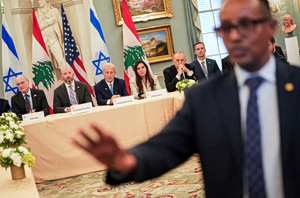
What has seemed to frustrate Trump most is Israel continuing to bomb Lebanon despite a ceasefire, administration officials said. At one point, Trump brought Israeli and Lebanese officials into the Oval Office and tried to broker a deal himself, according to people who attended. The first clash came after Trump told others he was shown pictures of Christians being bombed there.
In another call about Lebanon this month, the details of which were earlier reported by Axios, he called Netanyahu “f—ing crazy” and told him he would be in prison without his support.
Write to Josh Dawsey at Joshua.Dawsey@WSJ.com , Alexander Ward at alex.ward@wsj.com and Anat Peled at anat.peled@wsj.com