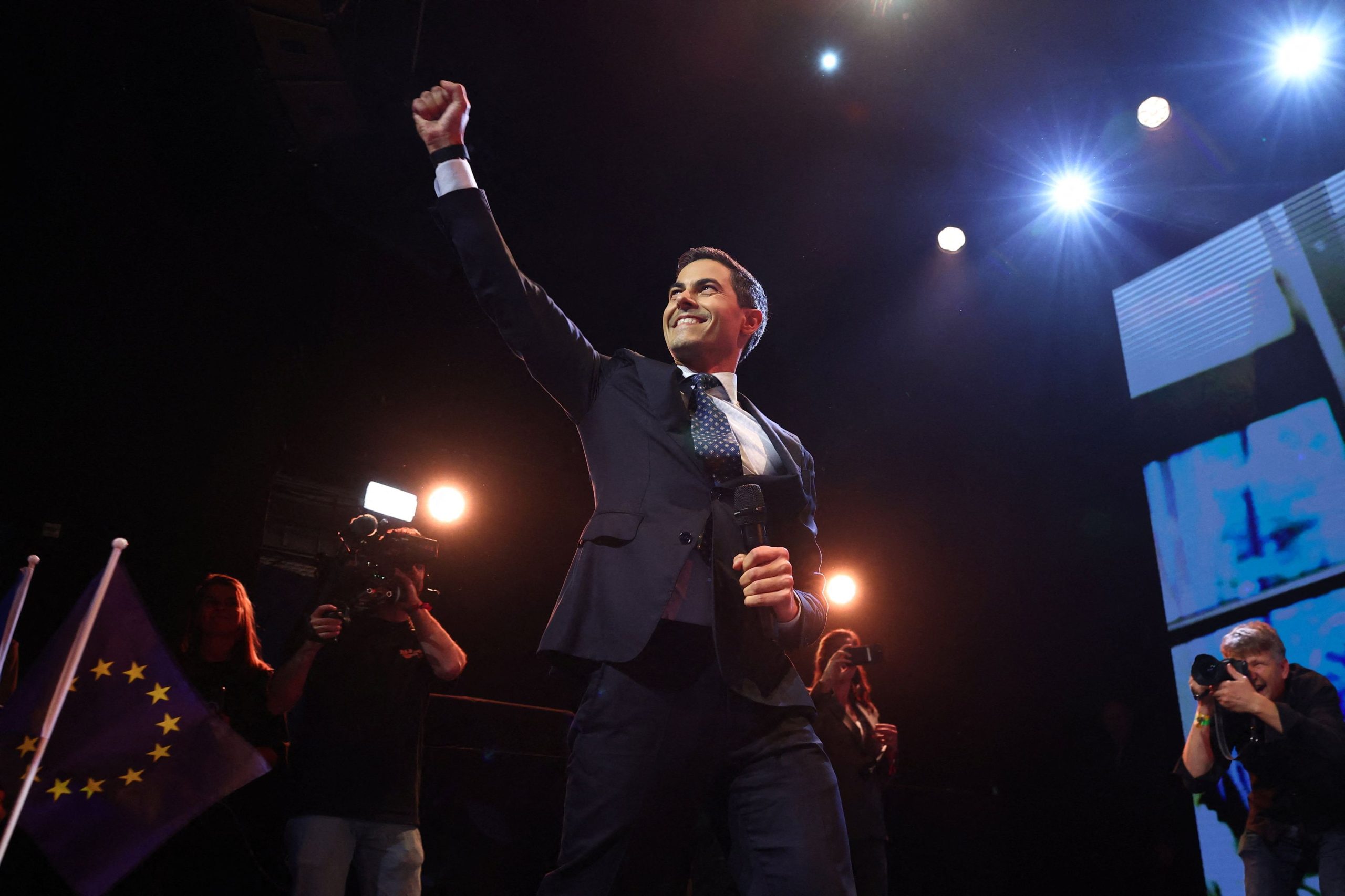
Two years ago, Dutch voters handed victory to one of Europe’s most prominent hard-right politicians. Last month, they backed his antithesis.
Rob Jetten , a 38-year-old centrist, will have the first shot at forming a government after his D66 political party roughly tripled its number of seats in the House of Representatives and won a bigger share of the popular vote than Geert Wilders’s far-right Freedom Party, which prevailed in 2023.
The Netherlands’ electoral council confirmed the results on Friday. Jetten’s party tied with Wilders’s for the number of seats won and got about 30,000 more votes, a thin margin that shows how tight the race was.

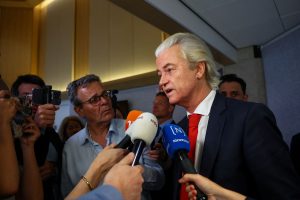
The Party for Freedom (PVV) party leader Geert Wilders and Democrats 66 (D66) party leader Rob Jetten attend the final debate in the run-up to the House of Representatives elections, in The Hague, Netherlands, October 28, 2025. REUTERS/Piroschka van de Wouw
If Jetten becomes prime minister, he will be the youngest in the Netherlands’ history and the first openly gay leader in the world’s first country to legalize same-sex marriage. He will also be among its more pop-culture-savvy leaders, having appeared on a televised quiz show during the election campaign and kept a large social-media following via frequent posts about his personal and professional lives.
Jetten’s socially progressive, pro-European Union stance contrasts sharply with that of Wilders, who has campaigned to close Dutch borders to asylum seekers, shut down mosques and ban the Quran.
“They are on the opposite sides of a cultural divide in the Netherlands,” said Sarah de Lange, a professor of Dutch politics at Leiden University. While Wilders took a confrontational approach, she said, Jetten “had a very unifying style.”
In a country best known for quaint houses and tidy landscapes, politics can be messy. Dutch leaders must rely on fragile multiparty coalitions to pursue their agendas, and modest shifts in political mood can propel them into power—or destroy them.
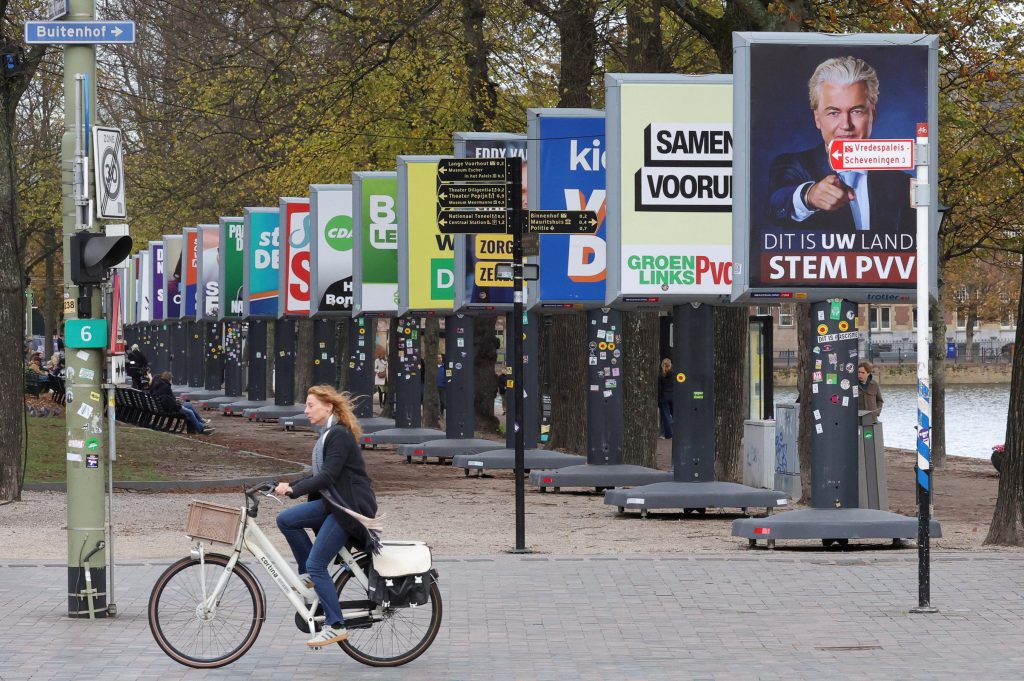
A person rides a bicycle next to election campaign posters on the eve of the Dutch parliamentary election, in The Hague, Netherlands, October 28, 2025. REUTERS/Yves Herman
The small, rich country has at times proved a harbinger of broader trends across Europe. After Wilders’s surprise success in 2023 , far-right parties notched gains in the European Parliament, Germany and Austria. His recent defeat also holds lessons, showing how difficult it can be for far-right leaders to transition from opposition to government.
Jetten, whose party entered the election with just nine of the Dutch House of Representatives’ 150 seats and is now poised to hold 26, was buoyed during the campaign by lucky breaks and external events.
One of those breaks came in October, when he was offered a last-minute spot in a televised debate after Wilders pulled out because of a security threat. Jetten ranked among the top performers in the debate, pollsters said, and support for his party climbed.
Another break was his participation in a popular Dutch game show called “De Slimste Mens,” or “The Smartest Person.” Although the recording of episodes began before the election was called in June, they aired in September and October, with the final round broadcast less than two weeks before the vote.
Jetten, who survived multiple knockout rounds to place third in the show’s finale, came across as charismatic and self-deprecating, viewers said. In one episode he told a story about watching former Prime Minister Mark Rutte devour entire bunches of bananas during political negotiations. In another, he joked that his friends used to call him “panda” whenever he was tired because of the dark circles that appeared under his eyes.
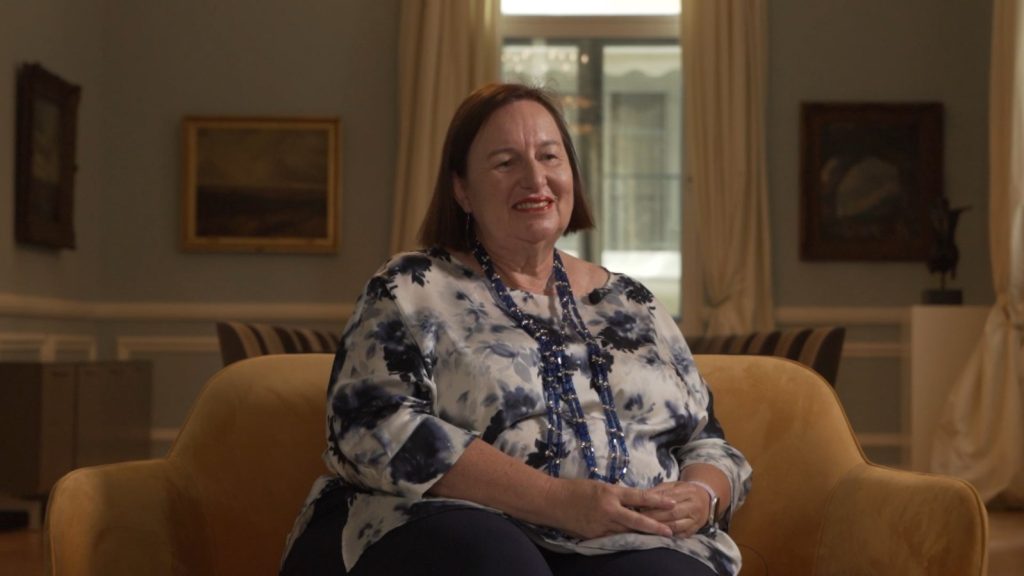
Stories like those “made him very human,” said Brankele Frank, a neurobiologist and writer who competed against Jetten on the game show and ultimately won the season. “I think that’s what really clicked with the public.”
It was a contrast from an impression some voters had of him years earlier. At one point, he was labeled “Robot Jetten” for what critics said was a tendency to repeat the same pre-prepped sound bites during interviews. On the quiz show, he said he keeps a tiny robot in his office as a reminder.
By the time Jetten became Dutch climate minister in 2022, under a coalition government led by Rutte, he had honed his communication skills.
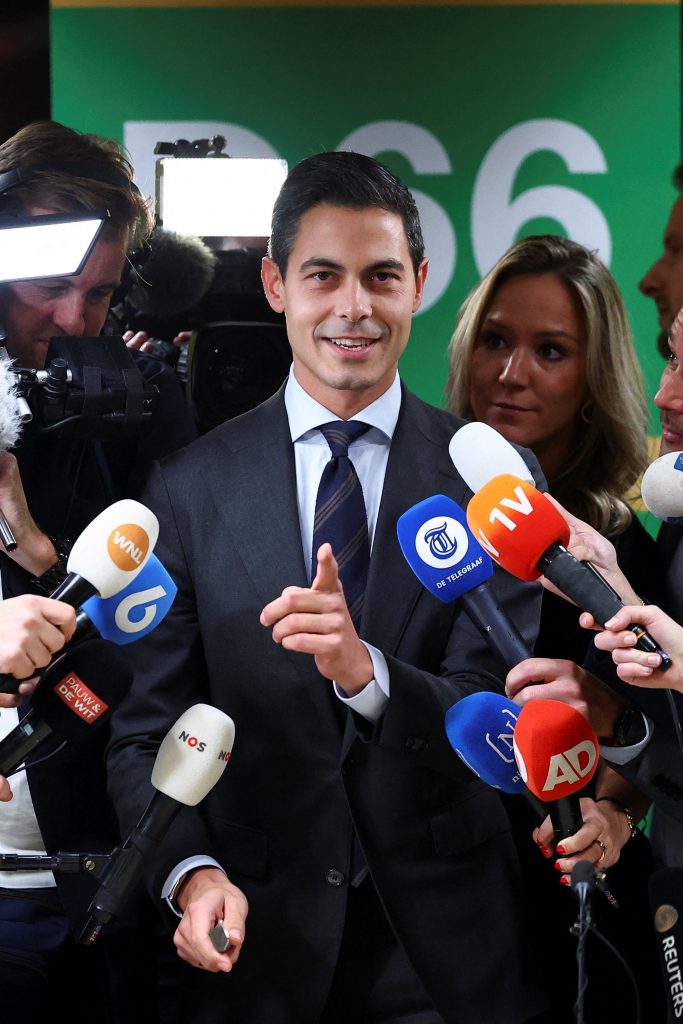
Democrats 66 (D66) party leader Rob Jetten speaks at the Dutch Parliament, after the Dutch parliamentary elections, in The Hague, Netherlands, October 30, 2025. REUTERS/Piroschka Van De Wouw
“He says yes to almost everything,” said Deniz Horzum, Jetten’s spokesman when he was climate minister. Horzum, who wasn’t involved in the campaign, said he saw that same approach continue in recent months, with Jetten visiting conservative talk shows and posting clips of himself on TikTok with his fiancé.
Jetten’s positivity and emphasis on overcoming division in the Netherlands helped him stand out during the election campaign, Dutch political experts said. He used the slogan “Het kan wél” —“It is possible”— which echoed former President Barack Obama’s “Yes We Can” message from 2008.
Joey de Haas, a 21-year-old political-science student who organized an election viewing party at the University of Amsterdam, said she voted for a different party because she didn’t think Jetten had a clear plan to deliver on his promises. But it was clear Jetten’s messaging resonated with a lot of people.
“Jetten had the Obama factor,” de Haas said. “He campaigned on a break from a stale way of doing politics.”
Jetten’s youth and hopeful tone have prompted comparisons to New York City Mayor-elect Zohran Mamdani , but their economic philosophies are different. While Mamdani calls himself a democratic socialist and wants to significantly expand social programs —including free buses and rent freezes—Jetten’s proposals are more restrained and include measures to tighten eligibility for unemployment benefits and ease the regulatory burden on businesses.
Jetten faces formidable challenges. Governing will require crafting a multiparty coalition from a fractious political landscape, in which around 15 parties won seats and the far-right remains a powerful force despite Wilders’s losses.
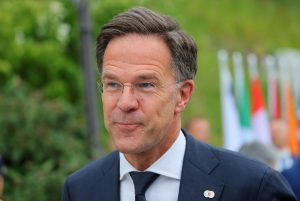
Rutte stayed in power for 14 years, and analysts said he only achieved that through ruthless pragmatism and political flexibility—tactics he now applies to his job leading the North Atlantic Treaty Organization , where he has worked relentlessly to keep President Trump interested in the alliance.
Jetten moved his party modestly to the right on immigration during the election campaign. As the leader of a centrist party that can draw support from both the left and right, he could find it difficult to satisfy both, said de Lange, the politics professor. D66 “is prone to incredible volatility in support,” she said.
One approach that seems to be working for Jetten so far is his tendency to infuse pop culture into his messaging—a style his team says helps him communicate with voters who prefer some entertainment alongside more serious political content.
After receiving a bobblehead in his likeness during an election debate last month, Jetten posted a video of himself holding the figurine and lip-syncing to a satirical audio clip about owning a “24-karat gold” Labubu—a reference to Pop Mart’s troll-like plush toys, which have exploded in popularity over the past year.
The personalized bobblehead, which sports a blue suit and tie, later appeared in a set of campaign photos on Jetten’s Instagram. “This doll haunts me in my sleep,” he joked.
Write to Kim Mackrael at kim.mackrael@wsj.com