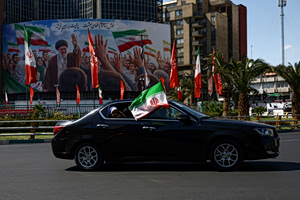
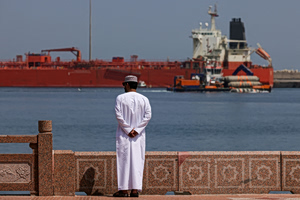
Shipping blockades like the operation President Trump launched in the Strait of Hormuz are among the oldest and most effective techniques of warfare, though rarely the only factor in defeating an adversary.
Throughout history, global dependence on seaborne trade has rendered countries vulnerable to blockades, a form of economic warfare meant to starve an enemy of material and treasure by severing its commercial lifelines.
Because a blockade is recognized in international law as an act of war, governments more often characterize their efforts to isolate an adversary as sanctions, embargoes or quarantines that suggest narrower goals. When President John F. Kennedy warned the Soviet Union that the U.S. military would block ships ferrying nuclear missiles to Cuba in 1962, he called the action “a strict quarantine.”
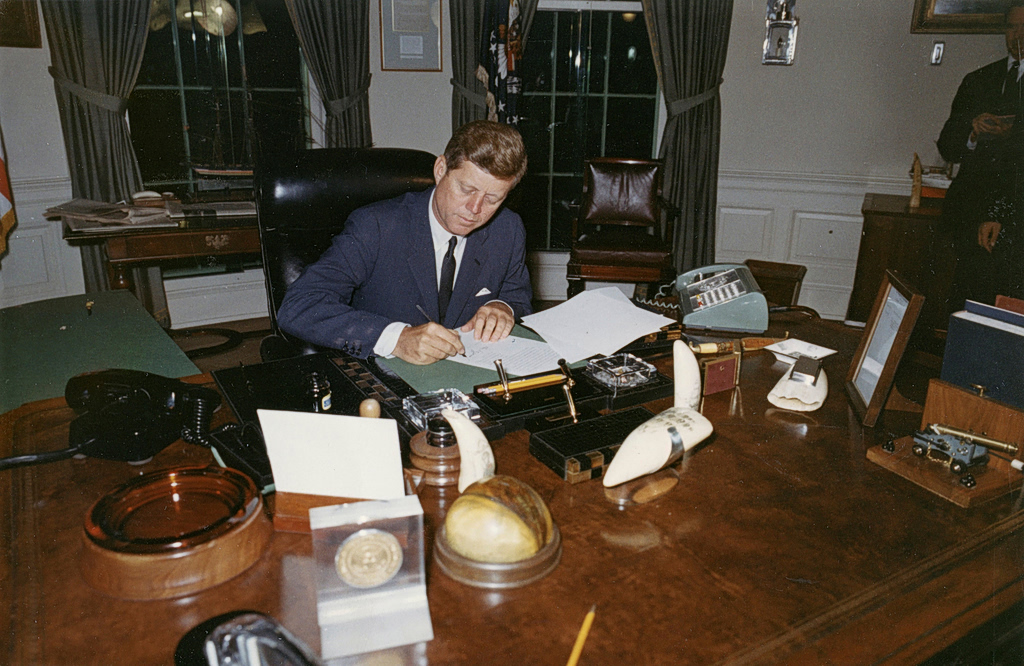
FILE PHOTO: U.S. President John F. Kennedy signs a proclamation for the interdiction of the delivery of offensive weapons to Cuba during the Cuban missile crisis, at the White House in Washington, DC October 23, 1962. Cecil Stoughton/The White House/John F. Kennedy Presidential Library/File Photo via REUTERS.
Iran has declared its own form of embargo on the strait by firing at vessels trying to cross. Now it is a “double blockade,” according to analysts at Lloyd’s List Intelligence.
Wars have been won by stopping shipping. In ancient Greece, the city-state of Sparta forced the surrender of Athens by blocking its grain supplies. British naval blockades helped defeat Napoleon, who in turn had tried to hurt British merchants by forbidding their products from entering Europe. During the American Civil War, both the North and South attempted blockades.
“While much has changed since the days of sailing ships, the underlying principles of naval blockades remain as important today as they were…during the Civil War,” according to an academic paper on the practice by the U.S. Naval War College.
Historically, blockades were primarily designed to damage an enemy’s economy by blunting its ability to export.
But in World War I, Germany and Britain pursued a different tack with their dueling blockades: cutting the other’s access to foreign goods, in particular food. Likewise, the U.S. early in World War II stopped Japan from seaborne oil imports—targeting the very vulnerability Tokyo had sought to offset by trying to colonize its resource-rich Asian neighbors.
Trump’s strategy is a throwback since it is taking aim at Iranian revenue, not its imports. “He’s being Napoleonic,” said Stephen Broadberry, a professor of economic history at Oxford University.
India’s blockade of Pakistani ports helped Bangladesh secure independence from Pakistan in 1971. At the end of the Vietnam War, the U.S. dropped mines around the North Vietnamese port of Haiphong, effectively stopping supplies from moving through it and giving Washington some leverage in peace talks.
But largely since the world wars, naval blockades have taken a back seat to more modern forms of economic warfare.
For one, ruining an enemy’s economy today rests more on superior air power than ruling the seas. And perhaps the most powerful weapon of the contemporary blockade is the U.S.’s unique ability to freeze a rival nation—Iran, North Korea, Russia—out of the dollar-based international-financial system, though Washington calls its tool economic sanctions.
The U.S. isn’t the only nation to weaponize economic sanctions. For over three years starting in 2017, Saudi Arabia denied land, sea and air access to the peninsular nation of Qatar in a pressure campaign that also had the support of the United Arab Emirates, Bahrain and Egypt. And old-fashioned muscle still works: Saudi Arabia in recent years has also controlled Yemen’s naval and airspace.
Broadberry’s research into blockades shows successful ones continued for an extended period because they take time to have an impact and were accompanied by other pressure, like military force.
A blockade tends to fail because “policymakers always underestimate the options for the enemy to get around it,” Broadberry says.
He says Britain survived Germany’s blockade in World War I because it began importing grain in multi-vessel convoys that were defended by warships and safely reached port over 99% of the time. In turn, Germany was pushed to the edge of starvation, despite its relative food self-sufficiency, because Britain’s counter-blockade worsened the domestic fact that horses and farmers were sent from grainfields to the battlefields.
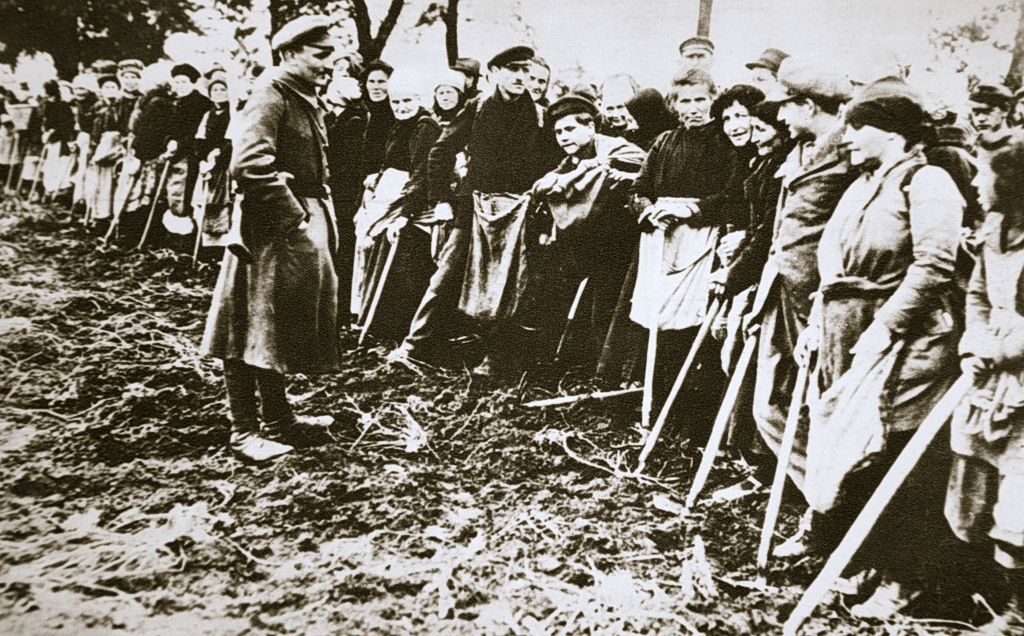
Germany was pushed to the edge of starvation by the British naval blockade during World War I. Historica Graphica Collection/Heritage Images/Getty Images/ WSJ
Blockades risk causing problems with other countries. If the U.S. action at Hormuz stops the flow of Iranian oil, shortages will be acute in China and India—and potentially pull them more directly into the conflict.
“The political calculator changes,” said Sidharth Kaushal, an expert in naval power at U.K. think tank the Royal United Services Institute.
Kaushal says the Union’s blockade of Confederate ports during the Civil War starved the U.K. of cotton and pushed the world’s then-military superpower to contemplate breaking it. “The Union relaxed the blockade simply because of the risk of upsetting the British,” Kaushal said.
Graham Allison, a professor of government at Harvard University, said Trump’s decision to forgo diplomacy with Iran and declare a blockade could encourage Beijing to attempt something similar to achieve its claim on the democratically run island of Taiwan.
“We should not expect that the U.S. will be the only one who plays by the new rules,” said Allison.
Write to James T. Areddy at James.Areddy@wsj.com and Alistair MacDonald at Alistair.Macdonald@wsj.com