
 Μake us preferred on Google
 PARIS—When French riot police bore down on a throng of student protesters this week, Bally Bagayoko, the mayor of a working-class suburb of the French capital, jumped in front of the high-schoolers and acted as a human shield.
“Stop! Back up!” Bagayoko shouted to the police, according to video of the standoff that went viral, his arms outstretched as he leaned against the students at his back.
Bagayoko, 53, has repeatedly stepped into the front lines of the student protests that have swept French schools this month, becoming a hero of the movement and a lightning rod for its critics. The far-left mayor of Saint-Denis, just north of Paris, was carried through the streets last week by student protesters shouting “Bal-ly! Bal-ly!”
The attention has transformed Bagayoko into a leading figure in France Unbowed, the far-left party led by Jean-Luc Mélenchon who has risen in polls ahead of next spring’s presidential elections. Yet centrist and right-leaning politicians say Bagayoko is fueling a movement that has sowed chaos, with protesters blockading many schools and setting some of them on fire.
Prime Minister Sébastien Lecornu accused France Unbowed of being behind the protests, after a memo circulated by French intelligence said the far-left politicians were implicated in the movement. Since then, intelligence services have backed off that finding, a French official said, saying that the movement began spontaneously, was infiltrated by violent antiestablishment protesters and was later embraced by Bagayoko and other members of the far-left.
Still, Bagayoko last week appeared to endorse violence by protesters if they are attacked by the police. “Violence can be legitimate at a certain point,” he said during a protest, “but every time we can avoid it, that’s better.”
That prompted the Paris police to ask prosecutors to open an investigation into Bagayoko for incitement. Bagayoko didn’t respond to a request for comment.
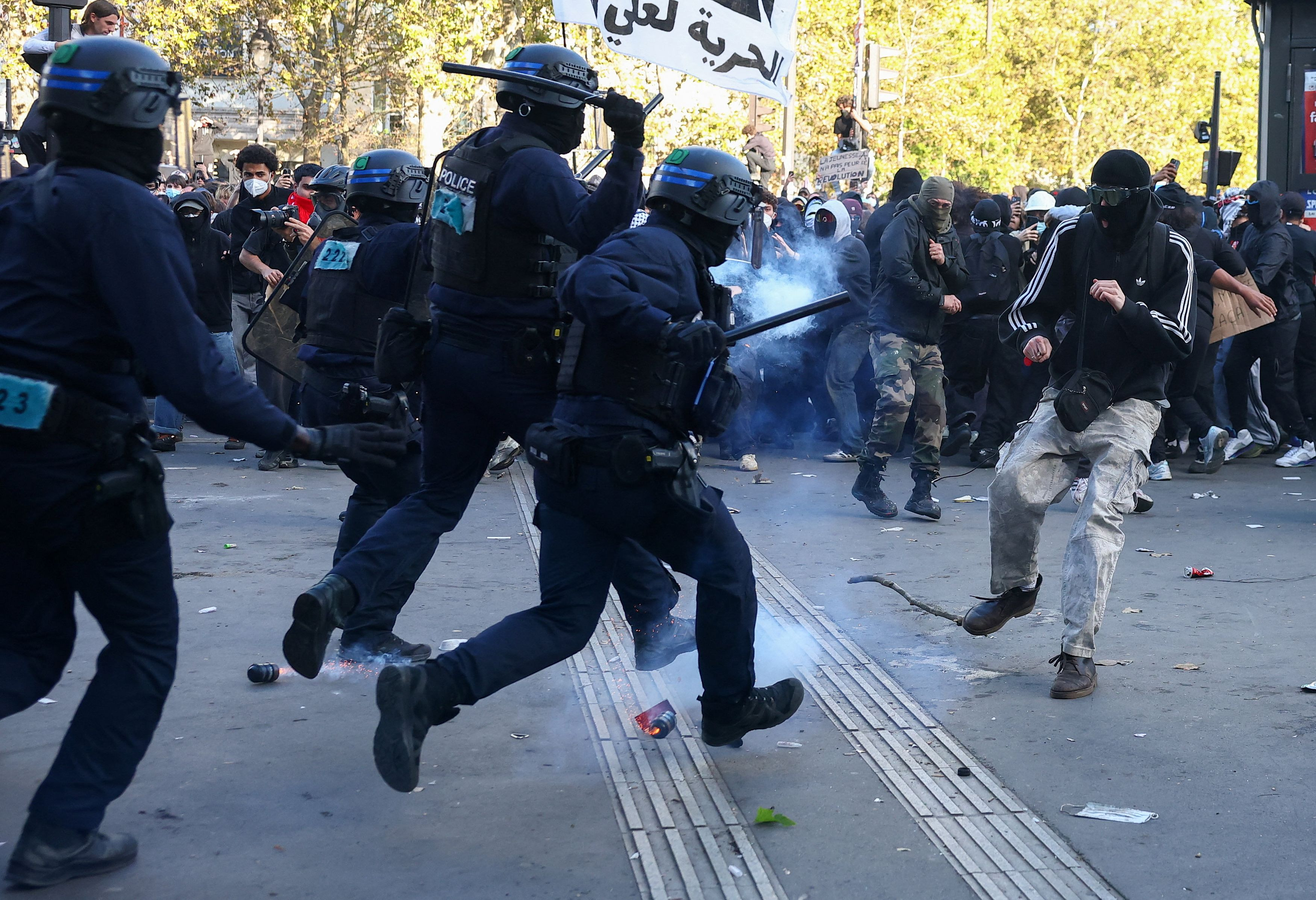
Protesters have tussled with police, who have used tear gas and stun grenades to disperse them. The government said that 488 people were arrested and 43 police were injured during protests earlier this week. The interior ministry also said police would stop using stun grenades on the students.
Tens of thousands students protested again on Thursday, including a large gathering at Place de la Bastille, the site of the prison that was stormed and torn down in the French Revolution. Around 71,500 took to the streets across the country, the interior ministry said; 504 people were arrested, and 48 police and gendarmes were injured, the ministry said. Protesters burned a police car in Strasbourg, attacked a police station in La Rochelle and destroyed a school cafeteria in Saint-Etienne, among other incidents.
Bagayoko, meanwhile, called for President Emmanuel Macron to apologize to the families of students injured in the protests, saying “this action does not require billions, just humanism.”
Saint-Denis, a suburb of 150,000 people, was among the first places where students began to protest. It is one of the poorest areas of France, home to a large population of recent immigrants from the developing world. The protests have since spread across France, from well-heeled districts of Paris to towns deep in the French countryside.
French education is largely funded by the central government, unlike in the U.S. where local taxes are the main source of public school funding. That prevents the kinds of large disparities in education budgets between rich and poor districts seen in the U.S. The government says it spends extra in poorer French districts, resulting in lower student-to-teacher ratios. But those teachers tend to be younger and less experienced.
Broad student discontent is driving the protests. The students say teachers are often absent, that school facilities are in poor condition and that the school days are too long. They want France’s university admissions system to be reformed and food in school cafeterias to be improved.
Bagayoko, the son of immigrants from Mali, is considered a rising star in France Unbowed. He was a longtime manager at the RATP, the Parisian public transport agency, who was active in local politics before running for office. He won election with 51% of the vote in March, avoiding a runoff against other candidates in the second round.
This week, he defended his role in the protests, saying he feared that police might hurt the students.
“They held back because I’m a recognizable figure,” Bagayoko said.
Write to Matthew Dalton at Matthew.Dalton@wsj.com