“USA250 : The Story of the World’s Greatest Economy” is a yearlong WSJ series examining America’s first 250 years. Read more about it from Editor in Chief Emma Tucker.
When it comes to the diseases that threaten to steal our healthy years—Alzheimer’s, heart disease, cancer, arthritis—they all have one thing in common: By the time we get diagnosed, often much of the damage is already done.
But a wave of new scientific advances have the potential to shift that timeline far earlier.
In the near future, doctors may be able to predict the speed at which your individual organs are aging , and detect cancer, Alzheimer’s and other diseases long before you develop symptoms. GLP-1 drugs, now used for diabetes and weight loss, might be prescribed to protect your heart or brain or to treat a range of chronic conditions . And instead of a knee or hip replacement, you could get new bone and joint treatments designed to reverse physical decline entirely by regenerating tissue in damaged joints. undefined undefined “We’re entering a new era of prediction and prevention,” says Dr. Eric Topol, founder and director of the Scripps Research Translational Institute and author of “Super Agers.” “We’re talking about each organ in your body, and having new insights we never had. That’s where the whole future lies—preventing the big age-related diseases.”
Experts say the speed at which these changes are happening is rapid, and within the next five to 10 years, healthcare will already be shifting to better risk prediction and earlier interventions. Some of these medical advances are in limited use now, while others are expected to enter clinical trials in the next few years.
Here’s what the future of health looks like, head to toe.
Brain health
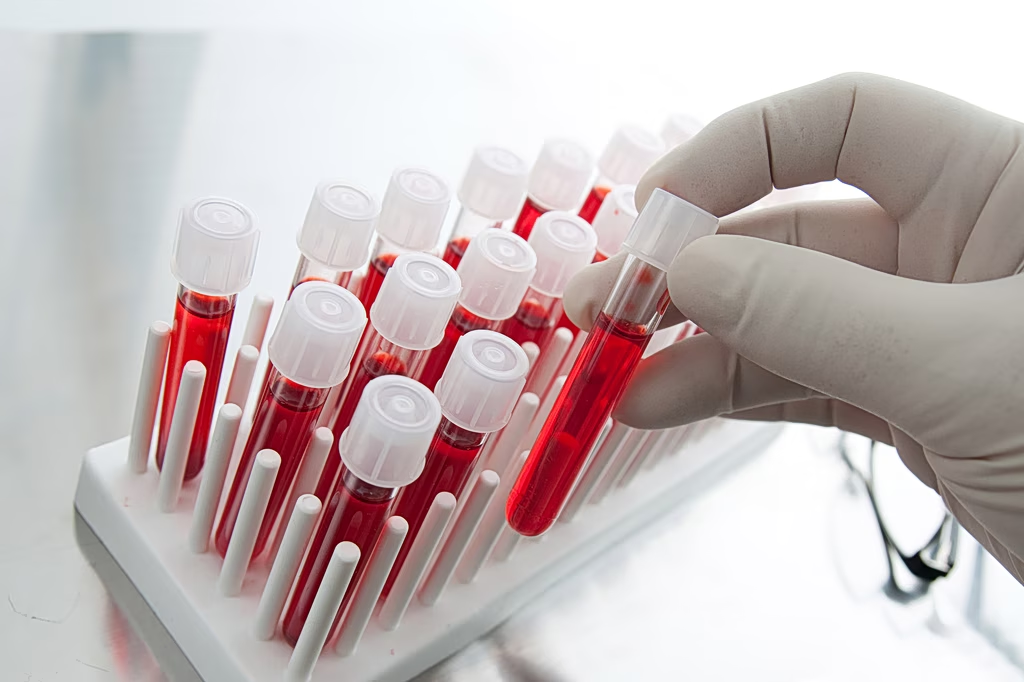
We’re close to a future when a simple blood draw may not only reveal your genetic risk for Alzheimer’s but will help predict exactly when the symptoms will appear . That sounds scary, but the hope is that knowing your risk early, will allow time for treatments that will actually slow or even prevent mental decline.
Already, a blood test can identify variants of the APOE gene, which are associated with inherited risk for Alzheimer’s, although it isn’t a routine part of medical care yet. Another blood test that measures p-tau217 can detect early changes linked to the buildup of abnormal proteins in the brain, but it’s used mainly in symptomatic patients and in research, not for screening healthy people.
The question is whether lowering your p-tau217 levels will make a difference, just like lowering cholesterol can improve heart health. This year, Scripps Research will be conducting a new randomized clinical trial of 1,200 high-risk participants to study whether lifestyle interventions including exercise and better sleep can have a meaningful impact on p-tau217 levels and subsequently lower risk for developing Alzheimer’s.
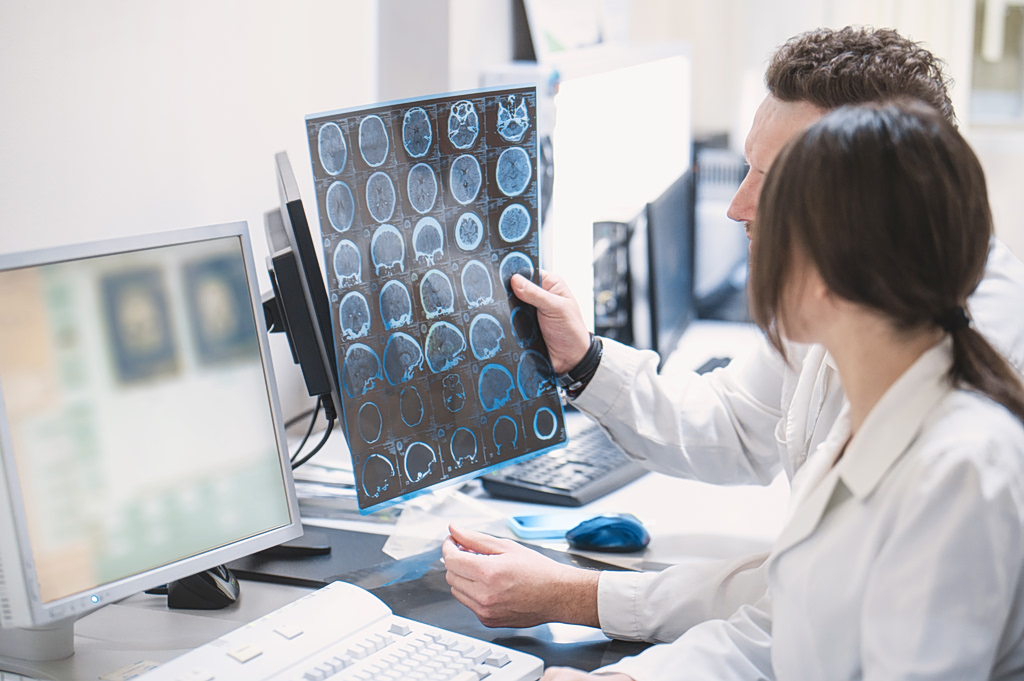
GLP-1 drugs may one day be used to lower Alzheimer’s risk. Already, studies of veterans with diabetes , electronic records of patients prescribed semaglutide , and a meta-analysis of randomized trials , suggest that GLP-1 users are less likely to be diagnosed with dementia or cognitive decline. Although an initial trial didn’t show a benefit , many experts believe early intervention with GLP-1 drugs before symptoms appear could still have an effect.
A positive result from a lifestyle or drug trial may make early testing routine in five years or even sooner, Topol says. But so far, convincing people to learn about their future dementia risk has been a tough sell. In public talks, Topol often asks audience members to raise their hand if they want to know their brain risk status.
“Nobody!” he says. “They think it’s a curse. But they should want to know because there’s going to be a lot you can do. I’m convinced we will be making a dent in preventing Alzheimer’s.”
Heart disease
Better risk prediction and early detection, fewer pills and one-and-done treatments are on the horizon for heart disease. To start, heart-risk screening is going to happen in some surprising places in the future.
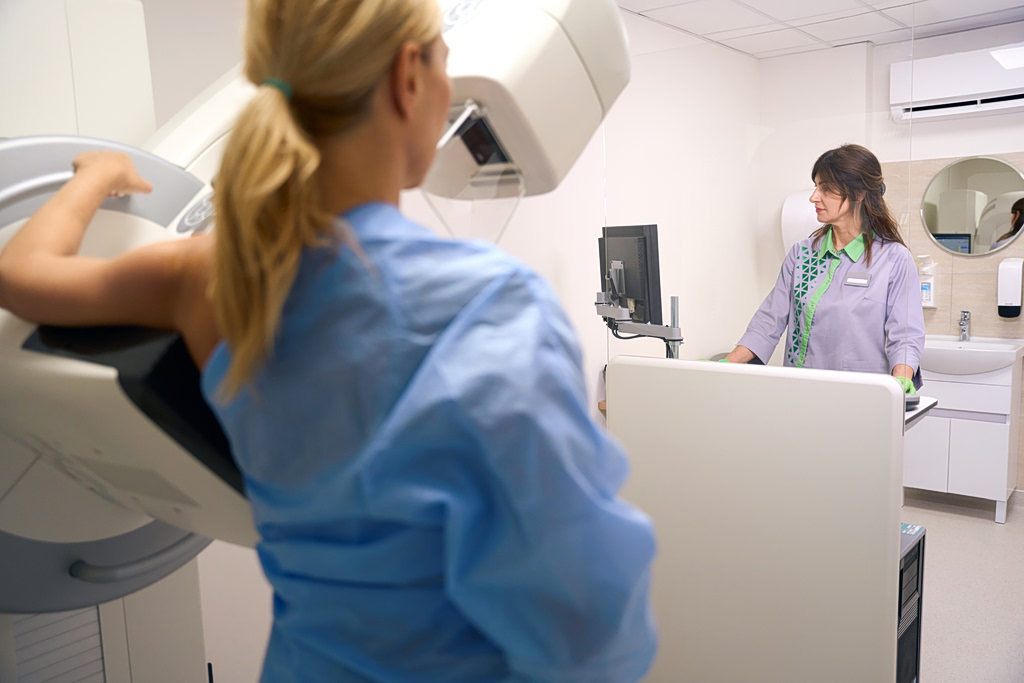
Mammograms may be used to reveal calcification in breast arteries. Eye exams can flag subtle vascular changes that reflect heart health. And AI tools are expected to improve heart risk assessments, detecting patterns not visible to the human eye. For instance, Yale researchers have developed an AI tool that reads electrocardiograms to identify asymptomatic people at risk of heart failure long before their symptoms appear.
But early detection only matters if treatments follow, and those are on the horizon too. GLP-1 drugs, which are already used to lower heart risk and treat sleep apnea , are expected to be more widely used for cardiac protection. Other drugs are in development. New RNA-based drugs target the genetic instructions inside cells to lower cholesterol or blood pressure, while therapies based on Crispr, a gene-editing technology, will permanently switch off genes that drive heart disease.
The advantage of these treatments is that patients won’t have to take daily pills, instead receiving treatments every six months, annually or some may even be done after one treatment. The RNA-based blood-pressure treatment zilebesiran, being co-developed by Roche and Alnylam, may be taken every six months. A recent study found that a one-time Crispr-based therapy lowered LDL cholesterol and triglycerides by about 50%. Given that many patients stop taking cholesterol medications within the first year, doctors are excited about the possibility of a one-time treatment.
“This problem of adherence is really huge,” says Dr. Steven Nissen, chief academic officer at the Cleveland Clinic Heart, Vascular & Thoracic Institute. “If you can get a one-and-done therapy and never need another treatment, that has a lot of appeal.”
One of the most closely watched trials in heart disease is studying a new drug that lowers Lp(a), a largely genetic risk factor that affects about 20% of the population and still lacks a targeted treatment. Results expected later this year will show whether the Novartis drug pelacarsen reduces heart attacks and death.
“If it works, it’ll be the first time in history we could treat a disorder that 20% of the world population have that’s a source of a lot of morbidity and mortality,” says Nissen, the study chair of the trial.
Breast cancer
For women with breast cancer, a continuing worry is whether the disease will come back, even if it was caught early. The future of breast-cancer care includes earlier detection of microscopic cancer recurrence, long before it would ever show up on a scan. New blood tests that measure circulating tumor DNA—tiny fragments of cancer DNA shed into the bloodstream—are already in limited use and offer a way to detect relapse months or even years sooner, when treatments should be more effective.
These tests are “a ground breaking technology which is going to revolutionize cancer care across the board,” says Dr. Joyce A. O’Shaughnessy, chair, breast cancer research at the Baylor Scott & White Sammons Cancer Center.
In one new trial, Baylor researchers are using one of these tests to identify certain breast-cancer patients who may be at high risk of recurrence, and then treating them with tirzepatide, the GLP-1 drug marketed as Mounjaro and Zepbound. The hope is that by reducing body fat, improving insulin sensitivity, and lowering chronic inflammation, GLP-1 drugs create an inhospitable environment for tumors to regrow. “The goal is to use that window of opportunity before cancer is clinically apparent to clear it and monitor it,” says O’Shaughnessy.
Gut health
Imagine going to the doctor for a colonoscopy and leaving with a complete view not just of your gut or colon-cancer risk, but of your overall health status. Over the next decade, the gut will emerge as a central hub to treat multiple diseases and protect organs across the body.
“We’re no longer thinking about gut health as just gut health,” says Trisha Pasricha, director of the Institute for Gut-Brain Research at Beth Israel Deaconess Medical Center. “Gut health is brain health, heart health. It’s the gateway to every other organ in your body.”
The gut contains trillions of microbes that help regulate immunity, metabolism and even brain signaling. Researchers are now developing therapies designed to reshape this ecosystem, from introducing beneficial bacteria to more precisely designed microbial treatments.
Already one exploratory study on probiotics and Parkinson’s symptoms led to modest improvements in nonmotor symptoms like constipation and fatigue, along with faster response to Parkinson’s medications. Another study found that higher citrus intake was associated with increased levels of beneficial gut bacteria and a lower risk of depression, suggesting a link between diet, the microbiome and mental health.
“It’s not just colorectal cancer or constipation or diarrhea,” says Pasricha, author of the book, “You’ve Been Pooping All Wrong.” “We’re going to be able to make more sophisticated risk estimations about cardiac health, neurodegenerative health or other inflammatory conditions. If inflammation is involved, you can trace the origin of that inflammation to the gut.”
Knee arthritis
Today, painful wear and tear on your joints typically is treated with pain medication and ultimately, a knee or hip replacement. But a slate of research teams around the world are on an ambitious quest to cure arthritis, developing therapies that regrow cartilage and rebuild underlying bone to heal damaged joints. The big shift will be from repair to regeneration.
Human trials in Europe are already under way, testing engineered cartilage implants developed at the University of Basel. Doctors take a small sample of cartilage from a patient’s nose, use it to grow new cartilage in the lab, and then surgically implant it into damaged knee joints. Results are expected in three to four years.
At Duke and the University of Colorado Boulder, researchers are developing injectable therapies that regenerate joint tissue. At Columbia, scientists envision a future when they will use a patient’s own cells or donor cells to grow new bone and cartilage as a new form of total joint replacement. The research has shown success in animal studies and is expected to begin human trials in late 2027.
Today’s “reparative treatments are basically Band-Aids,” says Dr. Ross Uhrich, a program manager at the Advanced Research Projects Agency for Health, the government agency funding the Columbia, Duke and Colorado teams. “The purpose is to change the entire paradigm of care so patients can get treatment and go live their lives.”