 Μake us preferred on Google
 To become jaded is an occupational hazard when you’ve reviewed 2,000 movies, but I was genuinely excited to see Christopher Nolan’s “The Odyssey.” The night before I saw it, my happy dreams teemed with imagined scenes from the film.
Mr. Nolan’s vision is broad, deep, ambitious and aglow with awe for our cultural wellsprings. Without any winking irony or condescension to our ancient forebears in storytelling, the writer-director aims to rekindle our fascination with these oft-told tales: the Trojan Horse, the Sirens’ song, Scylla and Charybdis.
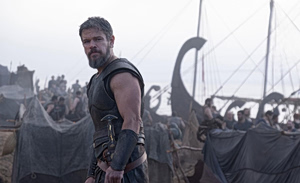
Retelling the adventures of Odysseus (a muscly but careworn Matt Damon) and his years-long journey home to Ithaca after winning the Trojan War, Mr. Nolan is attuned to the possibility that today’s audiences may find some details archaic. He has made an admirable effort to stay true to the feel of Homer (though altering some aspects, such as by having Helen and Clytemnestra be twins, both played by Lupita Nyong’o). But he also tries to knock the dust off a nearly 3,000-year-old saga. The language is informal (“Dad,” not “Father”) and the cast multiethnic (though everyone has an American accent, even the many British performers). Via the rapper Travis Scott , who has a cameo as a bard who dramatically recounts Odysseus’ exploits, Mr. Nolan draws a line from the ancient oral tradition to today’s street poetry.
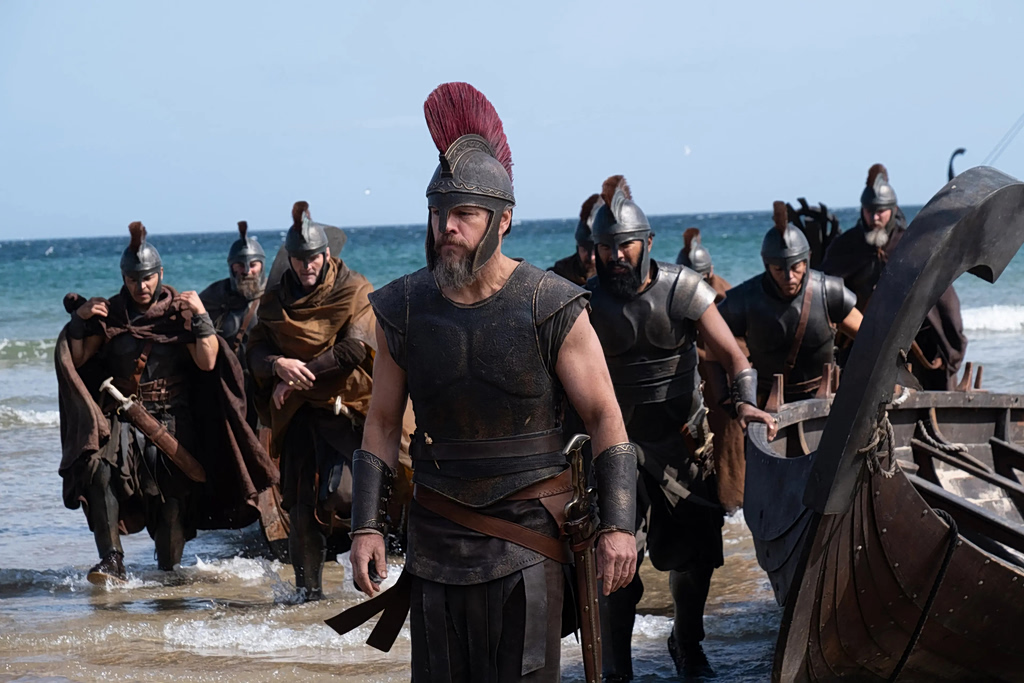
Many of Mr. Nolan’s set pieces are marvelous, even glorious. The end of the Trojan War is one of several climaxes, yielding one of the most brilliant action scenes of the filmmaker’s celebrated career. There are other intense interludes, such as a chilling confrontation with the risen dead, a battle with the armored giants the Laestrygonians, and a match of wits with a Cyclops ( Bill Irwin and digital magic make the figure truly, indelibly weird) who imprisons Odysseus’ men in a cave and snacks on their heads. Samantha Morton gives the film’s most beguiling performance as a passive-aggressive Circe—she seems more like a kindly social worker than the sexy witch of legend—in a breathless scene in which Odysseus seeks to understand why his men have disappeared. Charlize Theron is appropriately enchanting as Calypso, whose charms waylay and confuse Odysseus.
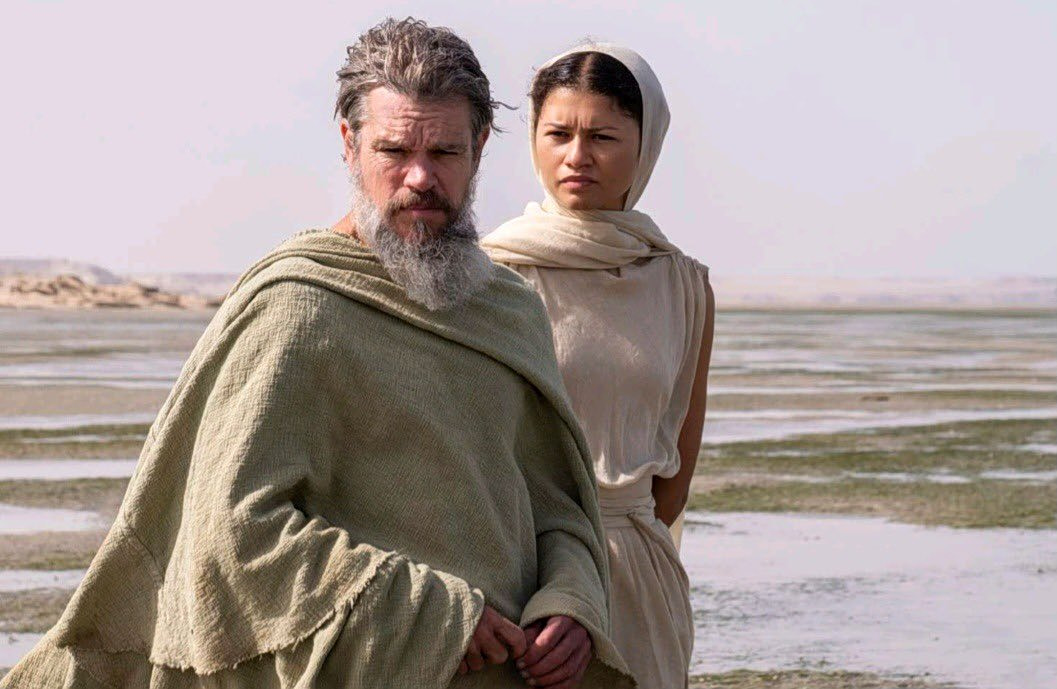
Now in his mid-50s, Mr. Nolan has waited until the proper age to craft this story about being well past life’s halfway mark, and again deploys his trademark fractured timeline in a profoundly affecting meditation on regret about poor decisions and things that are lost forever. He and Mr. Damon create an Odysseus who, though confident bordering on arrogant, is also torn by his many mistakes and especially by his men’s treatment of the goddess Athena (Zendaya). Oddly, she appears as a sort of confidante with whom Odysseus speaks at intervals, and might be a figment of his imagination. Man’s eternal anguish about understanding his gods’ desires provides a solemn core.
Certainly “The Odyssey” is among the year’s best pictures. Yet I can’t call it one of Mr. Nolan’s best pictures; nor is it as satisfying as Peter Jackson’s “Lord of the Rings” trilogy, which constitutes perhaps its nearest contemporary equivalent. Its characters are not as sharply drawn, nor the confrontation with evil as urgent, as in Mr. Nolan’s Batman films; the emotions are not as deep as in “Interstellar” or “Dunkirk.” Its many action scenes, spirited as they are, sometimes feel rushed and squeezed in to keep the running time (just) under three hours; oddly enough, “The Odyssey” isn’t as propulsively exciting or as suspenseful as “Oppenheimer.”
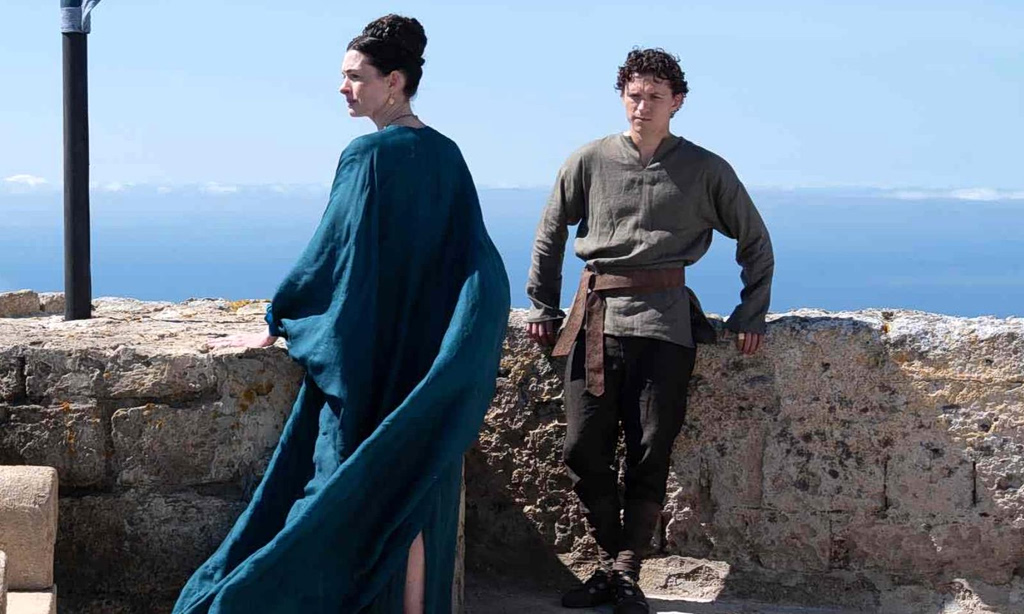
Nearly half of the story takes place back home in Ithaca, where Odysseus’ patient wife, Penelope (Anne Hathaway), and son, Telemachus (Tom Holland), wonder whether he will ever return and dozens of suitors have moved into the royal palace seeking to marry the queen and seize the vacant throne. Robert Pattinson , as the most prominent schemer, Antinous, fails to paint a notable portrait and Mr. Holland is even less impressive. The “Spider-Man” star’s boyish mildness is unsuited for a youth who should be tormented by unanswered questions. Many of the Ithaca scenes consequently fall flat, although a surprising standout is John Leguizamo , delivering the performance of his career as the wise and faithful swineherd, Eumaeus, who is blind but sees more than others.
Though occasionally less than ideally written and acted, “The Odyssey,” as a feast of image and sound, is an exceptional cinematic experience. Especially evocative are the loamy cinematography by Hoyte van Hoytema and the musical score, built around period instruments, which marks yet another transcendent achievement by Ludwig Göransson (who won one of his three Oscars for “Oppenheimer”). Odysseus is obsessed with honor, and Mr. Nolan has likewise done everything in his considerable power to pay worthy cinematic tribute to one of our foundational texts.