The U.S. military fired up to 70 or more of its high-end air defense interceptors last week when Iran launched a missile attack on Jordan, U.S. and regional officials familiar with the matter said, a heavy expenditure that underscores Iran’s improved ability to target U.S. forces and challenge American air defenses.
U.S. forces fired 60 to 70 Patriot interceptors to counter the attack, which consisted of about 20 ballistic missiles, some of the officials said. The U.S. also fired more than a dozen Thaad interceptors, one of the officials said. The expenditure is about what the U.S. has used in a full week at other times in the war, another of the officials said.
The exchanges showed how air-defense math can favor the attacker and how Iran has adapted its attacks to force the U.S. to burn precious munitions.
The nature of the attack made it more difficult to counter. Iran targeted American troops with warheads that separate into more numerous projectiles as they close in on their target, the officials said.
The defenses didn’t stop everything. While no troops were killed in the attack last week , Iran managed to hit jet fighters and other aircraft at the Muwaffaq Salti Air Base in Jordan, one of the officials said.
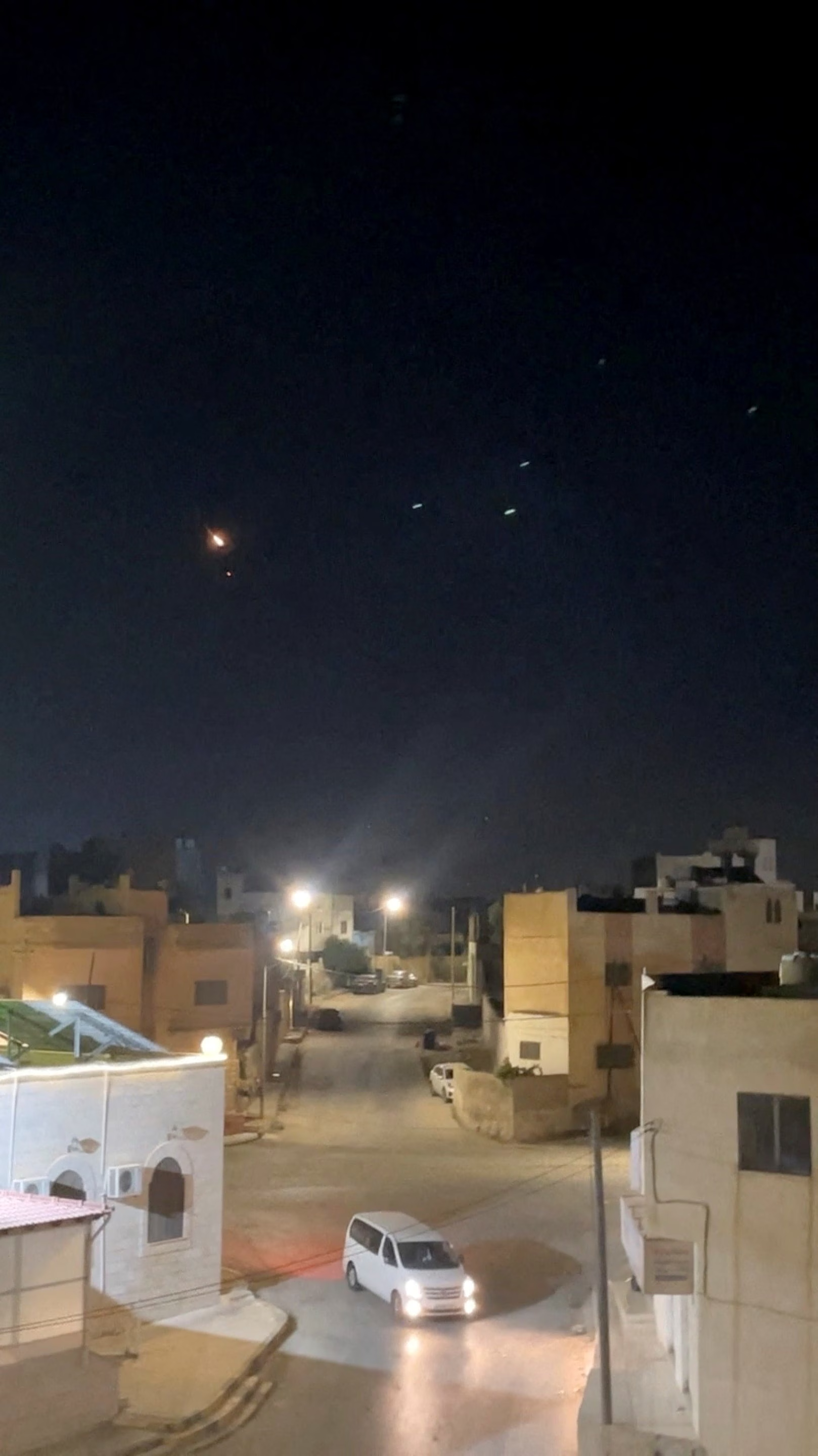
flash of light appears in the sky as air defense operates to intercept projectiles fired by Iran’s Revolutionary Guard, in Ash-Shajarah, Jordan, September 9, 2026, in this still image taken from video. Video obtained by Reuters/via REUTERS
Throughout the war, Iran’s attacks have grown increasingly complex , with the regime using different missile varieties, trajectories, maneuvers and warheads to try to overwhelm U.S. defenses, officials say. In July, Iran killed three U.S. servicemembers in one of those missile attacks on Jordan. Iran acquired high-resolution satellite images of the base from Chinese entities before the attack, U.S. officials familiar with the details of the incident said.
“These types of new tactics that we’re seeing show that the Iranians continue to adapt, continue to learn, continue to experiment, see what works, what doesn’t work,” said Fabian Hinz, an expert on Iran’s missile force with Conflict Armament Research.
A spokesman for U.S. Central Command, which oversees the Middle East, declined to comment. Jordanian officials declined to comment.
“Reports suggesting that the United States’ munitions are depleted are completely false,” Pentagon spokesman Sean Parnell said. “The U.S. military remains the strongest and most capable fighting force in the world.”
President Trump said Monday on social media that the U.S. has large numbers of interceptors in stock and is ramping up production.
Lockheed Martin , which makes the Patriots, produced a record 620 of the interceptors in 2025 and has a goal of reaching roughly 2,000 a year.
A new report this week by the Defense Department’s inspector general says the war “has resulted in strategic inventory shortfalls and revealed industrial base bottlenecks for munitions resupply.”
The U.S. and Iran are locked in a race between Iran’s ballistic missile capacity and American stockpiles of interceptors to knock them down.
Iran has managed to dig out missiles trapped in underground facilities by U.S. attacks early in the war and has recently resumed production of new missiles from stockpiled parts. The U.S. and its allies, meanwhile, face production bottlenecks that have put pressure on supplies of interceptors across the region, Arab and U.S. officials said.
The war in Iran has drained American supplies of missile interceptors and highly accurate offensive weapons. Military planners worry the U.S. has rushed so many munitions to the Middle East that America’s ability to defend against potential threats from China and Russia has been diminished, The Wall Street Journal has reported.
U.S. inventories in Europe of PAC-3 Patriot air defense interceptors and Atacms surface-to-surface missiles are deemed by some U.S. officials to be beyond critical and rebuilding the stockpiles could take years, the Journal reported.
Adm. Brad Cooper, head of the U.S. Central Command, told CBS newsmagazine “60 Minutes” this week that he isn’t concerned at all about shortages of interceptors and that the military is ready for any contingency.
The supply strains have set off a scramble for interceptors among Gulf and other Middle East nations in Iran’s crosshairs and has weakened Ukraine’s ability to defend itself against Russian airstrikes.
A debate over munitions stockpiles along with diplomatic efforts at the time contributed to Trump’s decision in late July to forgo an intensive series of strikes on Iran that could have lasted two weeks, the Journal has reported.
The Journal has reported that by mid-July, the U.S. had expended about 1,700 Patriot air defense interceptors and more than 200 Thaad antimissile interceptors in the war, officials have said. U.S. Navy ships had fired another 150 Standard Missile interceptors to take out Iranian missiles and drones.
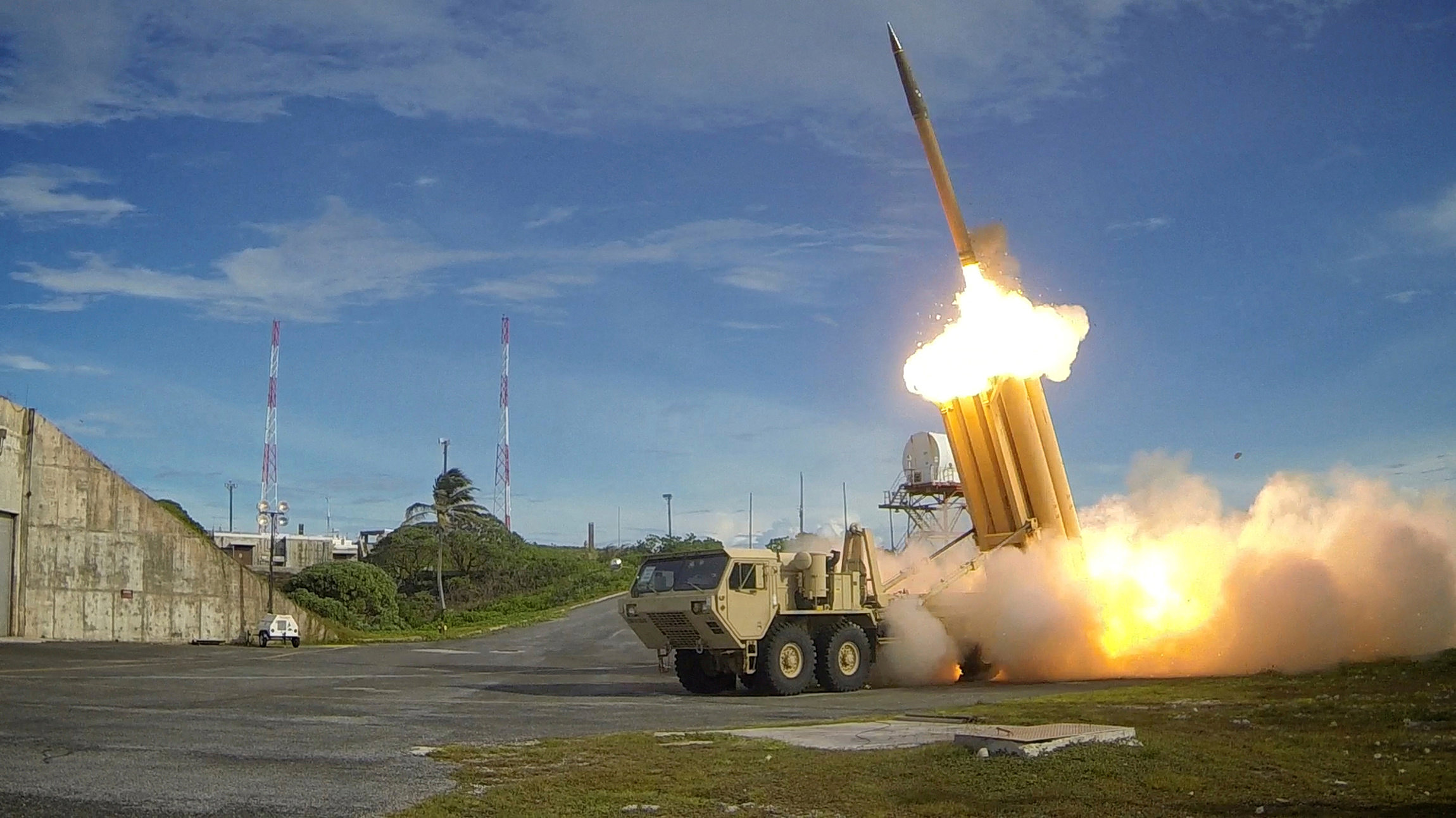
FILE PHOTO: A Terminal High Altitude Area Defense (THAAD) interceptor is launched during a successful intercept test, in this undated handout photo provided by the U.S. Department of Defense, Missile Defense Agency. U.S. Department of Defense, Missile Defense Agency/Handout via Reuters/File Photo
The Iranian attacks on Jordan grew out of an escalating exchange of fire as Tehran tries to break a tightening American economic chokehold. After Iran fired missiles that came close to U.S. warships in the region, the U.S. military responded by destroying five Iranian oil tankers. In response, Iran attacked U.S. troops in Jordan, taking aim at a target it has fired at repeatedly over the summer.
“This has been the Iranian objective all along, to make the kind of the U.S. presence in the region unsustainable and costly,” said Hamidreza Azizi, a senior Iran analyst at International Crisis Group, a think tank based in Brussels. “So now it seems that Jordan is also not as safe as it used to be.”
The attacks show how Iran continues to be able to use its missile arsenal to put pressure on the U.S. military and allied countries in the region.
Any prospect of an escalation in the fighting is alarming to America’s allies in the Persian Gulf. They are concerned about their own declining stockpiles after repelling thousands of missile and drone attacks from Iran during more than six months of war.
Gulf states have lobbied the U.S. for more interceptors since early in the war and have scoured the world for other sources with mixed results. At one point Israel sent one of its closely guarded Iron Dome systems to the United Arab Emirates along with troops to operate it.
Write to Jared Malsin at jared.malsin@wsj.com , Summer Said at summer.said@wsj.com and Shelby Holliday at shelby.holliday@wsj.com