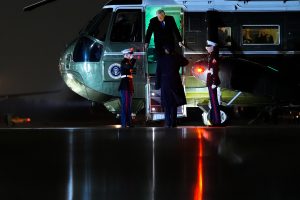
President Trump on Wednesday said Iran had stopped killing antiregime protesters and wouldn’t execute those it accused of trying to topple the government, appearing to narrow the possibility that the U.S. was about to launch military strikes against the country.
Speaking at the White House, Trump told reporters that the U.S. had been notified Iran had “no plans to carry out any executions of protesters.”
“We’ve been told that killing in Iran is stopping—it has stopped,” Trump said. “That has just gotten to me, some information, that the killing has stopped, that the executions have stopped—they are not going to have an execution, which a lot of people were talking about for the last couple of days. Today was going to be the day of execution.” He said that he hoped what officials had been told was true.
Trump has been considering military strikes on Iranian targets in recent days amid reports that thousands of protesters have been killed and others who have been arrested could soon be put to death, The Wall Street Journal previously reported, but has received briefings on a range of options.
Asked if military action was off the table, he said, “We’re going to watch it and see what the process is, but we were given a very good statement by people that are aware of what’s going on.”
Earlier Wednesday, the U.S. military said it was evacuating some personnel from Al Udeid Air Base in Qatar as a precaution. The personnel are moving out of the base, where the U.S. military has a major presence, given the escalating tensions between Washington and Tehran, a U.S. official and another person familiar with the matter said.
Later in the day, Iran closed its airspace to flights, except those given permission by the authorities in Tehran.
Trump on Tuesday told Iranians demonstrating against their government that “help is on its way.” He also told reporters Tuesday that Americans in Iran should consider evacuating the country.
The president ordered a strike on Iranian nuclear sites during a 12-day war in June . Iran retaliated by firing missiles at Al Udeid, but they did little damage, with most intercepted by air defenses.
Iran warned Sunday it could strike U.S. bases in the Middle East, shipping lanes or Israel in the event of a U.S. attack.

Trump’s stepped up warnings to Iran come as the death toll grows in protests that are now in their third week. The group Human Rights Activists in Iran said Wednesday the toll had surpassed 2,400, as the regime has moved to crush demonstrations. It said more than 140 members of the government security forces had been killed and that more than 18,000 people had been detained.
Other rights groups have put the toll even higher, though a six-day continuing internet blackout and phone service disruptions have made it difficult to verify them.
Iran signaled Wednesday it was preparing to conduct swift trials and the execution of antigovernment protesters, further defying Trump.
The family of Erfan Soltani, a 26-year-old man who was arrested on Jan. 8, had been told his death sentence would be carried out Wednesday, according to Awyer Shekhi of Hengaw Organization for Human Rights, a Norway-based nonprofit. But a relative of Soltani’s said later that her family had heard the sentence wouldn’t be carried out that day after all.
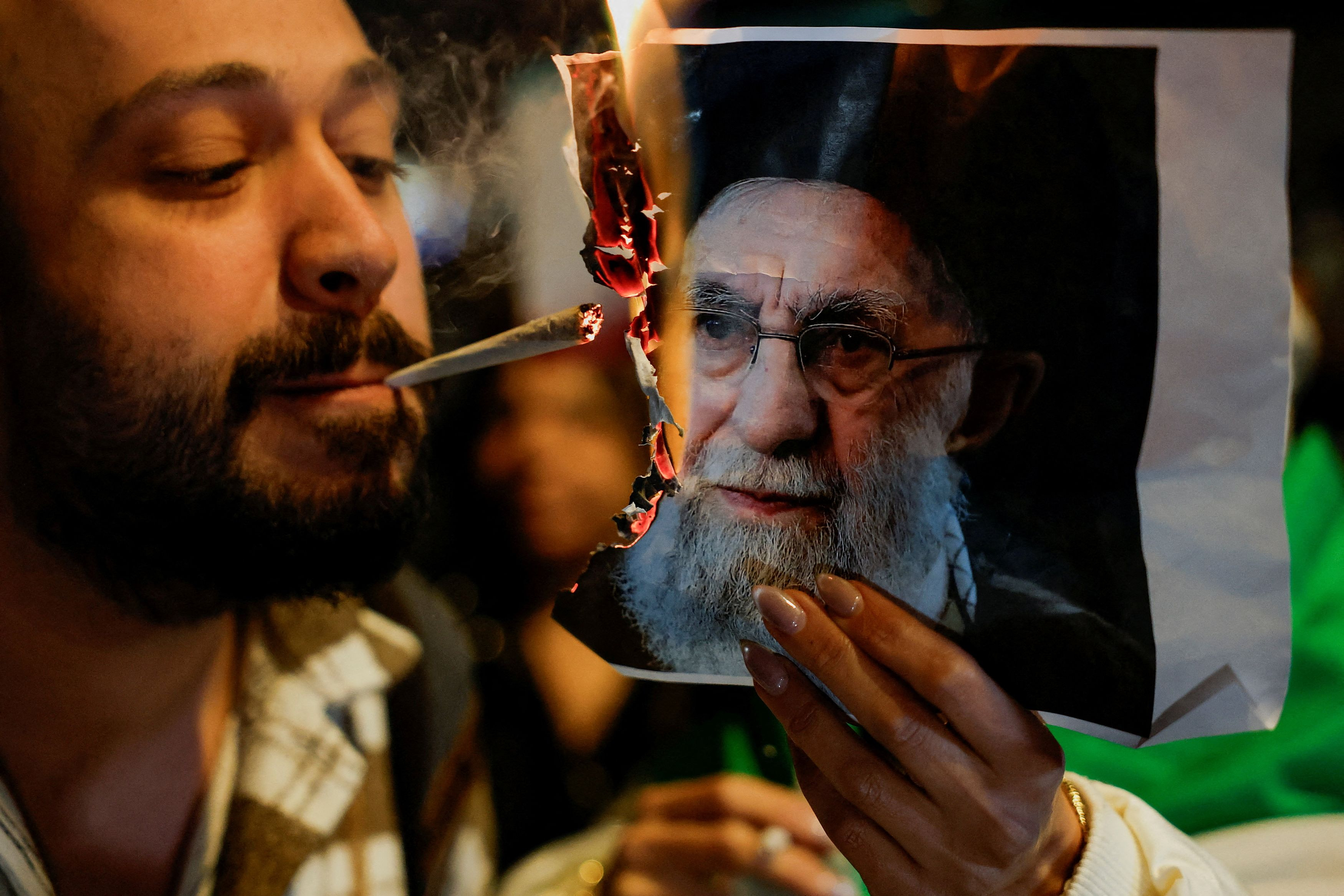
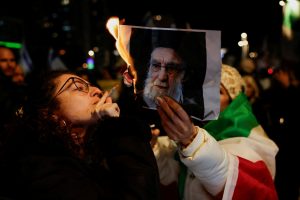
A man lights a cigarette with fire from a burning picture of Iran’s Supreme Leader Ayatollah Ali Khamenei, as Israelis rally in support of the nationwide protests happening in Iran, in Holon, Israel, January 14, 2026. REUTERS/Ammar Awad TPX IMAGES OF THE DAY
In a statement Hengaw said the execution order had been postponed.
Aboard Air Force One on Tuesday, Trump told reporters he was expecting a report on the latest situation in Iran and dismissed a threat by the country’s leaders to retaliate to any U.S. attack.
Trump for days has received briefings from top members of his team, including Vice President JD Vance and Secretary of State Marco Rubio , who have presented him with a suite of options. Many of the options don’t involve force of arms, including cyberattacks, sanctions or supporting antiregime messaging online, officials said.
Trump for now has ruled out negotiations with Iran, he said Tuesday on Truth Social: “I have cancelled all meetings with Iranian Officials until the senseless killing of protesters STOPS.”
If he does decide to authorize an attack, his options to do so are limited by the shift of military personnel and equipment to the Caribbean. Only six U.S. Navy warships are now in the Middle East—three littoral combat ships and three destroyers—versus 12 in the Caribbean, according to a Navy official. There is no aircraft carrier strike group nearby either, because Trump ordered the Gerald R. Ford carrier group from the Mediterranean to the Caribbean in October.
The Pentagon could still order Tomahawk missile strikes from destroyers in the Middle East, as well as send bombers and jet fighters stationed in the region equipped with long-range weapons.
In contrast, during the June war launched by Israel, the U.S. was flush with military assets in the region. While Iran proved helpless against Israeli and U.S. airstrikes, it did launch barrages of ballistic missiles that got through Israeli defenses and depleted inventories of interceptors.
Protecting American troops stationed in the region becomes more precarious without an aircraft carrier and its accompanying destroyers, which are equipped with the Aegis combat system that provides the ability to shoot down incoming missiles.
But officials and experts say the U.S. still can defend its forces in the area by other means, including using Patriot batteries and air-defense systems from regional partners across the Middle East.
Write to Lara Seligman at lara.seligman@wsj.com , Benoit Faucon at benoit.faucon@wsj.com and Ken Thomas at ken.thomas@wsj.com