 Μake us preferred on Google
 As climate change drives more frequent and intense heatwaves, the global fashion industry is facing mounting pressure to adapt its supply chains to rising temperatures that are affecting productivity, costs and worker safety.
Much of the world’s clothing is manufactured in Asia, where increasingly extreme heat is forcing companies to redesign factories and invest in cooling technologies to protect employees and maintain production levels.
One example is a new manufacturing facility operated by Epic Group in the Indian state of Odisha. Built with extreme temperatures in mind, the site uses specialized architecture and advanced cooling systems to keep indoor temperatures at around 28°C, despite outdoor conditions frequently exceeding 34°C with high humidity.
The need for such investments is becoming increasingly urgent. According to research cited in the report, high temperatures are already reducing productivity in India’s garment industry by as much as 10% during the summer months, while heat-related illnesses are contributing to higher rates of worker absenteeism.
Heat is becoming a major business risk
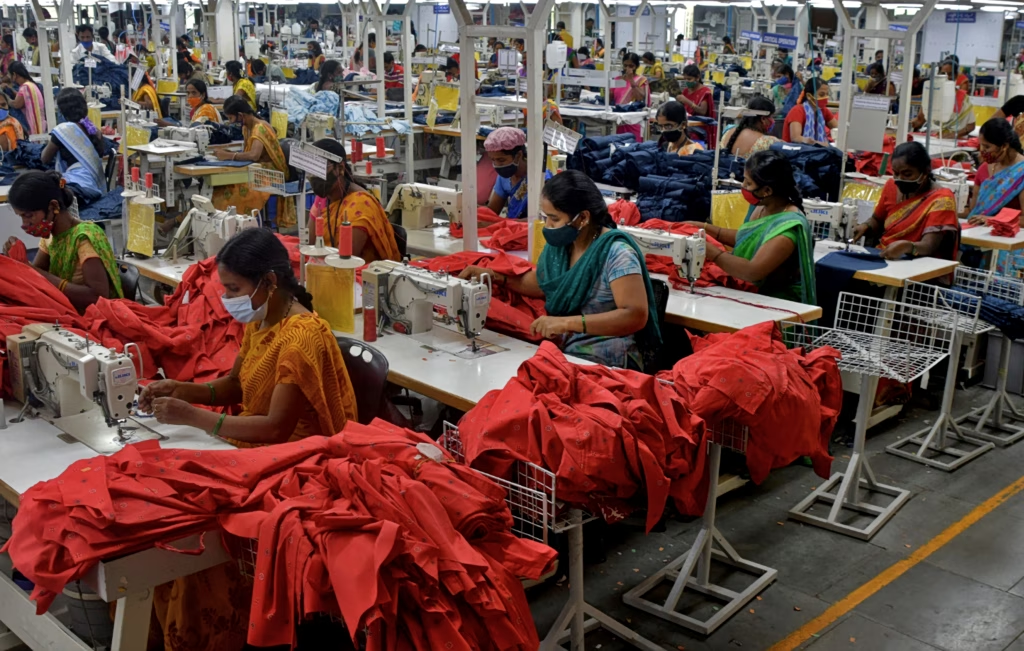
The garment manufacturing sector is particularly vulnerable to extreme weather. Production lines often place hundreds of workers alongside heat-generating machinery in older buildings with poor ventilation and limited insulation.
Industry experts say many factories were originally designed to protect expensive equipment rather than the people working inside them, and only recently has the sector begun to recognize the scale of the problem created by rising temperatures.
India experienced another exceptionally hot summer in 2026, with all of the world’s 50 hottest cities during April and May located in the country, underscoring the growing challenge facing manufacturers.
Workers who transferred to Epic Group’s new facility told Bloomberg that their previous workplaces relied on only a few fans while metal roofs turned factory floors into “ovens” during the hottest months. They said the improved working conditions have made it easier to concentrate and maintain productivity.
Millions of workers affected
The global apparel industry employs more than 90 million people, most of them in Asia. Research from Cornell University and the International Finance Corporation found that three-quarters of the world’s major garment production hubs have seen more than a 10% increase in days with temperatures above 35°C over the past two decades.
Another study found that 87% of garment workers surveyed in India experienced symptoms associated with heat stress during the past year.
To address the issue, Epic Group has incorporated heat-resistant construction materials, enhanced roof insulation and energy-efficient cooling systems into its facilities. The project has also received $100 million in financing from the International Finance Corporation, linked to targets for reducing greenhouse gas emissions, conserving water and increasing women’s representation in management positions.
Brands urged to support suppliers
Experts warn that adapting to climate change cannot be left to manufacturers alone. With garment suppliers operating on thin profit margins, many lack the financial resources to invest in climate-resilient infrastructure without outside support.
As a result, major international fashion brands are being encouraged to provide longer-term contracts and financial assistance to help suppliers improve factory conditions and better protect workers.
Some companies, including Uniqlo, say long-term partnerships give suppliers the confidence to invest in sustainable facilities, while industry organizations have also called on fashion brands to share the cost of safeguarding workers from extreme heat.
Although modern factories can reduce workplace risks, experts note that many employees continue to face high temperatures at home, where access to cooling and reliable electricity remains limited. They argue that adapting the fashion industry’s supply chains to climate change is not only a technological challenge but also a broader social and economic necessity.