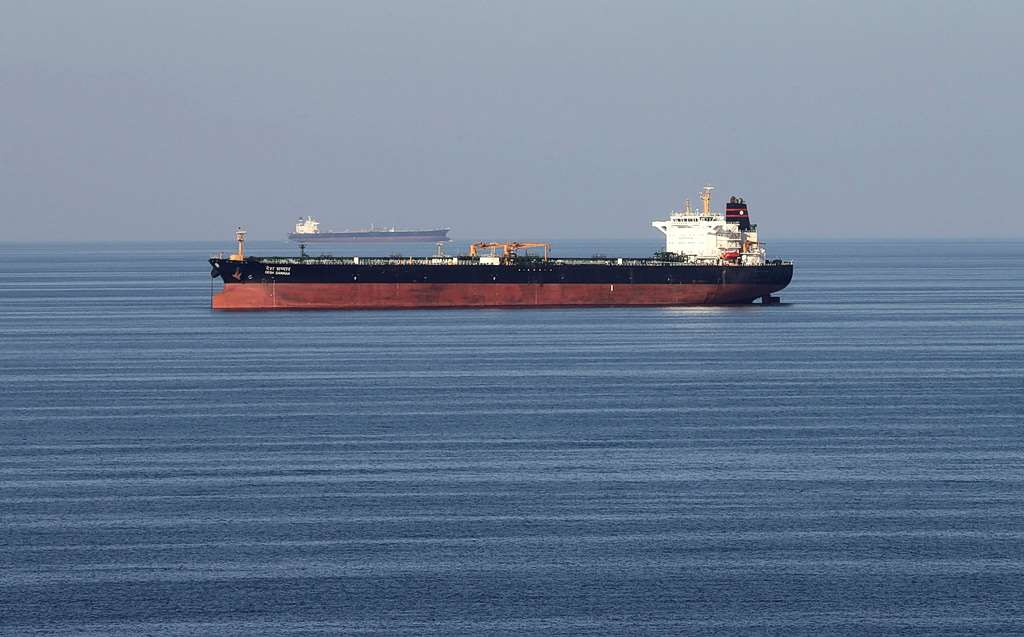

Greece could be heading toward record natural gas exports in the 2026–2030 period, although geopolitical risks continue to cloud the outlook for actual volumes. According to Greece’s National Natural Gas System operator’s (DESFA) Demand Forecast Study (DFS) for 2026–2030, the country is emerging as a potential export hub for Southeastern and Central Europe—a role that could strengthen further under specific geopolitical and policy conditions.
DESFA cautions, however, that exports remain the most uncertain element of the forecast. This uncertainty underscores the need for flexible infrastructure planning and adaptive policy frameworks capable of handling both low and high flow scenarios.
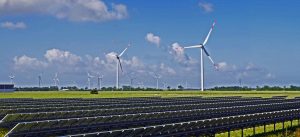
At the same time, the study confirms that natural gas will remain a dominant fuel over the next decade. Despite the rapid expansion of renewables—expected to account for 62% of electricity generation in 2026 and 70% by 2035—gas will continue to serve as a key flexibility fuel in power generation and as a strategic energy bridge connecting Greece with regional markets.
Under DESFA’s baseline scenario, domestic gas consumption rises from about 6 billion cubic meters (bcm) in 2026 to 7.1 bcm in 2033, remaining broadly stable through 2035. Demand for gas-fired power generation is projected to peak at around 4.5 bcm in 2032, supported by new international electricity interconnections that boost net power exports and plant utilization.
Gas demand in distribution networks is set to grow steadily—by roughly 24% by 2035—driven by infrastructure expansion into new regions. Industrial consumers connected directly to the high-pressure grid are expected to fully recover from the price shock of recent years by 2029.
Exports, however, are the most strategically significant variable. DESFA models two scenarios: a conservative one based on existing and expected capacity bookings at interconnection points, and a high-potential scenario reflecting a regional supply gap that Greece could fill in the event of a full or partial halt in Russian gas flows—aligned with EU policy goals.
Export potential is estimated at 1.3–3.8 bcm in 2026, narrowing to 1.9–3.5 bcm annually by 2035. Even at the lower end, exports would mark a record, compared with an estimated 720 million cubic meters in 2025.