 Μake us preferred on Google
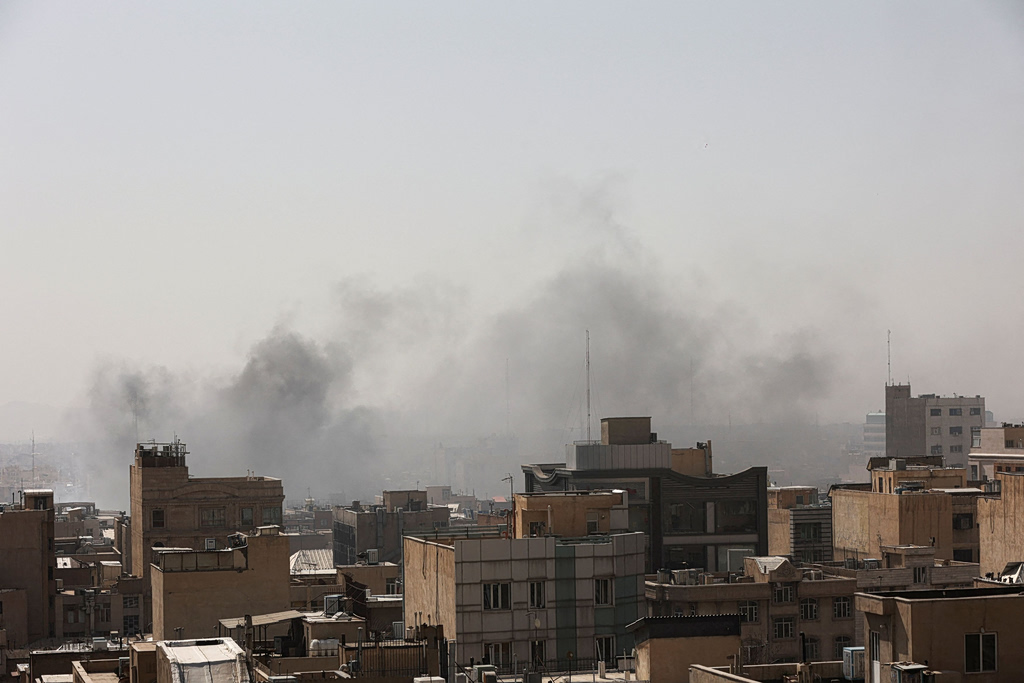
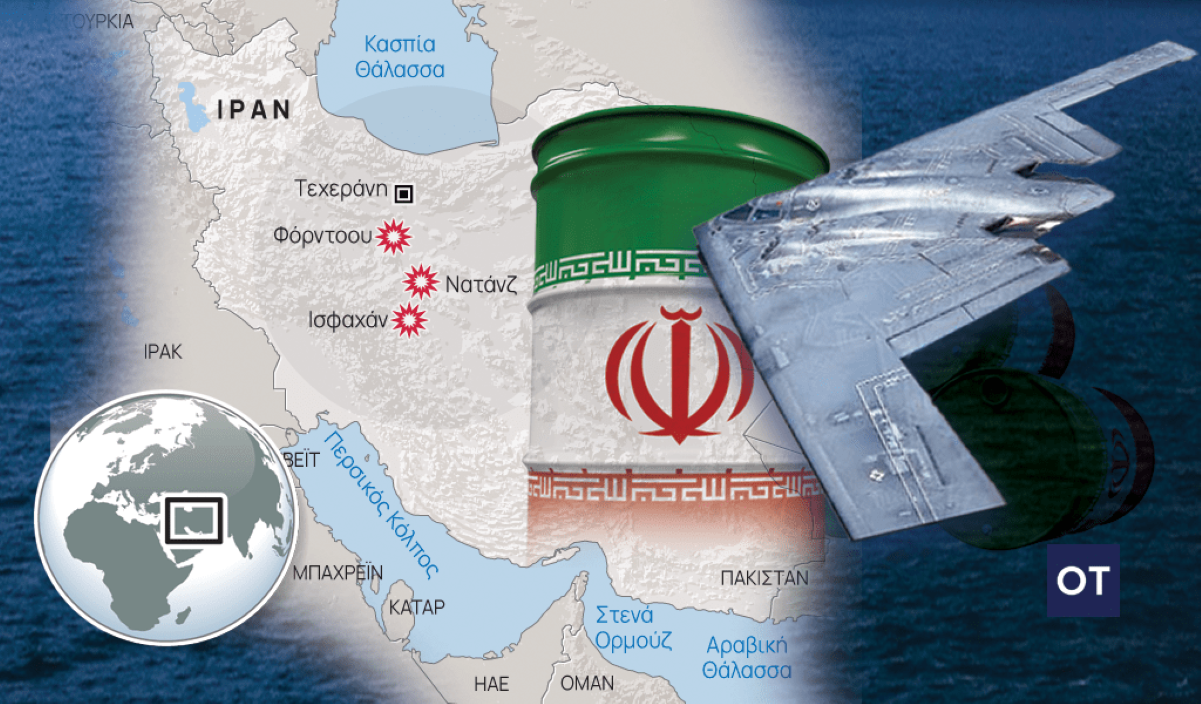
 Announcing the launch of a sweeping military campaign against Iran—code-named “Epic Wrath”—U.S. President Donald Trump declared on Saturday, Feb. 28 that Washington’s immediate objective is the total destruction of Iran’s military infrastructure, the elimination of its leadership, and the permanent dismantling of its nuclear program.
As military operations intensify across multiple fronts, concerns are shifting from the battlefield to the global energy market. Strategists and analysts are questioning how long the conflict may last and what it could mean for energy supplies, particularly as Gulf states provide nearly 25% of the world’s daily oil and LNG output.
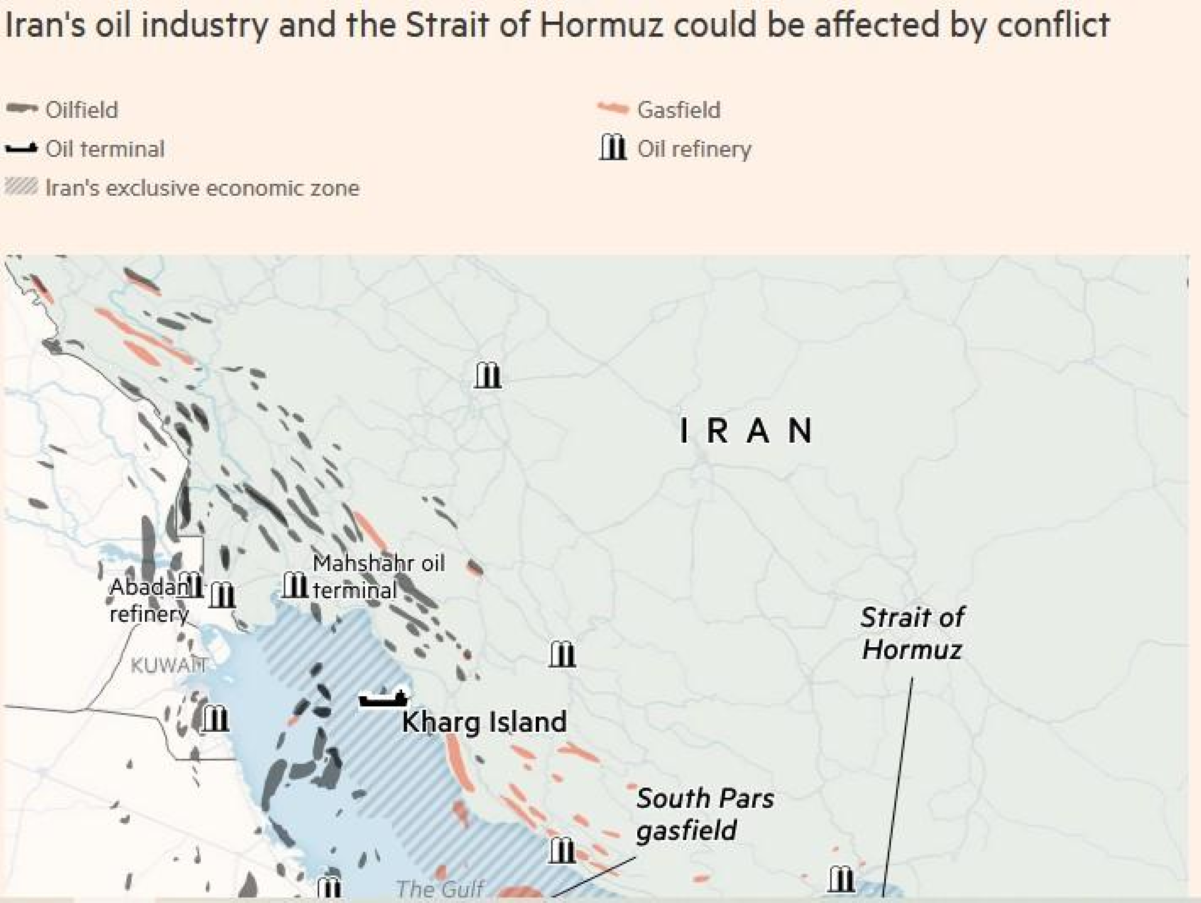
At the heart of these fears is the Strait of Hormuz, a critical artery for energy exports. Any disruption—whether from Iranian naval mines or escalating sea battles—could severely restrict the flow of crude and natural gas to Asia and Europe. Even the threat of a closure is enough to rattle markets, with some analysts warning that oil prices could surge to $110 or even $120 per barrel.
In recent days, energy markets had already been pricing in the likelihood of hostilities. Financial Times reported that Brent crude—the international benchmark—closed at $73.21 per barrel, its highest level in six months. Analysts are now focused on Monday’s market opening, where further gains are widely anticipated amid continued fighting and uncertainty over the U.S. Navy’s ability to keep the Strait of Hormuz open.
A snap poll conducted by the Financial Times suggests many analysts expect Brent to jump at least $10 per barrel at the start of trading, moving into the $80–$85 range—assuming production and exports from Saudi Arabia and neighboring oil producers remain unaffected. Should hostilities damage critical oil infrastructure, even temporarily, prices could swiftly climb past $100 per barrel.
Such elevated levels are likely to persist as long as military operations continue and uncertainty clouds the conflict’s trajectory. A stabilization in prices—possibly back to the $70–$80 range—would depend on a clear de-escalation, whether through a ceasefire or the unconditional surrender of Iran’s leadership, an outcome openly sought by the Trump administration.
For now, markets are not overly alarmed by Iran’s own oil flows. The country produces about 3.45 million barrels per day—roughly 3% of global output—and exports around 1.4 million barrels daily, mostly to China, where it supplies about 13% of imports. Significant as these volumes are, they are not enough on their own to destabilize the market.
The real concern is a wider regional escalation that could threaten exports from key Gulf producers such as Saudi Arabia, Iraq, Kuwait, and United Arab Emirates. Together, they ship nearly 15 million barrels per day—about 12% of global supply—meaning any disruption would have sweeping global repercussions.
Traders and procurement executives are looking to OPEC and the International Energy Agency (IEA) for clarity on global reserves. The IEA’s February 2026 report shows worldwide oil inventories at about 8.2 billion barrels at the start of the year—the highest level since 2021—suggesting the market is well supplied and better positioned to absorb an initial shock.
A further buffer lies in OPEC’s spare production capacity, estimated at 4.4 million barrels per day, allowing OPEC+ to increase output if needed. However, roughly 3 million barrels per day of that cushion is concentrated in Saudi Arabia and other Gulf states now potentially exposed to Iranian missile strikes, raising doubts about how reliable this safety net would be in a prolonged conflict.
Unlike the brief 12-day war of June 2025, the current crisis risks broader regional escalation. If more Gulf states are drawn in, oil prices could remain elevated for an extended period, driven by ongoing uncertainty over production and the security of maritime routes for crude, refined products, and LNG.