
 Μake us preferred on Google
 A striking new video created with AI is transporting viewers nearly 4,000 years into the past to a reimagined Knossos, on the large island of Crete, at the height of its power at around 1700 BC, during the golden age of the Minoan civilization—Europe’s earliest advanced society.
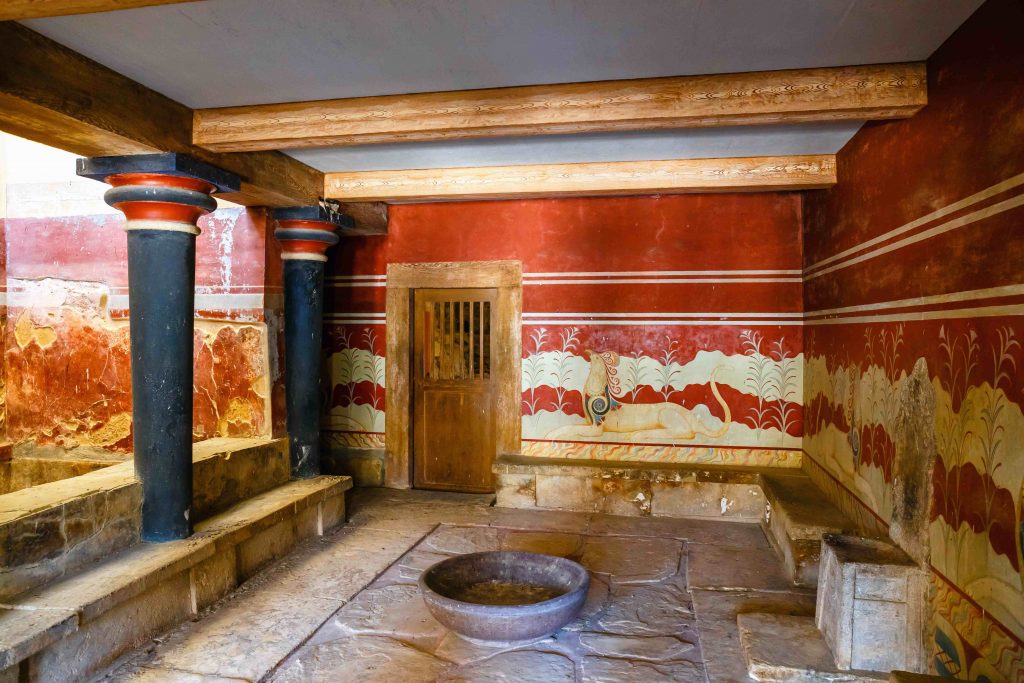
The digital reconstruction reveals the Palace of Knossos as scholars believe it once stood: a vast, labyrinthine complex of more than 1,000 rooms. Unlike other major centers of the ancient world, it lacked defensive walls—suggesting a society that may have relied more on stability and maritime strength than fortification.
What stands out most is its remarkable infrastructure, as imagined by AI. The palace is depicted with a highly advanced hydraulic system, including flushing toilets.
Beyond architecture, the video explores the social fabric of Minoan life. Rather than being ruled by kings, the civilization may have been governed by priestesses—a theory that sets it apart from most hierarchical ancient societies and continues to intrigue historians.
According to the narrative, the Minoans faced a double blow: first, a massive volcanic eruption, widely associated with the Thera event on today’s island of Santorini, and later, raids from mainland Greece. Together, these events likely accelerated the civilization’s decline.
The video draws a compelling line between history and legend. It suggests that the fall of the Minoans may have inspired enduring Greek myths, most famously the tale of the Labyrinth and the Minotaur.