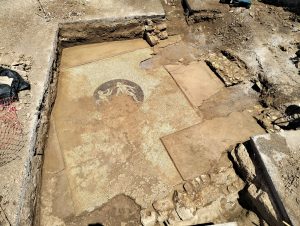
Greece’s Minister of Culture, Lina Mendoni, visited the Kasta Tomb in Amphipolis, where restoration and conservation works are progressing rapidly, unveiling for the first time the monument’s true scale and architectural ambition.
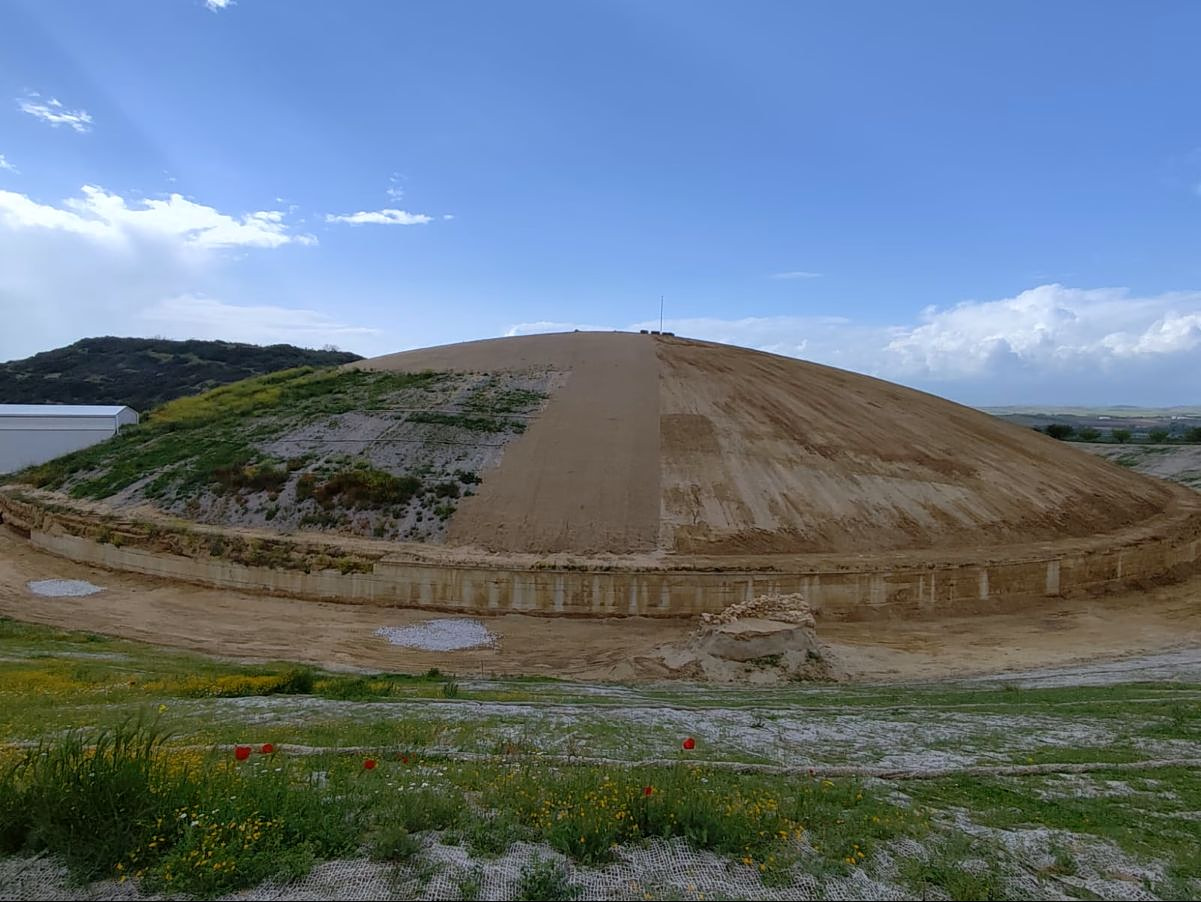
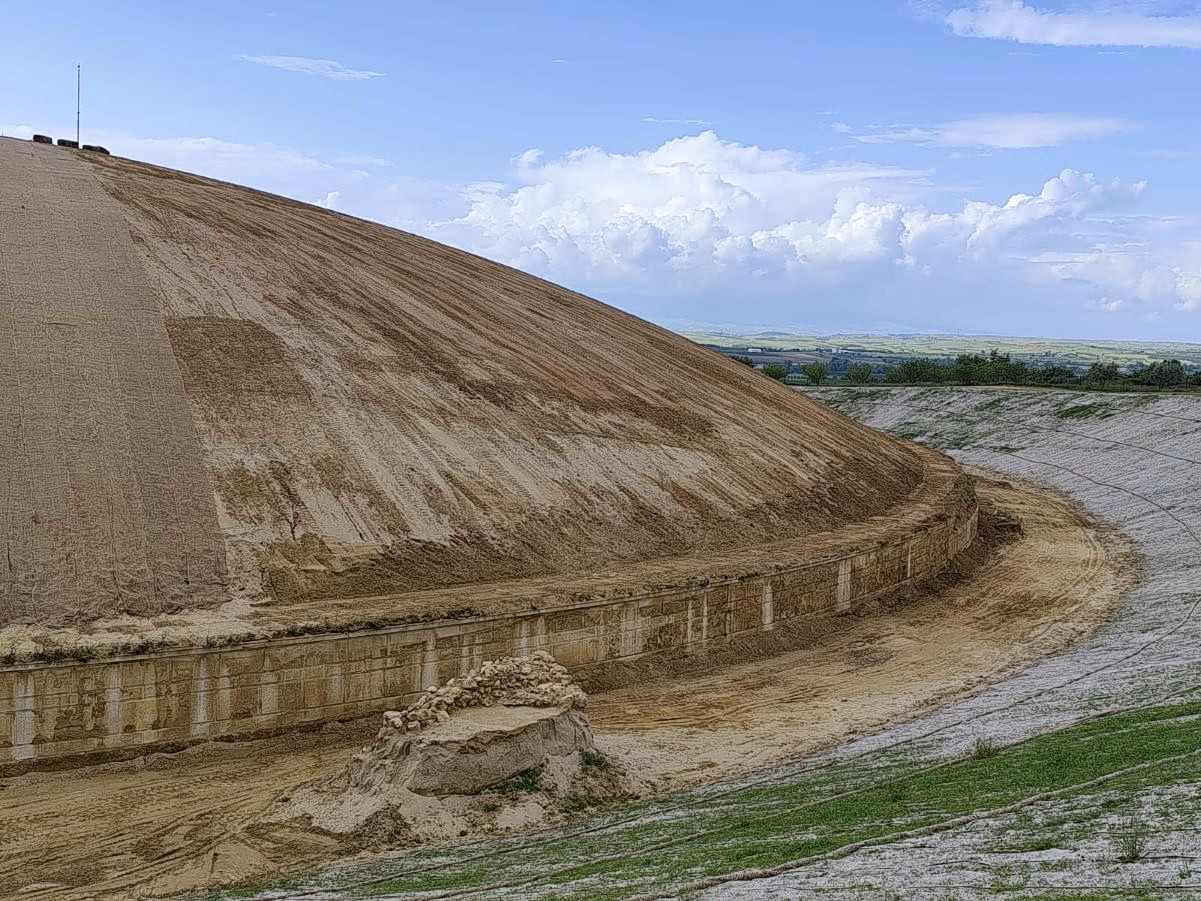
Archaeologists have now fully revealed the tumulus enclosure, stretching 497 meters in circumference, while the monument itself covers more than 20 acres (approximately 22,000 square meters). The broader surrounding area extends across an additional 30 acres, underscoring the immense dimensions of what is considered the largest burial mound yet discovered in Macedonia.
Mendoni was briefed by restoration director Themistoklis Vlachoulis and supervising engineer Michalis Lefantzis on the ongoing interventions. Completed works include the excavation of the ancient enclosure wall, the restoration of the mound’s original geometry, and extensive landscaping of the surrounding terrain. Restoration of the southern section of the marble enclosure has also advanced significantly, using original scattered marble members alongside carefully limited artificial stone additions.
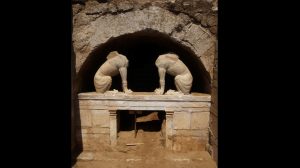
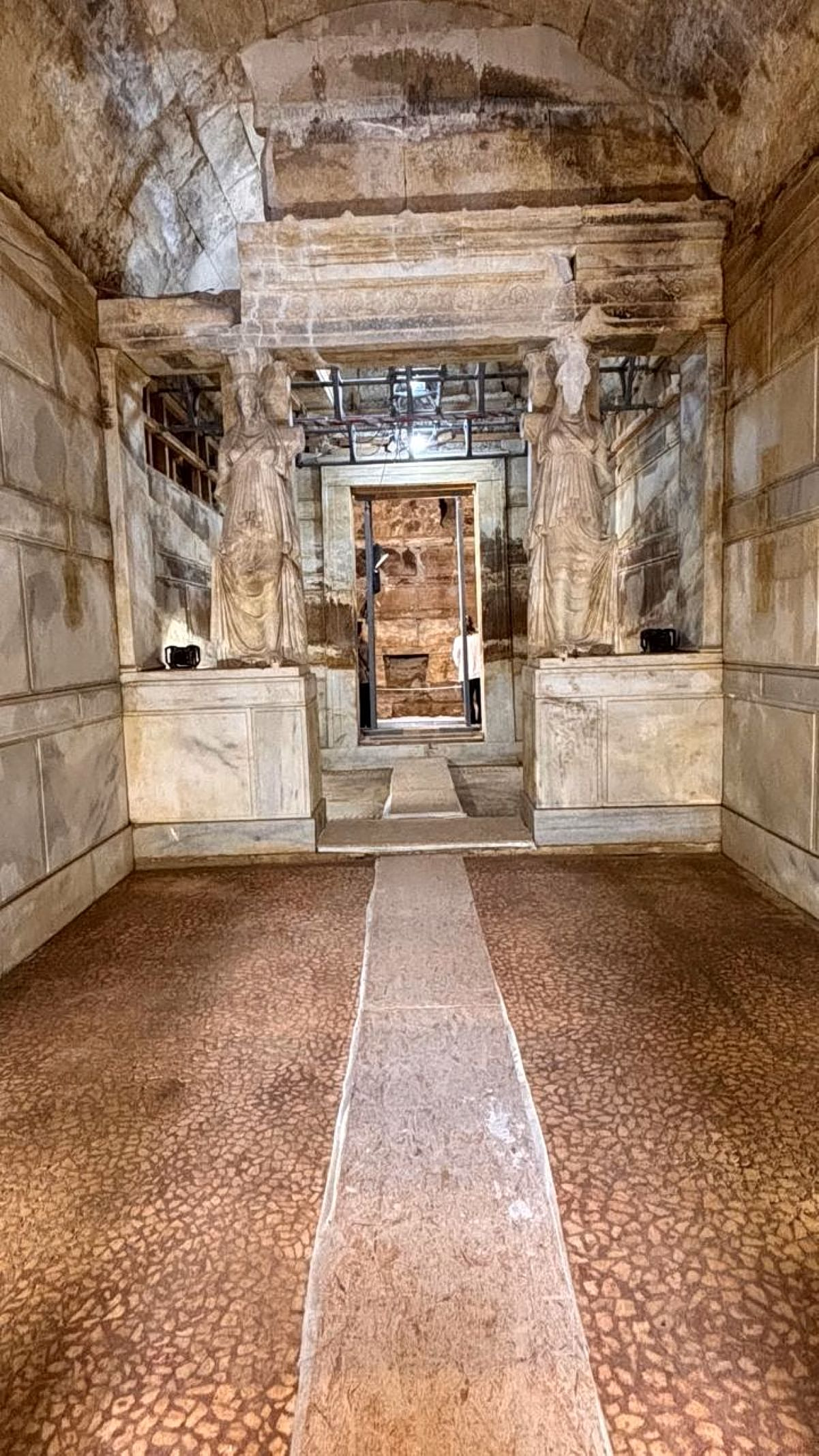
Inside the funerary monument, stabilization and restoration of the burial chamber have been completed, allowing the monument’s interior to become fully visible after the removal of older metal supports. Next phases include the reinstallation of the monumental double-leaf marble Macedonian door, followed by the sphinx’s wings and head.
Speaking after the inspection, Mendoni described Kasta as “a unique and monumental Macedonian memorial” dating to the final quarter of the 4th century BC, directly linked to the era of Alexander the Great. She noted that the mound exceeds 140 meters in diameter, surpassing even the royal tumulus at Aigai.
The overall restoration budget is expected to exceed 15 million euros, funded largely through European regional development programs. Authorities are also planning a dedicated museum space and visitor infrastructure, with the full public opening of the site targeted for early 2028.
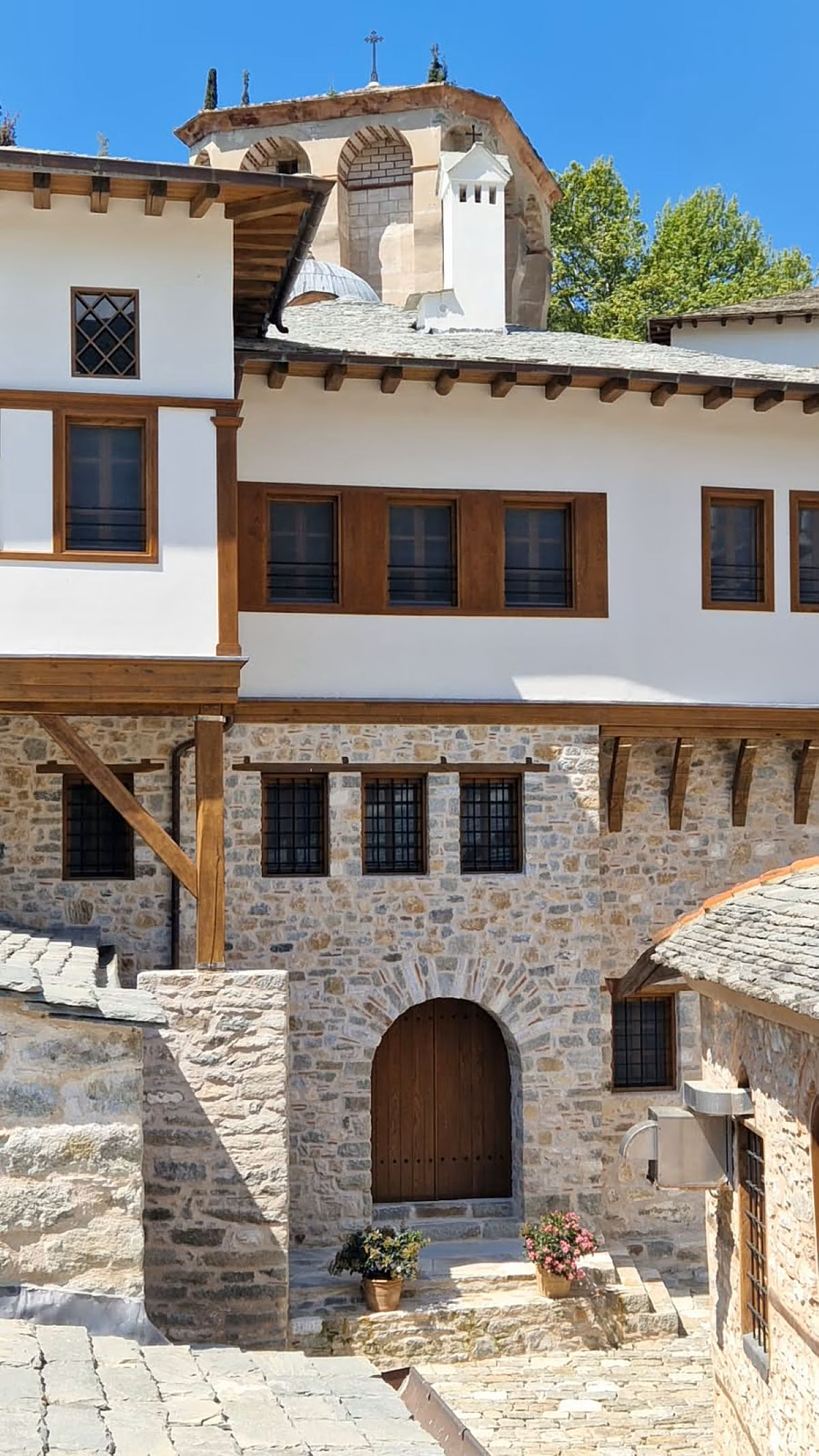
During her visit to the Serres region, Mendoni also inspected the conservation of Amphipolis’ rare 5th-century BC wooden bridge and restoration projects at the 12th-century Monastery of Timios Prodromos.