 Μake us preferred on Google
“Make me look good.”
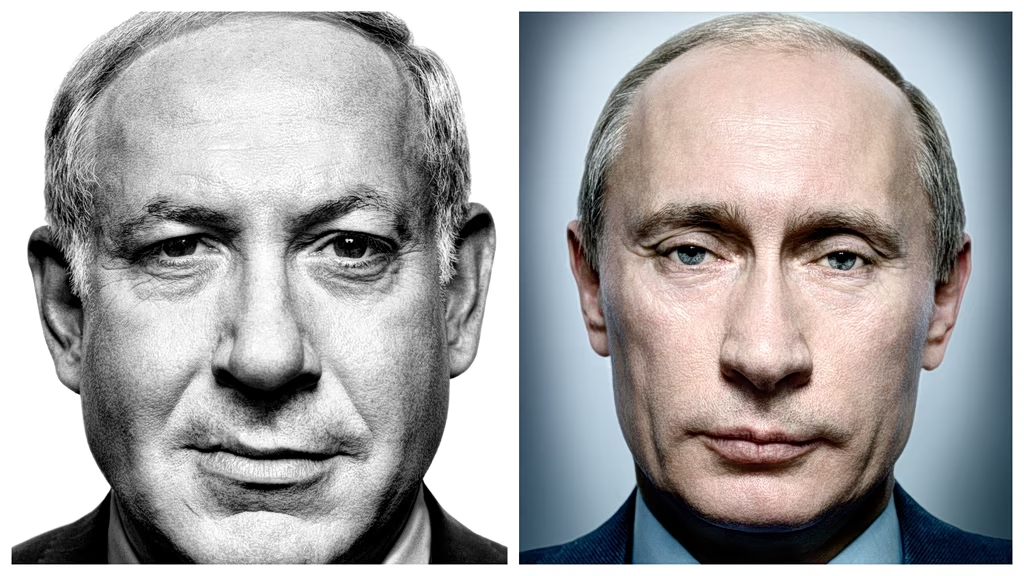
Benjamin Netanyahu whispered those words to Platon as the photographer prepared to take his portrait in 2009. With the camera just inches from his face, Platon was about to capture every detail: the shape of his nose, the size of his eyes, the width of his forehead, the length of his ears and, inevitably, his wrinkles. Those wrinkles, Platon suggests, are cracks in the mask of power, physical marks left by the weight of authority.
An entire life story was about to be condensed into a single image. Netanyahu had just one request.
The British photographer of Greek descent recalls the encounter in an interview with TO BHMA, as he discusses the portrait, now on display at the “People Power Platon” exhibition at the Benaki Museum in Athens. Running from November 5, 2026, to January 31, 2027, the exhibition is the largest solo presentation of his work to date. Curated by Platon himself, it brings together two distinct bodies of work that explore power, influence, identity and the human connections behind the camera.
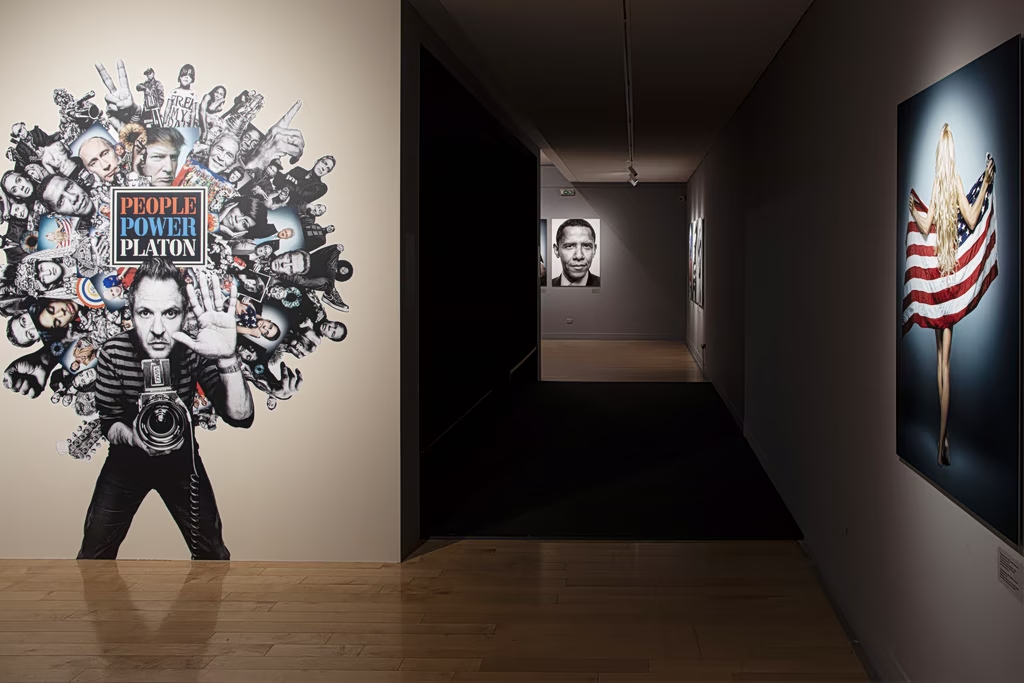
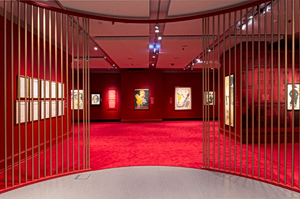
Entering the exhibition “People Power Platon”. Photo: Thomas Daskalakis
Born in London in 1968 and raised on the Greek island of Paros, Platon has photographed some of the most influential figures of our time. His work has appeared on more than 30 covers of TIME magazine, and, according to the exhibition organizers, he has photographed more world leaders than any other photographer in history.
One section of the exhibition features the people who shape the contemporary world: political leaders, celebrities, technology giants, activists, human rights defenders and even dictators. Yet its emotional center lies somewhere else entirely: among the people of Paros, the island where Platon grew up and to which he has returned repeatedly over nearly four decades.
The second section brings together photographic compositions drawn from those visits, offering a deeply personal counterpoint to the portraits of presidents, celebrities and powerful figures.
A mirror, not a showcase
Netanyahu’s portrait carries an additional symbolic weight in light of the genocide in Gaza. Its placement between portraits of Russian President Vladimir Putin and Venezuelan leader Hugo Chávez also invites questions.
“Some of your heroes may be in this exhibition. But there will also be people you don’t like: people with very problematic legacies,” Platon told journalists at the exhibition’s press conference. “I’m not trying to sell you anyone. I’m holding up a mirror.”
Even his use of color follows an emotional logic. Platon photographed Putin in color because he wanted to convey what he describes as “the coldness of power” he felt in the room.
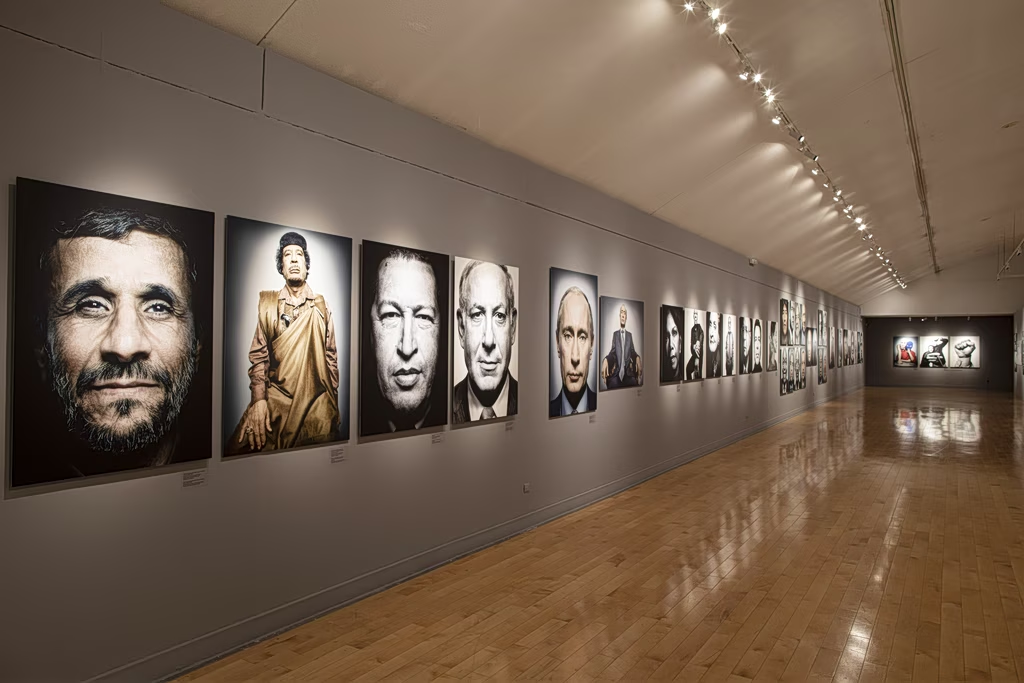
In the exhibition, Putin appears to be looking toward photographs of Russian protesters, dissidents and activists displayed across the corridor. Netanyahu, by contrast, does not face any Palestinian subjects.
Asked whether this was a deliberate curatorial decision, Platon explains that his team had planned a photographic assignment in Israel and Gaza, but the situation suddenly became too dangerous.
He also recalls another encounter with Netanyahu, whom he photographed again following his father’s death.
“The photograph we’re looking at here is from 2009. I photographed him again after his father died. He was an emotional wreck. I think that’s the Netanyahu we’re seeing now. When he’s vulnerable, he’s explosive,” he says.
Platon is adamant that photographing such figures does not amount to endorsing them.
“I’m not promoting him. I’m not promoting Putin, Obama or Trump. I’m opening up a conversation. If you feel that conversation needs to happen, then mission accomplished.”
That principle also explains why he never removes a photograph simply because history changes or public perceptions of a powerful individual shift. His portrait of Harvey Weinstein, for example, was taken when Weinstein was at the height of his influence. Today, the same image carries an entirely different meaning.
The many frequencies of power
Is there something that powerful people have in common when they stand just inches from Platon’s camera?
His answer begins with a distinction: power is not a single force.
“There’s the power of celebrity, the power of attention: Kim Kardashian. There’s financial and technological power: Elon Musk, Zuckerberg. There’s cultural power: Vivienne Westwood, Neil Young, Bono. There’s political power, which can be used for good or evil. And there’s another kind of power: the power of humanity, of being curious about others, of kindness.”
There is no common denominator, he says. But Platon has developed his own way of approaching each subject. More than the face of power itself, he is interested in its frequency — the particular energy each individual brings into a room. That is what he tries to capture.
“I think of it like an old radio,” he explains. “You have to tune into the station. Sometimes the signal is clear; sometimes there’s a lot of static: a politician who doesn’t have time, a human rights defender who’s afraid for their safety. My job is to tune into each person’s frequency. And when I manage to do that, it’s a magical moment.”
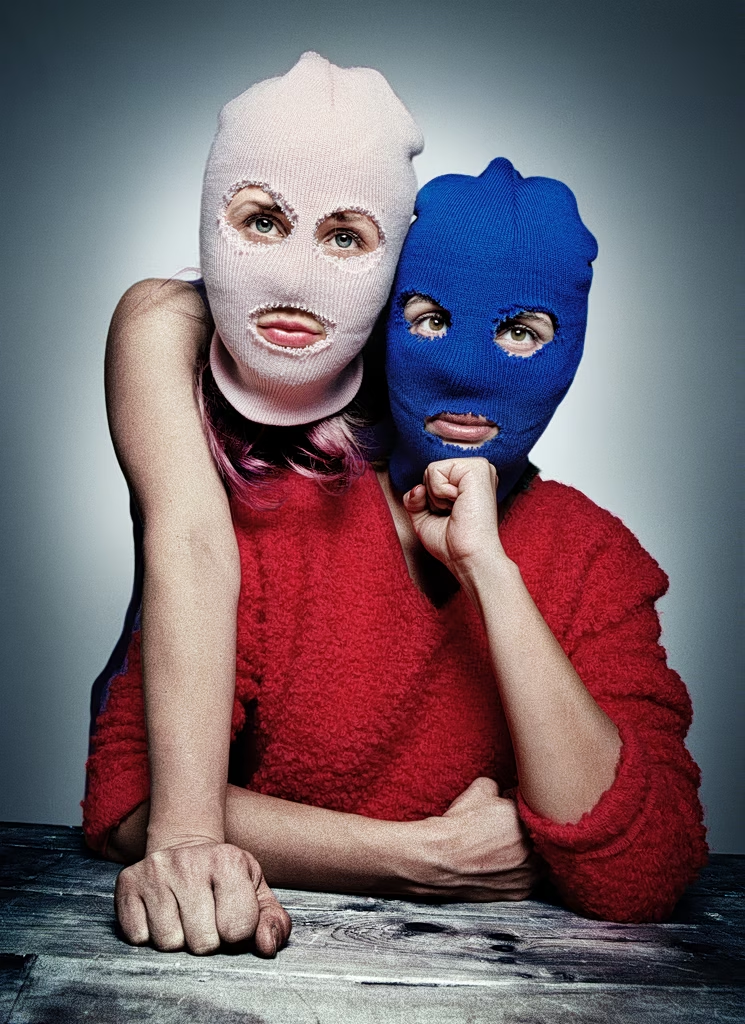
Pussy Riot. Photo: Studio Platon
The process demands extraordinary concentration. Within five minutes, Platon must read the entire room, including the adviser standing in the corner checking his watch — “because that is the person who’s going to ruin your photo shoot.”
It is, he says, “such an intense level of concentration that it almost hurts.”
He also admits that he has felt the attraction of power himself.
“Power is incredibly seductive. I’ve been in the same room as Prince, as world leaders. You feel it… It’s Icarus. It’s something very dangerous.”
Looking at the portraits of political figures displayed on the Benaki Museum’s walls, Platon suggests that the people we dislike are often “the ones trying to hold on to power,” while those we admire are “the ones who shared it.”
As for himself, he claims to be immune to its appeal.
“I wouldn’t know what to do with power if you gave it to me. That allows me not to feel intimidated by anyone, whether the person standing in front of me is homeless or a president.”
Putting everyone on the same box
Platon often photographs his subjects seated on a box, positioning his camera at a lower angle. At first glance, the technique might seem to emphasize the inequalities created by structures of power. But for him, it serves precisely the opposite purpose.
“The richest person on Earth, Elon Musk, has sat on the same box as the poorest person,” he explains.
The practice reflects his belief in photography as a democratic medium. The same simple object humanizes world leaders while giving a sense of dignity and agency to those who are often overlooked.
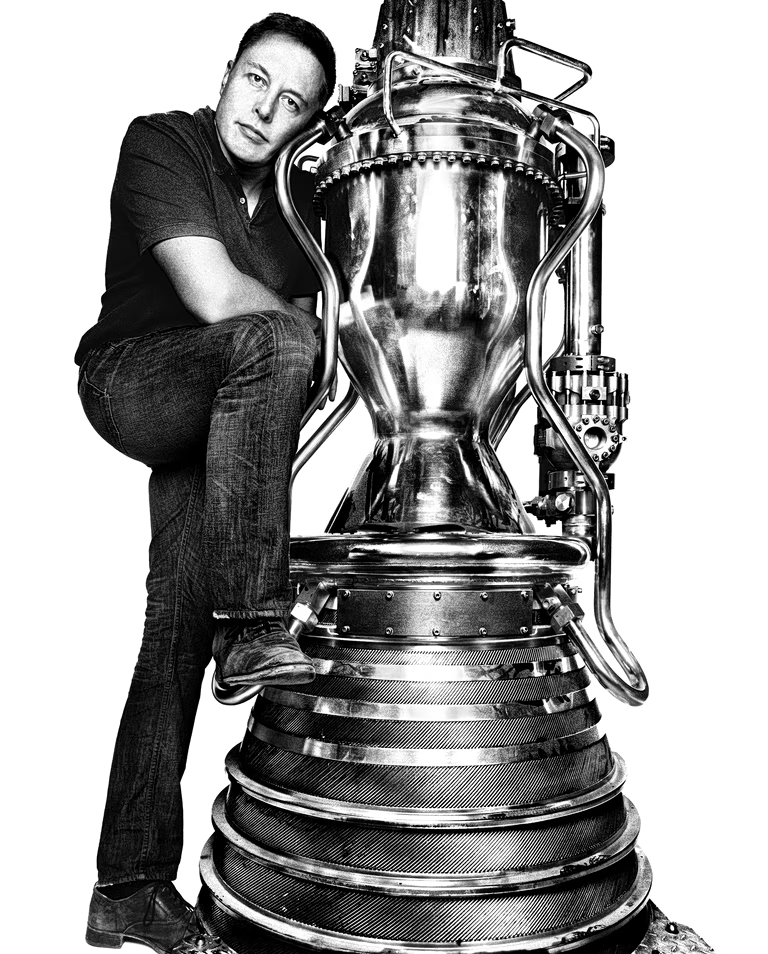
Elon Musk poses with a part of a SpaceX spaceship. Photo: Studio Platon
The same philosophy informs one of the exhibition’s most striking installations: a large-scale photographic mural of migrants that connects the two corridors housing some of Platon’s most famous portraits.
Rather than reproducing the familiar images of migrants that dominate public discourse, Platon chose to portray them through a different lens: as people full of courage and hope.
“They’re with their families, they’re laughing. They have no idea what their lives will look like, but they’re looking toward the future with courage,” he says.
At the press conference, he went a step further, comparing the mural to the Parthenon Frieze, the sculpted marble panels that once adorned the ancient Greek temple on the Acropolis.
“I know I’m half English, so I apologize for the sculptures. Perhaps I can replace those marbles with these people.”
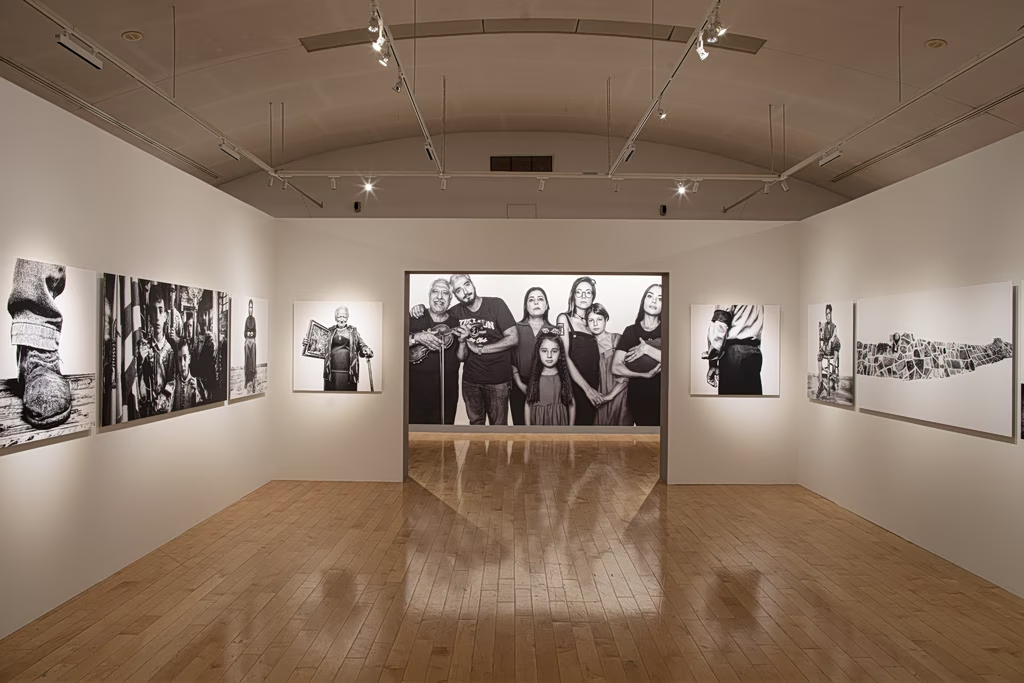
Inside the exhibition “People Power Platon”. Photo: Thomas Daskalakis
The comparison is more than a provocative artistic gesture. The mural also speaks to the unpredictable — and sometimes arbitrary — nature of history, both collective and individual. Being born in the right place at the right time can mean inheriting a world of privileges. Being born in the wrong place at the wrong time can mean spending a lifetime fighting simply to be seen.
The chapel of truth: Returning to Paros
At the center of the exhibition, Platon has created what he calls the “chapel of truth.” Here, the focus shifts from world leaders and public figures to the people of Paros, in photographs dating back to 1985.
Farmers, fishermen, grandmothers and ordinary islanders fill this section. They are people, Platon says, who understood the cycle of life — something he admits he has yet to fully grasp, despite living in New York.
“I wasn’t even a photographer first and foremost. I connect with people first, and I use photography to document that connection,” he tells TO BHMA.
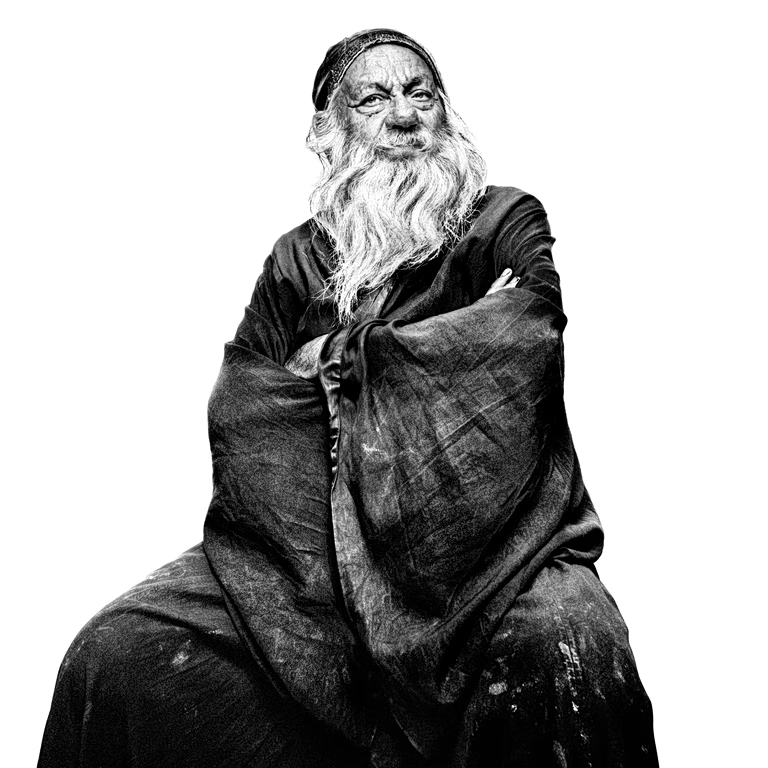
A monk in Paros. Photo: Studio Platon
This belief also shapes his views on artificial intelligence, which can generate a photographic portrait in seconds. For Platon, however, technical ability cannot replace the human connection at the heart of portrait photography.
Artificial intelligence cannot establish that connection, he argues, because “it has no soul.”
“I’m not against any tool. But I believe that over the next decade, we’ll value human contact more than anything else.”
Platon jokes that carrying the weight of his name — shared with the ancient Greek philosopher — is a burden he will never live up to. Yet he does identify with one aspect of his namesake’s legacy: his willingness to ask uncomfortable questions.
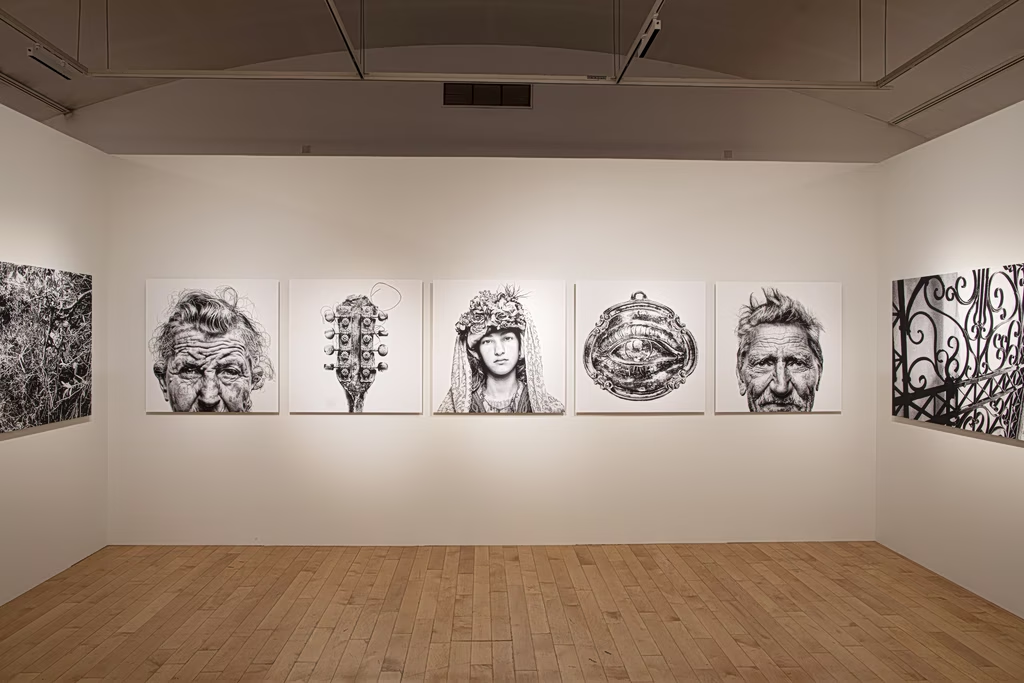
Inside the exhibition “People Power Platon”. Photo: Thomas Daskalakis
“The original Plato was constantly asking uncomfortable questions. I don’t have answers. It’s not my job to have answers. My job is to have questions.”