 Μake us preferred on Google
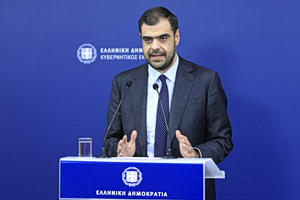
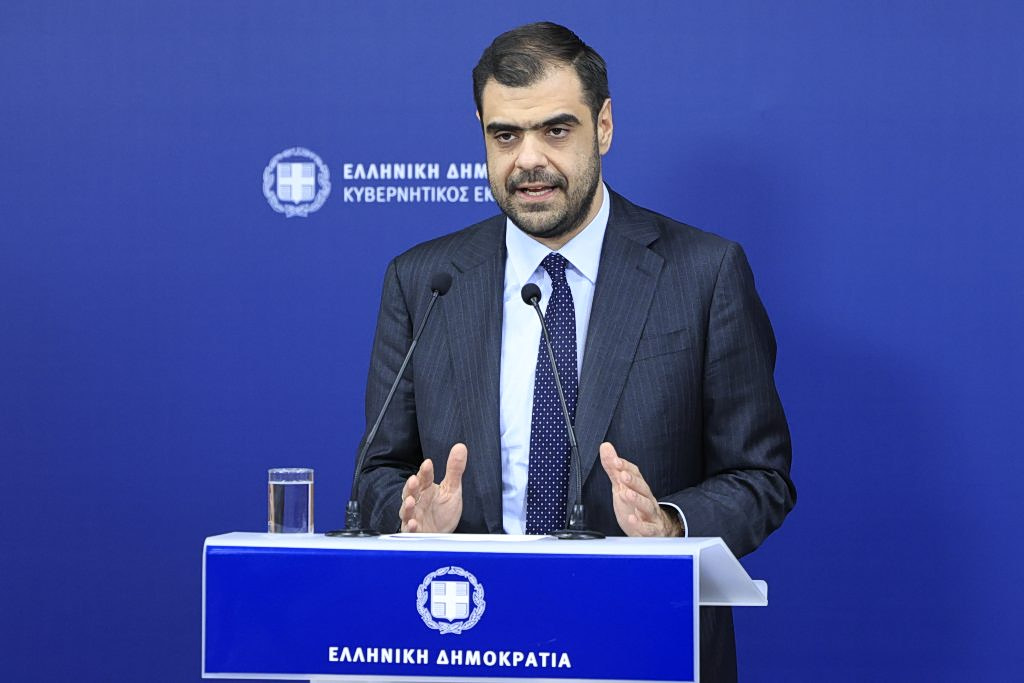
In an interview with ERTnews, Marinakis insisted that all required permits had been obtained exclusively from Greek and Cypriot authorities and that neither Turkey’s consent nor any form of coordination with Ankara had been sought. He also rejected suggestions that France’s diplomatic communication with Turkey amounted to recognition of Turkish rights or a request for permission.
The Greek foreign ministry announced last week that the licensing procedures for seabed surveys and cable-laying operations under the Great Sea Interconnector (GSI) had been completed. The decision followed a positive recommendation by the competent interministerial committee and an application submitted by French cable manufacturer Nexans on behalf of the project-owning company, GSI. The research vessel subsequently requested a NAVTEX, which was issued by the Hellenic Navy Hydrographic Service.
“Everything happened exactly as we had said it would,” Marinakis said, describing the sequence of applications, examination and authorization. The Greek NAVTEX was followed by a Turkish counter-notice challenging the Greek authorization and reiterating Ankara’s claims over parts of the survey area.
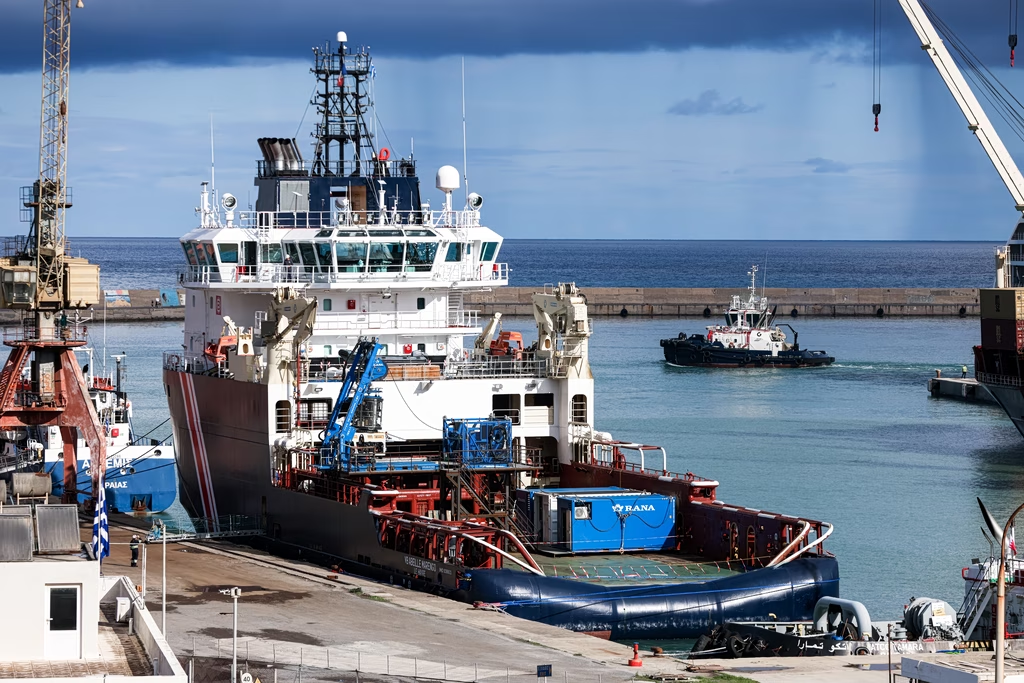
The French vessel Abeille Marengo arrives at the port of Heraklion, Crete, ahead of undersea surveys for the Great Sea Interconnector (GSI) Project (Stefanos Rapanis/EUROKINISSI)
France’s diplomatic communication
A substantial part of the interview focused on the French note verbale to Turkey, which has become a source of political debate. Marinakis described it as the mildest form of diplomatic communication between states, arguing that it had no legal effect, did not constitute a request for permission and did not recognize any Turkish sovereign or maritime rights.
He distinguished between obtaining authorization and notifying another country of planned activities, insisting that the two procedures should not be conflated. According to the government spokesman, the French communication was informational and reflected France’s direct interest in the project, given the involvement of French companies.
He said Athens had been aware of the French communication and that other countries in the region had also been informed, according to briefings he had received from the competent ministries. However, when asked specifically about the wording of the note verbale, he acknowledged that he had not personally seen its contents, which he said fell outside his responsibilities. He relied instead on assurances from the Foreign Ministry and on the nature of the diplomatic procedure.
France has a direct commercial interest in the project through cable manufacturer Nexans and investment group Meridiam, which became GSI’s majority shareholder in August 2026. Paris has also been involved in diplomatic contacts with Ankara over the resumption of seabed surveys.
Marinakis rejected reports suggesting that Greece had reached an understanding with Turkey over the licensing or implementation of the project. He was equally categorical in saying that there had been no communication or coordination between the Greek and Turkish sides on the matter.
A project delayed by maritime tensions
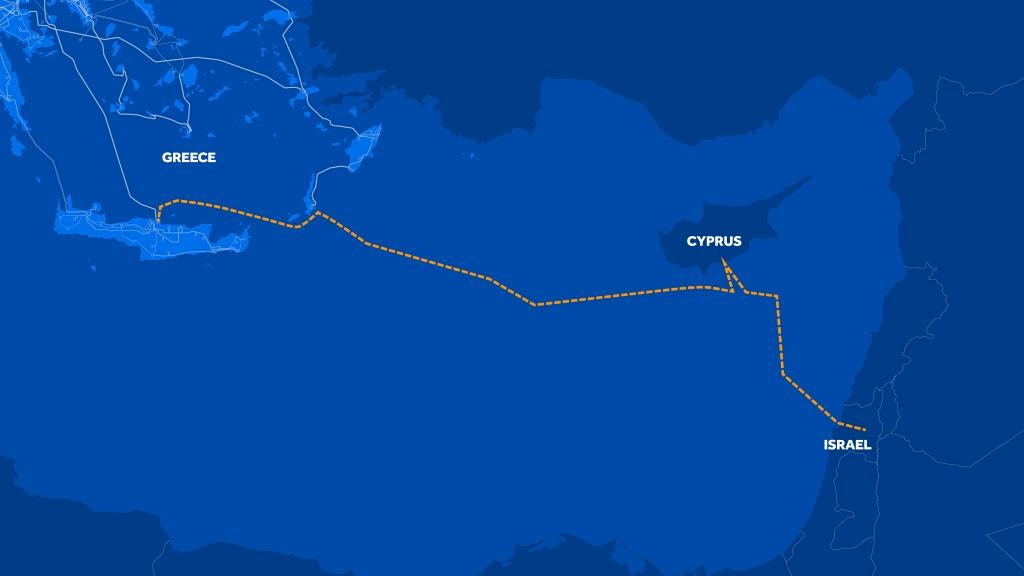
The latest developments follow a prolonged interruption of seabed surveys in July 2024, when the Italian research vessel Ievoli Relume suspended operations off Kasos after Turkish warships appeared in the area. The incident triggered a period of heightened tension between Athens and Ankara over competing maritime jurisdiction claims.
The new four-month Greek NAVTEX, valid until March 6, 2027, authorizes the French research vessel Abeille Marengo to resume surveys along the planned cable route. Turkey issued a counter-NAVTEX challenging the Greek notice and arguing that parts of the designated area fall within its continental shelf, as declared to the United Nations in 2020. Ankara also insisted that the activities required coordination with Turkish authorities.
Athens maintains that the relevant areas fall within its continental shelf and that authorization for the surveys is a matter for the competent Greek authorities. The government has rejected Turkey’s claims and says the counter-NAVTEX does not alter the legal position or the project’s course.
The dispute has also acquired a broader diplomatic dimension. Turkish Foreign Minister Hakan Fidan recently said that the situation was normal, while previously arguing that Ankara wanted written notification of planned maritime activities. Marinakis declined to interpret Fidan’s remarks, saying it was not the government’s role to decode statements made by the Turkish side.
He also dismissed suggestions of US intervention, saying he had no information to indicate that Washington had exerted pressure on either side.
Energy and strategic significance
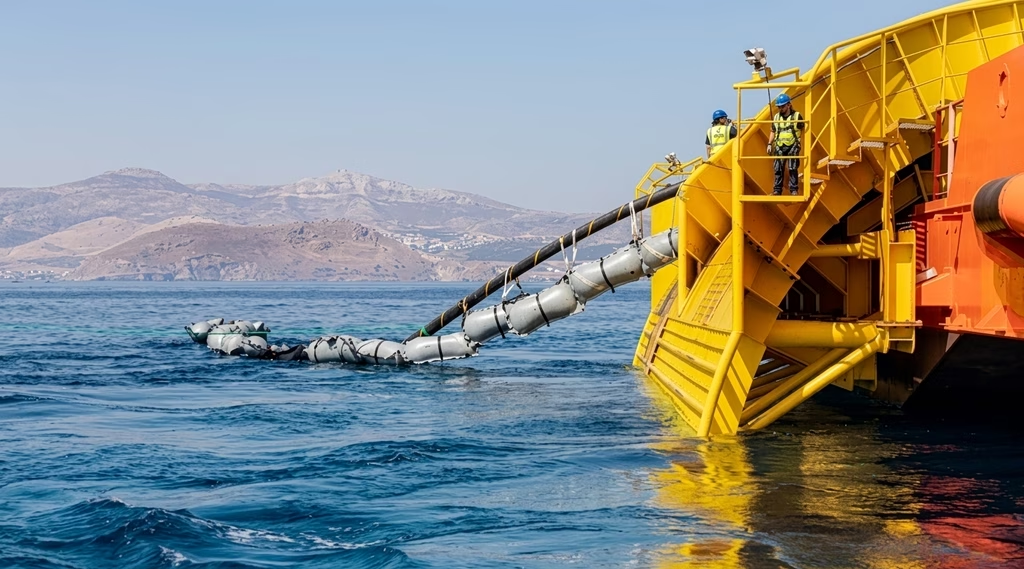
Marinakis described the GSI as a European project of strategic importance, intended to end Cyprus’ electricity isolation by connecting its grid with Greece and, through it, the wider European network. Cyprus is currently the only EU member state without an electricity interconnection.
The project has faced repeated delays amid disputes over maritime jurisdiction, as well as questions about its financing and economic viability. Its strategic importance has nevertheless been reaffirmed by Greece, Cyprus and the European Union. Recent analysis cited by To Vima estimates that the interconnection could generate annual consumer savings of up to 138 million euros by 2035, with most of the benefits accruing to Cyprus.
The project is also being pursued within a wider framework of European energy connectivity and regional cooperation. Marinakis said the government remained committed to its implementation and that the Foreign Ministry and other competent departments were monitoring developments closely.
Opposition criticism and national rights
The government spokesman devoted considerable attention to criticism from opposition parties and former political leaders, accusing some of fostering alarm over the project and prematurely portraying its difficulties as another national defeat.
He argued that initial predictions that the cable would not proceed had been disproved by the completion of the licensing process. He also sought to distinguish the positions of different political figures, saying former prime minister Costas Karamanlis had not used the rhetoric of national defeat and that main opposition PASOK had not adopted the same argument, citing statements by party leader Nikos Androulakis.
Marinakis said the foreign ministry would brief political parties on the French diplomatic communication at the appropriate time, but did not provide a date. He stressed that the licensing process had only been completed on Friday and that the project remained under way.
In defending the government’s broader foreign policy record, he cited the maritime delimitation agreements with Italy and Egypt, the extension of Greece’s territorial waters to 12 nautical miles in the Ionian Sea and the adoption of maritime spatial planning, which he said had recorded the country’s outer potential maritime limits with the endorsement of the European Union.
Marinakis rejected accusations that the country was retreating from its sovereign rights, saying national issues should not become an opportunity for political exploitation or confrontation.
“We do not retreat, and we never put matters concerning sovereign rights on the negotiating table,” he said, adding that the project should proceed while preserving peace and stability in the region.
Marinakis concluded by reiterating that Greece would complete the interconnection without seeking Turkish permission or accepting any arrangement that could compromise its sovereign rights. He declined to speculate on when the research vessel would depart, saying that providing a timetable without official information would be irresponsible.