
 Μake us preferred on Google
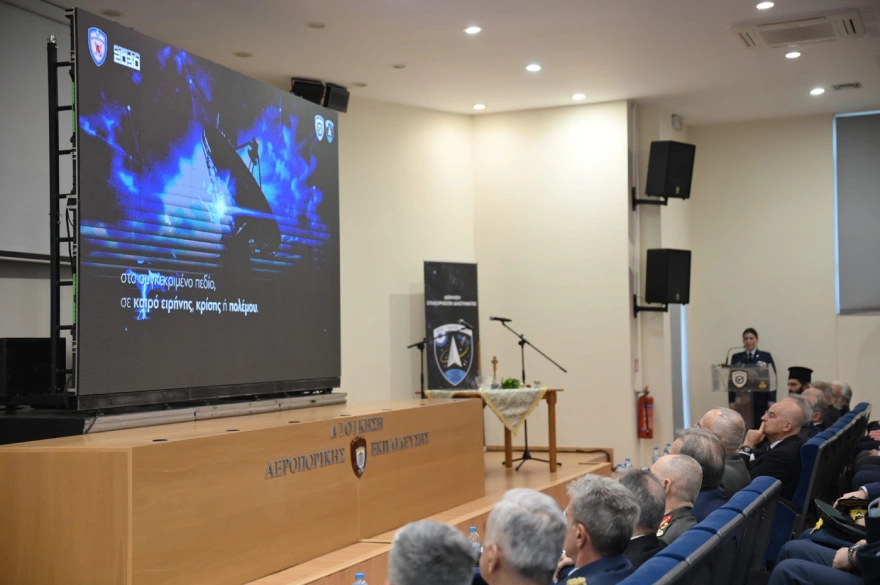
Defense Minister Nikos Dendias attended Monday’s ceremony, describing the new command as a significant step in adapting the military to operations spanning land, sea, air, space, cyberspace and the electromagnetic spectrum. The initiative forms part of the government’s Agenda 2030 defense reform program and the 2024-2035 force structure.
Dendias said Greece needed to reduce its dependence on foreign providers for critical satellite services, arguing that military communications during a crisis could not rely on privately owned satellites controlled from abroad. He cited the disruption to Ukrainian communications following the loss of access to space-based capabilities as evidence of the strategic importance of satellite infrastructure.
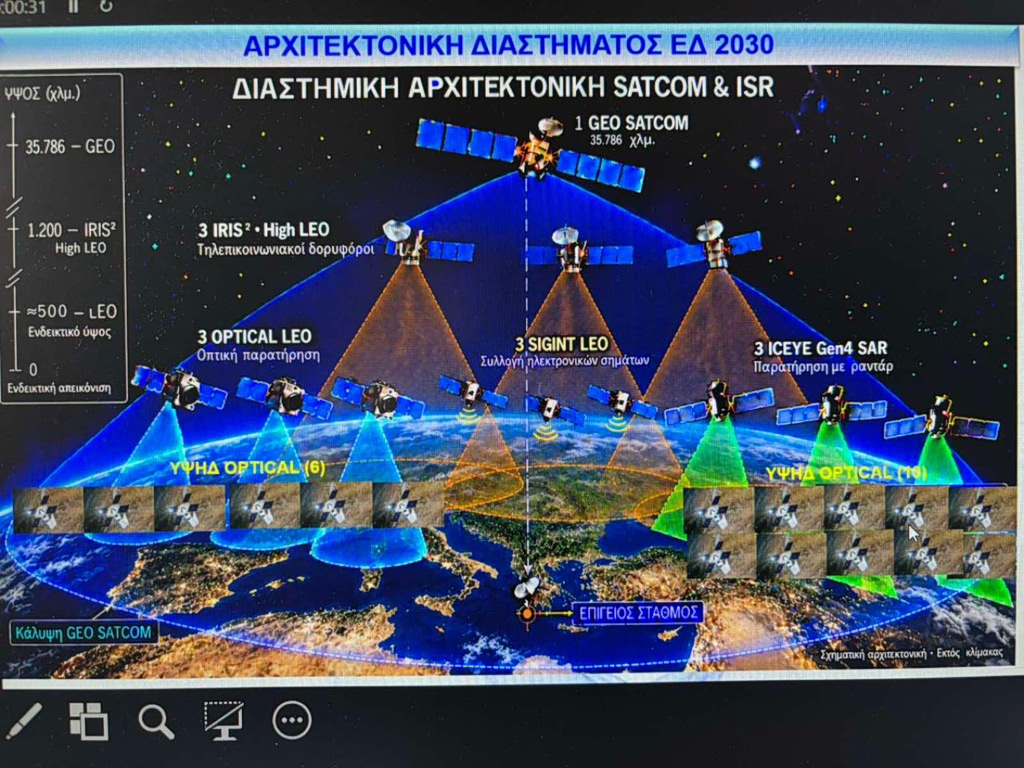
He outlined plans for 12 dedicated military satellites: six for optical observation, three for signals intelligence (SIGINT) and three using synthetic aperture radar (SAR), which can collect imagery regardless of daylight or weather conditions.
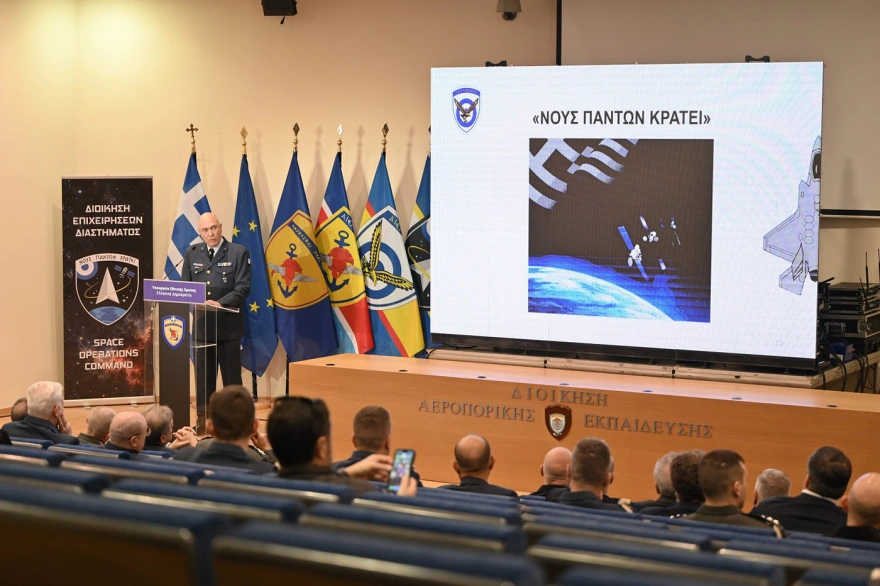
The minister also said Greece had acquired 16 dual-use optical satellites in low Earth orbit. This figure was presented as part of the government’s broader satellite development effort, although the precise composition and operational status of the satellites were not specified.
The military plan is separate from the national microsatellite programme, which includes optical, thermal and radar observation satellites as well as experimental CubeSats.
The wider defense strategy also includes the development of secure military satellite communications, with a geostationary satellite envisaged under the national MILSATCOM programme. Greece is also participating in European satellite initiatives, including GOVSATCOM, which provides secure communications for government users, and IRIS², the EU’s planned secure connectivity constellation.
Greece has been selected to host one of the two European GOVSATCOM hubs, in the Athens area, giving the country a role in the EU’s secure satellite communications architecture.
Dendias also highlighted the need to develop domestic technological capabilities, including facilities at the Hellenic Aerospace Industry for the assembly, integration and testing of space equipment. The aim, he said, is to strengthen national expertise and enable Greek companies to participate more substantially in space programmes.
The new command is intended to bring these capabilities together, ensuring that satellite-derived information can be integrated into military command and control systems and made available to units across all branches of the armed forces.