 Μake us preferred on Google
What title could that night of November 9, 1989, exactly 37 years ago today, have had? “The End of Illusions”? Or perhaps “The End of a Utopia”? “Brave New World,” to honor Huxley’s dystopias?
“The Night a Wall Fell and Thousands of Windows Opened,” those nailed-shut windows of the “Easterners” that were forbidden to open because they “looked” onto the West? Or something drawn from Kostoula Mitropoulou’s lyrics for Manos Loizos’s “O Dromos” and their one word, freedom?
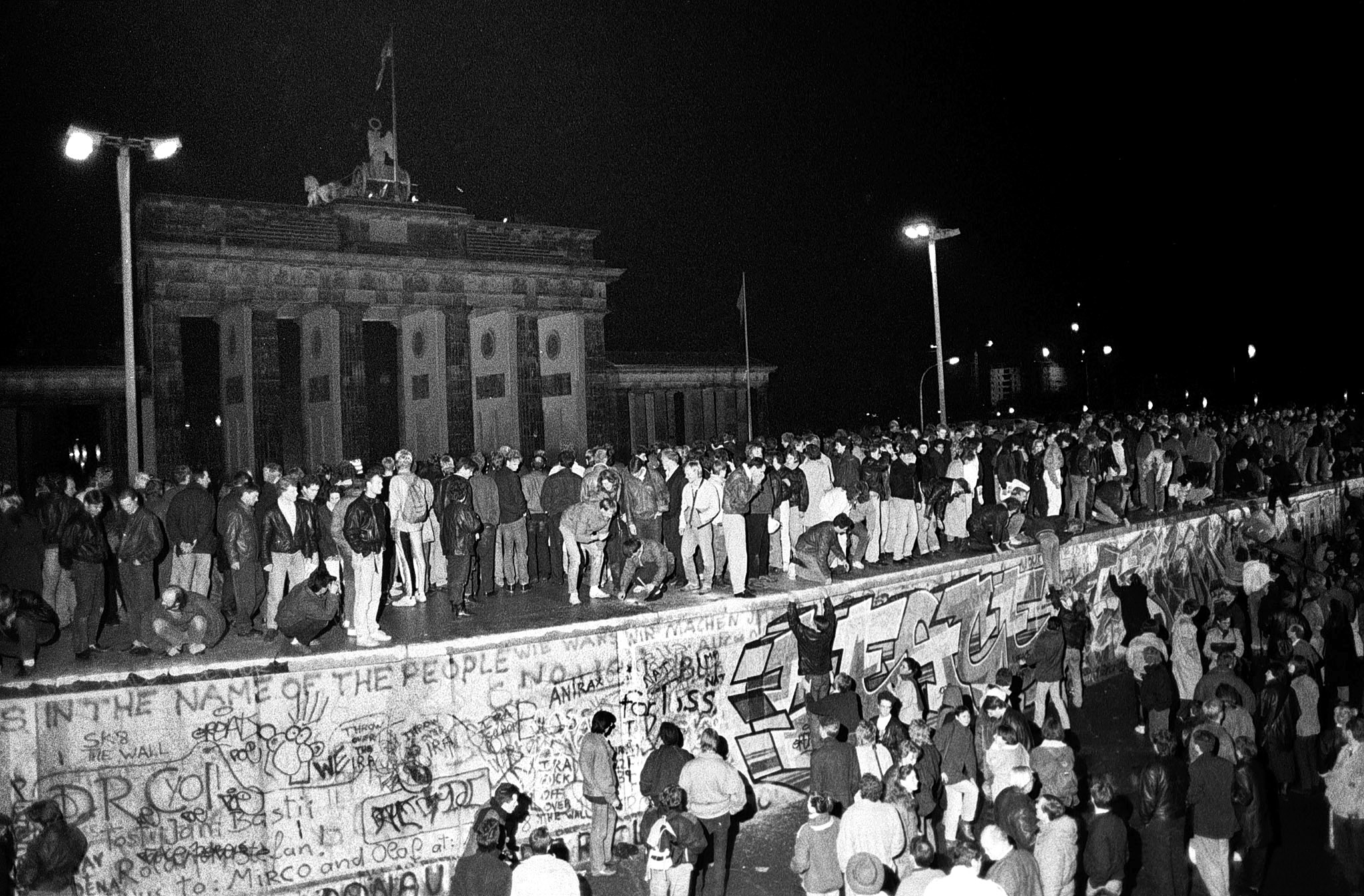
I am referring to the fall of the Berlin Wall, the defining scene of the fall of actually existing socialism. It was a scene made up of thousands of people, built from the materials of History itself and recorded by the camera of reality, one that no director could have staged. Not even Eisenstein, who was inspired by the storming of the Winter Palace (symbolically, the first scene of the great utopia) and rendered it through his film lens in the way that suited a narrative, and not exactly as it happened.
Today, more years have passed since the fall of the wall than the years it stood, dividing in two a city, a country, thousands of families and millions of lives. These are precisely the cycles of History.
The children born back then now have children of their own. And the parents of those children had lived almost their entire lives under this regime, which, in essence, did what? It put up barriers to the past and erased it. The life of every Berliner began in those days of August 1961, when the wall and the barbed wire split the city in two, and where each person happened to be at that moment determined their future.
The fall of the wall is not simply a historical event. It is that supreme moment when the small stories of people meet so that the great History of Humankind can be written. And however much the political decisions had already been made, the wall fell through the hands, the hammers, the bulldozers and the anguish of people eager to reunite not only with their loved ones, but with their own lives.
The Strange Story Of Conrad Schumann
Conrad Schumann was born in Saxony in the middle of the war, in 1942. He was a shepherd and had nothing to do with politics. At 18 he joined the East German police, and in August 1961, when the barbed wire was going up where the wall would soon rise, he was serving in Berlin.
On the afternoon of August 15, he was guarding those very spots, to stop anyone trying to cross to the other side, by shooting if necessary. But he did not feel right; he felt suffocated. “I did not want to shoot people. I did not want to imprison anyone, and I did not want to be a prisoner myself,” he would later tell journalists.
The 19-year-old Conrad seemed nervous. He smoked constantly and kept looking around. The journalists and photographers standing on the other side picked up on it immediately. They understood that something was going to happen. They alerted the authorities, and a car came and stopped on the western side with its back door open, as if waiting for something.
Photographer Peter Leibing waited with his finger on his camera. The others, without having coordinated with Conrad or even exchanged a glance with him, began making noise to distract the other guards. Suddenly he threw away his weapon and, at the same moment, jumped to the other side. That is the exact moment Leibing captured: Conrad with one foot in freedom and the other in the regime he was leaving behind.
Conrad Schumann settled in Bavaria, married and started a family, but he always lived in fear for the relatives he had left behind, fear of reprisals because his photograph had become a symbol. He said he truly felt free on that night of November 9, 1989. Then, nine years later, he took his own life.