 Μake us preferred on Google
 A papyrus fragment containing a passage from Homer‘s Iliad has been discovered concealed inside an Egyptian mummy at the ancient site of Oxyrhynchus, raising new questions about the role of Greek literary tradition in the funerary practices of the Roman-era world.
The fragment, which records verses from Book II of the Iliad — specifically the Catalogue of Ships, the inventory of the Achaean fleet that sailed for Troy — was found by a joint team of Spanish and Egyptian archaeologists from the University of Barcelona and the Institute of the Ancient Near East.
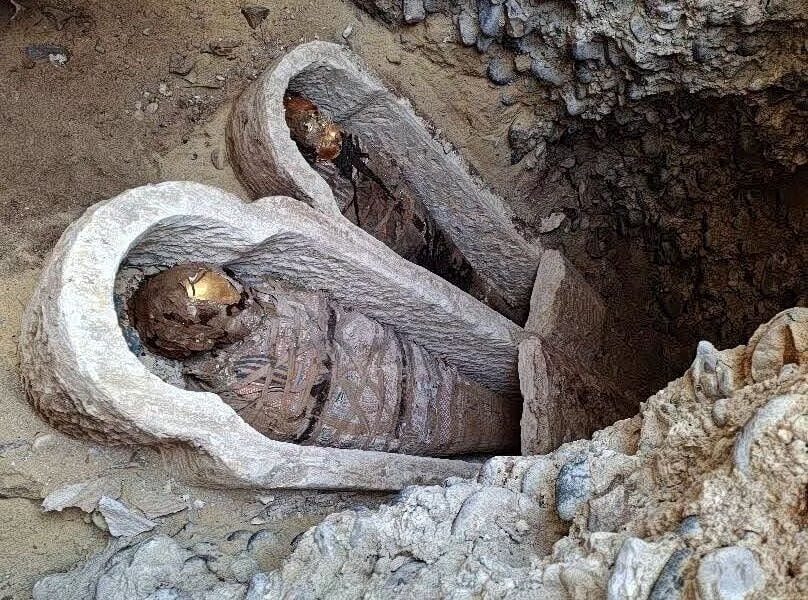
The team uncovered a trench containing three limestone burial chambers holding the cremated remains of adults, an infant, and animals, primarily cats, wrapped in cloth, alongside a collection of clay and bronze figurines of the god Harpocrates and a figure of Eros.
While the discovery of papyri at Oxyrhynchus — modern-day El-Bahnasa — is not unusual, given the large volume of literary, archival, and official documents previously recovered there, researchers said this find was distinctive. Unlike most papyri from the site, which have been found in refuse deposits, this one was placed deliberately within an organized funerary context.
“The find suggests that the local elite in Oxyrhynchus not only absorbed Greek culture but actively engaged with its literary traditions,” said the secretary-general of Egypt’s Supreme Council of Antiquities.
Scholars said the papyrus attests to the reach and prestige of Homeric epic across the Roman world, and highlights the influence Greek literature held in a society that, as evidenced by the mummification itself, continued to observe its own ancient burial customs.