

 Μake us preferred on Google
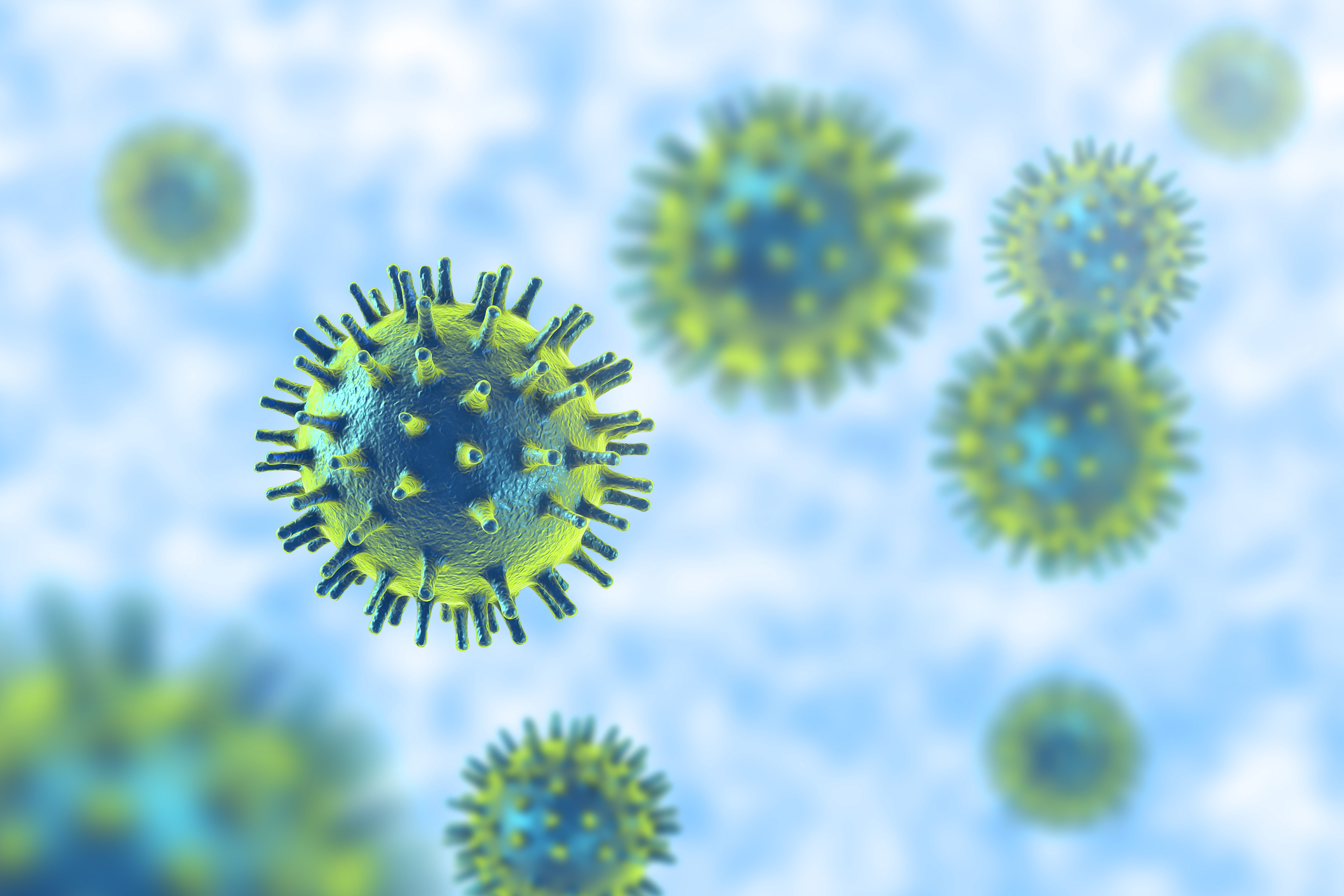
 Influenza D is the newest member of the influenza virus family — identified as recently as 2011 in pigs and officially named in 2014. It is a rather neglected member at that, because despite having been detected in cattle farms across every continent, it is not subject to systematic testing. It is not systematically monitored in humans either, even though antibody tests have shown that it can infect people (fortunately, at least so far, without causing serious illness), and that it can more readily infect human respiratory cells in the laboratory.
The question that naturally arises is: could Influenza D, largely unknown to the general public, yet sharing many characteristics with the demonstrably dangerous Influenza A, become a significant future global threat? Leading international experts who have spent years trying to untangle this viral knot spoke to Vima-Science, stressing that there is much we do not yet know and even more we need to learn, in time, so that we are not one day left chasing Influenza D and falling short.
Getting Acquainted
First, let us get better acquainted with Influenza D. It was discovered in 2011 by Ben Hause, who was then head of the diagnostic division of Newport Laboratories, a veterinary vaccine company in Minnesota. Hause isolated a flu-like virus from a pig showing flu symptoms on a farm in Oklahoma, but tests showed it was not Influenza A. Hause and his team found that the new virus could be transmitted among pigs through contact without producing symptoms. Concerned about its future potential, he asked Richard Webby, a prominent flu researcher at St. Jude Children’s Research Hospital, to help investigate it further. Experiments showed that the virus could spread through direct contact between ferrets (the primary model for flu research, because their respiratory receptors closely resemble those of humans). However, it did not spread airborne among ferrets and did not cause them symptoms.
These findings were first published by the team in 2013, describing a virus that appeared related to Influenza C (milder than A and B), as genetic studies showed they shared 50% of their genome. Further experiments led to the virus being classified as Influenza D, as the researchers described in a 2014 paper in the journal mBio, noting that its primary reservoir was cattle rather than pigs.
Rapid Spread
Since then, Influenza D has been detected in a wide range of other species, as Professor Gregory Gray, Professor of Epidemiology of Infectious Diseases at the University of Texas, told Vima-Science. Professor Gray conducts on-site surveillance for Influenza D in cattle and poultry farms in Mexico, aiming to shed more light on how the virus spreads and whether it could pose a threat to humans. “Influenza D has now been found in cattle farms across North America and also in Europe, Asia, Africa, and Australia. A Swedish study detected antibodies to Influenza D in milk before pasteurisation, while our team found the virus in aerosol samples from poultry farms in Malaysia. Antibodies to Influenza D have also been found in sheep, goats, chickens, giraffes, deer, horses, wild boar, kangaroos, and even cats and dogs.”
This broad range of species in which Influenza D circulates is concerning. According to Cody Warren, Assistant Professor in the Department of Veterinary Biosciences at Ohio State University, it “opens the door for two variants adapted to different species to potentially infect the same animal and recombine, creating a new variant capable of more easily infecting humans.” Equally worrying is the fact that the Influenza D virus displays some of the dangerous characteristics of Influenza A: it appears in many parts of the world, infects multiple species, and has a tendency to recombine. “It has all the hallmarks of an emerging pathogen for both animals and humans, and if it manages to become more easily transmissible between people, it will have epidemic and possibly pandemic potential,” Professor Gray warned.
Blind Spots
Cattle are already falling ill from Influenza D, which contributes to Bovine Respiratory Disease (BRD), a serious condition caused by a mixture of viruses and bacteria. Humans are also being infected. As Dr. Mariette Ducatez, Research Director in the Host-Pathogen Interactions Department at France’s National Research Institute for Agriculture, Food and the Environment (INRAE) — one of the few European specialists to have studied Influenza D extensively, with around 25 papers on the subject — told Vima-Science: “Several studies have shown the presence of antibodies to the virus in the blood of farm workers. These infections were capable of triggering an immune response, as evidenced by the antibodies, but to date no live virus has ever been isolated from an infected individual.”
Dr. Warren emphasised that “it remains unclear whether people actually get sick from Influenza D. What is clear is that they never end up in hospital to be diagnosed, so evidently if they do have symptoms, they are mild. Moreover, since there is no systematic Influenza D surveillance anywhere in the world, even if there are some symptomatic cases, they never come to light.” The experts we spoke with broadly agreed that we are essentially in the dark regarding the spread of Influenza D, even in animals, since it is not currently classified as a priority pathogen warranting regular monitoring in most countries. “And if you don’t look, you don’t find,” Professor Gray noted.
Alarming Findings
While we are not looking, the warning signs are stacking up. A 2024 study analysing genetic sequences from cattle Influenza D samples dating back to 2005 revealed rapid genetic evolution of the virus, which translates into frequent jumps from one species to another. A 2023 study by Professor Gray and colleagues revealed the presence of viral fragments in nasal swabs taken from farm workers. Equally alarming were recent findings from researchers at the Institute of Virology and Immunology in Switzerland, which showed that Influenza D replicates more efficiently in human airway cells in the laboratory than Influenza C does.
What about the general population? Here too the picture is murky. For instance, a study by Dr. Hause, the virus’s original discoverer, found antibodies in only 1.3% of 316 samples from individuals who had participated in flu vaccine studies.
However, a Chinese study published in 2025 presented very different figures. Researchers at the Changchun Veterinary Research Institute reported that among 612 samples from individuals in both urban and rural areas of northern China, 73% tested positive for Influenza D antibodies, and among those with respiratory illnesses, that figure soared to 97%.
These Chinese findings were challenged by other experts, who pointed out that if Influenza D truly had such widespread circulation in China, it would likely have been detected, given that the country carries out thorough pathogen sequencing. That said, the Chinese experiments were conducted using a newer strain of Influenza D that was recently isolated in China — and this strain may show greater potential.
A Call for Vigilance
To avoid discovering the potentially global threat posed by Influenza D only when it is too late, experts are calling for stricter and more regular surveillance. Professor Gray stressed that “our current knowledge of Influenza D is superficial — the virus is neither adequately studied nor tested, and that needs to change.” Dr. Warren emphasised that “given that the general population has no immunity to Influenza D, meaning that if the virus becomes easily transmissible between humans most people will be susceptible to infection, we scientists must act proactively. What I would recommend is stricter surveillance, starting with farm workers in facilities where we already know the virus is circulating in cattle, as well as their close contacts. In any case, I do not consider Influenza D an immediate threat to humanity right now, but that does not mean it will not become one in the future. And we need to be prepared.”
Dr. Ducatez echoed the same view: “Right now there are no measures in place to monitor Influenza D, but there should be. While I believe Influenza D has greater potential as a zoonotic disease and I am not so worried it will cause a pandemic, it is important to conduct stricter surveillance so we can better understand how it circulates in both animal and human populations, because viruses have a proven track record of surprising us.” And viral surprises are certainly something nobody wants.