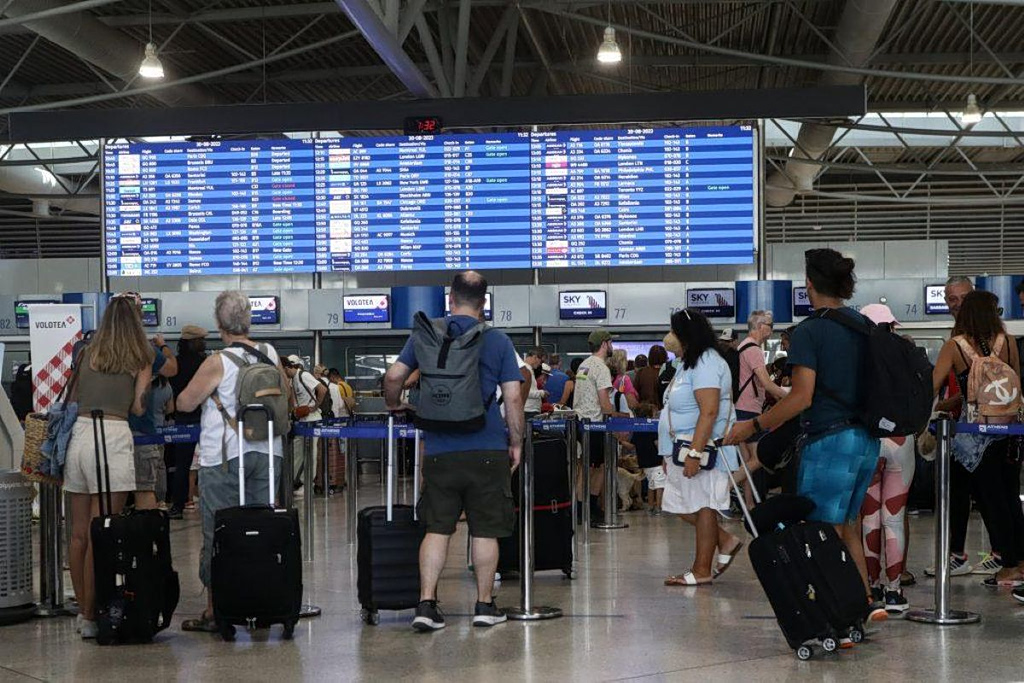

Greece’s regional airports continued their upward trajectory in 2025, with Fraport Greece reporting strong growth in both annual and December passenger traffic across the 14 airports it operates and manages.
According to the company’s latest traffic figures, more than 37.1 million passengers traveled through the regional airport network in 2025, marking a 3% increase compared with 2024. The results confirm the long-term expansion of regional air travel in Greece, driven by sustained tourism demand and improved connectivity.
Strong finish to the year
December 2025 capped the year on a positive note. The 14 regional airports welcomed more than 881,000 passengers, an increase of 9.4% compared with December 2024. The performance highlights continued momentum even during the winter season, traditionally a quieter period for Greek tourism.
Fraport Greece said the consistent rise in passenger numbers throughout the year strengthens Greece’s position as an attractive and competitive tourism destination, while also supporting local economies and communities across the country.
Flight activity on the rise
Growth in passenger traffic was accompanied by increased flight activity. During 2025, domestic flights rose by 1.1% to 86,971 movements, while international flights increased by 3.2% to 196,382. Overall flight traffic, combining domestic and international services, climbed 2.5% year over year, reflecting stable demand for air travel to and from Greek destinations.
Thessaloniki and Rhodes lead regional growth
Several airports posted particularly strong results. Thessaloniki Macedonia Airport, Greece’s second-largest airport, recorded a 10.7% increase in December traffic, adding about 56,000 passengers and bringing the month’s total to 580,267. For the full year, passenger traffic in Thessaloniki rose 8.2%, reaching nearly 8 million travelers, reinforcing the city’s growing importance in both domestic and international air networks.
Among island destinations, Rhodes Diagoras Airport surpassed 7 million passengers in 2025, posting a 2.5% annual increase compared with 2024. December traffic at the airport rose 8.4%, with more than 72,600 travelers, underlining Rhodes’ enduring appeal as a leading international tourism destination.
Santorini and Mykonos See Passenger Drops
Despite the broadly positive trend, Santorini Airport and Mykonos Airport were the only two airports in the Fraport Greece network to record a decline in passenger traffic in 2025. Santorini posted the sharper drop, with passenger numbers falling 16% year over year, from 2,877,122 travelers in 2024 to 2,418,219 in 2025. Mykonos saw a more moderate decrease of 2%, corresponding to 31,896 fewer passengers, reflecting softer demand at two of Greece’s most heavily tourism-dependent island gateways.
Long-term impact
Since Fraport Greece assumed management of the 14 regional airports in 2017, total passenger traffic through the network has reached approximately 249.6 million travelers through the end of 2025. Compared with 2016, the year before the concession began, overall passenger volumes have increased by nearly 48%, highlighting the long-term transformation of Greece’s regional aviation infrastructure.
CEO: Resilience amid challenges
Commenting on the results, Alexander Zinell, CEO of Fraport Greece, said the 2025 performance confirmed strong demand for Greek destinations despite a challenging operating environment marked by geopolitical uncertainty and extraordinary events, including seismic activity on the island of Santorini.
Zinell emphasized that airport teams successfully managed higher traffic volumes while maintaining uninterrupted operations, high safety standards and consistently strong service levels. He added that sustaining this momentum and ensuring the long-term resilience of Greek tourism will require targeted investments in critical infrastructure and services, supported by close cooperation between public and private stakeholders.