The timeline for the Great Sea Interconnector (GSI), the flagship undersea power link connecting Greece and Cyprus, is being revised following a rescheduling of activities by Nexans, the French company responsible for building the project’s cable section.
In a statement issued Monday, Nexans said it is “working closely with its customer to evaluate the best available options for a revised execution schedule,” noting that the changes will affect the project’s delivery date.
The announcement marks the first official confirmation of a shift in the timetable for the Greece – Cyprus electricity interconnection, a key infrastructure project designed to strengthen energy security in the Eastern Mediterranean.
What Nexans said
According to Nexans, the project continues to be carried out in line with its contractual obligations and milestones set since 2023. However, a reprogramming of activities is underway, prompting a reassessment of the execution schedule.
The company stressed that it remains fully committed to the project and is coordinating closely with its client to manage the changes. Nexans added that the revised timeline will not affect its 2028 financial targets, citing a strong order backlog and mitigation measures that will take effect starting in 2026.
Nexans said it will present its financial guidance for 2026 alongside its full-year 2025 results on Feb. 19, 2026.
Julien Hueber, chief executive officer of Nexans, said the Great Sea Interconnector “remains underway” and described it as critical infrastructure. He emphasized that the company is managing the situation with “strong discipline” and remains on track with its long-term financial trajectory.
Why the GSI matters
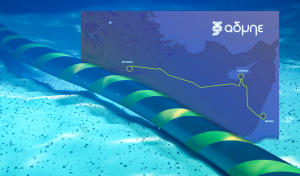
The Great Sea Interconnector is a major subsea electricity project designed to link the power grids of Greece, Cyprus and Israel. Once completed, it is expected to exchange up to 1,000 megawatts of electricity, with the potential to double capacity to 2,000 megawatts, which is roughly equivalent to the average electricity consumption of about 3 million households.
A central goal of the project is to end Cyprus’ energy isolation by creating a direct electricity connection with the European grid, effectively forming an energy corridor between Europe and the Eastern Mediterranean.
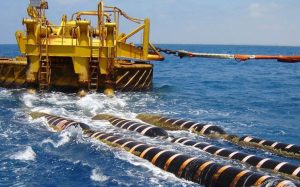
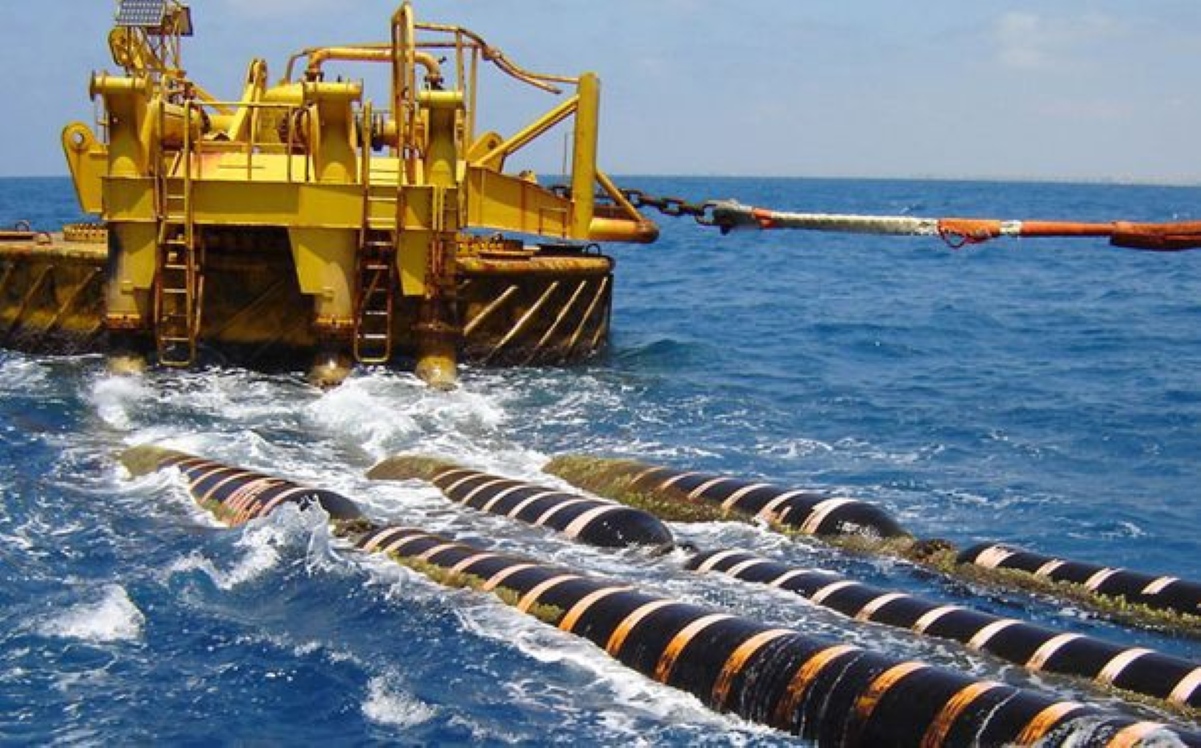
The Greece – Cyprus section of the interconnector is being built using high-voltage direct current (HVDC) technology. The cable will run across the Mediterranean seabed at depths exceeding 3,000 meters, making it one of the longest and deepest subsea power links in the world.
Project background
Nexans was awarded the contract for the Greece -Cyprus section of the GSI in what was described at the time as a historic deal, valued at €1.43 billion.
Under the original plan, the first phase of the interconnector was expected to be completed in 2028, with the second phase following in 2029.
The project has been designated a Project of Common Interest by the European Union, a status that allows for faster permitting and planning while supporting EU energy and climate goals. Much of the electricity exchanged through the interconnector is expected to come from renewable and low-carbon sources.
Despite the revised schedule, Nexans reiterated that it remains confident in the long-term prospects of its power transmission business and committed to delivering the Great Sea Interconnector in cooperation with its partners.