The message that came out of Washington these last couple of days was direct: Europe needs to pick up the pace.
Senior U.S. officials this week urged their European counterparts to clear regulatory hurdles and fast-track infrastructure investment so the Vertical Gas Corridor can evolve into a competitive and strategically vital supply route for Southeast Europe.
The corridor — a north-south gas transmission route connecting Greece with Bulgaria, Romania, Hungary, Slovakia, Moldova and Ukraine — is designed to channel liquefied natural gas (LNG), including U.S. LNG, deeper into the continent.
Pressure on the European Commission
According to sources familiar with the talks, firm pressure was directed at European Commission Director-General for Energy Ditte Juul Jørgensen during a high-level meeting attended by U.S. Department of Energy officials, Ukrainian representatives and executives from the five national gas transmission system operators along the corridor. Greece was represented by Maria Sferruzza, CEO of DESFA, the country’s natural gas transmission operator.
Washington is seeking a clear timetable for resolving outstanding regulatory issues that are slowing the corridor’s full commercial deployment.
According to sources, Jørgensen, listened closely and committed to helping expedite solutions. She called for a follow-up meeting, which will likely take place in Brussels on March 3 and will bring together transmission operators and national regulators in the hopes of shaping a mutually acceptable framework. Such an agreement would allow the Commission to grant long-term approval for competitive, multi-year capacity products, enabling the corridor to operate at scale.
The Commission is also considering extending the temporary exemption currently in place through April. That measure allows capacity auctions to continue in order to cover Ukraine’s needs through the corridor’s bundled “Route products.”
Linking Infrastructure to a $750 Billion Energy Framework
U.S. officials also floated a strategic proposal aimed at accelerating European decision-making.
They suggested that funding to lower transmission tariffs along the Vertical Corridor, as well as investment in critical infrastructure such as floating storage and regasification units (FSRUs), new or expanded pipelines and gas-fired power plants ,could be incorporated into the wider commercial agreement under discussion. That agreement envisions European commitments to purchase up to $750 billion in U.S. energy products by 2028.
The US proposal aims to provide a coordinated energy and trade strategy, linking infrastructure development with long-term commercial flows in a way that aligns geopolitical and economic priorities.
Investment Momentum Builds
The commercial implications of the long-term supply agreements that have been signed over the last 2 days are already coming into focus.
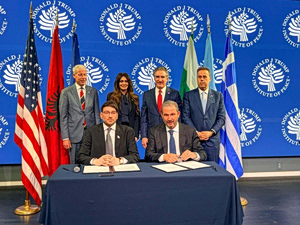
After securing 20-year LNG supply deals for U.S. gas deliveries to Albania, Bulgaria, Ukraine and Bosnia-Herzegovina, Atlantic SEE LNG Trade — a joint venture between Greece’s AKTOR Group (60%) and DEPA Commercial (40 %) — is assessing participation in a series of energy infrastructure projects across the region.
Among the projects under review are additional FSRUs in Greece and Albania, capacity upgrades to existing interconnectors such as the Greece-Bulgaria pipeline and potentially new pipeline links needed for the corridor’s full development.
There is also consideration of building a gas-fired power plant in Greece. With long-term LNG purchase agreements now in place, demand visibility has improved significantly. That stability makes it easier to justify major capital commitments, as predictable offtake translates into steadier revenue streams; a key factor in financing large-scale infrastructure.
At the same time, Gastrade is advancing plans for a second FSRU in Thrace, northeastern Greece. Company executives have stepped up contacts in Washington in recent days in an effort to secure financing and strategic partnerships.
Greece’s Strategic Role
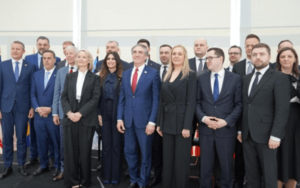
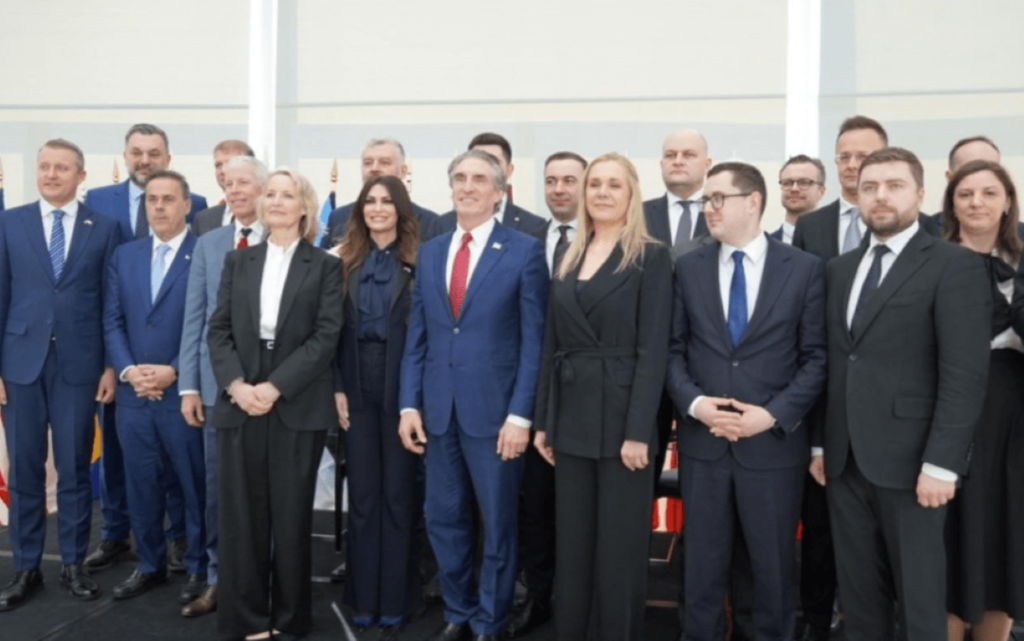
Energy cooperation featured prominently in meetings in Washington between Greek Environment and Energy Minister Stavros Papastavrou and U.S. Interior Secretary Doug Burgum, who chairs the National Energy Dominance Council, as well as U.S. Energy Secretary Chris Wright. The talks were attended by Greece’s ambassador to the United States, Antonis Alexandridis, and U.S. Ambassador to Greece Kimberly Guilfoyle.
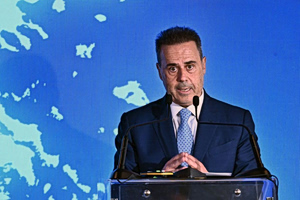
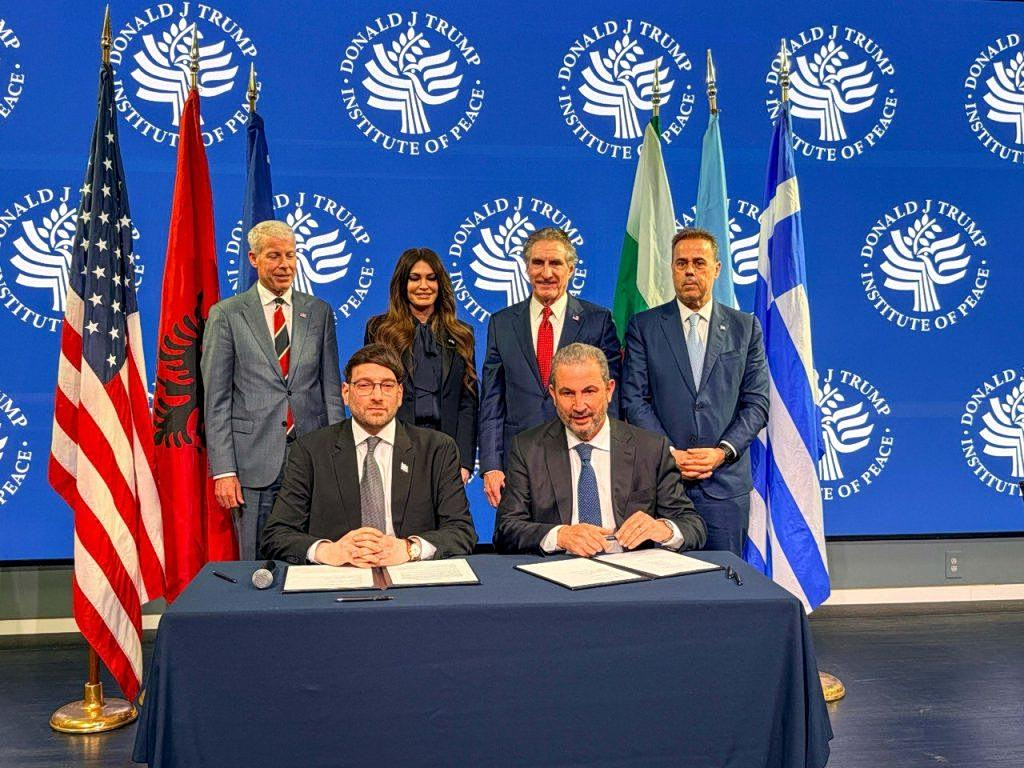
Papastavrou said Greece stands at the center of the energy agreements signed in Washington this week, including four memorandums of understanding (MoU) involving Atlantic SEE and a separate MoU between Metlen and Shell. The deals build on previous commitments reached during the P-TEC ministerial held at the Zappeion in Athens.
“Today, Greece is a gateway for American natural gas and a key pillar of regional energy security,” Papastavrou said. “Tomorrow, we aim to develop our hydrocarbons sector and produce natural gas for the benefit of the Greek people, our country and Europe as a whole.”
New Shipbuilding and Energy Partnerships
Beyond gas infrastructure, broader industrial cooperation is also taking shape.
In Washington, ONEX Shipyards & Technologies, which controls the Elefsina and Syros shipyards in Greece, signed an agreement with South Korea’s Hanwha Power Systems covering the construction of military vessels, including corvettes and frigates, to be built in both the United States and Greece.
The plan also includes commercial vessels for transporting energy products to the United States, with the possibility that smaller-tonnage ships could eventually be built in Greece as well.
Source: ot.gr