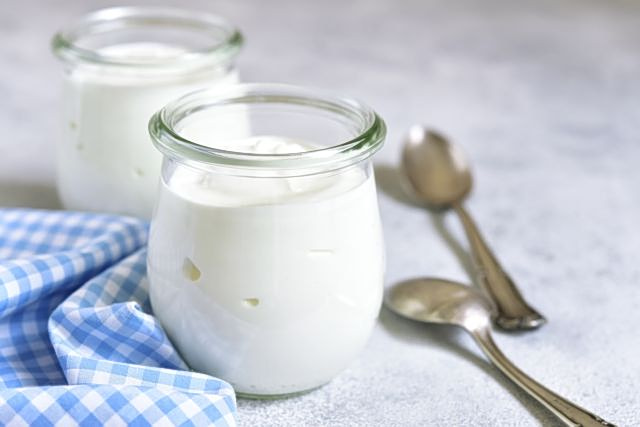
Greek yogurt is no longer just another food trend. It has become ubiquitous—across social media, in recipes by food creators, in fitness-related content, and on supermarket shelves throughout Europe and beyond.
The president of the Association of Greek Dairy Industries emphasized that Greek yogurt exports are not merely increasing but surging.
Over the past decade, exports of the product have more than tripled in both volume and value. From approximately €100 million in the early 2010s, annual exports now exceed €300 million.
Italy, the United Kingdom, France, Belgium, and increasingly the Netherlands account for up to 60% of total production. This indicates that the food is not merely a social media-driven trend, but one of the most dynamic export sectors of Greek food manufacturing.
The success is driven by two critical attributes: it is widely regarded as one of the healthiest foods internationally and is a leading source of protein, fully aligned with modern dietary preferences. However, this success has also given rise to widespread imitations—products labeled “Greek yogurt” that have little substantive connection to Greek production, as Apostolopoulos noted.
Greek yogurt exported abroad is not necessarily produced using Greek milk. This is not a matter of choice but necessity. Domestic cow’s milk production in Greece does not cover even 20% of total Greek yogurt output the president of the Association of Greek Dairy Industries. Under a different sourcing regime, Greece would simply be unable to meet global demand.
This reality does not undermine Greek production—quite the opposite. The sector continues to grow, invest, and expand exports. Nevertheless, the proliferation of imitations, particularly in international markets, creates a structural challenge: commercial success is advancing faster than product identity. Over the long term, this imbalance carries risks for the sector.