At the foot of Mount Olympus, Greece’s legendary highest peak and the mythical home of the ancient gods, nature changes character with every season. Here, among wildflowers, aromatic herbs and mountain air scented by the surrounding landscape, a remarkable story has taken root.
What makes it especially compelling is that it was born not out of necessity, but out of a desire to create.
Katerina Kalampaka and Kostas Goutelias met as students in Thessaloniki. She was studying Forestry, he Chemistry. Their academic paths brought them together through science, but they also discovered a shared way of thinking: a deep appreciation for the environment, sustainability and the pursuit of a meaningful life.
Like many young graduates, they eventually faced a familiar question. Should they look for jobs in the city? Try their luck abroad? Or build something of their own?
The answer did not come overnight. It emerged through countless conversations, reflection and a growing desire to create something that truly reflected who they were.
Gradually, Litochoro—a picturesque town in the Pieria region of northern Greece where Katerina was born and raised—began to take on a new meaning. No longer just a place filled with childhood memories, it became a place of possibility.
Courage, Persistence and a Field Full of Fragrance
For many people, life in the countryside conjures images of tranquillity, slower rhythms and a close connection to nature.
The reality, however, is far more demanding.
Leaving the city behind to build a business in rural Greece requires courage, persistence and extraordinary patience. Success depends on the weather. Returns are rarely immediate. Challenges are part of everyday life.
Yet in 2013, the couple decided to take the leap.
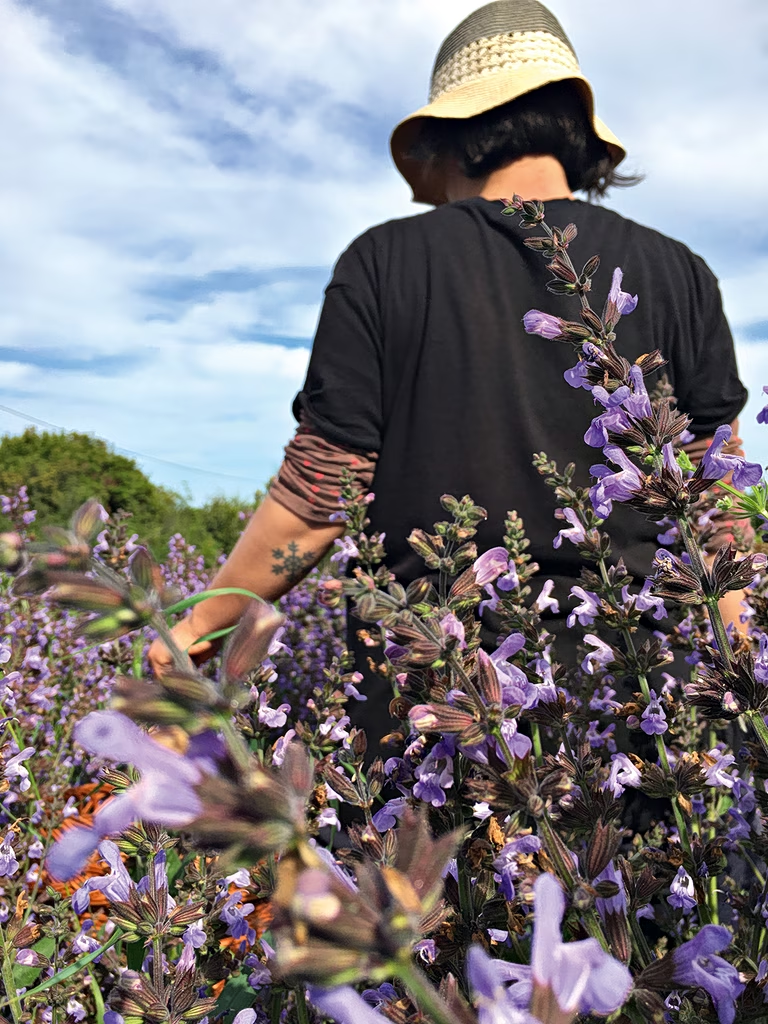
Starting from scratch, they poured their energy into a one-acre field that became the testing ground for their first experiments. There was no family farming tradition to rely on and no existing infrastructure waiting for them. What they did have was knowledge, research and a willingness to learn.
They chose to begin with aromatic and medicinal plants: Greek mountain tea, sage, lemon balm and oregano.
The decision was carefully considered. These crops thrive in the area’s unique microclimate, enjoy strong market demand and have a wide range of applications, from herbal infusions and cosmetics to essential oils.
Their first harvest arrived that same summer.
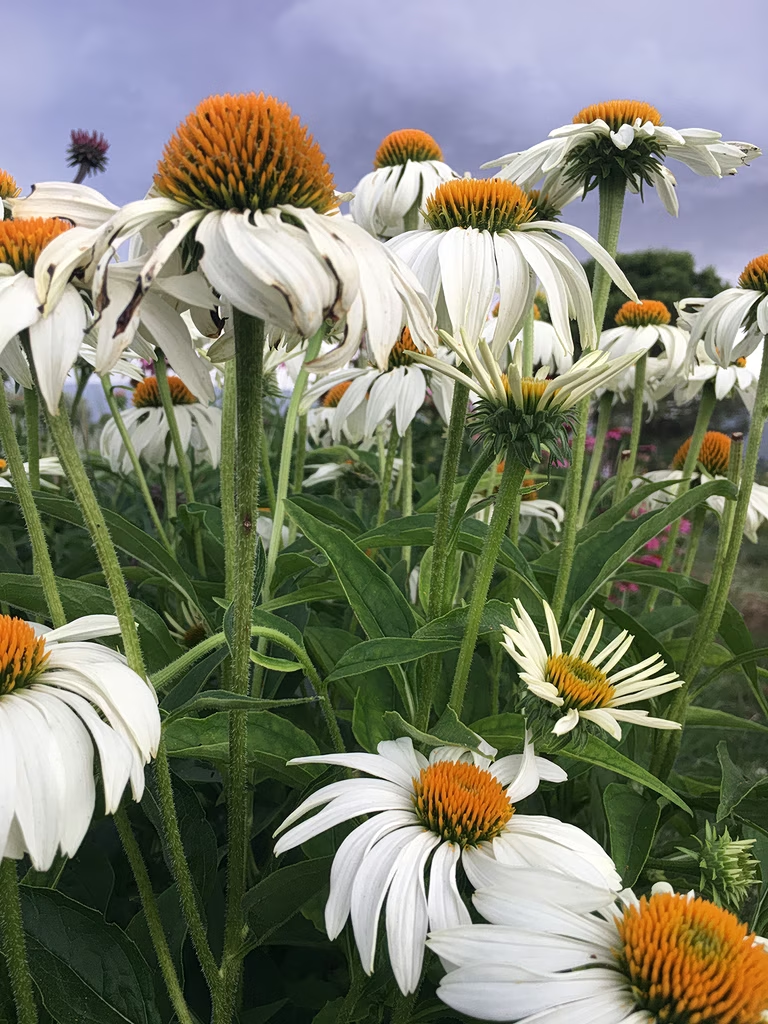
The quantities were modest, but the results were encouraging enough to convince them they were on the right path. At the same time, they began the process of obtaining organic certification—a demanding commitment requiring time, discipline and strict compliance with production standards.
From the beginning, their goal was never mass production. It was quality and authenticity.
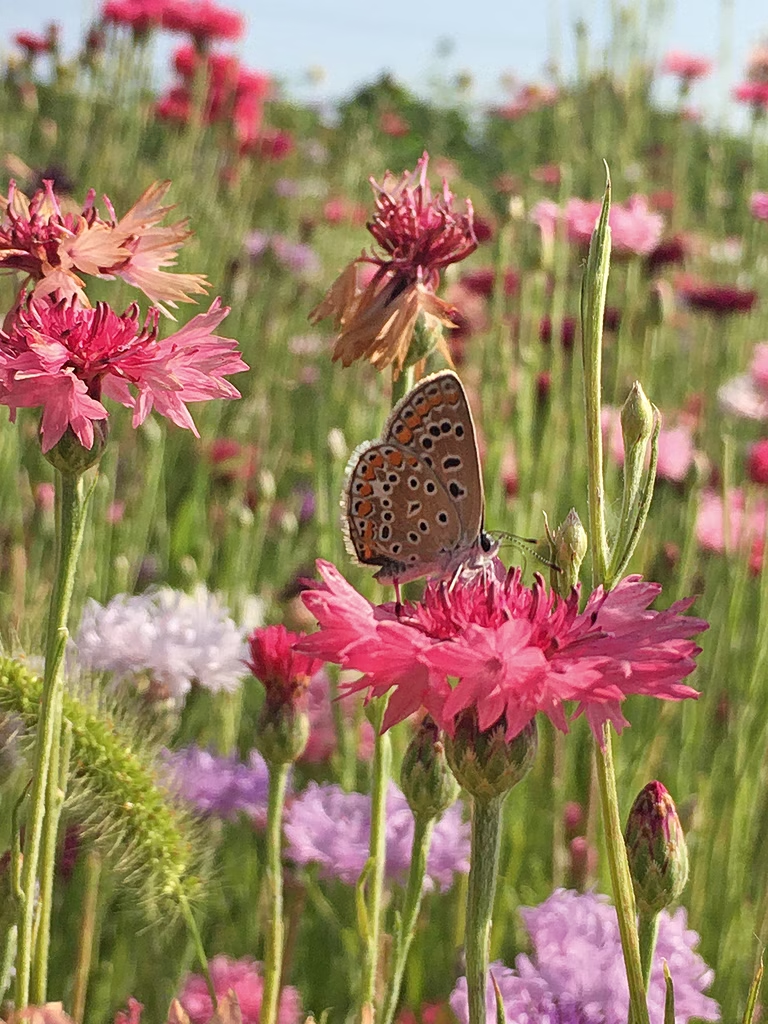
Their daily routine changed completely.
Days began at sunrise. Before heading into the fields, they answered emails, processed orders and communicated with customers. Then came the agricultural work: sowing, transplanting, weeding, pruning and harvesting.
There were no clearly defined roles. Everything passed through their hands.
The same was true of packaging, marketing and business management. Work ended only when the sun went down, followed by one final inspection of the day’s progress.
Slowly, their efforts began to pay off.
International collaborations opened new opportunities, and an unexpected request from a customer sparked the idea that would ultimately transform their business: edible flowers.
A client asked for a specific flower variety. Curious, they decided to experiment.
The results exceeded their expectations.
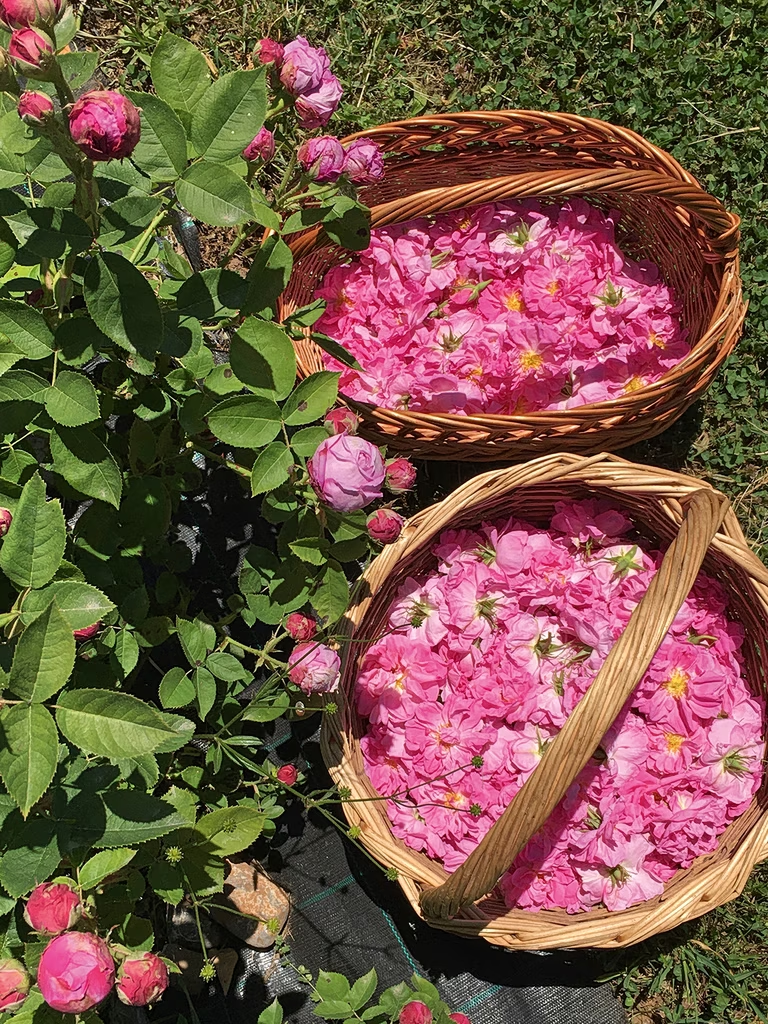
Soon they were studying new species, testing different varieties and gradually expanding their cultivation.
Bringing Colour to Fields—and to Plates
In recent years, edible flowers have become one of gastronomy’s most striking trends.
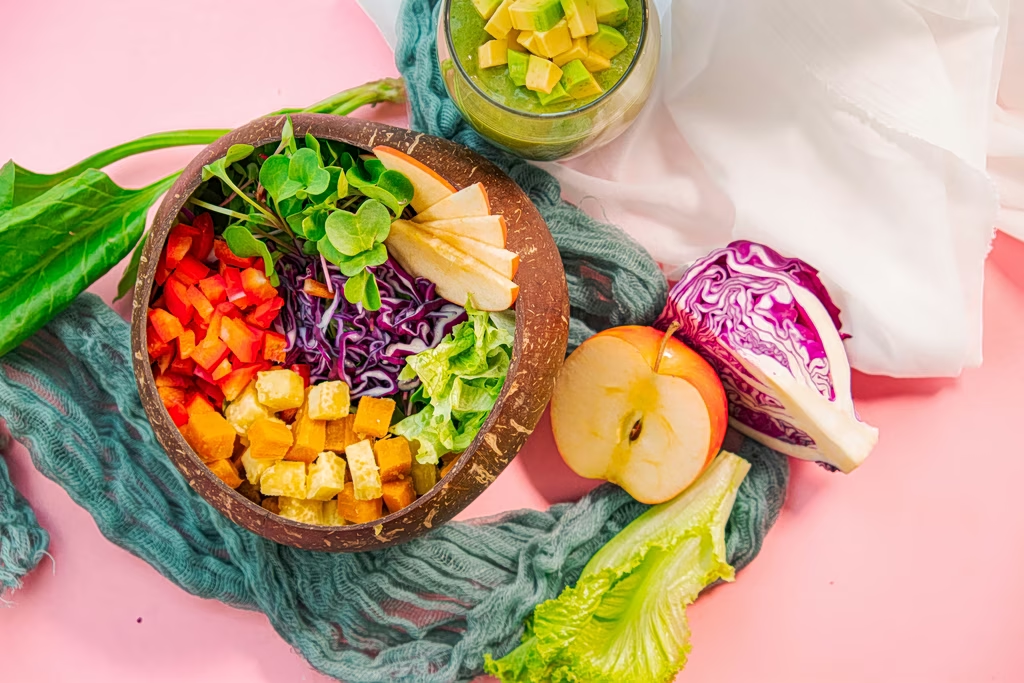
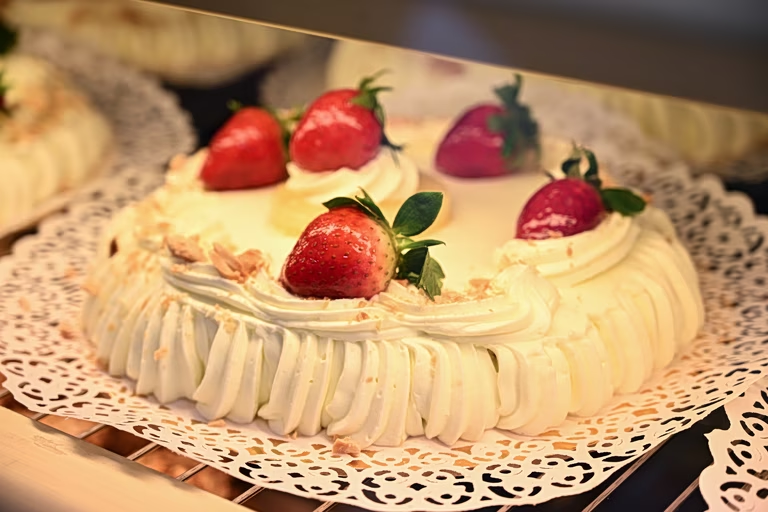
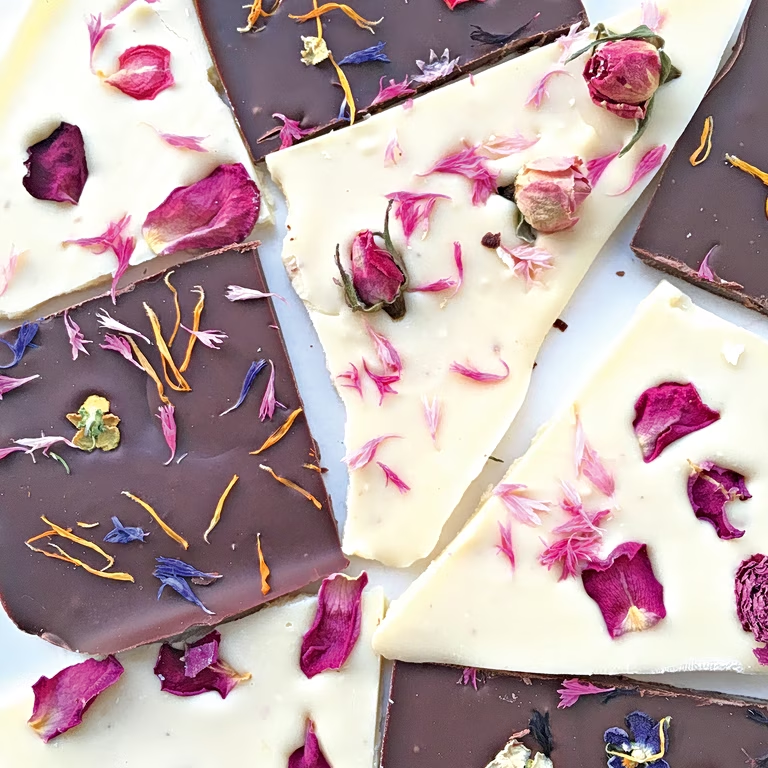
Chefs and pastry makers use them to add colour, texture and visual appeal to dishes. Unlike artificial decorative elements, edible flowers offer natural beauty without additives, while their generally delicate flavour makes them ideal for salads, desserts, beverages and cocktails.
Today, the couple cultivates dozens of varieties of herbs and flowers.
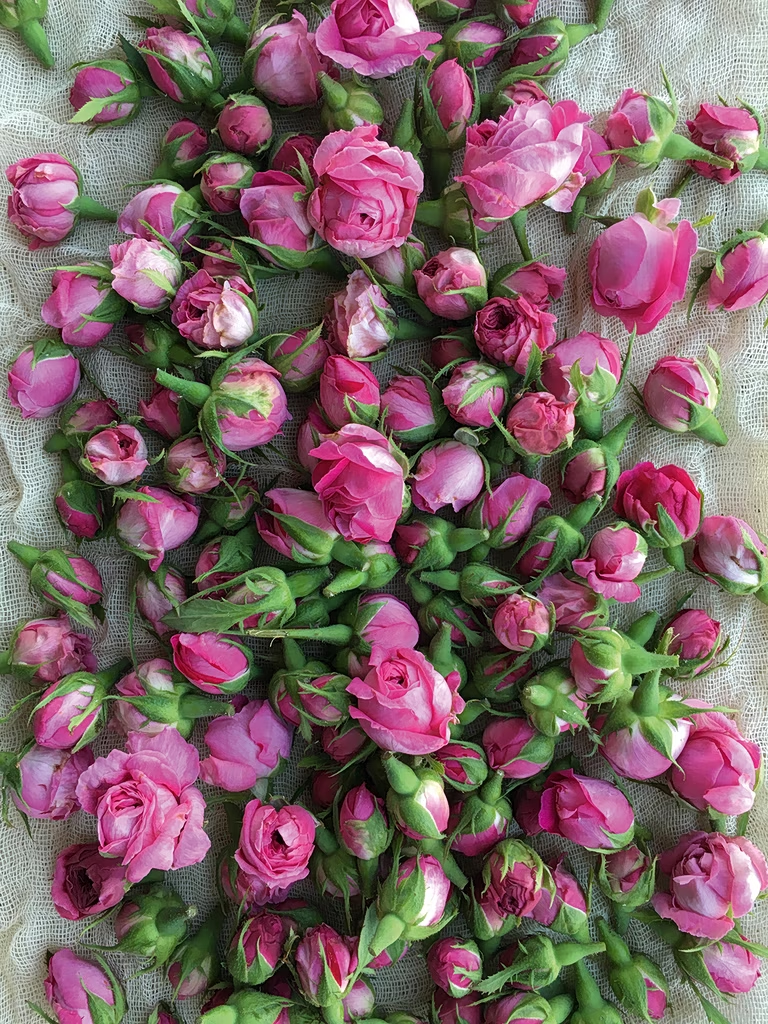
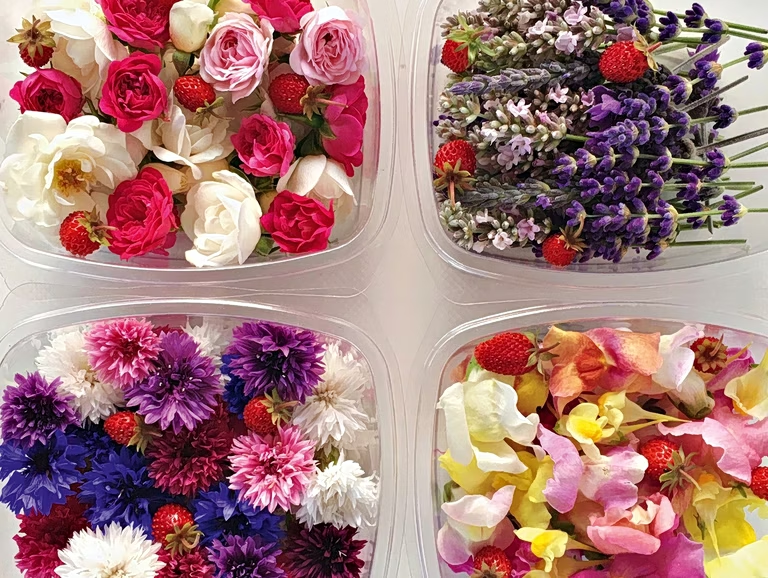
Calendula, pansies, violets, cornflowers, roses and many other blooms are grown with care and harvested by hand.
Every variety is selected according to strict criteria: climate resilience, productivity, visual appeal and market demand.
Each growing season presents new challenges as they continue experimenting with fresh crops and new ideas.
Their expanding network of partnerships has brought their products into professional kitchens, pastry shops and delicatessens, demonstrating the value of patience and long-term commitment in ventures like these.
Yet for many consumers, the idea of eating flowers still comes as a surprise.
That perception, however, is slowly changing.
A single flower can transform the appearance of a salad. Added to a drink or dessert, it creates an entirely different sensory experience.
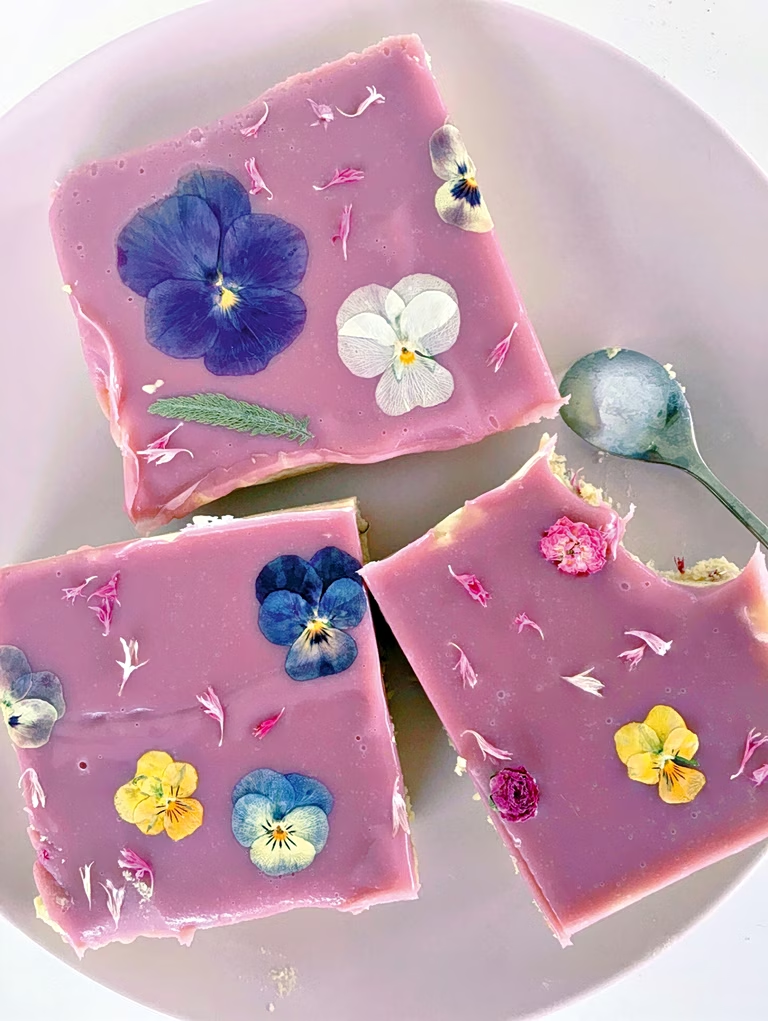
Calendula petals, for example, bring vibrant colour, while rosebuds add delicate fragrance to desserts and cocktails. Flowers can also be frozen into ice cubes, incorporated into cookie glazes or used as the finishing touch on a pasta dish.
A Life Rooted in Nature
Despite the growth of their business, the couple’s philosophy remains unchanged.
Respect for nature. Handmade production. Continuous evolution.
They do not see their work merely as a profession, but as a way of life.
Their days are filled with anticipation—for what is currently growing in the fields and for the ideas they hope to test next season.
Looking back, they feel vindicated in their decision. Neither can imagine returning permanently to city life.
They love their days among the fields, even when the work is physically demanding.
And honestly, who wouldn’t want to wake up surrounded by herbs, flowers and their fragrances?
The more one imagines such a life, the more appealing it becomes—a reminder that sometimes the most rewarding journeys begin with nothing more than the courage to plant a seed.