 Μake us preferred on Google
 For the past decade, Prosilio has been one of the restaurants that helped redefine the culinary landscape of Zakynthos, the Ionian island renowned for its dramatic coastline and rich gastronomic traditions. With chef Krysty Karageorgou leading the kitchen and Giorgos Kampitsis overseeing hospitality and the wine programme, the pair have built something rare: a restaurant founded on trust, local ingredients, traditional Zakynthian recipes and their own unwavering personal commitment.
This year, however, marks the beginning of a new chapter.
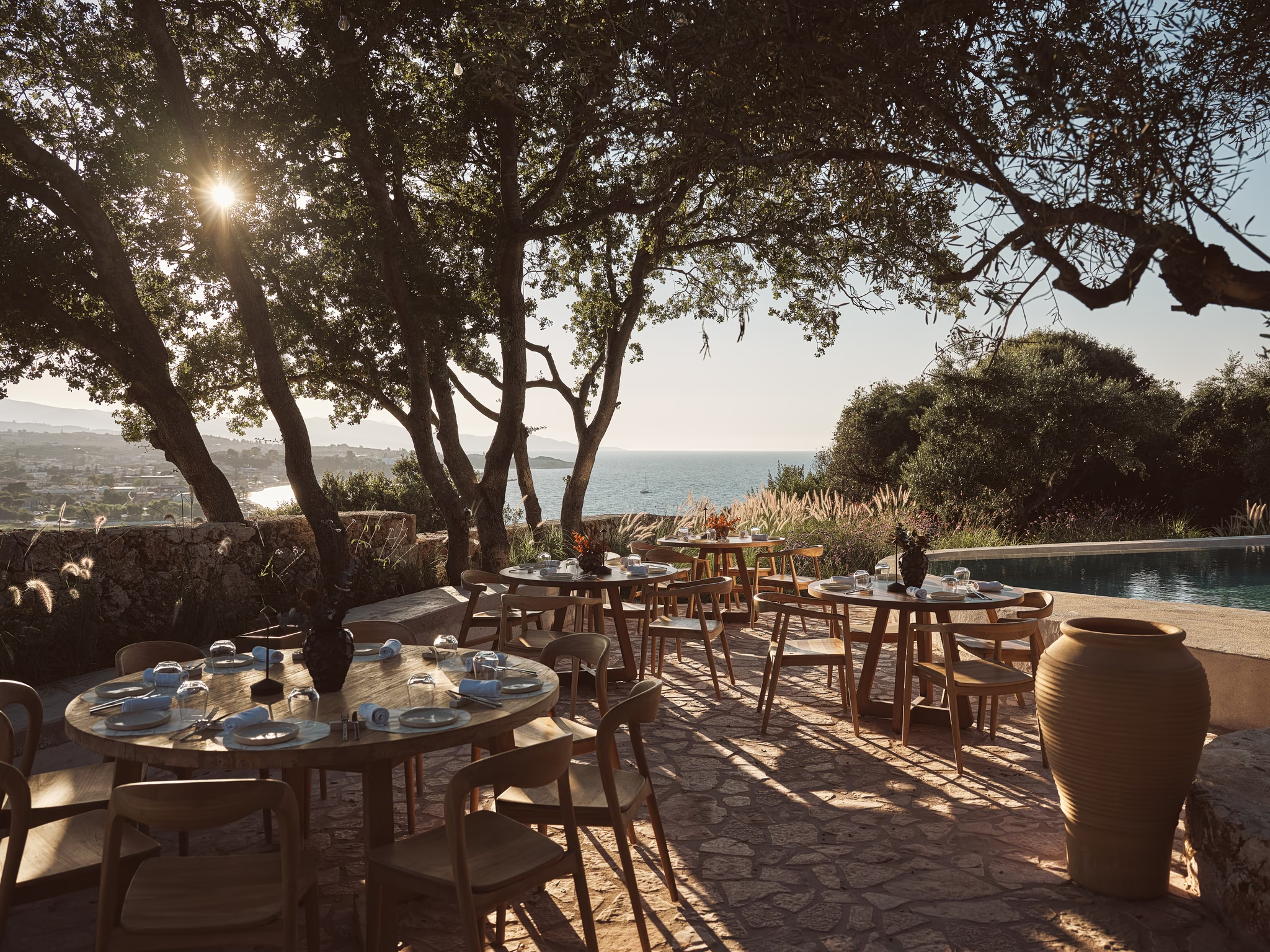
Prosilio has left its long-time home in the town and relocated to an olive grove owned by the Kampitsis family, taking on an entirely different identity. Its amphitheatre-style open kitchen now overlooks centuries-old olive trees and the Ionian Sea. Guests walk through the restaurant’s vegetable garden before reaching their table, while every aspect of the experience is designed to foster a close connection with nature.
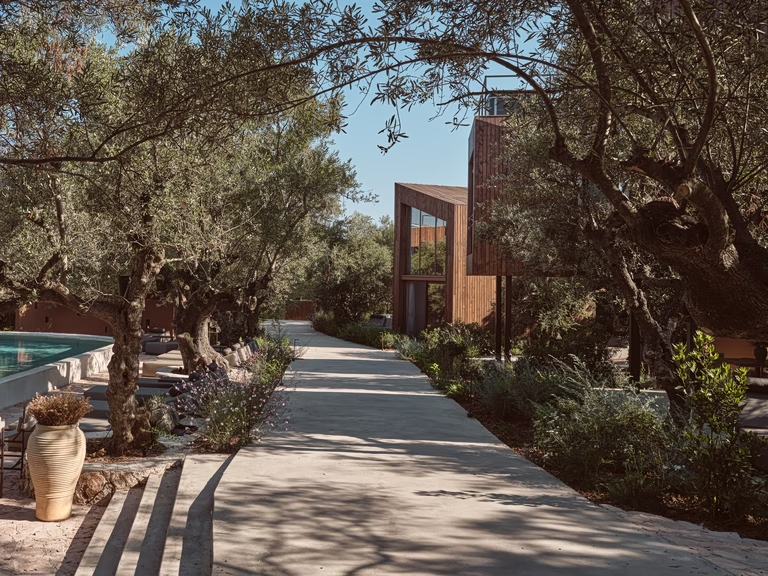
Their next ambition is already taking shape. The treehouses they have built within the grove will eventually operate alongside the restaurant, allowing guests to combine their stay with dinner as part of a fully immersive gastronomic retreat.
Karageorgou spoke to us about her lifelong collaboration with Kampitsis, the challenges behind every entrepreneurial step and how a change of landscape has transformed not only the restaurant, but also the way she cooks.
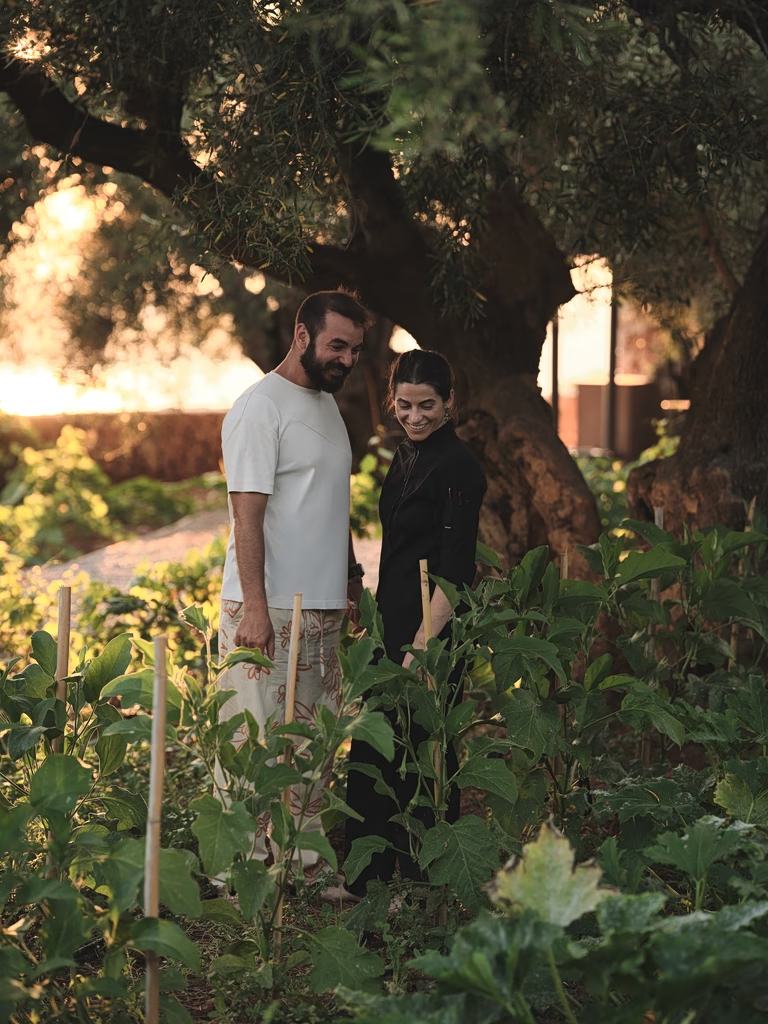
Chef Krysty Karageorgou with her long-time collaborator, Giorgos Kampitsis, in Prosilio’s vegetable garden. Photo: Nikos Kontostavlakis.
Ten years on, Prosilio has left the town and moved into the olive grove. How has that transition felt?
“I don’t see it as simply moving the restaurant out of town. It feels like the natural continuation of everything we’ve been building over the years.
“It all began with the idea of creating the treehouses in the olive grove—a dream we were determined to make a reality. We eventually did, but it took an enormous amount of hard work and persistence. These are highly unusual structures, and we had to navigate countless approvals, procedures and obstacles before we could build them.
“Once the treehouses were completed, it felt only natural to relocate the restaurant among the olive trees and these distinctive accommodations. We knew we were making the right decision because what we’ve created is truly unique. The timing couldn’t have been better either, as it coincides with Prosilio celebrating its tenth anniversary.”
View this post on Instagram
How does it change a chef’s work when the landscape itself becomes part of the dining experience?
“More than I ever imagined.
“In our previous restaurant, the kitchen was enclosed, so I had almost no contact with the people eating my food. Here, it’s exactly the opposite. The kitchen is elevated and completely open to the dining room, so I constantly have eye contact with our guests. I can watch their reactions, hear their conversations and see how they experience the meal as a whole.
“That has given me an incredible amount of energy. I feel that now I’m cooking with people rather than being separated from them.
“And then there’s the landscape itself. My kitchen looks out over the olive grove and the sea. I’m literally cooking in nature.
“We’ve also created our own vegetable garden, something I’d always dreamed of doing. We grow tomatoes, aubergines, herbs and seasonal vegetables that we use in our dishes every day.
“But perhaps the most beautiful part is that guests walk through the garden before they even reach the restaurant. Their experience begins long before they sit down at the table.”
A lush vegetable garden welcomes guests as they arrive at Prosilio. The experience begins before dinner is even served. Photo: Nikos Kontostavlakis.
From what you’ve described, Prosilio is intentionally intimate.
“That was our vision from the very beginning.
“We welcome around 25 guests, and we never wanted to create a large restaurant. We wanted a place where we could devote genuine care and attention to every table.
“Prosilio is us. I’m in the kitchen every day, Giorgos is in the dining room, and we’re both present from the moment we open until the last guest leaves.
“We’re not the kind of people who simply stop by for an hour to supervise. That’s also why we decided not to keep the restaurant in town operating alongside this one.
“We’re not interested in managing dozens of employees while moving from one restaurant to another. What we offer is deeply personal. If we’re not here to organize, support, solve problems and look after every detail ourselves, then Prosilio couldn’t exist in the way we’ve always imagined it.
“So we chose to dedicate all our energy to the olive grove.”
View this post on Instagram
Krysty, every time we speak, I notice you always say “we.” You never talk about Prosilio without including Giorgos.
“That’s because none of this would exist without Giorgos.
“We first met while working in Chania, on the island of Crete. At the time, I was saving money because I dreamed of opening my own restaurant one day. Giorgos had already found his calling in hospitality. He’s someone who was born to look after people. He genuinely loves connecting with guests and giving generously of himself.
“We met again a few years later, worked together once more and eventually moved to Zakynthos, where we initially took over another restaurant. But from the very beginning we knew that would only be temporary.
“We had one goal: to create a restaurant that was entirely our own.
“That’s how Prosilio was born.”
You’ve worked together for more than a decade. What’s the secret to such a lasting partnership?
“It’s not an easy partnership.
“Giorgos and I are very different people. We think differently, we react differently and we often disagree—sometimes quite passionately. But one thing has never changed: the bond between us.
“We may argue, but two minutes later we’re carrying on as if nothing happened. We never bottle things up, and I think that’s one of the greatest gifts in any professional relationship.
“We’ve also been through some very difficult times together. We started with no financial backing and no safety net. We borrowed money to open our first restaurant, and now we’ve taken out another loan to make our next dream a reality.
“Everything we’ve built has come through hard work, but also through a great deal of faith—because we know that what we’re creating truly reflects who we are.”
Has living in Zakynthos and discovering its producers, ingredients and traditional recipes changed the way you cook?
“Absolutely.
“It’s impossible not to be influenced by the place where you live and create. It happens naturally. Every dish on our menu is shaped by the island. The food tells Zakynthos’ story and becomes a creative continuation of its culinary traditions.”
Which traditional Zakynthian dishes have inspired you the most?
“There are many.
Rabbit sártsa—a traditional Zakynthian rabbit stew in a rich tomato sauce—skordostoubi, a classic garlic-based local dish, and several others.
“They’re dishes that people have embraced, and I continue to develop them. I keep their essence intact while constantly experimenting and looking for new ways to express them without losing their identity.”
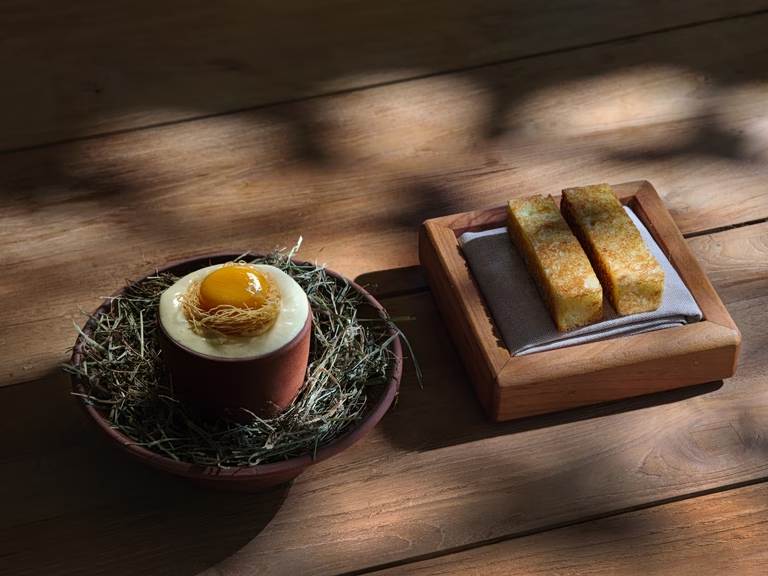
Photo: Nikos Kontostavlakis.
Which local products impressed you most after moving to Zakynthos?
“There was a small farm that produced exceptional cheeses, but sadly it has now closed.
“It was Korina Farm. Sakis wasn’t just an outstanding cheesemaker—he was also a wonderful person. I genuinely miss him because I relied almost exclusively on his cheeses. He even made tyri tis tavlas, Zakynthos’ traditional table cheese, which, unfortunately, no one produces anymore.”
How difficult is it to maintain a high-end restaurant on an island where local production can’t always meet demand?
“It’s definitely challenging.
“Production is small-scale, and very often local farmers simply can’t supply the quantities a restaurant needs. A producer might have five kilos of potatoes available, while I need twenty kilos in a single day.
“I do everything I can to support local producers, but sometimes the quantities simply aren’t there. The same applies to cheese. Today it’s difficult to find truly outstanding Zakynthian cheese, so I also work with producers from elsewhere in Greece, such as Alexandris, who does exceptional work.
“I need consistency if I’m going to cook the way I want.”
Has tourism affected the development of Zakynthos’ agricultural production?
“Very much so.
“That said, there are also some excellent initiatives taking place, and the island is home to some very good restaurants. The chefs here are doing remarkable work.
“What we need now is greater support for young producers so they can carry on local traditions while taking them forward.
“A good example is choiromeri, Zakynthos’ traditional cured pork leg. It’s a wonderful local product, but no younger producer has yet taken it to the next level or showcased it in the way it deserves.
“There’s still a long way to go.”
View this post on Instagram
If someone were visiting Prosilio for the first time, which dish would you say best captures the flavour and history of Zakynthos?
“Without question, our avgolemono.
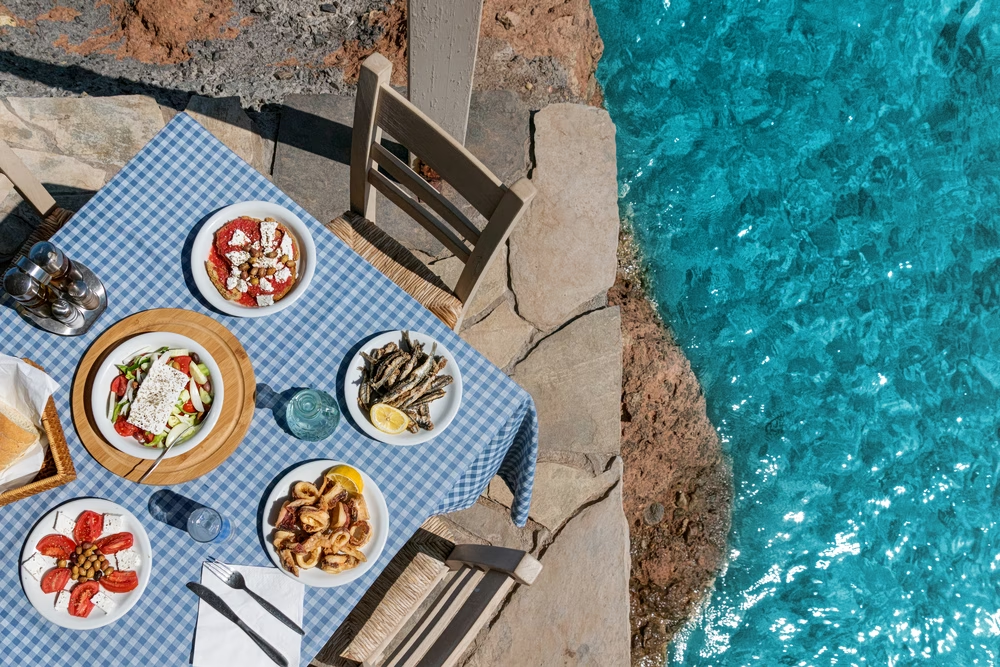
“In Zakynthos, avgolemono—Greece’s famous egg-and-lemon sauce—is prepared in a distinctive way, using cockerel broth and rice cooked until it’s exceptionally creamy.
“I took that traditional idea and transformed it into something entirely my own. The technique is different, but whenever people from Zakynthos taste it, they tell me it reminds them of their mother or grandmother’s cooking.
“For me, that’s the greatest compliment I could ever receive.”
Is there one dish that best reflects your own evolution as a chef?
“When I was younger, I never gave myself any credit. Today, I do.
“Not because I think I know everything, but because I know how hard I work every single day.
“It’s not one specific dish—it’s my cooking as a whole. It’s the organisation, the cleanliness, the way the team works together, the consistency.
“Today I can finally say ‘well done’ to myself because, no matter how exhausted I am, I try every day to give the very best I can.
“You know what motivates me? Every time I cook, I imagine I’m preparing a meal for someone I deeply love.
“That thought keeps me grounded, even on the hardest days.”
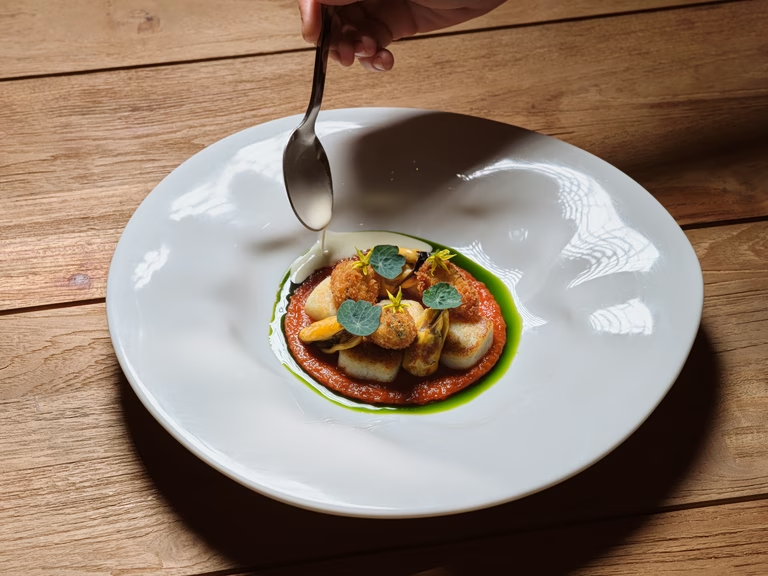
Photo: Nikos Kontostavlakis.
You’re still very young, yet you’ve already come a long way. How do you see the future?
“I’ve been cooking since I was fifteen.
“But I actually believe the best years of my career are still ahead of me.
“What I want most now is to find a balance between my work and my home life. A year and a half ago, I only had myself to look after. Now there’s little Filippos.”
Your partner, Vangelis Lioutas, has now joined the Prosilio team as well.
“Yes.
“Vangelis is also a chef. When Filippos was born, we decided we wanted to raise our son ourselves. We didn’t want to rely on a nanny or constantly ask our parents for help.
“So Vangelis joined the Prosilio team, and we divide our time so that one of us can always be with our little boy.
“Vangelis was one of my closest friends for many years before we became a couple. He understands exactly how I think, believes completely in what we’re creating and plays an essential role in the day-to-day running of the kitchen.
“We work incredibly well together, and that’s one of our greatest strengths.”
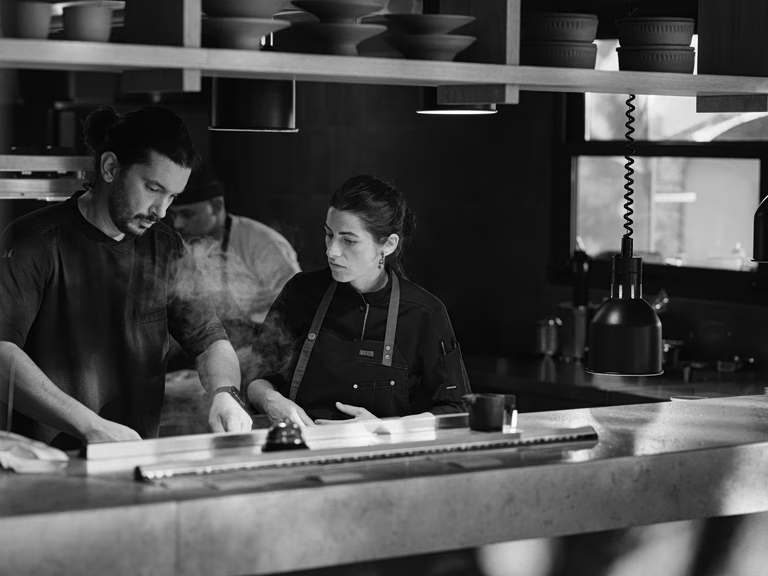
Chef Krysty Karageorgou in the kitchen at Prosilio, where her partner, chef Vangelis Lioutas, has now joined the team. Photo: Nikos Kontostavlakis.
When you return to Athens during the winter, do you travel to discover new cuisines or do you simply rest?
“I do rest a little, but mostly I work.
“I read constantly. Every book or piece of material I can find about cooking passes through my hands.
“I’m always experimenting—trying, failing, starting again.
“I’ve never worked abroad, so everything I’ve learned about modern techniques has come through personal study and endless experimentation.
“I don’t inherit knowledge ready-made. I have to earn it myself. And that takes time.”
That’s an important message for young chefs, isn’t it?
“I think it is.
“If you don’t read, if you don’t experiment, if you don’t keep evolving, you can’t move forward. You can’t create something that’s truly your own.
“Vangelis and I were talking recently about how demanding this profession really is. Sometimes I think it’s even tougher than working on a construction site.
“On a building site, you can stop for a moment and catch your breath. In a professional kitchen there are days when you work for fourteen hours straight without lifting your head once.
“And it’s not only the physical exhaustion. Every single dish that leaves the kitchen is judged.
“Every time I cook, I know someone is about to taste what I’ve created, and it has to be exactly as I imagined it.
“I think that’s something every young chef should understand before beginning this journey.”
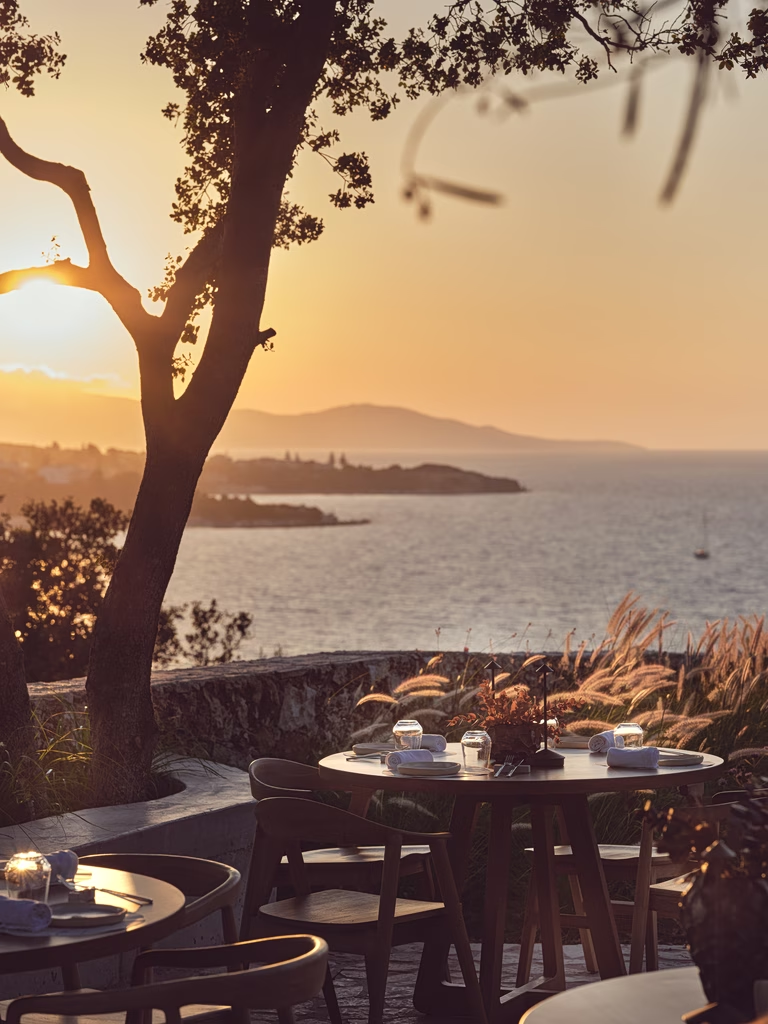
Photo: Nikos Kontostavlakis.
We said goodbye with a promise to meet again in the winter, this time in Athens.
There, Karageorgou will leave behind the olive grove, the Ionian Sea and the relentless pace of the summer season, returning instead to books, research and experimentation—to testing new techniques, making mistakes, refining ideas and preparing for another year in the kitchen.
As she puts it, cooking never stops when the restaurant closes.
That’s when the next journey truly begins.
Before ending our conversation, however, there was one more person we couldn’t leave out.
Beyond welcoming guests and overseeing service, Giorgos Kampitsis is also Prosilio’s sommelier, responsible for building one of the island’s most carefully curated wine program. We spoke to him about the philosophy behind the restaurant’s cellar.
View this post on Instagram
“We do everything we can to support Zakynthos’ vineyards, as well as small wineries from across Greece. That’s why around 80% of our wine list is made up of Greek labels.
Today our cellar includes more than 500 different wines, and we’ve also created an underground cellar that will soon be open to all our guests.
Visitors will be able to discover our latest additions, while we’ll also host winemakers and organize guided wine tastings featuring their wines.”
As our conversation came to an end, it was impossible not to admire two young professionals investing so much care, vision and determination in the place they call home.
The experiences created at Prosilio enrich not only the people fortunate enough to dine there, but Zakynthos itself.