 Μake us preferred on Google
 A wonderful blend of Greek and Western European pastry traditions, Ionian desserts are refined, elegant, deeply aromatic, and never heavy. They are delicate and airy, much like the people who were born and raised surrounded by the Ionian Sea.
The islands’ inhabitants have long been open, lively, and influenced by the Venetians, the British, and the French who passed through these lands centuries ago, leaving their unmistakable mark on every form of art — from music and architecture to painting and, naturally, gastronomy.
Because it is truly an art to take the ingredients of your homeland — the exceptionally fertile land of the Ionian Islands, which has always supplied local kitchens with outstanding and distinctive produce — and transform them into small edible wonders.
It is an art we never tire of tasting whenever we visit these magical islands, places undeniably blessed by nature.
And since we always leave with gifts to bring back for those who stayed behind — and for ourselves, naturally — we did the research for you. We mapped out where to find the best sweets across the Ionian Islands, marking the pastry shops worth visiting to fill our luggage with little and large boxes of mandoles, pasteli, and sykomaidies.
For every possible question, keep reading.
Corfu
When the Venetians arrived on Corfu, they brought mandoles with them — and the sweet remained even after Venetian rule came to an end.
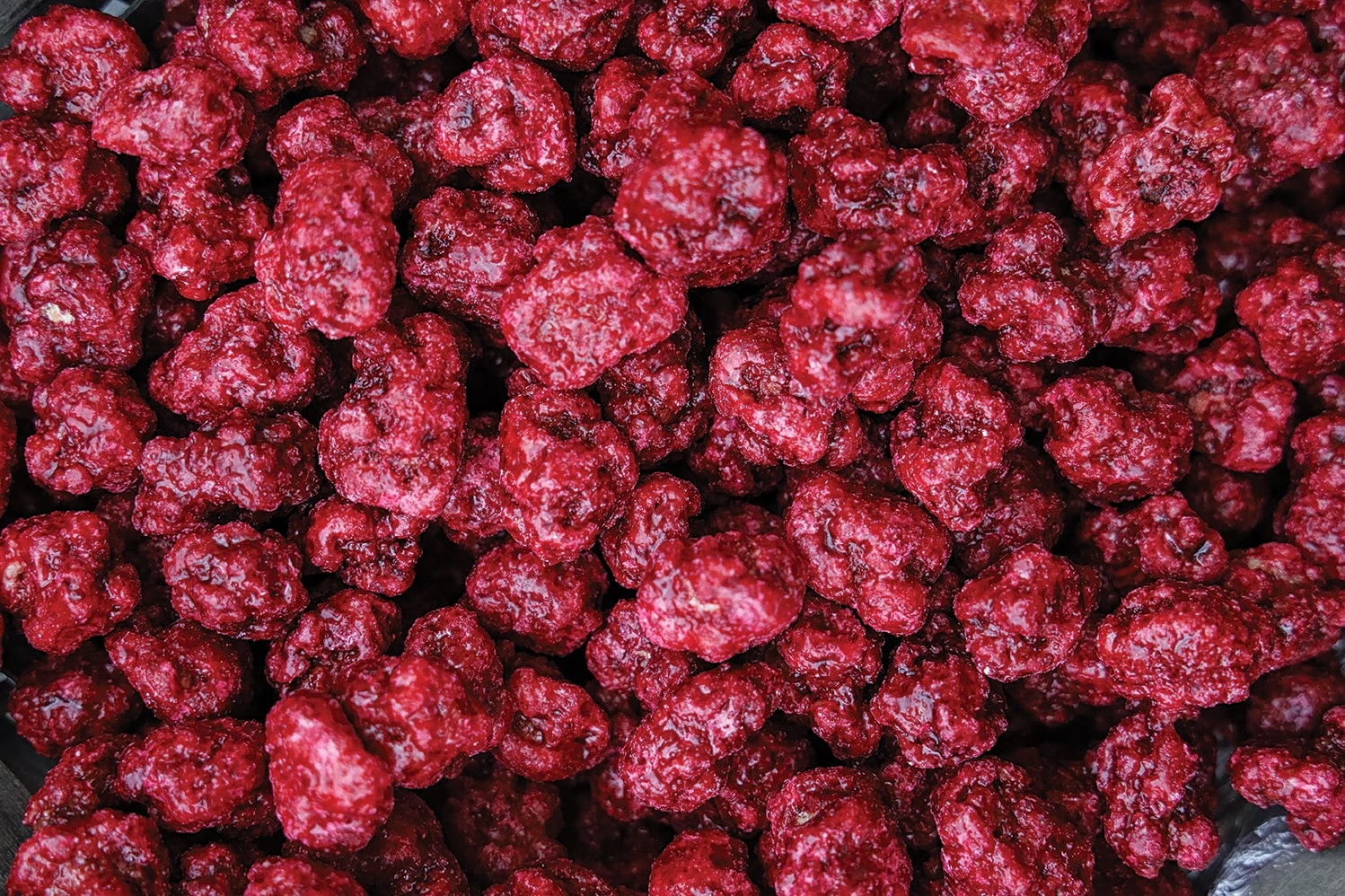
Today, they are the island’s most famous and traditional confection: a simple, bite-sized sweet shaped like a sugared almond, featuring a roasted almond at its center covered in caramel scented with essential oils.
The word mandola comes from the Italian word mandorla, meaning almond. They come either in a deep red color or their classic caramel shade, and they are famously addictive — they are so small that nobody can eat just one, as an old advertising slogan once famously suggested.
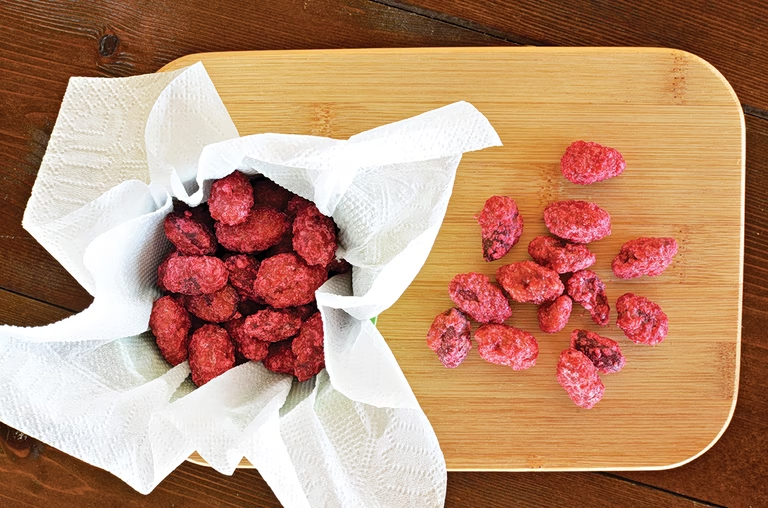
Corfu’s irresistible mandoles — impossible to stop eating.
Mandolato, on the other hand — known as mandorlato or torrone in Italy, where it originated — is something entirely different.
Essentially, it is a sandwich made from two wafers filled with nougat: a soft, chewy white cream containing coarsely chopped or sometimes whole roasted almonds.
Nougat is made with meringue, sugar, and honey, and is often enriched with other nuts or dried fruits. The combination of its chewy texture and the crispness of the wafer makes mandolato irresistible — which is why, when it comes in small bite-sized pieces, it takes real self-control not to overindulge.
Fortunately, Corfu’s culinary tradition also offers a healthier alternative whenever a sweet craving strikes.
Sykomagides, or sykomaidies, are a true superfood: a mixture of dried fig and black raisin paste, fermented with raki, grape molasses (petimezi), pepper, and other spices. The mixture is shaped into rounds, wrapped in fig leaves, and dried.
This ancient sweet has been known since antiquity and is packed with antioxidants and vitamins. It pairs beautifully with salty cheeses and cured meats on bruschetta or grazing platters.
A similar role is played by the British-influenced mostarda dolce, essentially a chutney made from dried fruits.
Fruit flavors are also celebrated in Corfu’s famous kumquats, the island’s traditional small citrus fruits, which are sold everywhere as liqueur, jam, or spoon sweets — fruit preserved in syrup and traditionally served by the spoonful.
In fact, citrus fruits are celebrated not only in Corfu but throughout all the Ionian Islands.
Even in the Italian-inspired almond sweets found here, the famous bianchetti, grated almonds are mixed with sugar and mandarin pulp before being cooked, shaped like small pears, and covered with powdered sugar.
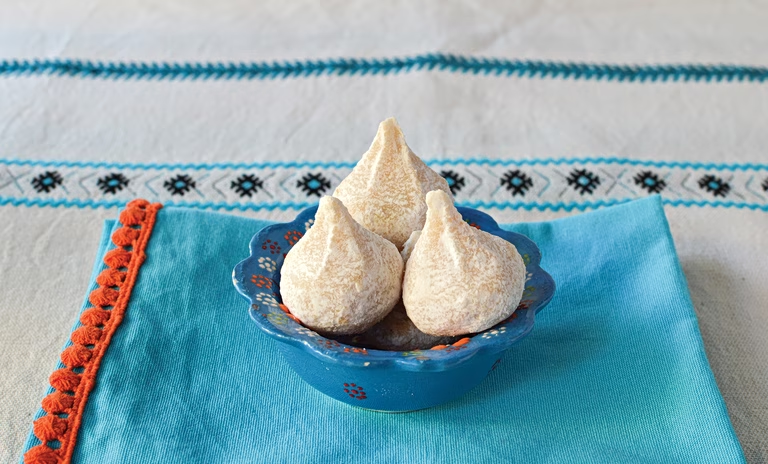
Corfu’s almond sweets, the aromatic bianchetti, made with ground almonds and mandarin pulp.
The Venetian influence on the island is especially visible in its dough-based desserts.
At the center of this tradition is fogatsa, a round sweet bread similar to Greek tsoureki (a festive braided sweet bread), flavored with cognac and bergamot.
During Easter, it appears in the shape of a dove, known as colombina (colomba di Pasqua), following the Italian tradition.
Corfu is also home to the famous Greek dessert pasta flora, although here it is called pasta frola because of the island’s Italian influence.
Despite the name change, it is the same beloved dessert: a buttery tart filled with jam.
Another classic Greek dessert found throughout the country is the loukoumades — small fried dough balls — but in Corfu they are called tiganites t’ Agiou (“Saint’s fritters”) because they are traditionally prepared for the feast day of Saint Gerasimos and served dusted with cinnamon sugar.
The fritoles are another type of fritter, available in both fasting and non-fasting versions, made with raisins flavored with citrus zest.
The tzaleti are similar, but they are made with corn flour, which gives them their distinctive golden-yellow color.
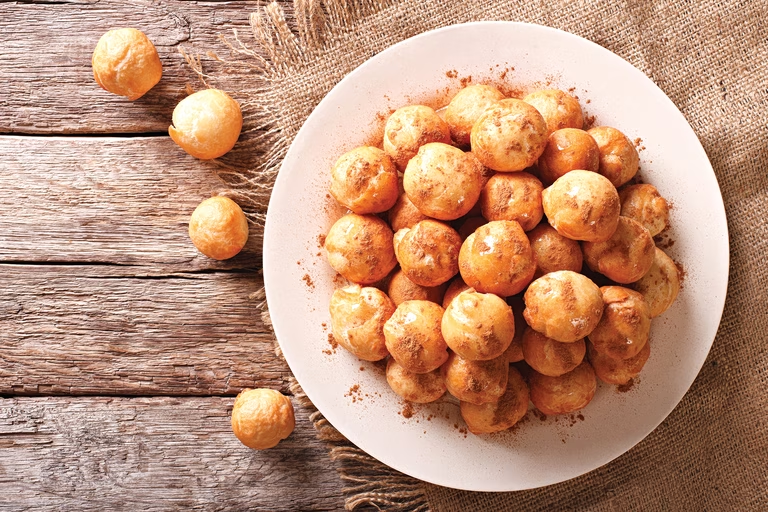
In Corfu, loukoumades appear in different versions and under different names.
Among baked sweets — specifically cookies — you will find koutsouloi, made with pepper and spices.
Corfu also has syrup-soaked desserts with the wonderfully unusual name Bolsheviks, served with a rich Serrano cream.
And all of these treats are especially enjoyable during the warm summer afternoons with an ice-cold tsitsibira, Corfu’s traditional soft drink — a legacy of British rule on the island.
Made with lemon juice, ginger, sugar, and white raisins, it is one of Corfu’s most refreshing summer traditions.
Where to find them
Thanks to its incredibly rich dessert heritage, Corfu has many excellent pastry shops.
For traditional Corfiot sweets — especially kumquat products, pasta frola, and fogatsa — visit Andriotis Pastry Workshop, located at Kantouni Bizi in Corfu Old Town.
Lefkada
The most famous sweet from Lefkada carries the unmistakable aroma of olive oil.
Known as ladopita, it is a type of halva made with generous amounts of olive oil and flour. It is slowly baked in a pan, scored into diamond-shaped pieces, and covered with plenty of sesame seeds, which give it its distinctive toasted aroma.
At New Year’s, locals also prepare ladopita as a traditional vasilopita — the festive cake that contains a hidden coin, with the lucky person who finds it believed to have a fortunate year ahead.
Olive oil also dominates Lefkada’s ladokouloura, another fasting-friendly cookie, while the island’s excellent local thyme honey is used to create its energizing pastelia.
Naturally, Lefkada also shares the Ionian love for mandolata and mandoles, available in various forms, as well as exceptional traditional liqueurs.
Among them is soumada, a concentrated almond syrup diluted with water and served chilled on summer afternoons.
There is also rozoli, a yellow aromatic liqueur made with citron and cinnamon.
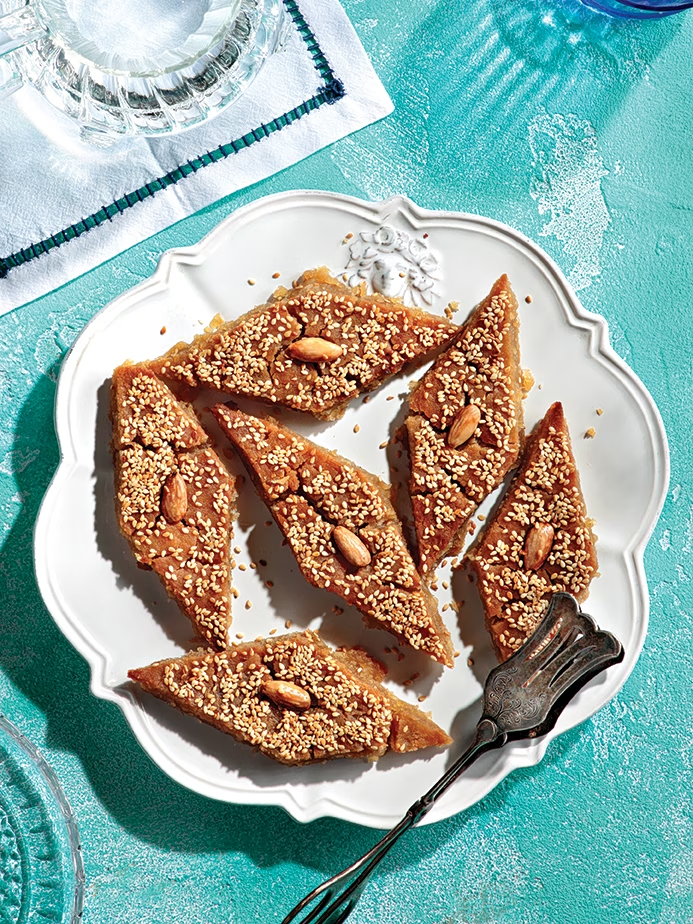
Lefkada’s ladopita, a fasting-friendly semolina-style halva with a distinctive shape, also becomes a New Year’s cake. Photo: Giorgos Drakopoulos Food styling: Olivia Artemis Webb
Where to find them
At Stavrakas Pastry Shop, located in Agios Minas Square, visitors can find some of the best ladopita in Lefkada, along with exceptional syrup desserts, almond sweets, and liqueurs made using the same traditional methods for nearly 60 years.
Kefalonia
Mandoles and mandolata, pastelia made with the island’s exceptional fir-tree or thyme honey, sesame, and almonds, as well as almond sweets, are among the treats found throughout the Ionian Islands.
Unlike Corfu’s almond sweets, however, Kefalonia’s versions are traditionally flavored with lemon and orange blossom water.
Yet Kefalonia also has its own distinctive specialties, including the exceptional pastokydono, also known as komfeto — a delicious and wholesome sweet made in autumn when quinces are harvested.
The fruit is peeled, seeded, chopped, turned into a pulp, and cooked with sugar until it becomes a thick jam-like mixture.
At that point, roasted almonds and honey are added, and the mixture is left to cool.
Another almond-based treat is barboule, shaped like a bar and made from honey caramel and roasted almonds. Crunchy, aromatic, and naturally nutritious, it is another example of how island sweets often rely on simple, high-quality ingredients.
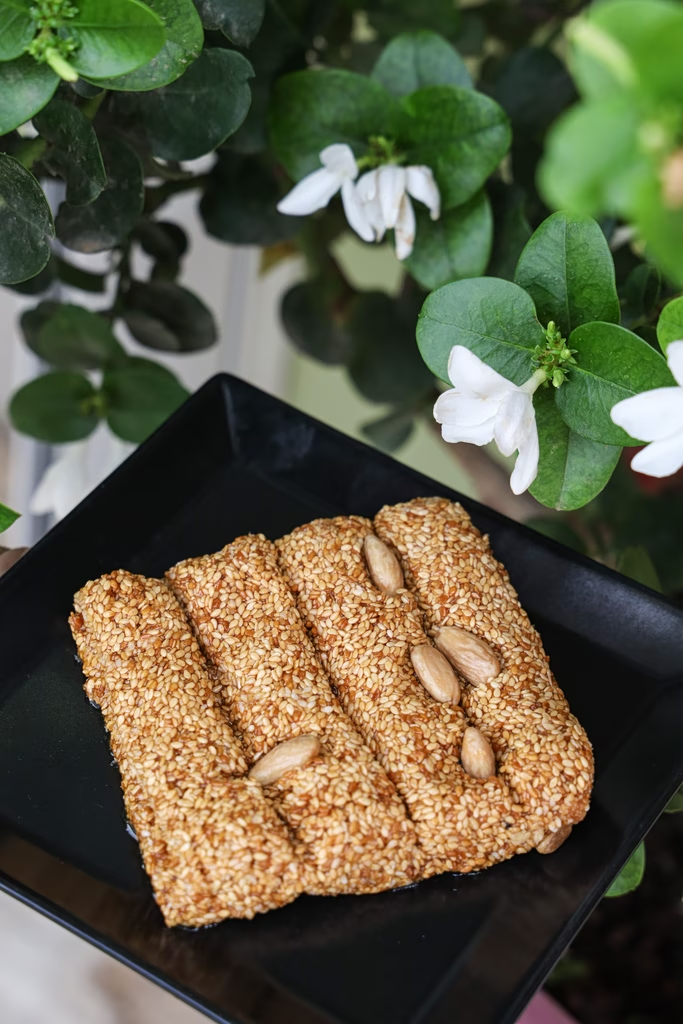
Traditional Kefalonian pasteli made with local honey, sesame, and almonds. Photo: Giorgos Adamos
Where to find them
Voskοpoula in Argostoli has been part of Kefalonia’s sweet tradition for more than a century. At its two locations — one on Lithostroto Street and another on Vergoti Avenue — visitors can find some of the best handmade almond sweets, pastelia, mantolata, and other traditional Kefalonian desserts.
Zakynthos
With the island’s unmistakable musical accent, locals proudly celebrate the wonderful mandolata and mandoles produced by small local makers who continue to honor the Ionian sweet-making tradition.
But Zakynthos has many other treasures hidden in its pastry shops.
One of them is frygania, a simple, almost homemade dessert that has been elevated here into a true specialty and remains a classic offering in the island’s tavernas.
It begins with a base of crisp bread soaked in cinnamon syrup, topped with silky cream and a generous layer of whipped cream. Finally, it is finished with coarsely chopped roasted almonds.
A dessert that feels almost poetic.
The Zakynthian cake resembles a version of petimezi pie, a fasting-friendly tray dessert made with olive oil and grape molasses, then sprinkled with sesame seeds.
But perhaps Zakynthos’ most distinctive sweet is fitoura (or fritoura).
This festive specialty is a firm semolina cream — similar to the filling of galaktoboureko — traditionally prepared during celebrations and religious festivals, especially for the feast of Saint Dionysios, the patron saint of Zakynthos.
Once the cream has thickened, it is cooled, cut into pieces, and fried before being served warm by hand, covered generously with cinnamon sugar.
Finally, Zakynthian glaounes are similar to pancakes but made with orange juice, flavored with cinnamon, cloves, and anise, and enriched with black raisins.
Aromatic and relatively light, they require very little oil for frying.
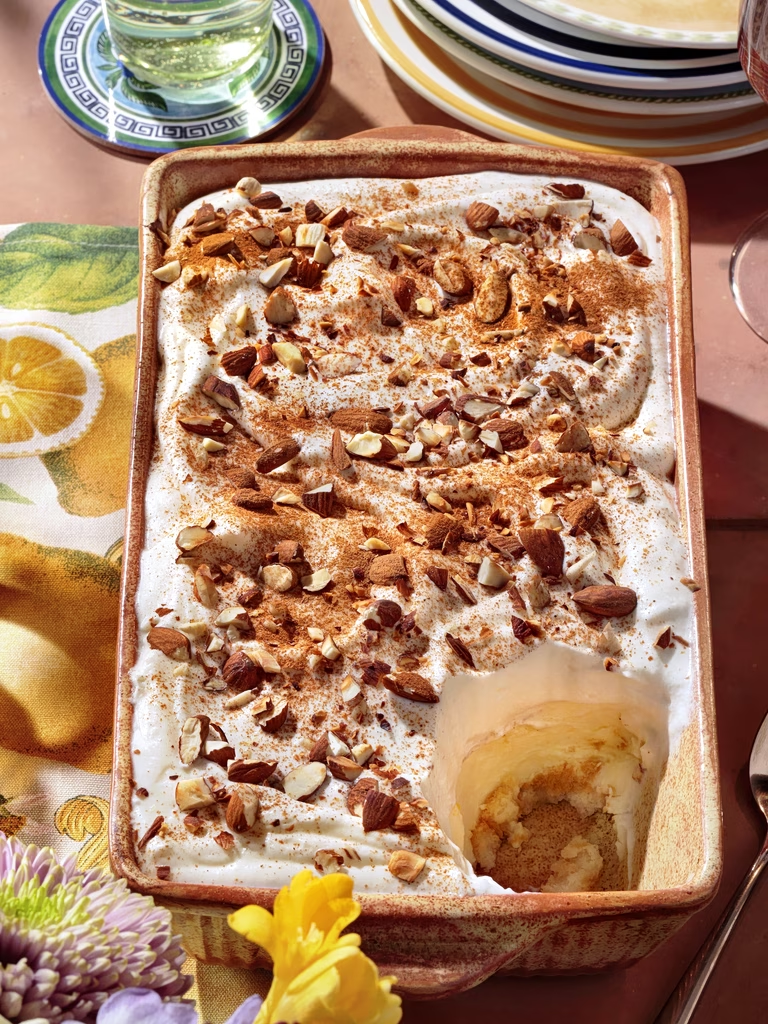
Zakynthos’ irresistible frygania, soaked in syrup and topped with rich cream and whipped cream. Photo: Giorgos Drakopoulos Food styling: Olivia Artemis Webb
Where to find them
On Zakynthos, two traditional workshops specialize in pastelia, mantolata, and mantoles: Zakynthini Apolafsi and To Anthos.
They are both worth visiting, not only for their sweets but also for the feeling that they belong to another era. Their desserts are made with genuine care and respect for tradition.
Ithaca
On the least tourist-developed of the Ionian Islands, sweets tell a particularly fascinating story.
One of the island’s most distinctive desserts is rovani — a sweet that may remind visitors of ravani, the Greek syrup-soaked semolina cake, but is actually something entirely different.
Rovani is made with broken rice, olive oil, and honey. The ingredients are combined in a large pot known locally as a pinata and cooked until they become a thick mixture, which is then spread into a baking tray.
After baking, the rovani is cut into diamond-shaped pieces or squares, decorated with almonds, wrapped, and traditionally offered at celebrations and weddings.
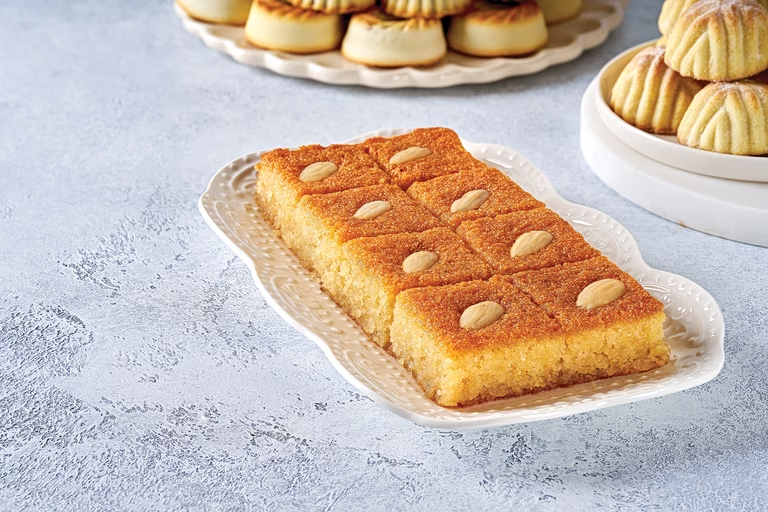
Rovani topped with a whole almond garnish.
Ithaca’s cuisine also reflects British influences, a legacy of the island’s past under British rule. One example is its version of pudding, adapted to local tastes and made with white bread rather than semolina.
The island’s sykopita, meanwhile, is a distinctly Greek creation: a sweet made from finely chopped dried figs kneaded together with nuts, sugar, honey, cognac, and spices.
The mixture is shaped into a cylinder, sliced, and preserved wrapped in cellophane.
Chourmades (also known as gourmades) are a type of fried honey pastry, similar to melomakarona, soaked in syrup and generously topped with walnuts and cinnamon.
Finally, troufa is a cake made with a light sponge base, cocoa cream, and plenty of chocolate sprinkles.
Where to find them
The Margarita Pastry Shop in Stavros makes what many consider the best rovani on Ithaca.
It is worth visiting not only to take home traditional sweets, but also to sit down and enjoy one of the many sweet and savory treats served at the outdoor tables.