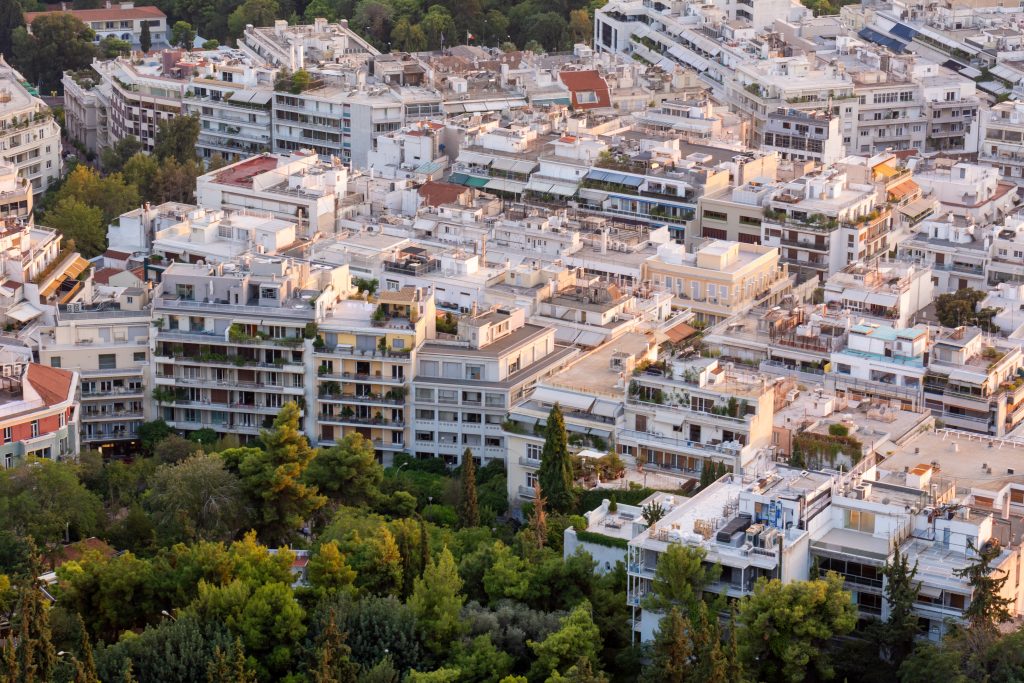
There are places that serve coffee, and there are places that hold history.
In Athens’ Exarchia district, one of the Greek capital’s most politically and culturally significant neighborhoods, a small traditional café called Mouria has been doing both for more than a century.
Founded in 1915 and operating continuously ever since, Mouria is believed to be among the oldest, if not the oldest, cafés in Athens still occupying its original location. Over the decades, it has witnessed wars, dictatorships, social movements, political debates, love stories, friendships, heartbreaks, celebrations, and the everyday rituals that quietly shape a city.
Today, however, the beloved kafeneio—a traditional Greek coffeehouse that has long functioned as a social institution rather than merely a business—is facing an uncertain future.
And for many Athenians, the prospect of losing it feels like losing part of the city’s memory itself.
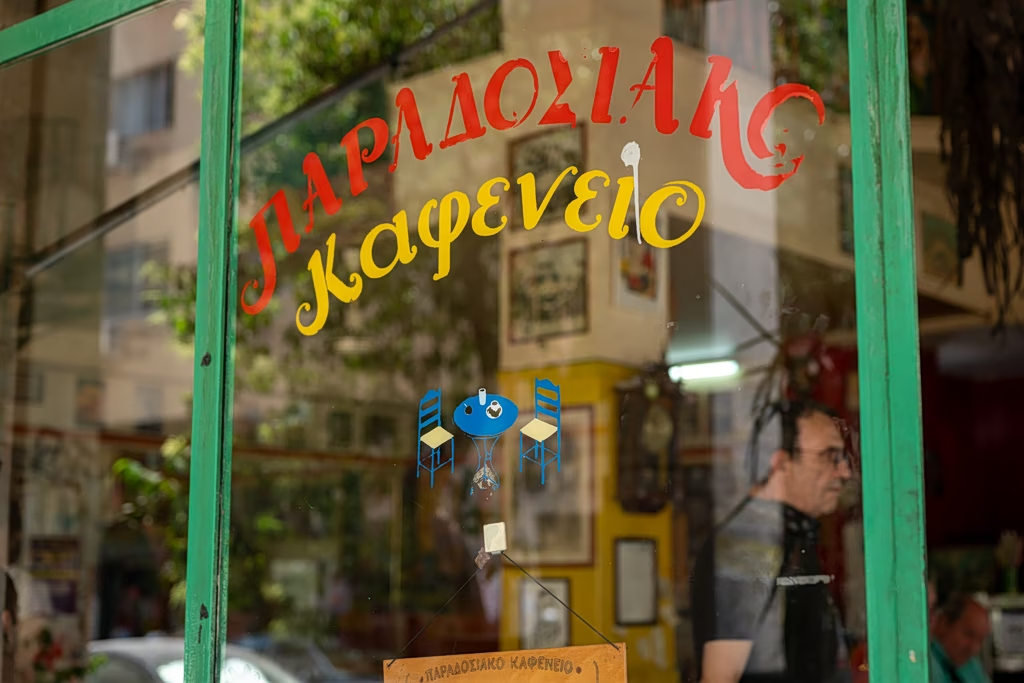
You are always greeted with a warm “good morning” when you walk into Mouria. Photo: Alexandros Alexandris
More Than a Coffeehouse
I have often spoken about my love for authentic Greek kafeneia and my frustration with the modern tendency to label every establishment serving small plates a “café.”
Greece already has a word for those places: mezedopoleio, a tavern-style venue serving appetizers and drinks.
A true kafeneio is something else entirely.
Its tables preserve history. Its walls absorb conversations. It becomes a gathering point for a neighborhood, a refuge for the lonely, a meeting place for friends, a stage for political arguments and philosophical discussions. Within its modest space, generations of people leave traces of their lives behind.
For that reason alone, authentic kafeneia deserve protection. They are an inseparable part of Greece’s cultural heritage.
I have always been drawn to them.
Growing up in the Athens suburb of Holargos during the 1990s, my friends and I spent countless hours in local kafeneia. To many people it seemed odd to see teenagers sitting among older patrons, but we were children of the ’90s and wanted to be different.
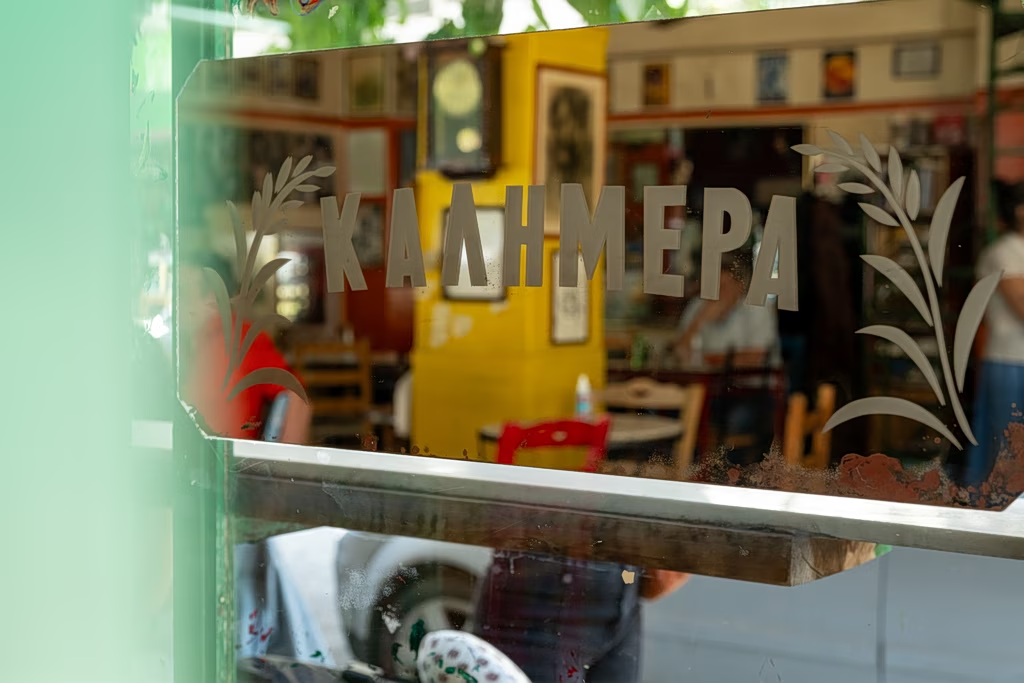
For more than a century, this café has served some of the most lovingly prepared coffee in Athens. Photo: Alexandros Alexandris
Later, I sought out kafeneia on islands and in mountain villages across Greece. The café in my family’s village held a special place in my heart. It was there that my godfather taught me how to play backgammon and where, as a child, I felt somehow older and wiser than my years.
Then, years later, I moved to Exarchia.
And I found Mouria.
The Café That Grew Alongside Exarchia
Mouria takes its name from a mulberry tree that once stood outside its entrance.
Back in 1915, when the café first opened, Exarchia was already developing its own distinct identity. The neighborhood owes its name to Vasilis Exarchos, an entrepreneur from Epirus who established Athens’ first department store there.
Over time, Exarchia became known as a district of intellectuals, artists, students, political activists, and independent thinkers. It was a neighborhood that consistently attracted people willing to challenge convention and question authority.
By the early twentieth century, the area had already become associated with political organizing, social movements, radical ideas, and cultural experimentation. During the years that followed, Exarchia played important roles in resistance movements, democratic struggles, and intellectual life.
Writers, artists, academics, and activists all found a home there.
The history of Mouria unfolded alongside that of the neighborhood itself.
According to local historical accounts, the café began as a simple shack before evolving into a two-story building. Since 1962, it has occupied the ground floor of an apartment building on the corner of Charilaou Trikoupi and Kallidromiou streets.
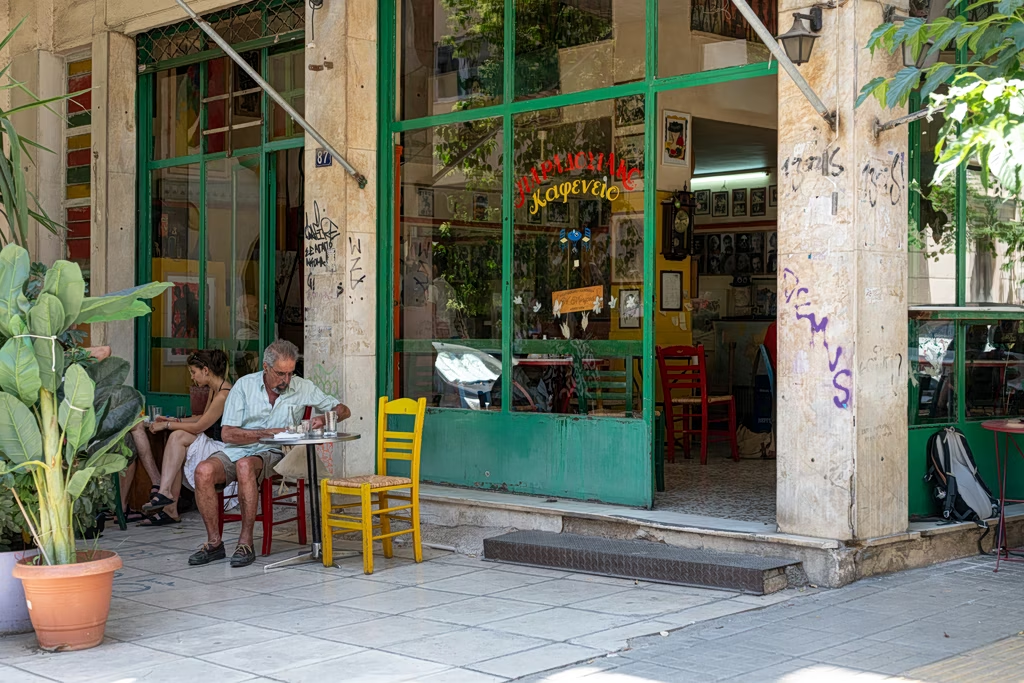
Everyone knows that Mouria will be waiting for them on the corner of Charilaou Trikoupi and Kallidromiou. Photo: Alexandros Alexandris
Understanding the history of neighborhoods like Exarchia helps explain why places like Mouria matter.
This is not simply an old café.
It is a site of memory.
A place where people once whispered plans for resistance and social change, and where others publicly defended ideals of freedom, equality, and justice.
A Place That Welcomes Everyone
Yet Mouria has never been only an intellectual meeting point.
It has always been something more intimate: a refuge.
A place where people could sit, talk, argue, laugh, grieve, or simply exist together.
That is the unique power of the kafeneio.
It brings people closer. It creates communities. Over time, its regulars become a kind of family—one connected not by blood but by shared experiences.
Like all families, they disagree. Sometimes they clash. Yet they continue to care for one another.
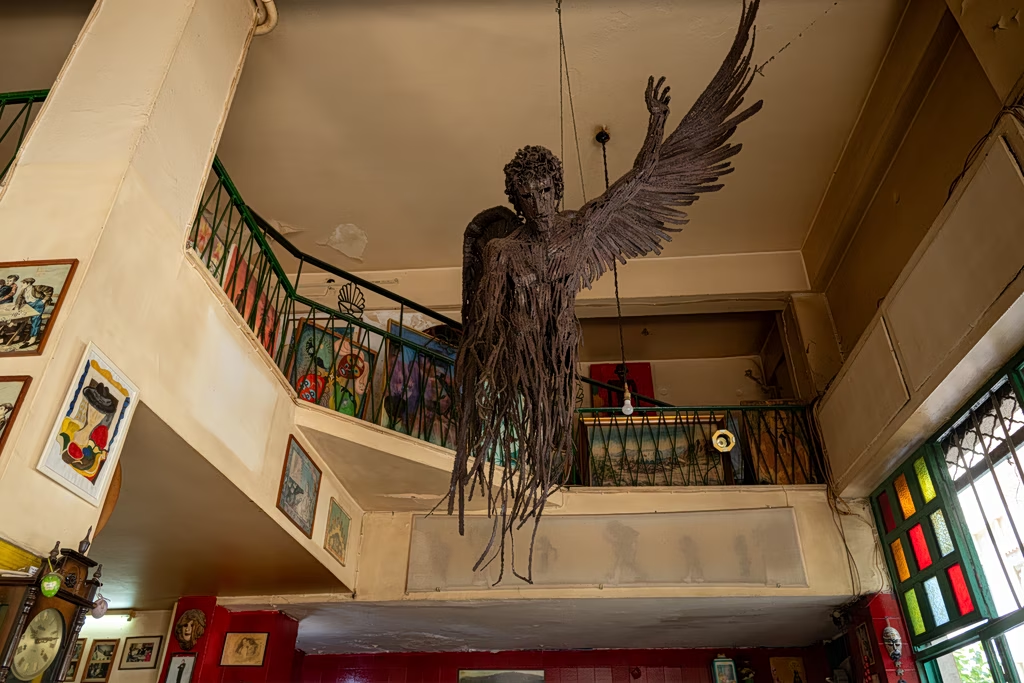
Works of art fill every corner of Mouria, which has long been a gathering place for artists, thinkers, and writers. Photo: Alexandros Alexandris
I have run into Mouria during sudden downpours carrying my Jack Russell terrier, seeking shelter from the rain. I have spent entire afternoons there drinking what felt like the most cinematic coffee of my life while talking with complete strangers who had sought refuge from the same storm.
I have stumbled in on Saturday mornings after sleepless nights out, searching for a beer and a simple meze to bring me back to life.
I have fallen in love there.
I have cried there.
I have laughed until tears rolled down my face.
At its tables I have seen politicians, lawyers, doctors, musicians, painters, actors, and photographers who documented major social struggles. I have also seen solitary people who knew that, if they needed help, someone there would extend a hand.
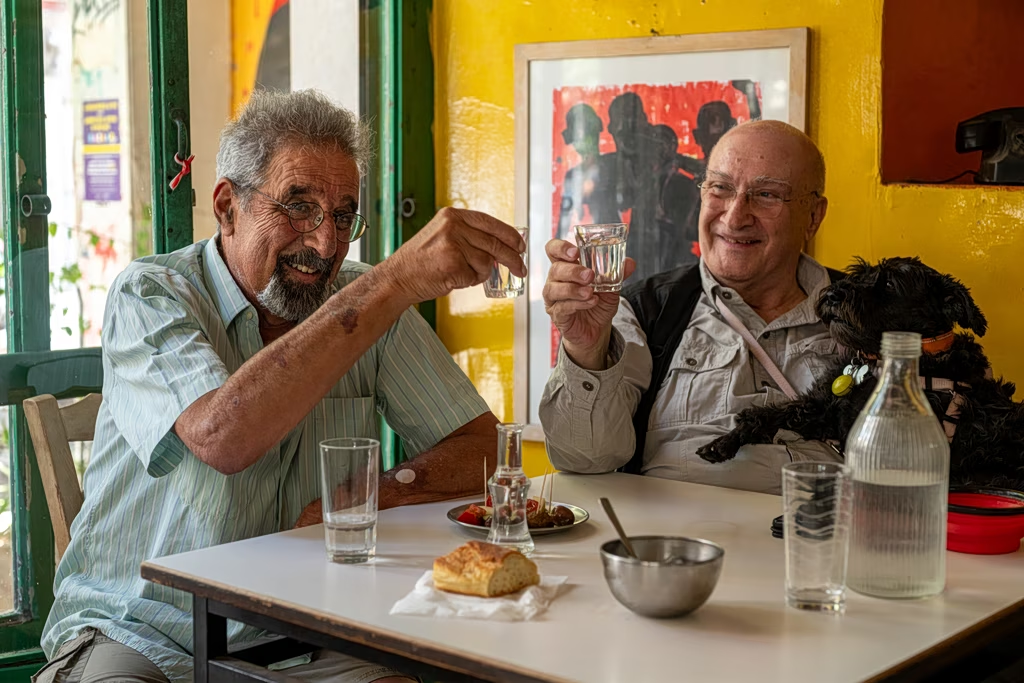
Thomas and Kostas raise a toast, as countless others have done during Mouria’s long history as one of Exarchia’s living landmarks. Photo: Alexandros Alexandris
Years ago, the clientele consisted mostly of older Athenians—retirees and working people shaped by decades of experience. Students were always present too.
In recent years, however, a younger generation has embraced Mouria. So have visitors and newcomers from abroad.
They recognize what many instinctively understand: some places carry a unique weight.
They hold memory.
They possess a reason for being.
Fighting for Survival
Yesterday, we visited Mouria once again.
I had hoped to publish this article before Saturday, the café’s busiest day, when Kallidromiou Street’s famous open-air market fills the neighborhood and people squeeze around Mouria’s tables as if responding to an invitation that was never formally issued but has somehow always existed.
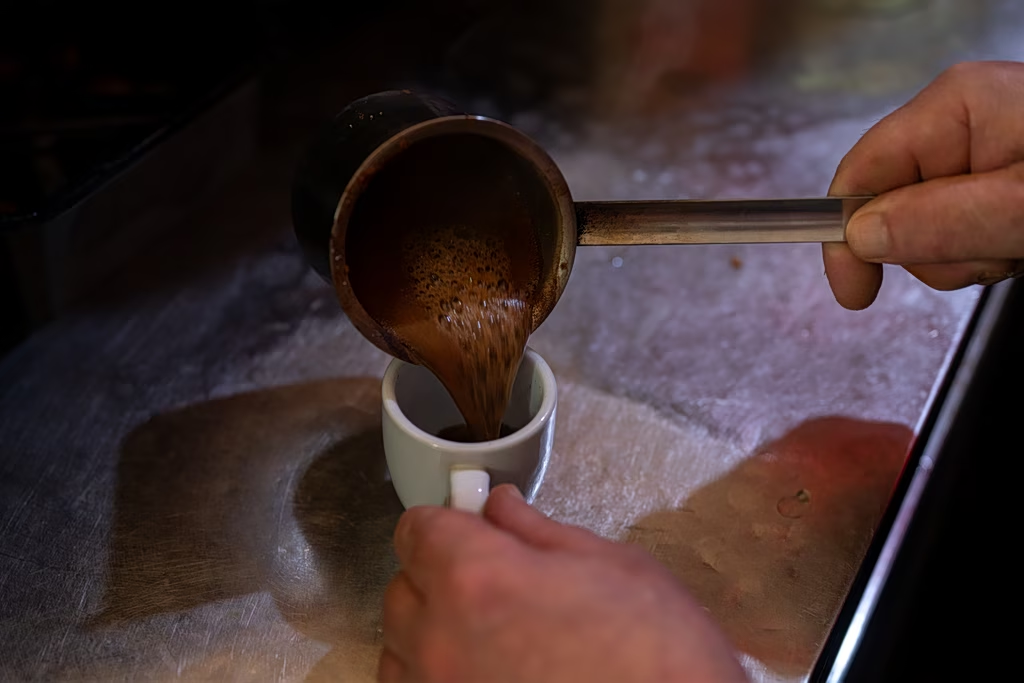
On Saturdays, Mouria opens before dawn to welcome vendors and workers from the Kallidromiou market for their first coffee of the day. Photo: Alexandros Alexandris
There, I spoke with Christos Vanas, Mouria’s seventh owner.
He has been behind the counter since 1982.
Before taking over, he was one of the café’s regular patrons. When the previous owner retired, friends encouraged him to continue its story.
He quickly became its heart and soul.
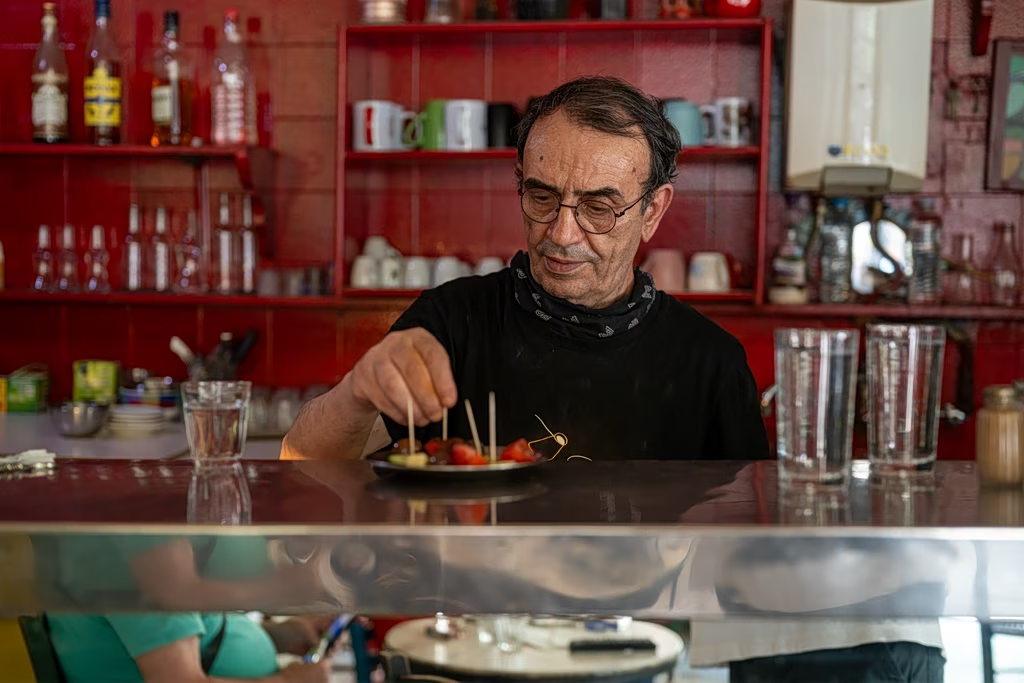
Current owner Christos Vanas was once one of Mouria’s regular customers before taking over the café. Photo: Alexandros Alexandris
Together with his wife, Effie, he opens the doors every morning before sunrise. Over the years, they raised two daughters, Spyridoula and Areti. They welcomed a grandchild into the family. They watched Exarchia transform repeatedly while navigating the joys and hardships of life.
Today, Areti works alongside her father. Now a parent herself, she hopes to continue operating the café, fully aware of its importance to both the neighborhood and Greece’s cultural heritage.
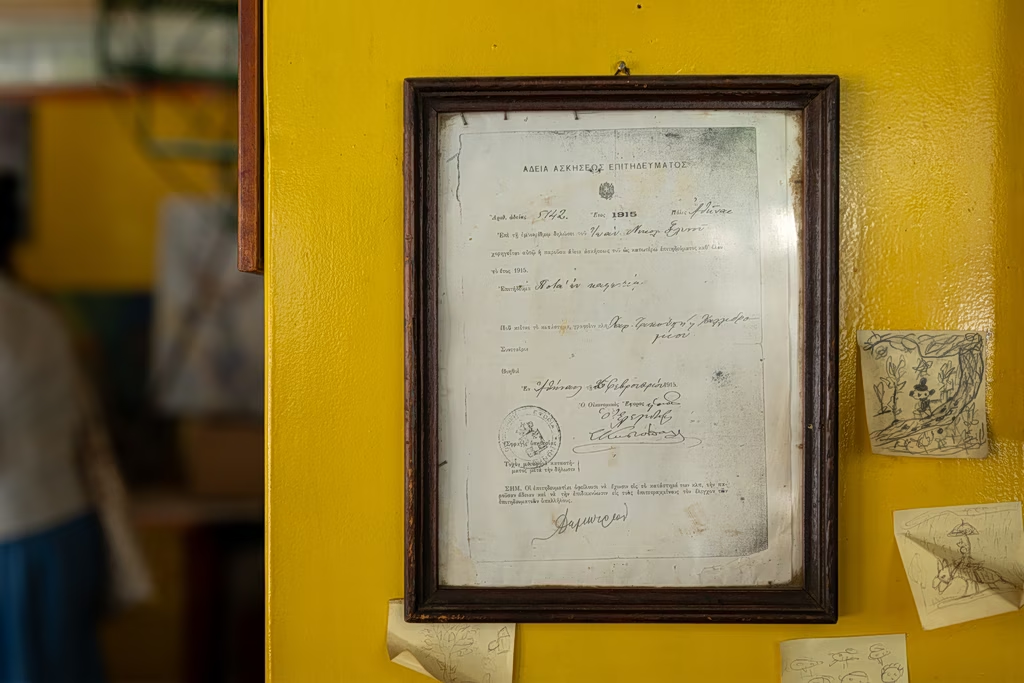
The café’s operating license stands as a witness to its long history. Photo: Alexandros Alexandris
Then the conversation took an unexpected turn.
I learned that the building’s owner has asked Christos to vacate the premises in order to change the property’s use.
I was stunned.
I had assumed the state had already found a way to protect a café with such historical significance.
Christos explained that efforts to preserve Mouria are already underway.
Applications have been submitted to Greece’s Service for Modern Monuments and Technical Works, while the municipal group Open City has requested that the Athens City Council consider recognizing Mouria as a protected monument of contemporary cultural heritage.
The initiative has received support from the Athens Association of Food Service Professionals, local organizations, and many residents of Exarchia.
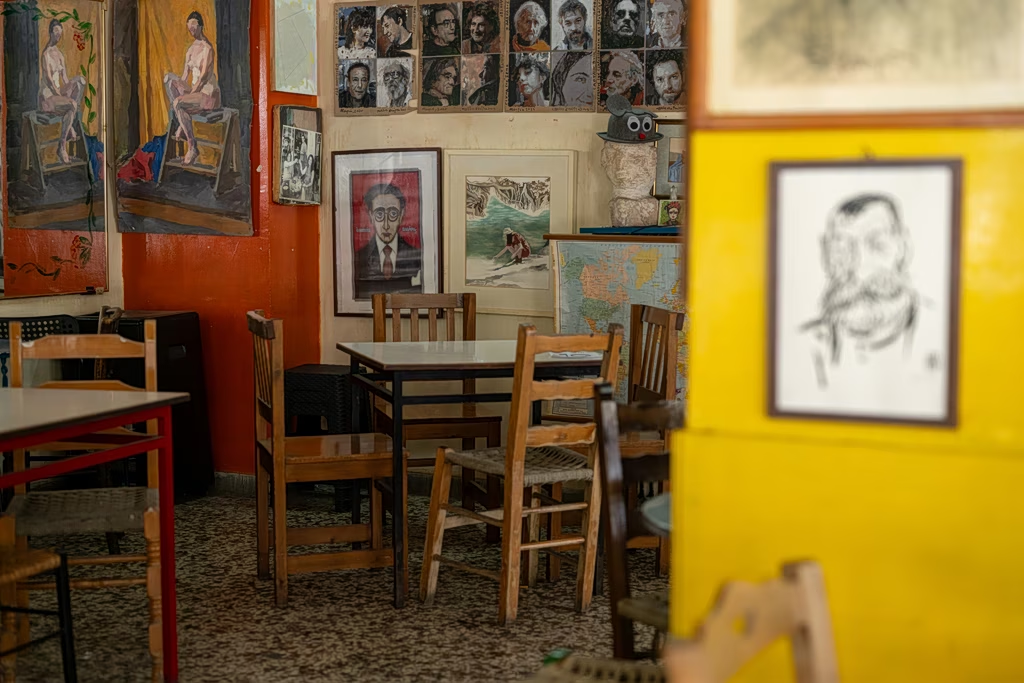
A café with character. Supporters are seeking official recognition of Mouria as a protected monument of contemporary cultural heritage. Photo: Alexandros Alexandris
The Ministry of Culture now faces a critical decision.
For supporters, preserving Mouria is not simply about protecting a business. It is about safeguarding a place where people continue to meet, remember, tell stories, and create new memories.
After all, this is one of Athens’ oldest continuously operating cafés.
Some things carry a value far greater than their commercial worth.
Saturday at Mouria
The food at Mouria is exactly what one expects from a traditional Greek kafeneio.
Tomatoes, olives, cucumber, graviera cheese, hard-boiled eggs, meatballs, cured salami, and sausage.
Nothing elaborate.
Nothing unnecessary.
Just simple meze served alongside ouzo, tsipouro, wine, beer, coffee, and soft drinks.
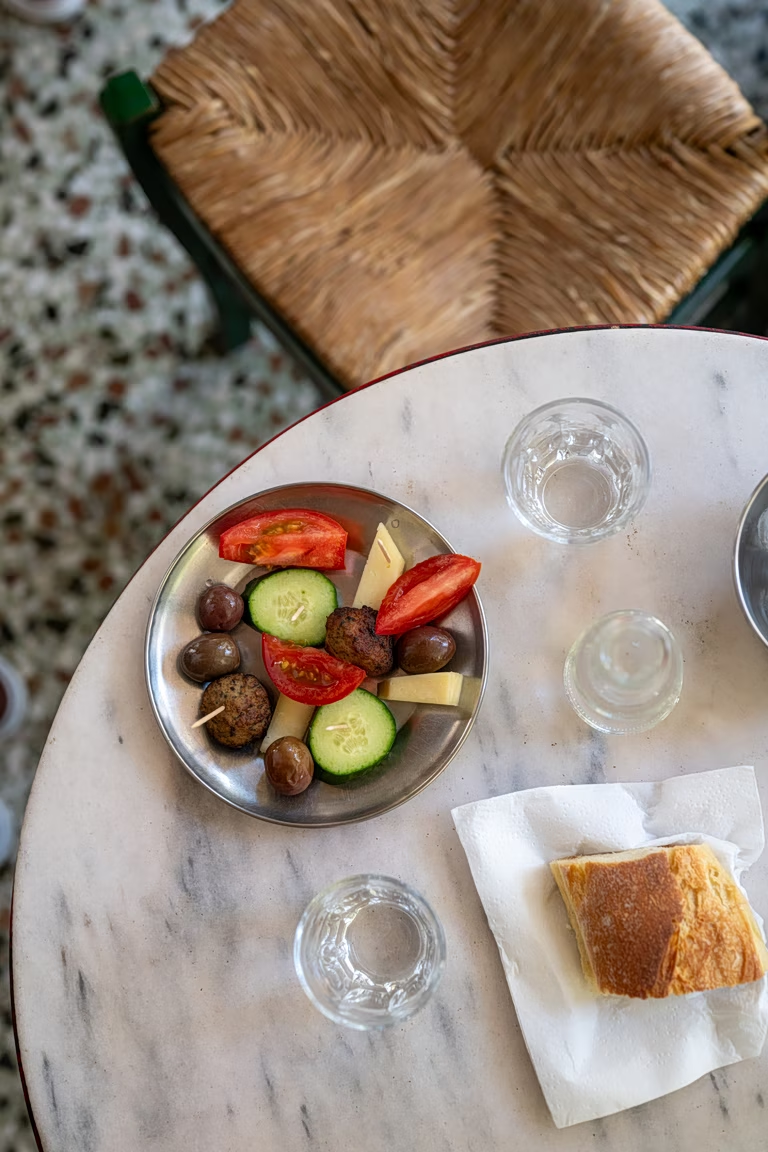
The beloved Mouria meze is simple but full of flavor, always accompanied by ouzo, tsipouro, or beer. Photo: Alexandros Alexandris
On Saturdays, Christos arrives before the market stalls are even assembled.
The café fills and empties throughout the day as shoppers, vendors, neighbors, old friends, and curious newcomers pass through.
Inside, the high-ceilinged room—with its colorful chairs, artwork, photographs, and newspaper clippings—comes alive with laughter, teasing conversations, political debates, and the joyful noise of community life.
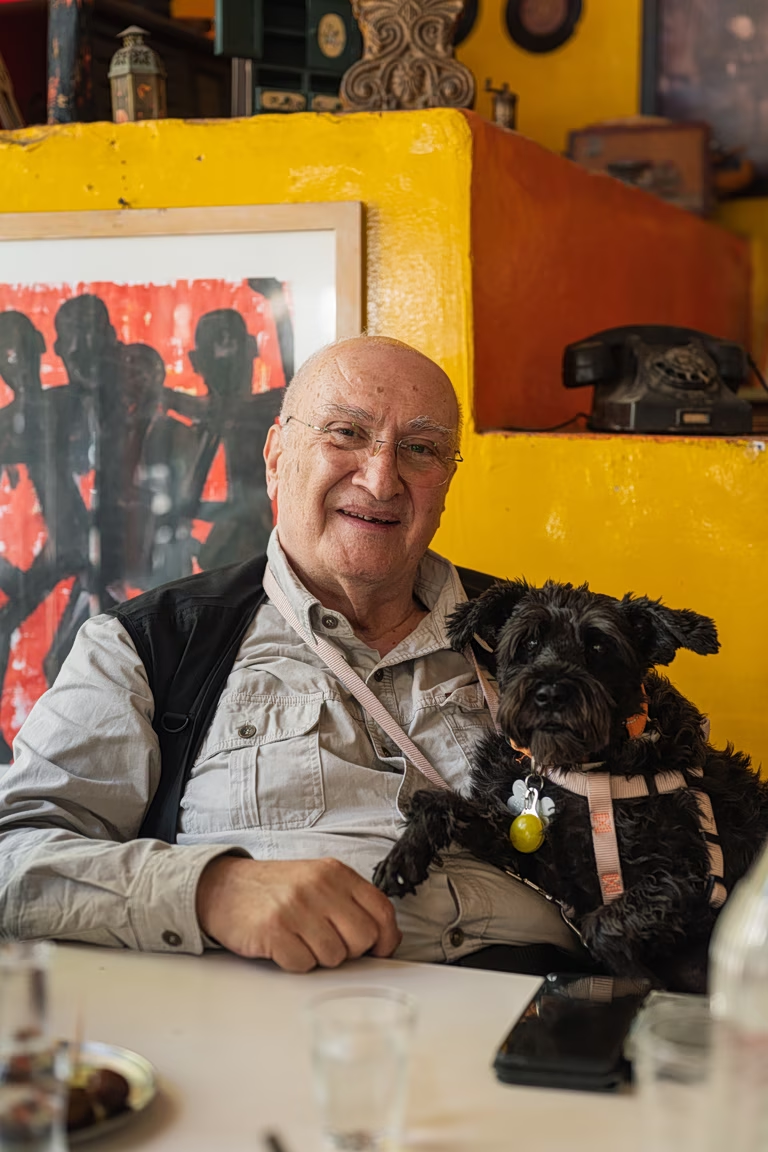
Mr. Kostas and his beloved Zelda, regular fixtures at Mouria. Photo: Alexandros Alexandris
Among the familiar faces is painter Nikos Kaskouras, whose presence has become inseparable from the identity of the café, along with many other longtime friends of both Mouria and the family that keeps it alive.
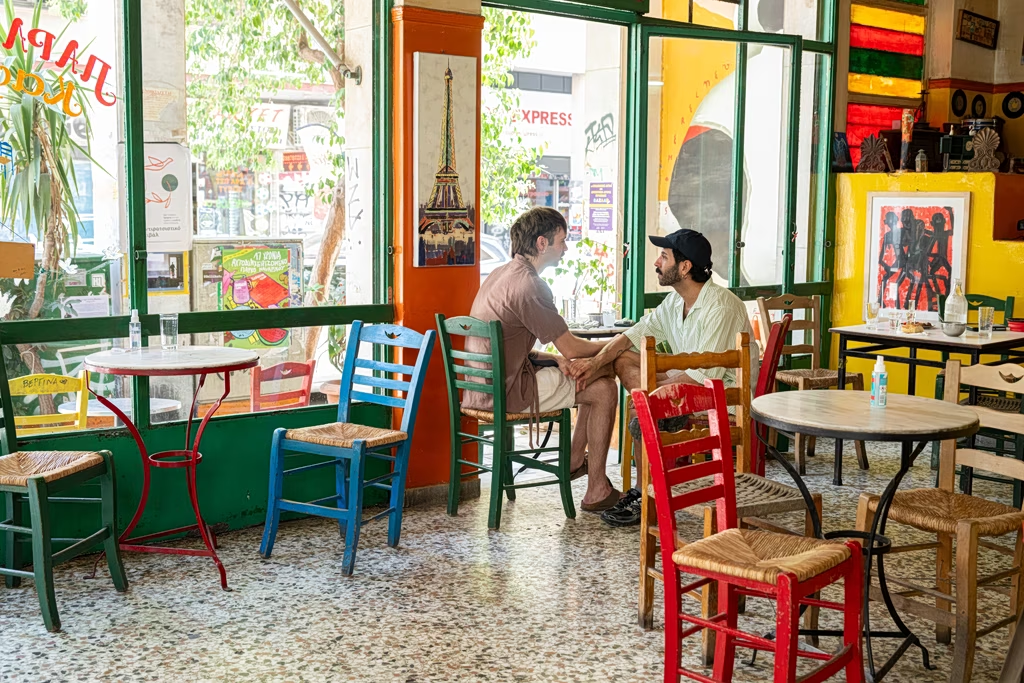
Areez Katki and Mateusz Kulpa represent the younger generation of Mouria’s friends and supporters. Photo: Alexandros Alexandris
Over the years, Mouria has hosted theatrical performances, book presentations, political gatherings, and wedding celebrations.
Its supporters hope—and are prepared to fight—to ensure it remains exactly where it has stood for generations, on the corner of Charilaou Trikoupi and Kallidromiou streets, waiting patiently for the next chapter in its story.
Because Mouria is not merely a café.
It is a piece of Athens’ memory.
And once memory disappears, it can never truly be replaced.