Cyprus is not a peripheral concern for Britain. The United Kingdom is a guarantor power and maintains sovereign military territory on the island.
Bercow’s answer was striking in its candor. He had, he said, no knowledge of the matter.
Before answering, he reached for a familiar anecdote. Early in his political career, he recalled, a selection committee in Surrey had tried to catch him off guard with an obscure question about “the burning of our emulsion.”
He replied that his ignorance exceeded that of anyone else in the room. The committee laughed. The deflection worked.
In Washington, years later, the same instinct resurfaced. The Cyprus question was acknowledged, even entertained, and then set aside. At the time, this felt like a familiar Bercow moment: wry, self-aware, entirely within the limits of his office.
But seven years later the comparison lingers. Cyprus is treated much like the “burning of the emulsion.” It barely registers as a strategic priority within Britain’s political conversation.
That no longer holds. Cyprus is no longer a distant file. It is a frontline. And the culture of inattention has had operational consequences.
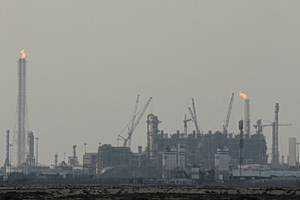
The drone strike on RAF Akrotiri in early 2026, amid the escalating confrontation with Iran, marked the first time a British sovereign facility had ever been hit in Cyprus.
It was not a signal. It was a test that exposed vulnerability.
London moved quickly to contain escalation, signaling that the bases would not be drawn further into the conflict. In the aftermath, Cypriot President Nikos Christodoulides called for a “frank and open discussion” on the future of the British presence.
British officials responded just as firmly: Akrotiri and Dhekelia are sovereign territory and not open to negotiation.
Legally, that position is clear. Strategically, it is not enough. Sovereignty carries exposure. It must also carry responsibility.
When the strike occurred, Britain did not have a destroyer immediately available in the Eastern Mediterranean. The deployment of HMS Dragon followed, but not at the speed the moment demanded.
This was not hesitation. The assets were simply not there.
Britain still presents itself as a global security actor, from Europe to the Indo Pacific. But it cannot both hold sovereign bases in a volatile region and treat that theater as secondary when it comes to readiness.
That tension is no longer theoretical. It is operational, and it extends beyond the question of ships alone.
Britain’s role in Cyprus has never been that of a distant observer. It is a former colonial power, a guarantor state, and a permanent military presence on the island.
Yet its political posture has often been more cautious than its legal position suggests, particularly when tensions with Turkey escalate.
Turkey complicates that calculus. It is a NATO ally whose cooperation Britain depends on, and whose interests in Cyprus run directly counter to Nicosia’s.
The 1960 Treaty of Guarantee obliges Britain, alongside Greece and Turkey, to uphold Cyprus’ constitutional order and, if necessary, act to restore it. Cyprus has not always received the full weight of what that role implies.
When that obligation was tested in 1974, Britain chose diplomacy over intervention as Turkey’s forces moved across the island. The Treaty had contemplated action. But Britain did not act and that decision remains contested to this day.
Britain has consistently claimed the privileges of its position in Cyprus while hedging on the obligations that position carries.
Of course, Parliament does not run foreign policy and does not decide where ships are deployed. That is the government’s responsibility. But Parliament shapes the political environment in which those decisions are made.
When Cyprus does not register at the level of the Speaker of the House, it is unlikely to be pressing anyone harder further down the chain. Issues that do not register politically rarely command urgency strategically.
The Bercow exchange and the strike at Akrotiri are years apart, but they are not disconnected. They reflect the same hierarchy of attention.
Britain treats Cyprus as permanent in law, but secondary in practice. That gap carries consequences. For Cyprus, it means exposure at a moment of rising regional volatility.
In a security environment where timing shapes outcomes, Britain can assert the legal status of its bases without delay. Acting on that claim at the same speed is a different test.
The burning emulsion, it turns out, was not a trick question.