Μake us preferred on Google
 It reveals a deeper and more persistent problem: that in public life, credibility is too often constructed through presentation rather than secured through honesty. The reference here to former Australian Prime Minister Paul Keating is not intended as a broad comparison. It serves a narrower purpose—to illustrate that authority, in a functioning democracy, rests on clarity and integrity, not on the careful management of appearances.
Honesty first
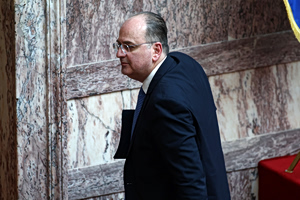
Greek political life does not lack credentials; it often lacks clarity about them. The debate surrounding Lazaridis’s reference to studies in “journalism and political science at the College of Southeastern Europe” shifted attention away from policy and toward the credibility of his public self-presentation.
When qualifications are expressed in ways that invite doubt, the issue ceases to be procedural and becomes institutional. Citizens are asked to evaluate public figures without the clarity required for meaningful judgment. In such conditions, accountability is weakened, not strengthened.
Democratic legitimacy depends on trust. And trust cannot coexist with ambiguity.
This raises a broader question about merit itself. If credibility depends not only on what is claimed but also on how transparently it is conveyed, public evaluation cannot rest on formal qualifications alone.
The Keating standard
This distinction becomes clearer in comparative perspective. Paul Keating left school at the age of 14 and never concealed it (ABC News). Despite the absence of formal higher education, he became one of Australia’s most influential Treasurers and later Prime Minister, overseeing structural reforms that reshaped the country’s economic and institutional trajectory (Paul Keating).
His authority derived not from credentials, but from clarity of thought, decisiveness, and a refusal to obscure basic facts about himself. His governing philosophy reflected a broader conviction: economic policy is not only about distribution, but about expansion—growing productive capacity and long-term national wealth (AFR 2014).
Keating’s intellectual orientation extended beyond economics. His engagement with cultural and historical questions gave his political style a distinct depth. His interaction with figures such as Mikis Theodorakis during the latter’s visit to Australia reflected a broader understanding: politics is not merely administration, but an interplay between ideas, culture, and statecraft (Neos Kosmos).
Self-interest without concealment
Keating’s political realism was shaped by Jack Lang, a defining figure in Australian Labor politics. Keating often cited Lang’s observation: “In the race of life, always back self-interest—at least you know it’s trying” (The Age 2012).
This was not a defense of opportunism, but an argument for clarity. Political systems function more effectively when motivations are acknowledged rather than concealed.
In Australia, the open articulation of motive is often treated as political maturity. In Greece, by contrast, a culture of appearances and institutional centrality tends to obscure motivations, allowing them to re-emerge not as transparency, but as suspicion—now a persistent feature of public debate.
The line between merit and its representation
The problem extends beyond individual misrepresentation. It reflects a deeper ambiguity in how merit is understood and narrated in public life. The promise of a “government of the best”—one that would dismantle entrenched dysfunction and correct systemic inefficiencies—rested on the assumption that formal qualifications would automatically translate into better governance.
Experience suggests otherwise. Political effectiveness depends not only on credentials, but on judgment, clarity, and institutional awareness. Figures such as Paul Keating illustrate that competence and impact do not always align with conventional educational trajectories.
In Greece, the issue is not the absence of qualifications, but the coexistence of meritocratic language with enduring clientelist practices. The system is no longer defined simply by the “unqualified,” but increasingly by the ostensibly “qualified”—those who invoke meritocracy while reproducing elements of the same underlying logic.
Patronage has not disappeared; it has evolved. It now operates within a more refined framework, often expressed through the language of reform and professionalism. This makes it less visible—and more difficult to challenge.
When even those regarded as the “best” rely on selective presentation or informal privilege, the issue is no longer competence, but institutional integrity.
A question of attention
The Lazaridis case also raises a broader question: whether the intensity of focus on his CV has, intentionally or not, displaced attention from more substantive political issues. In this sense, the controversy functions less as a discrete debate and more as a diversion of attention away from structural concerns.
This does not require coordination. It reflects a familiar dynamic in political systems, where symbolic controversies eclipse institutional questions. When the public agenda shifts constantly—sometimes even within hours—it signals not responsiveness, but a lack of strategic coherence.
In such an environment, political debate becomes reactive rather than deliberative. Attention is absorbed by successive episodes, while underlying issues remain insufficiently examined. The result is not greater accountability, but its fragmentation.
The lesson for Greece
Ultimately, the issue is not the scandal itself, but what it reveals. Episodes such as the Lazaridis case will pass, as others have before them. What endures is the underlying deficit of credibility in public life. The relevance of the Paul Keating example lies only in this: authority can be built on clarity, consistency, and intellectual seriousness—not merely on formal credentials. Beyond that, any broader comparison quickly loses meaning. Keating’s political achievements belong to an entirely different order.
Unless this distinction is internalised, Greek political life will continue to oscillate between controversy and distraction, without addressing its deeper structural weaknesses. As Albert Einstein observed, “Education is what remains after one has forgotten what one has learned in school.” The point is not to diminish education, but to clarify its purpose: the cultivation of judgment.
In politics, as in public life, credibility is not built in moments of attention—it is sustained by consistently refusing to obscure the truth.