 Μake us preferred on Google
 The academic and think tank communities have been tracing these shifts for more than a decade. The warning arguments have been plentiful and from every direction. They have been coming from eccentric ‘academic prophets’, who were once dismissed precisely because of their eccentricity, but also from mainstream practitioners, continuing students of the international system. But most importantly, those knowledgeable individuals who saw the seams coming apart, who argued it through, and who warned early of the seismic changes ahead. Tectonic, for lack of imagination, as we like to call them in Greece.
These communities also informed us about the grain and the very fabric of a system that is coming, and the fibres of it are indeed of a different substance from those we were accustomed to. It will be a system unpredictable in daily functions, yet predictable in the texture of those functions. That texture, unfortunately, will be increasingly violent, unlawful, and at times inexplicable. It will be a system where decision-making will not, increasingly, take place in international fora. Finally, a system grounded on another chessboard altogether.
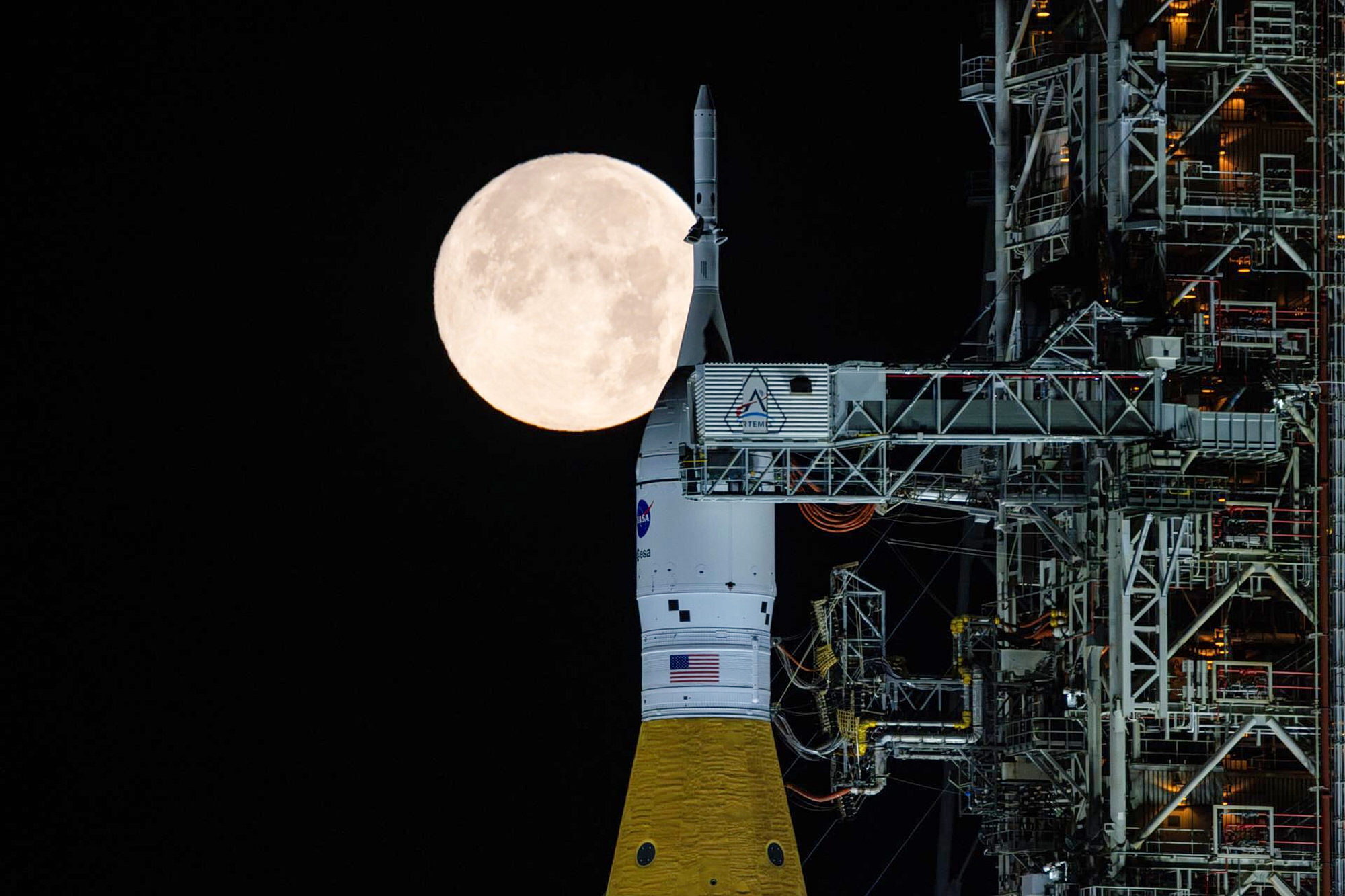
We’ve talked about space in the past. We have touched, as a species, its very skin on one or two occasions. The moon landing comes to mind. So does the race to establish a presence there, and the ambition to leap towards Mars. Policymaking is indeed a difficult vocation, not for the fainthearted. Most of the time takes place in the dark, with half the map missing. Yet it is not difficult to grasp the importance of space for our current, short- and long-term, future. McKinsey and the World Economic Forum project that the global space economy will reach $1.8 trillion by 2035. These are industries working specifically on space applications and hardware, not those merely depending on space functions. Their measuring becomes, simply put, unmeasurable.
A few state actors in our plucky ball of dirt and water, Earth, have measured it anyway. They’ve concluded they cannot afford to stay out this round. They’ve stretched arms, fixed their eyes on strategy, picked up their gloves and entered the arena. They play to win. In the blue corner, the United States and the US Space Force, responsible for President Trump’s ‘Golden Dome’ missile defence plan. In the red corner, China and the Chinese People’s Liberation Army Aerospace Force. The one planning to stick a nuclear reactor on the moon and mine it for rare earth elements. If Hollywood decides on a remake of Rocky IV, the ring will be astro-political, and Ivan Drago will be Chinese.
Europe Has Capabilities, Not a Posture
Back to Mr Draghi, and to every policymaker’s favourite reflex, ‘what about Europe?’. I am afraid the answer is bittersweet, just like Brussels. It is an acquired taste. No one, except us in Europe, finds it sweet, and even here it starts turning sour. The Draghi and Niinistö reports warned us about that. Yet Europe still lags behind the guy in the blue corner and the Chinese Ivan Drago(n).
There are positive points to consider, though. Copernicus, Galileo, the up-and-coming secure communications systems, IRIS² and GOVSATCOM. The much-appreciated, though still not enough, unprecedented financial commitment of ESA member states to the organisation, reaching above €22 billion for the 2026-2028 period. Europe, at the moment, is still trying to figure out its place in this coming international system, increasingly exoplanetary in its texture.
But unfortunately, reality hits once again. The same ecosystem is exposed, and Europe has not treated that exposure as a security issue. Recent reporting suggests that two Russian Luch spacecraft have repeatedly manoeuvred into proximity with Europe-facing geostationary communications satellites, close enough to listen from inside the beam geometry. A senior European intelligence official warns that part of this European ‘legacy fleet’ still carries unencrypted command data, the kind of link that becomes usable once recorded. Analysts sketch an obvious escalation path from interception to disruption, where a hostile actor mimics a ground operator and sends false thruster commands, nudging a satellite off-station and degrading service, with the first malfunction politely filed under “technical anomaly” until it happens again. The issue is not only espionage, though that alone should be embarrassing. The reality is far more consequential and far deeper in meaning, with far higher stakes. Ukraine was a wake-up call. The full-scale Russian assault was enabled by effective operations in cyberspace and the electromagnetic spectrum, including the disruption and jamming of commercial satellite services that Ukraine relied on to avoid operating blind amid uncertainty.
Against that backdrop, the scale of announced and ongoing above-mentioned Chinese and US plans sits well beyond Europe’s short-sighted horizon of what is rapidly coming. Europe is, quite frankly, woefully unprepared.
Dimitris Kollias
Research Fellow, ELIAMEP