 Μake us preferred on Google
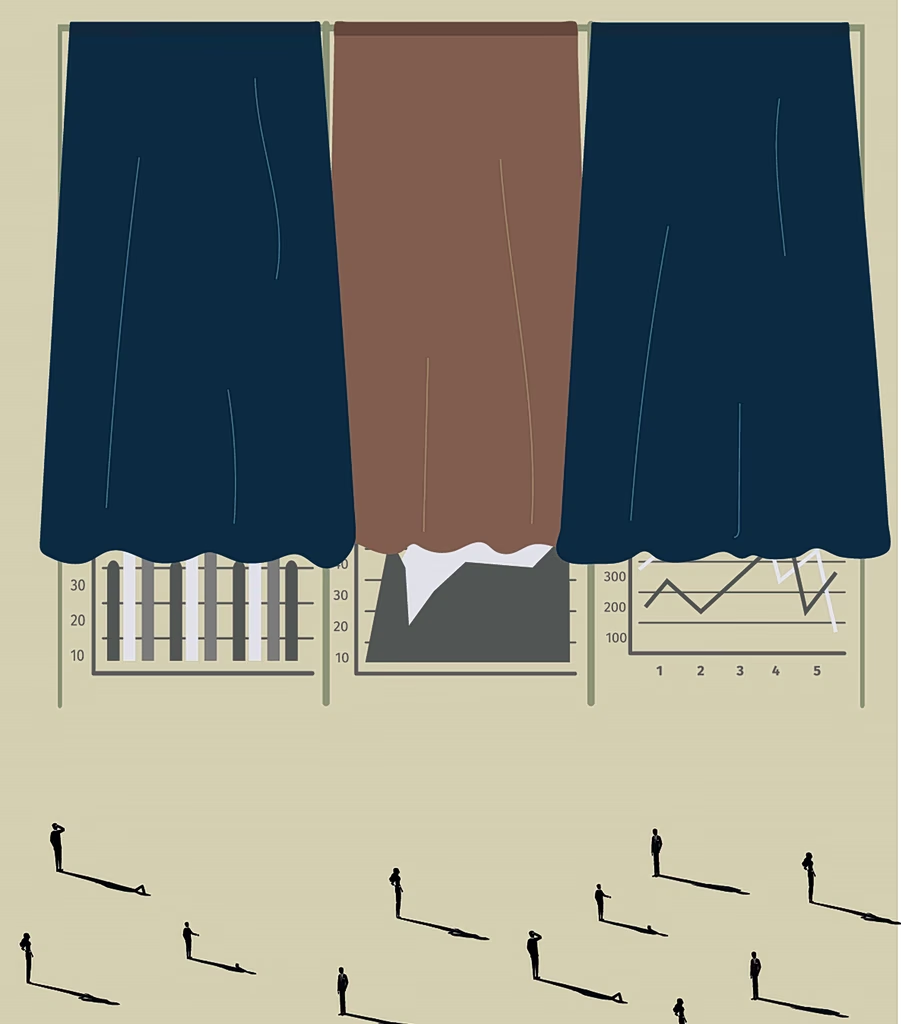
 The ritual is a familiar, commonplace one: whenever new parties appear, opinion polls quickly follow. Then everyone argues with everyone else about the new parties and their polling numbers. Yet these polls rarely—if ever—tell us anything different from what we expected to hear before the new parties even showed up. All the more so, since they do nothing more than gauge the electorate’s first impressions. The second and third impressions are still to come.
So, once again, there were literally no surprises. Everyone was already talking about “the battle for second place,” since there is nothing to indicate that first place is up for grabs.
And here is where we ended up: in essence, with three parties polling somewhere between 10% and 15% each. It’s an interesting matchup, and anyone’s guess is as good as mine. But no matter who lands second past the post, they are unlikely to change the broader landscape. In other words, there are still two dimensions to what’s at stake in this election.
First, whether New Democracy will secure an outright majority. Whether they do or not doesn’t only depend on their own performance; it also hinges on the total percentage of votes cast for parties that fail to clear the threshold to enter Parliament.
And second, what sort of government will form if New Democracy fails to secure an absolute majority. Because numerically speaking, it is virtually impossible to bypass the front-runner when forming a government.
At present, we lack answers to both questions. And, honestly, it’s going to stay that way until the ballots are counted.
What is striking, however, is the political class’s resolute unwillingness to cooperate—and hence, their total lack of realism. Even Ms. Karystianou has declared her intention to secure an outright majority.
Of course, coalition governments in Greece are now associated with a particularly traumatic period in recent political history: the years between 2011 and 2019. But the last thing we should blame for the scars left behind by that era is the parties’ willingness to join forces.
I get that on the campaign trail, you try to rally your own base, not explain who you plan to team up with after the election. Still, there is no doubt that the lack of communication and dialogue between our political parties is a major disadvantage, even for a system as fundamentally polarized as our own.
Still, I can’t say I’m overly concerned. In any case, whenever the country has entered troubled waters, it has quickly become clear that there is only one true mentor in politics.
It’s called realism.
And as we all know, in the end, governments aren’t formed on the basis of election manifestos. It’s the post-election reality that matters.