 Μake us preferred on Google
 National holidays, history told a certain way, the heroes, the flag. You hear so much about all this, you feel in your skin the injustices done to your ancestors, whom you believe to have always been on the right side of history, and you are proud, so very proud. Then perhaps you go through a different phase, you become a rebellious teenager of sorts, but in this case instead of your parents you challenge your country and feel that nothing is right about it. Until you grow up, you realize that your country is not perfect, but you like and can live with it in all its imperfections.
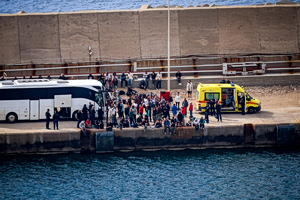
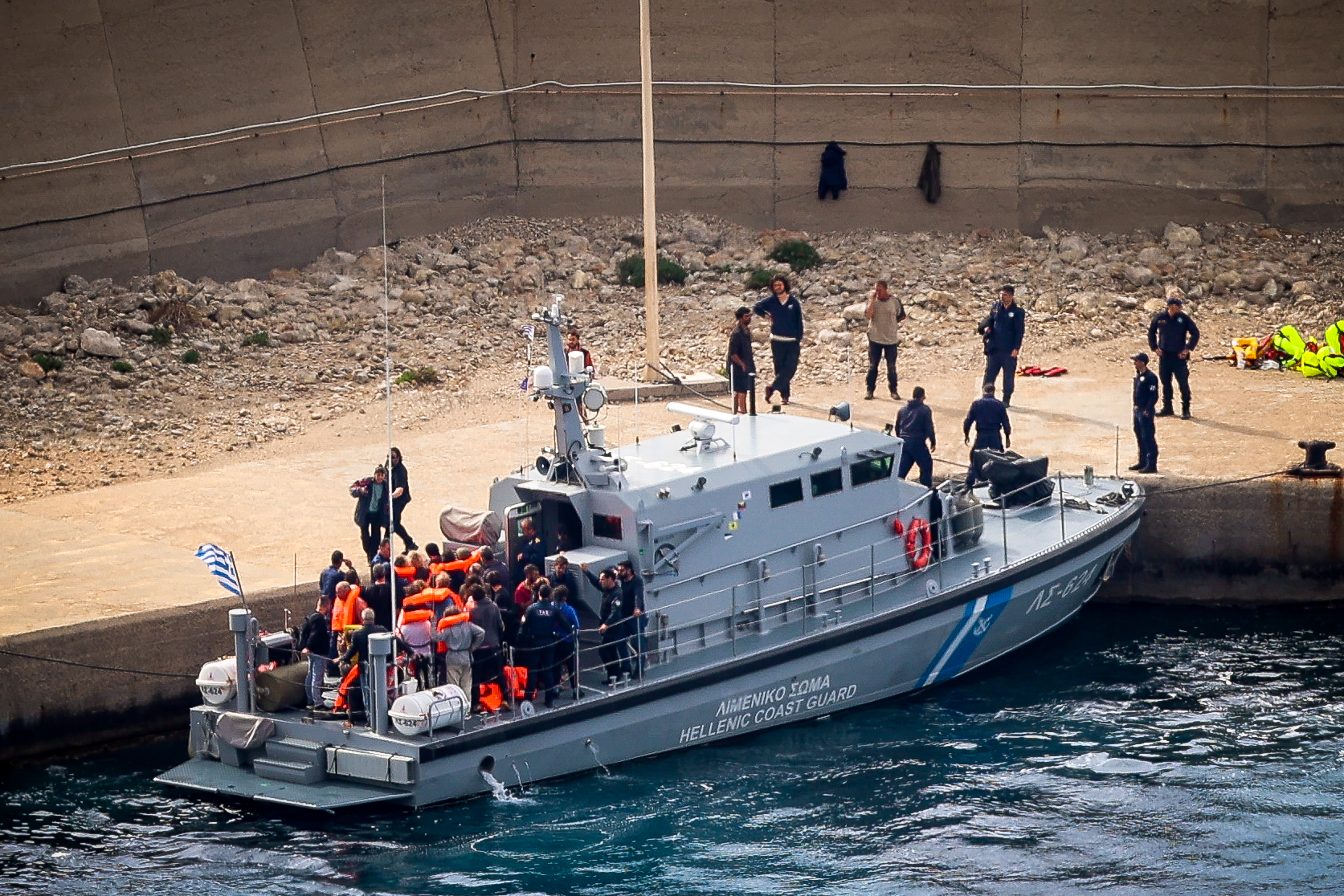
Well, I have to admit that I am going through a fourth phase, when I am starting to feel ashamed of my country, its policies on certain important issues that is. The “cherry at the top of the cake” came with the recent operation of the Israeli Navy in an area south of my native region of the Peloponnese and close to the island of Crete. Sure, it was inside international waters that the Israelis raided the Global Sumud Flotilla with some 175 activists onboard, from many countries, who were trying to bring humanitarian assistance and the world’s attention back to Gaza. It was, however, within a marine area for which Greece is responsible for the safety of navigation, search and rescue, standing watch for the European Union too. No safety for the pro-Palestinian activists, though, and no rescuing from the very long arm of the Israel Defence Forces (IDF) and Mr. Netanyahu’s extremist government. The Greek authorities were only used post-facto to clean up the mess, as the handmaidens of the Israeli Navy, arranging for the intercepted activists to be sent back to their homes (at whose expense, by the way?).
Obviously, this would not have happened if the intervening navy had been of another nationality, say Turkish, for example; or I hope that it would not have happened. If it is not incompetence that allowed it to happen with the Israeli Navy, then what is it? How can a maritime border, or a blockade line, illegally imposed on illegally occupied Gaza by the Occupying Power, Israel – illegality confirmed as recently as 2024 by the International Court of Justice – be moved almost a thousand kilometres away to come and rest between the Peloponnese and Crete? Was this a temporary move or will it stay there for good? Is now the immediate vicinity of Greece becoming another Middle East front, one of many that Israel has opened and keeps opening? Bye bye peace, safety and tourism, welcome tension, injustice and war?…
It was to be expected. The Greek government has been courting Israel for years. While one could understand some geopolitical aspects of this strategy – balancing the influence of Türkiye, pursuing energy security, securing hi-tech weaponry, pleasing the US – one could not but worry at this cozying up to Israel even when the latter clearly broke international law and committed atrocities. There is no excuse for not condemning Israel’s disproportionate use of force and genocidal acts in Gaza, its attacks on Palestinian civilians in the West Bank and the building of illegal settlements, its attacks on Iran and Lebanon, its destabilization of the whole Middle East region, on the flimsy basis of preemptive self-defence. The Greece I knew tried to keep a balance between relations with the Israelis and relations with the Palestinians, honestly supporting peace efforts and the two-state solution. That Greece is no longer there, but another Greece has emerged. One that apparently dreams of becoming the third participant in the Israel-US special relationship, and bringing Cyprus along too.
Only that this currently means joining the most destabilizing actors in the Middle East region, and beyond. This means going against any sense of international law, from the principle of non-aggression to the law of the sea, from the Geneva Conventions to the findings of the International Court of Justice and the International Criminal Court. At the same time, this new (un)kind of Greece still wants to be protected by international law when it is under threat itself. Perhaps a decision was made that international law does not work for us, after all, and the best way is to join the presumed winners, who beat everybody else, hopefully to beat our potential enemy too, when the time comes. However, from the Asia Minor Disaster of 1922 to the 1974 invasion of Cyprus, with more instances to talk about before, in-between and after, it should be clear that external actors use little Greece in the pursuit of their own interests by pumping up national fears and nationalist instincts, only to abandon it to the wolves when their own interests are at stake.
I hope that it is not too late for Greece to rediscover its ecumenical roots and stand up honestly and with equanimity for international law, peace and justice. This is not only a demand of the millennia-old Greek psyche, representing the best of the humanist traditions that this country brought to the world, but also of the Greek national interests, enlightened and medium-term. Otherwise, a false sense of security established for the short-term can easily collapse with the changing fortunes and the shifting alliances of the big brothers, the hyper-bullies Greece seems to be consorting with these days.