 Μake us preferred on Google
 Governments in Europe and North America cannot ignore the international responsibility that rests upon them, nor can Israel be unaware of the possibility of international criminal accountability for its soldiers.
At 101 years old, Joseph Süß was convicted in the first instance for the deaths of 3,518 prisoners at the Sachsenhausen concentration camp. Those familiar with the case will recall that he was transported to the courtroom bedridden. He had to answer for his participation in the horrific crimes of the Nazi regime, even though he was merely a camp guard.
In The Hague are based the two International Courts that, in 2024, dealt with cases related to military operations in Gaza: the International Court of Justice, which handled two applications—one against Israel and one against Germany—for the crime of genocide; and the International Criminal Court, which issued warrants against two members of the Israeli government for war crimes.
Did these interventions by international justice affect the course of events in Gaza?
One might answer no, as they date back to the previous year, and peace agreements are only very recent. Yet it could be argued that even the change of the U.S. president had no immediate effect; until recently, plans were circulating for the total elimination of Hamas and the removal of the Palestinian population from Gaza.
So what changed?
The fear of international criminal responsibility became more intense and pressing.
A UN expert report characterized, with some bias it is true, the events of 16 September 2025 in Gaza as genocide, and the international community largely agreed. Traditional allies of Israel were shaken in their support, and even within Israel and the global Jewish diaspora, the united front of backing was fractured.
Let us try to connect some critical points:
- In March 2024, Nicaragua filed a case against Germany before the International Court of Justice, accusing it of participating in genocide by supplying lethal weapons to Israel. A request for provisional measures was rejected because Germany had nearly ceased its material support, but the Court expressed deep concern over the situation in Gaza and reiterated its case law on states’ special obligations to act, with all available means, to prevent genocide.
- This was also the core message of three provisional measures decisions issued by the same Court from January to May 2024 in the South Africa vs. Israel case. Citing incendiary statements by Israeli officials after 7 October 2023 and threats to cut off water and food in Gaza, the Court identified a risk of genocide. Unlike crimes against humanity, this finding automatically creates international obligations for prevention—not only for the directly involved state but for all states, according to their power and capacity to act.
- The peculiarity of the international genocide regime—and its importance above all other international crimes—lies in the following: when a risk of genocide is identified, positive obligations arise immediately for the entire international community to prevent it; however, the ability to assign responsibility begins only when the Court officially determines that genocide indeed occurred. From the identification of risk to the final decision may pass years. It is a gray zone. No one knows for certain if genocide exists; all can only speculate and argue.
- The criminal prosecutions initiated in May 2024 by the International Criminal Court added another layer to the issue. They targeted only two leaders of a specific state, but the Joseph Süß case and, in general, the legal framework of war crimes allow us to accept that even ordinary soldiers participating in deadly operations can be prosecuted. Israeli tourists on holiday in Greece, for instance, could be arrested as accomplices and brought to The Hague if they simply served in their army during the critical period.
- The personal criminal responsibility of foreign leaders can be established under the same logic. If, as expected, the International Court of Justice issues its final decision in 2027 on whether genocide occurred and confirms it, the gray zone from 2024 to 2027 will be illuminated. Then, for every third state—like Germany, as we saw—international responsibility could be pursued. But not only that: also the personal criminal responsibility of the leaders of those states during the critical period.
Fantasy scenario or verifiable hypothesis?
Some would say it is a scenario not confirmed by international case law regarding the passage from state responsibility to the criminal responsibility of its leaders. Absolutely correct. But if you are the leader, as a human being, would you ever risk it, especially when, as with Joseph Süß, responsibility could pursue you to the last day of your life?
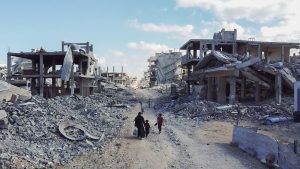
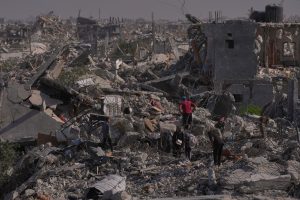
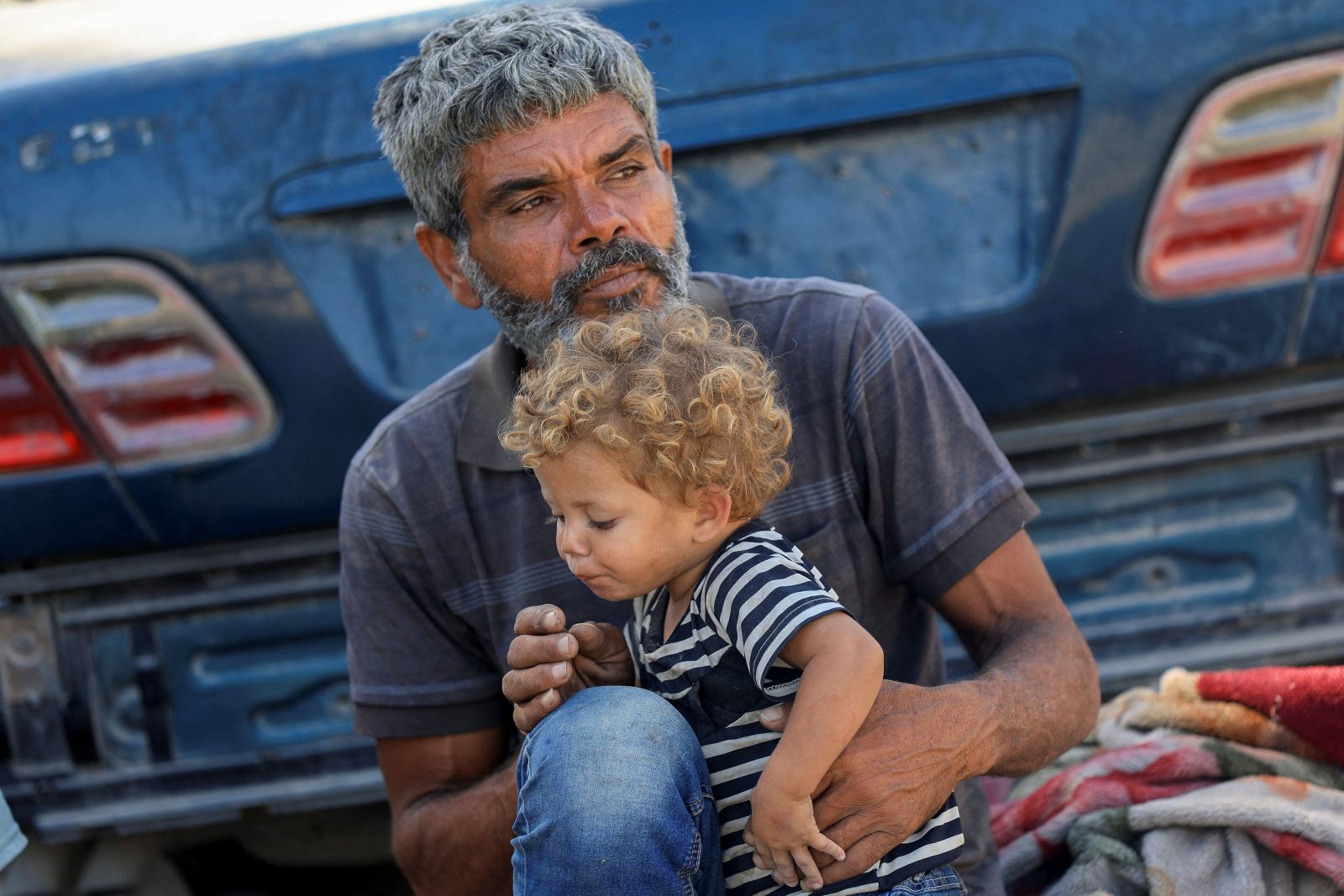
The trigger was the UN expert report from last September. Together with images of biblical-scale destruction, without obvious political motives, in the city of Gaza, alongside massive refugee camps on the sandy coasts and intense pressure on the local population to abandon the entire area. Governments in Europe and North America cannot ignore the international responsibility hanging over them, nor can Israel be unaware of the possibility of international criminal accountability for its soldiers.
So was it the fear of The Hague that led, more than anything else, to the September 13 Agreement in Sharm el-Sheikh?
As a working hypothesis, it cannot easily be dismissed. But for the optimists, for those who still believe in the power of international justice, it is this hypothesis that has the greatest chance of being verified by history.
Ioannis Sarmas is former caretaker prime minister and honorary president of the Hellenic Court of Audit.