 Μake us preferred on Google
 Greece’s two refineries will help fund a cut in fuel prices through the end of August, Prime Minister Kyriakos Mitsotakis told Parliament on Friday, as opposition leader Nikos Androulakis pressed him over seven years of price increases that, by his count, have outpaced every relief measure the government has tried.
Androulakis, who leads the center-left PASOK party, had put the urgent question to the prime minister, asking whether the government would finally act on prices or keep “being sorry and being angry.”
“The cost of living is a silent tax, the most unjust one imposed by this New Democracy government,” Androulakis told the chamber. Inflation, he argued, has taken far more out of Greek incomes than the government’s tax cuts and subsidies have given back. The average real annual wage grew by just 0.3% between 2019 and 2025, he said, citing the research institute of the General Confederation of Greek Workers (INE GSEE), the country’s largest trade union body.
He rejected the government’s preferred comparison between today’s Greece and the Greece of the bailout years. Measured against today’s Europe, he said, Greek food prices run some 6% above the eurozone average, in a country with the lowest purchasing power in the currency bloc.
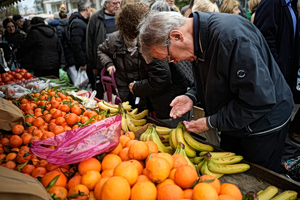
Androulakis brought invoices to the plenary session, which showed farmers selling cherries at 0.65 to 1.15 euros a kilo, while when they eventually reach supermarket shelves they are five times the price. Baby formula costs 32.79 euros a kilo in Greece against a European average of 23.12, a 40% premium, according to figures he cited from a state price-comparison platform, while baby food costs up to three times the European price. His running total: prices are up 24.51% since July 2019, across three successive rounds of government measures, from the “household basket” discount scheme to profit caps to voluntary reductions. “That is your real record,” he said.
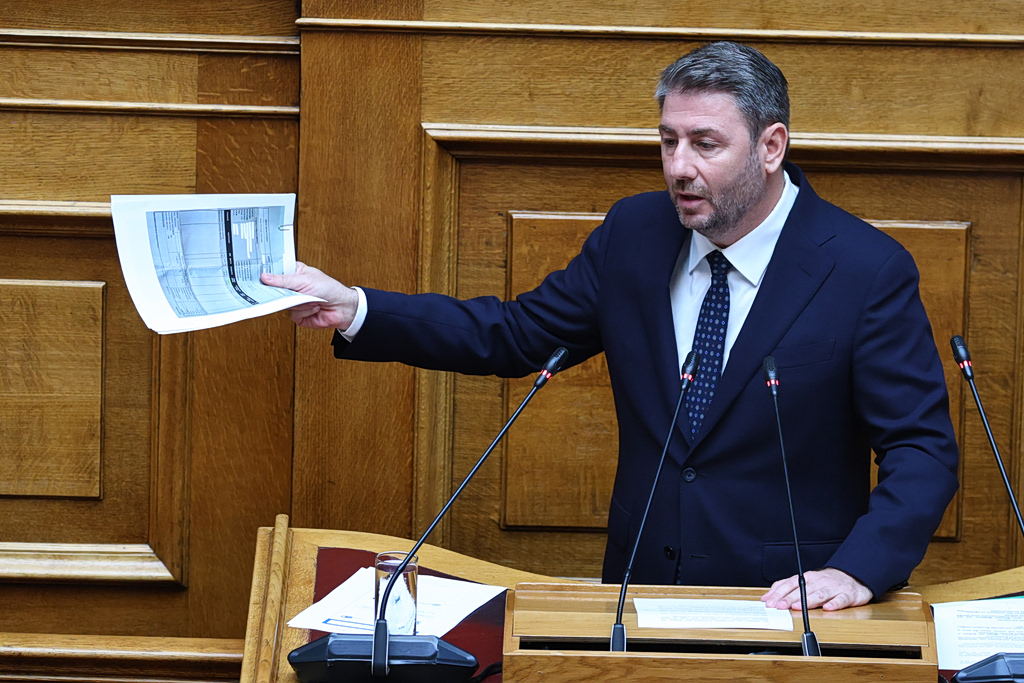
Nikos Androulakis addresses Kyriakos Mitsotakis during Prime Minister’s Question Time, where he had tabled an urgent question on the cost of living, Friday, July 10, 2026 (Yiannis Panagopoulos / Eurokinissi)
Mitsotakis replied that criticism is welcome if it rests on facts rather than slogans, and if the opposition’s proposals carry price tags. “The cost of your proposals is staggering,” he told Androulakis. Populism, he added, was creeping back into Greek politics with its appetite for simple answers to complicated problems.
Inflation, the prime minister argued, is a European problem, and Greece has fared better than most. According to the Prime Minister cumulative inflation is below the European average, the minimum wage is up 40% against cumulative price rises of about 20%, unemployment is falling, and public debt is shrinking faster than in any other OECD country, with a target of 130% of GDP. Greece, according to the PM’s assessment, has definitively left its economic crisis behind.
Mitsotakis during his speech made clear he considered PASOK’s proposals unrealistic. He dismissed the possibility of a VAT cut, as something that has been tried and failed, opening a hole in public finances while subsidizing rich and poor alike. On PASOK’s proposal to restore a 13th pension payment for retirees, he cited the state accounting office in putting the cost at more than 2 billion euros, and needled Androulakis for not producing a figure of his own. “What I take from this is that you have no idea what the 13th pension will cost,” he said. Androulakis accused him of back-of-the-envelope math.
On fuel, Mitsotakis said the Iran-US war had destroyed refining capacity in the wider region, pushing up gasoline and diesel prices across Europe through lower output and seasonal demand. Under the agreement with the two Greek refineries, gasoline will fall by 10 cents a liter and diesel by 5 cents through the end of August, with implementation details to be announced in the coming days. A cap on supermarket profit margins has also been restored.
The PASOK leader also raised a separate government pledge to impose a 5% price cut on selected consumer goods. The measure, announced with a fair bit of fanfare, only takes effect after Aug. 31, prompting Androulakis to ask what the discount would actually be worth once retailers had spent weeks nudging prices upward in the meantime. “Until September arrives, will high prices go on vacation?” he asked.